
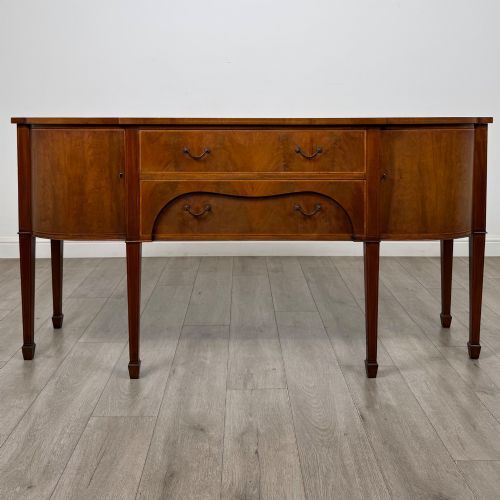
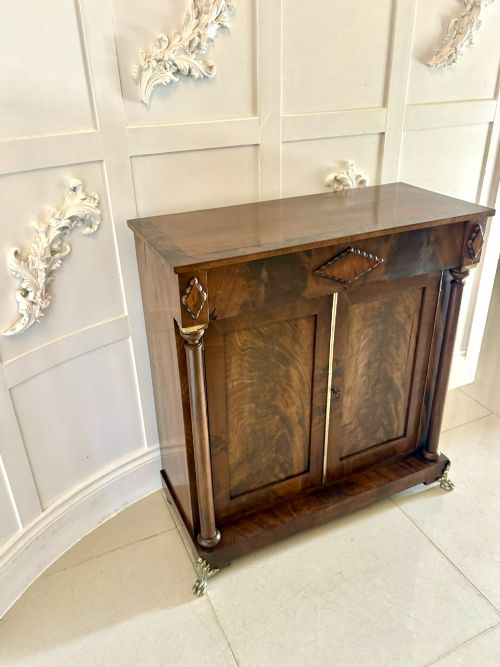
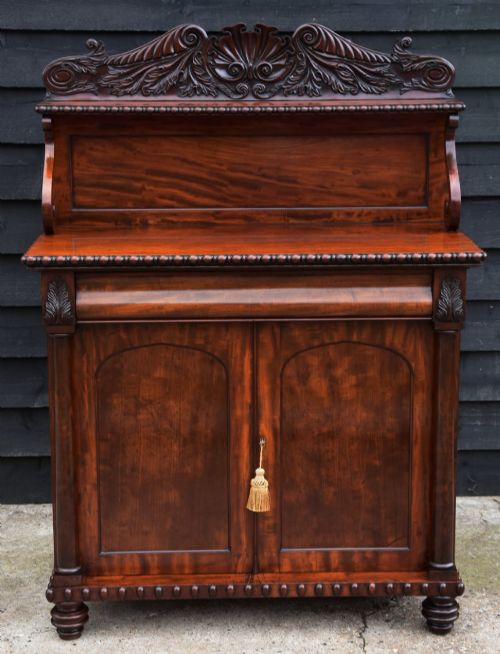
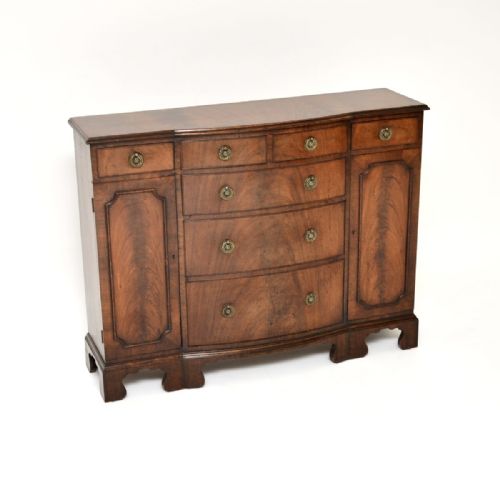
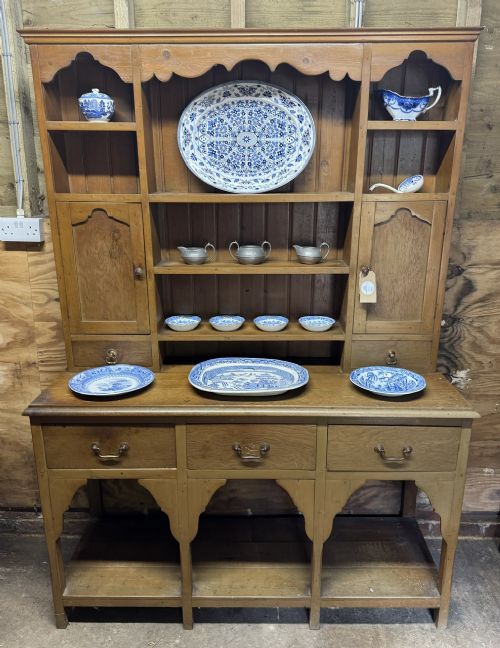
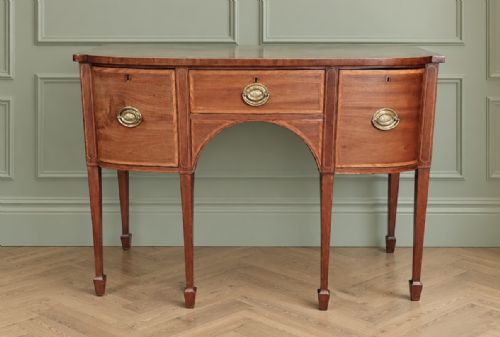
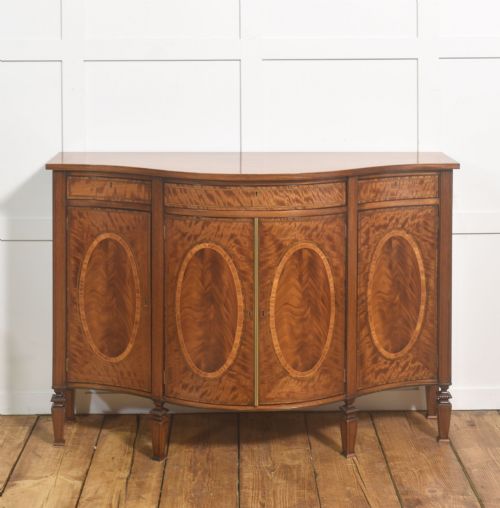
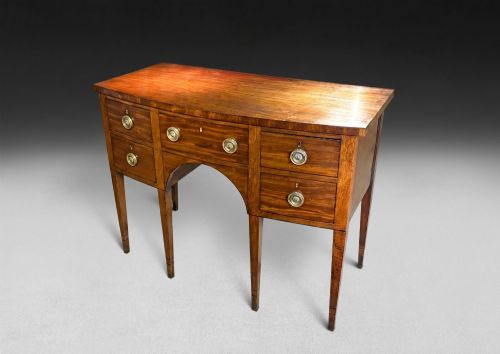
Georgian Wooden Sideboard Cabinet
A georgian wooden sideboard cabinet brings substantial timber and practical storage into a dining room or hallway.
Georgian Wooden Sideboard Cabinet
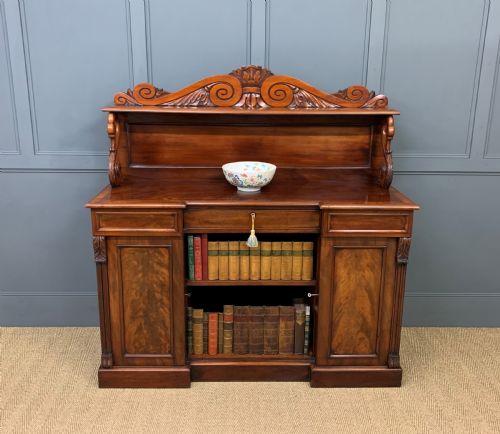
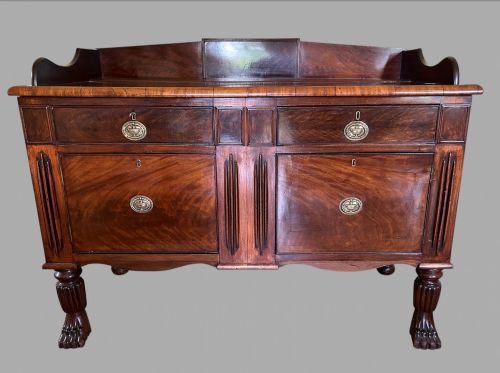
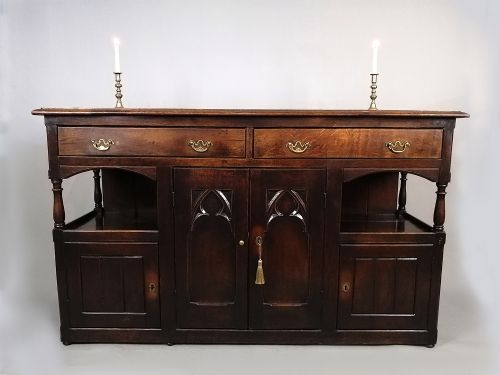
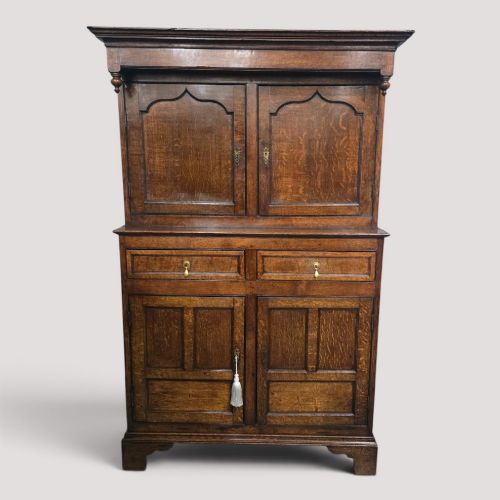
When searching for a georgian wooden sideboard cabinet, a buyer looks at large case furniture designed for dining rooms and domestic storage. The pieces on this page span the eighteenth and nineteenth centuries, alongside later revivals from the twentieth century.
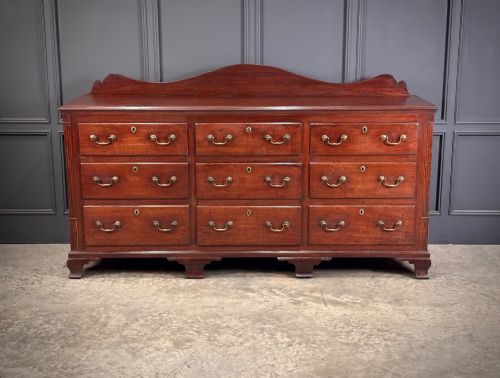
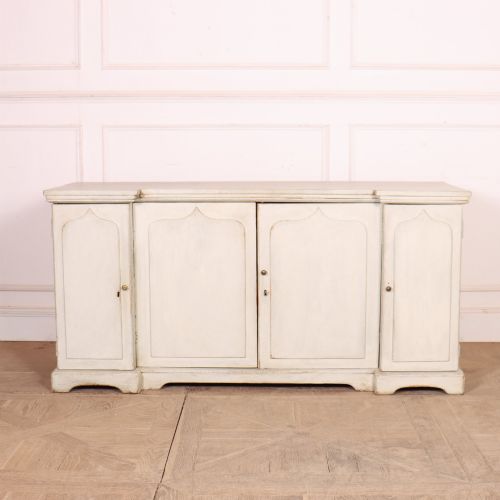
Mahogany dominates the forms, appearing alongside oak, pine, and satinwood. Common configurations include bow-fronted sideboards, breakfront dresser bases, chiffoniers, and cupboards with banks of drawers.
Originating primarily from English workshops, these items range from formal George III dining pieces to regional Welsh country dressers. Later adaptations include Edwardian and Sheraton Revival interpretations dating into the early twentieth century.
Materials and construction
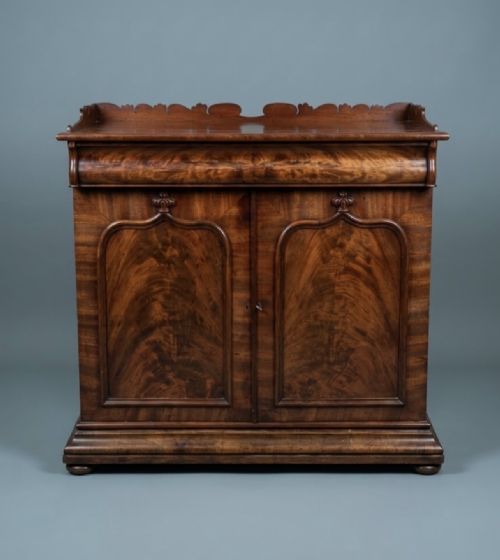
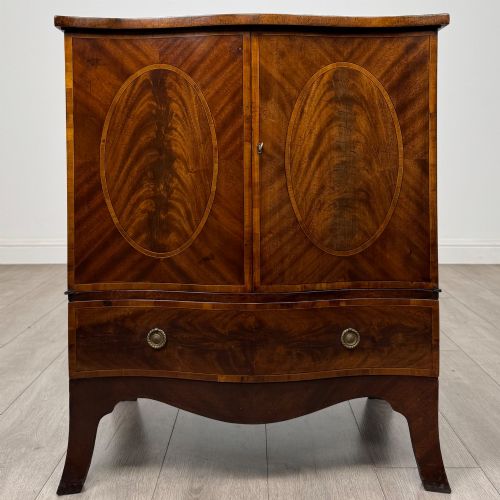
Makers utilised solid timbers like oak and mahogany for structural integrity, often applying flame mahogany or figured veneers to drawer fronts and cupboard doors for decorative impact.
Inlaid details in boxwood, satinwood, and brass provide linear contrast, particularly on pieces influenced by Sheraton designs. Secondary woods support internal drawer linings and backboards.
Surface treatments rely on traditional wax finishes that preserve the timber and develop depth over generations of handling. Original brass hardware, such as ring pulls and drop handles, secures the joinery.
Listings feature mahogany, oak, and pine constructions spanning the Georgian, Regency, and Edwardian periods.
Assessing craftsmanship
The division between standard and superior pieces rests on timber selection and grain continuity across the front elevation. Matched flame veneers and careful alignment show deliberate planning by the cabinet maker.
Structural refinement appears in the dovetail joints of drawers and the precision of inlaid stringing. Secondary elements like original backboards and unaltered brasses elevate the integrity of the piece.
M. D. Miller & Sons
The Georgian Wooden Sideboard Cabinet Glossary
- Bow front
- A convex curved cabinet front that projects outward in a smooth arc. This shape became popular during the late eighteenth century.
- Chiffonier
- A compact sideboard or low cabinet, often fitted with drawers and enclosed shelves below. These frequently incorporate a superstructure or mirror on top.
- Breakfront
- A cabinet design where the central section projects forward from the flanking outer sections. This architectural arrangement creates depth and shadow across the facade.
- Stringing
- Narrow bands of contrasting wood inlay used to outline drawers and panels. It creates a crisp linear border on mahogany surfaces.
- Dresser base
- A low wooden storage unit with drawers or cupboards, historically used in kitchens and dining spaces for holding tableware.
Georgian Wooden Sideboard Cabinet: Frequently Asked Questions
How do I spot a true Georgian piece?
Examine the secondary timbers inside the drawers, such as oak or pine, and check the hand-cut dovetails for irregularity that signals age.
Surface patination and the mellowing of mahogany under wax provide further clues to a piece predating nineteenth-century revivals.
Where should I place a large sideboard?
These cabinets suit dining rooms, large hallways, or living spaces where their length and depth can be fully appreciated without crowding the room.
Ensure adequate wall space is available to accommodate the proportions, particularly for breakfront or bow-fronted variants.
What is the difference between a sideboard and a chiffonier?
Sideboards are generally longer dining room pieces designed for serving food and storing large platters and cutlery.
Chiffoniers are more compact cabinets, often featuring enclosed cupboards and a tiered superstructure suited for smaller reception rooms.
How do I care for antique mahogany surfaces?
Apply a traditional beeswax polish sparingly and buff with a soft cloth to maintain the natural sheen of the timber.
Keep wooden cabinets away from direct heat sources and strong sunlight to prevent the veneers from drying and lifting.