
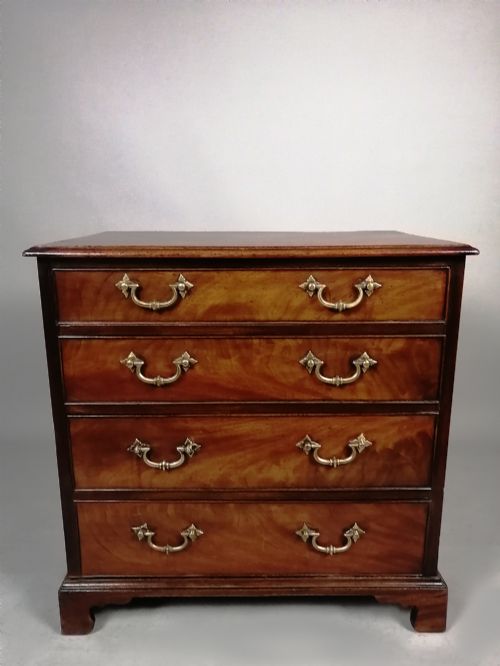
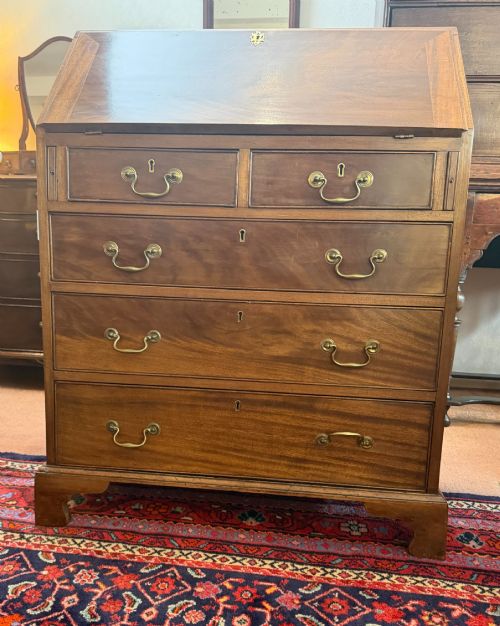
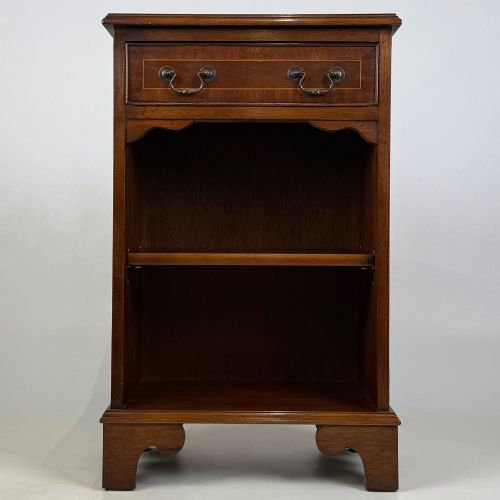
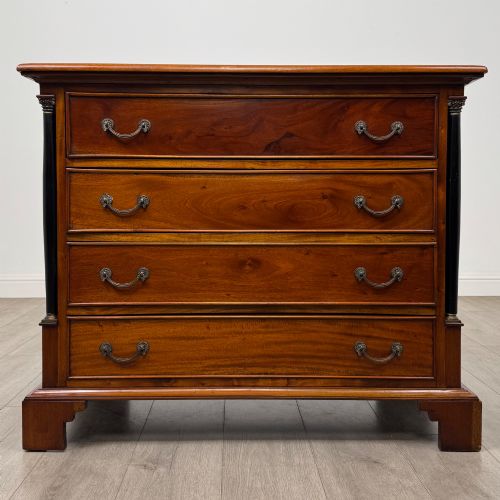
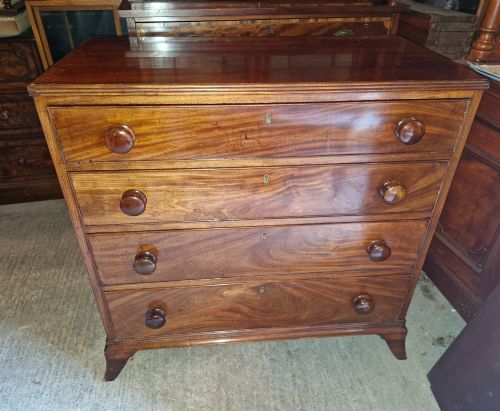
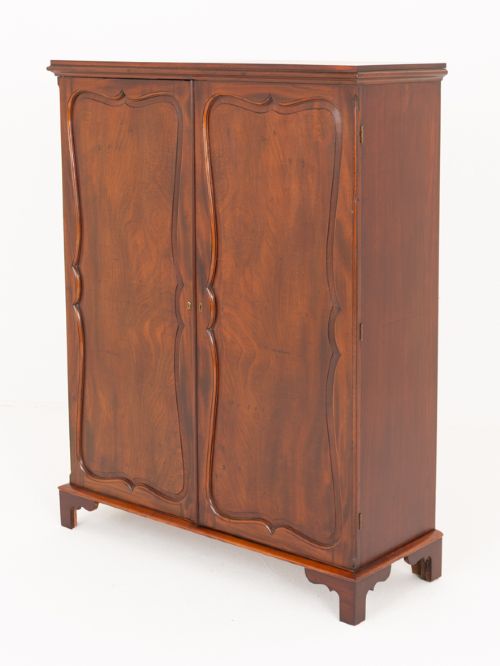
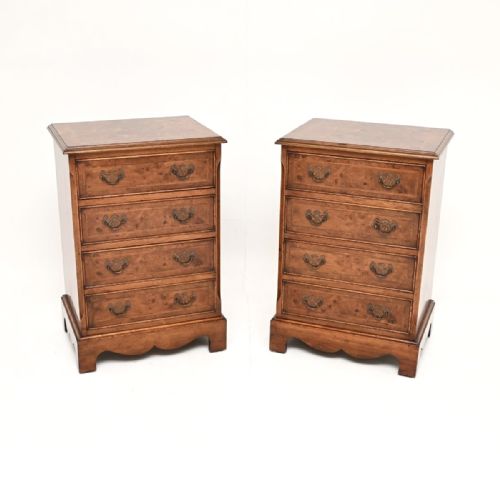
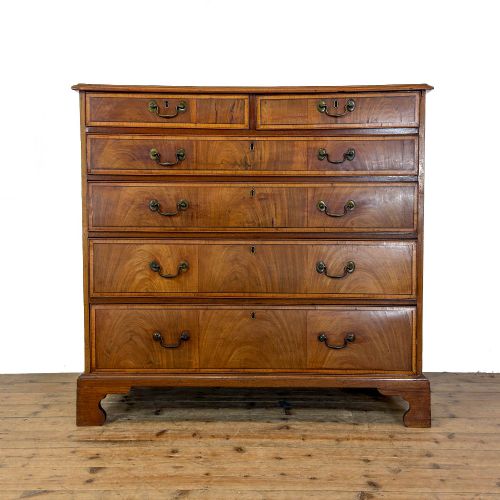
Georgian Bracket Foot Cabinet
These georgian bracket foot cabinet forms combine timber construction with elevated plinths, offering practical storage through traditional drawer and cupboard layouts.
Georgian Bracket Foot Cabinet
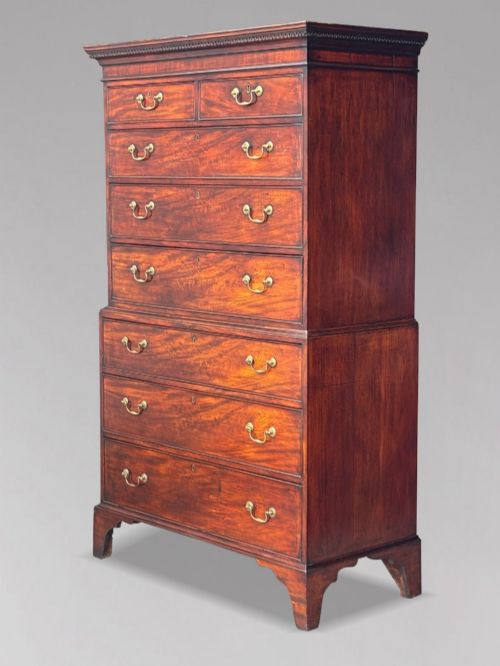
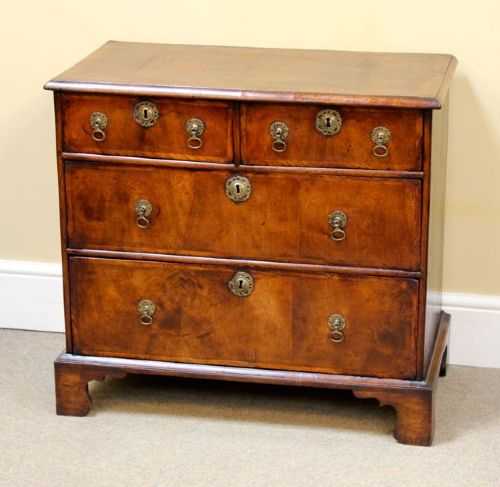
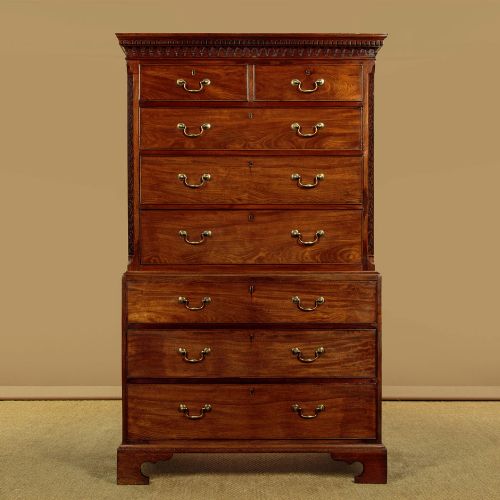
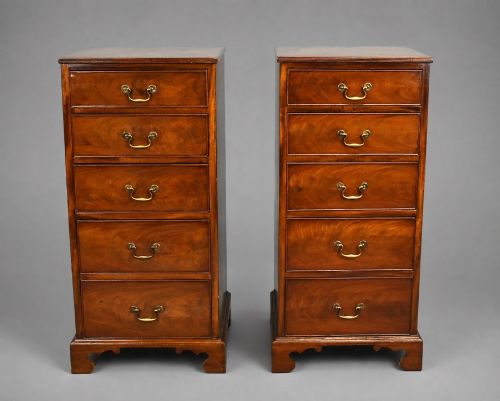
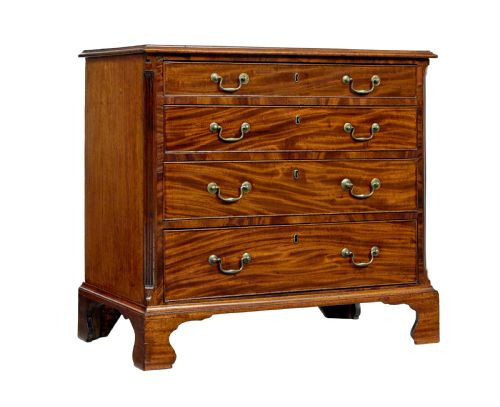
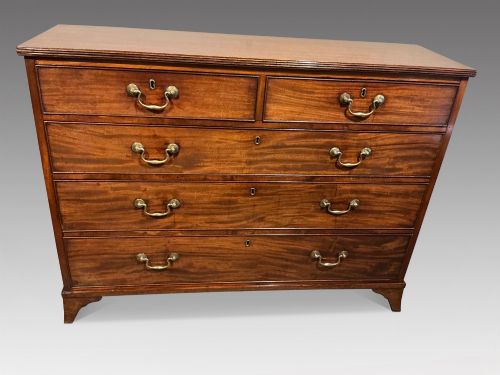
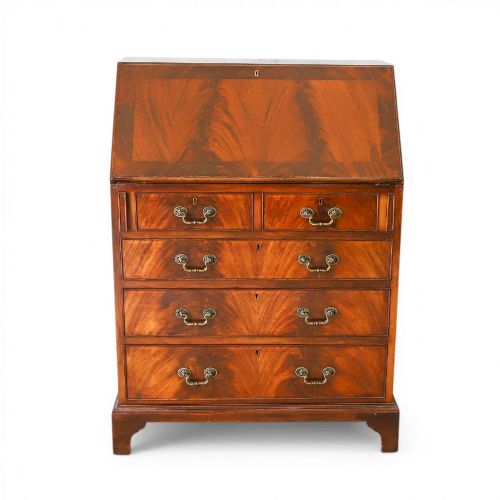
A georgian bracket foot cabinet most frequently appears on this page as a chest of drawers, chest on chest, or bureau originating from the eighteenth and nineteenth centuries. These pieces serve as domestic storage furniture built with enclosed carcases and distinctive corner foot supports.
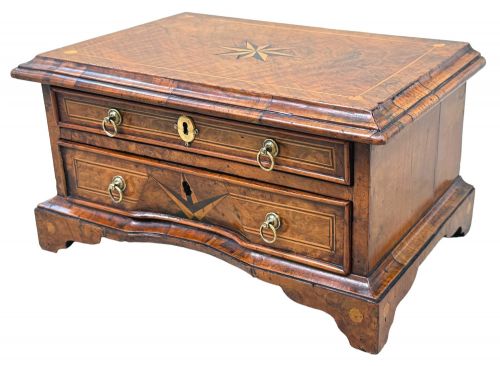
The selection ranges from compact bedside chests and miniature examples to large mahogany and walnut case furniture spanning periods from the early eighteenth century to the Edwardian era and the 1920s.
Makers and cabinetmakers constructed these items using regional hardwoods, shaping the base timbers into distinct bracket profiles that elevate the main body of the furniture from the floor.
Construction and materials
Cabinetmakers utilised primary hardwoods including mahogany, walnut, oak, and elm, often applying burr walnut veneer or flame-figured panels to visible surfaces. Brass handles, escutcheons, and hinges provide functional hardware fixed to the drawer fronts and cupboard doors.
Joinery techniques relied on dovetailed drawer construction and framed carcases to support heavy timber sections. The characteristic bracket feet are joined directly to the lower corners of the cabinet base, distributing weight evenly while lifting the structure.
Materials recorded across the available selection include solid mahogany, walnut, burr walnut veneer, oak, elm, bone, and brass.
Distinctions in craftsmanship
Quality separates pieces through the selection of timber figures, such as dense Cuban mahogany or highly figured burr walnut veneers. Superior examples display careful grain matching across drawer fronts and intact original brass hardware.
The precision of the dovetail joinery and the structural integrity of the bracket feet indicate the level of joiner skill. Pieces retaining their early or original surfaces and uncompromised timber thickness sit at the upper end of the range.
The Georgian Bracket Foot Cabinet Glossary
- Bracket foot
- A corner foot support shaped like a bracket, often mitred at the corner and used extensively on eighteenth-century case furniture.
- Chest on chest
- A tall storage unit formed by stacking one smaller chest of drawers directly on top of a wider lower section.
- Bureau
- A desk featuring a sloping fall-front that opens to reveal internal pigeonholes and small drawers.
- Veneer
- A thin layer of figured timber applied over a secondary wood base to provide a decorative exterior surface.
Georgian Bracket Foot Cabinet: Frequently Asked Questions
What is a bracket foot?
A bracket foot is a corner support attached to the base of case furniture, formed by two pieces joined at a mitre.
This architectural foot style lifts the cabinet body cleanly off the floor while maintaining stability.
How do I identify a chest on chest?
A chest on chest consists of two separate drawer sections built to sit one directly upon the other.
This tall form maximises vertical storage space within domestic rooms without occupying a large floor area.
Where were these cabinets used?
These pieces functioned primarily as domestic storage in bedrooms, hallways, and living spaces for clothing and documents.
Their enclosed carcases kept contents secure and protected from dust.
What woods appear most often?
Listings feature mahogany and walnut predominantly, alongside oak, elm, and yew wood.
Cabinetmakers frequently selected these dense hardwoods for their durability and attractive grain patterns.