



Georgian Whatnot Shelf
A georgian whatnot shelf provides tiered open display space, uniting utility and architectural grace in classic timber forms.
Georgian Whatnot Shelf
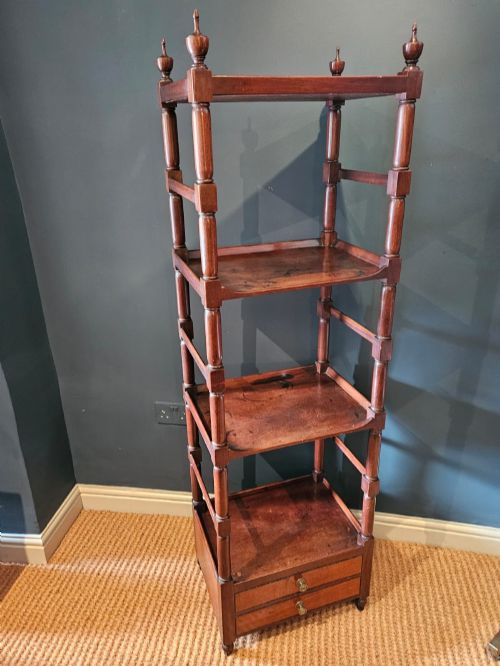
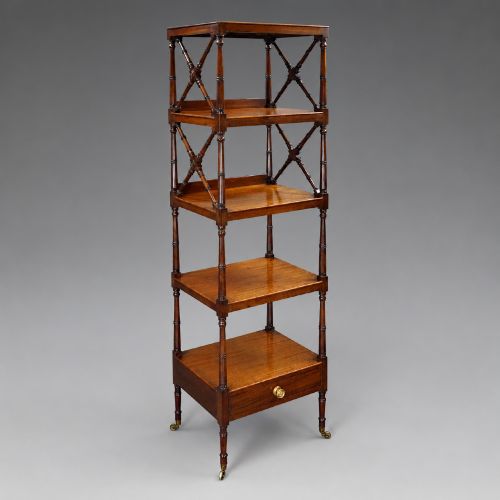
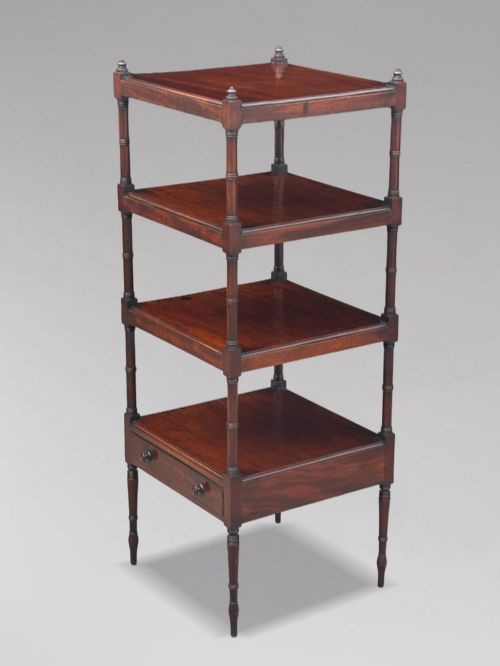
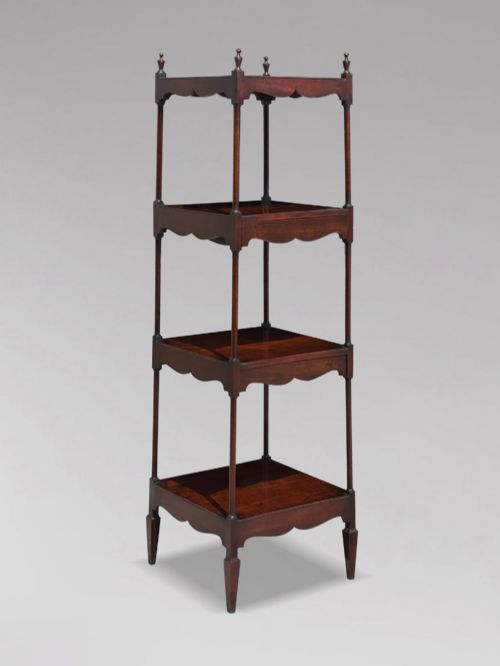
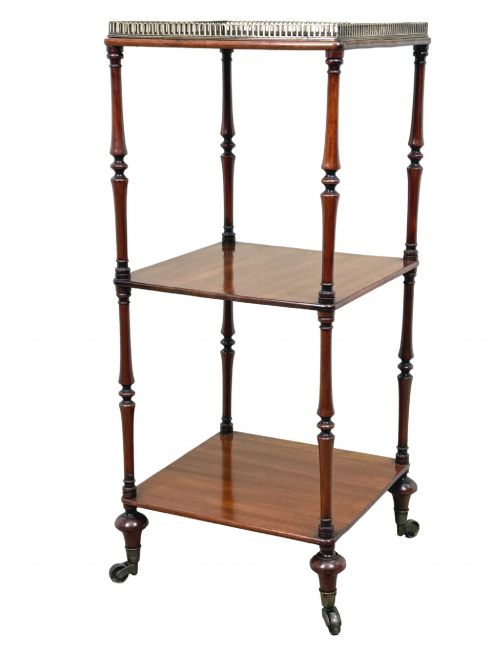
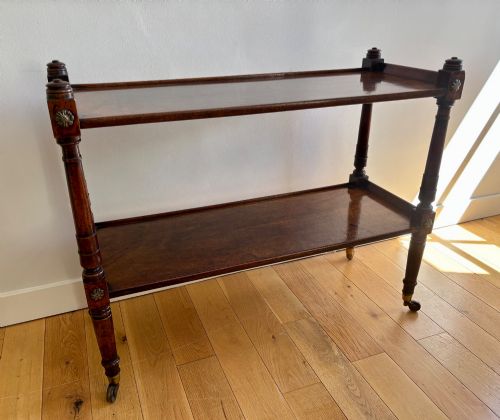
A georgian whatnot shelf takes the form of a multi-tiered open display stand or étagère, designed to hold books, china or decorative objects. These pieces appear primarily from the Georgian, Regency and George III periods, constructed with distinct vertical tiers.
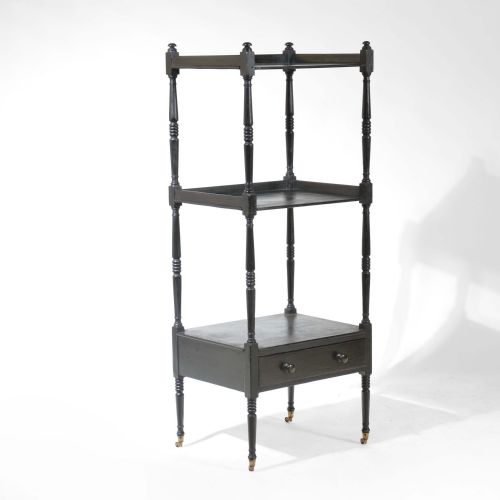
Buyers encounter forms ranging from simple three-tier open stands to sophisticated pieces featuring cupboards, music stands or corner designs. Mahogany remains the dominant timber, alongside rosewood, oak and birdseye maple across various listings.
Distinctions in craftsmanship
Quality rests upon the selection of timber grain, the crispness of turned supports and the proportion of the tiers. Superior examples display thoughtful timber matching and refined edge moulding.
Attribution to specific makers like Gillows elevates certain pieces through accomplished joinery and sophisticated design, distinguishing standard utility stands from finer cabinetwork.
Listings demonstrate that mahogany is the most frequently recorded primary material, accompanied by rosewood, oak and birdseye maple.
Gillows
The Georgian Whatnot Shelf Glossary
- Whatnot
- A piece of furniture consisting of a set of open shelves for displaying small objects or books. These tier stands evolved during the Georgian period.
- Étagère
- A piece of furniture with a set of open shelves for displaying ornaments. This term is frequently used interchangeably with whatnot.
- Regency
- A British architectural and decorative style spanning the early nineteenth century. Pieces from this era often feature clean lines and classical restraint.
- Ormolu
- Gilded bronze applications utilised for decorative mounts on fine furniture. This technique adds metallic contrast to dark timbers.
Georgian Whatnot Shelf: Frequently Asked Questions
What is a georgian whatnot shelf used for?
These pieces served as versatile storage and display furniture in traditional interiors, holding books, ceramics and decorative objects across multiple open levels.
Today, buyers utilise them in living spaces and bedrooms as functional bookshelves or bedside display stands.
How many tiers do they usually have?
Most examples feature three or four distinct shelving levels supported by turned upright columns or structural corner posts.
Some specialised variants incorporate lower enclosed cupboards or music stands while maintaining the open upper tiers.
Which woods were used for construction?
Mahogany is the primary timber seen across the listings, ranging from dark figured grain to warmer tones.
Cabinetmakers also worked with rosewood, oak, birdseye maple and ebonised wood to create varied aesthetic effects.
How do I identify a Regency period piece?
Regency items date from the early nineteenth century and typically display restrained classical details, tapered uprights and occasionally brass castors.
They share close stylistic ties with late Georgian furniture while exhibiting the distinct design shifts of the Regency era.