
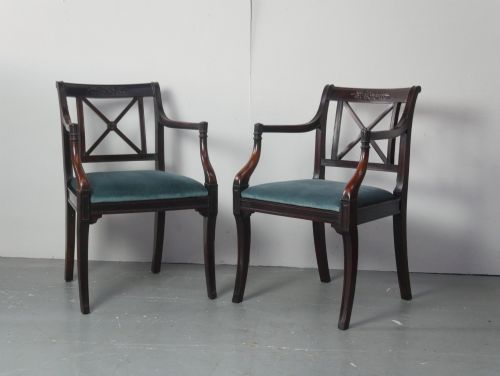
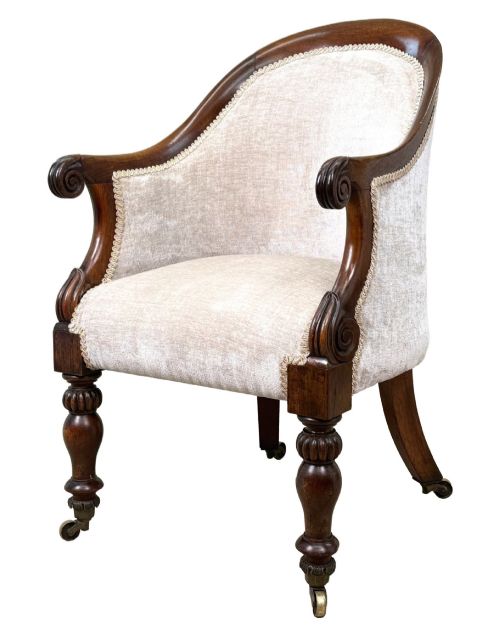
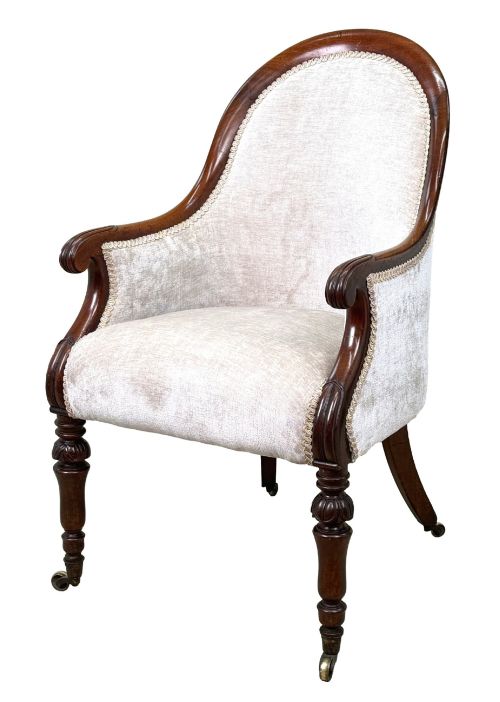
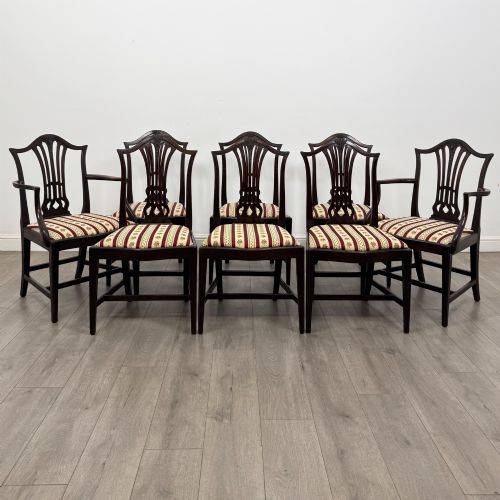
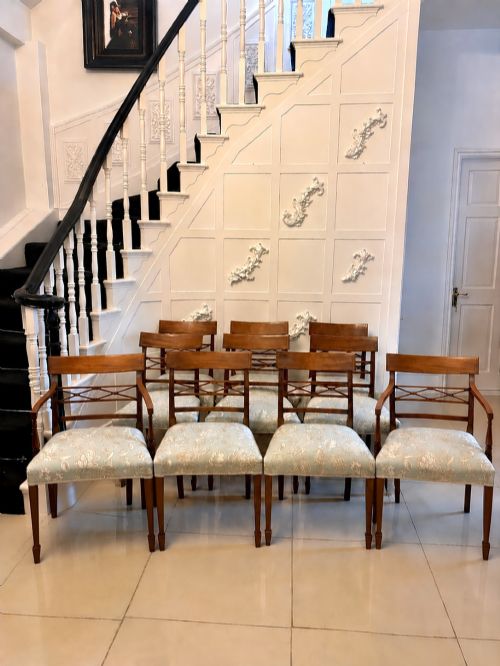
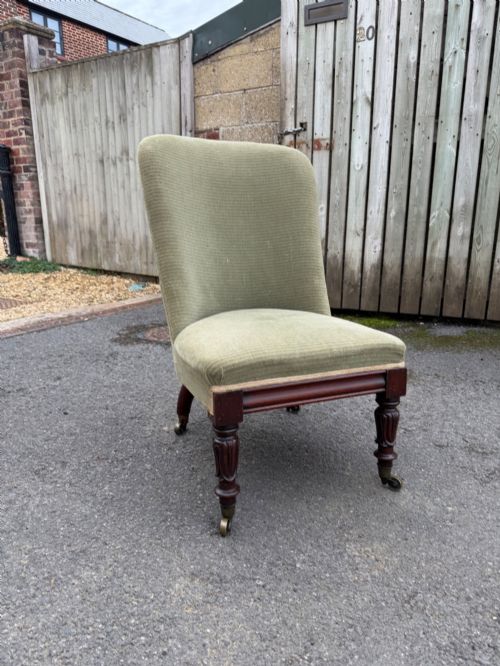
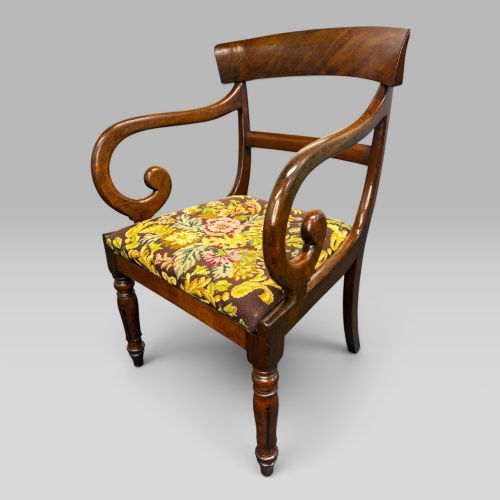
Georgian Upholstered Armchair
A georgian upholstered armchair brings substance and history to a room, offering deep seating and traditional craftsmanship that commands attention.
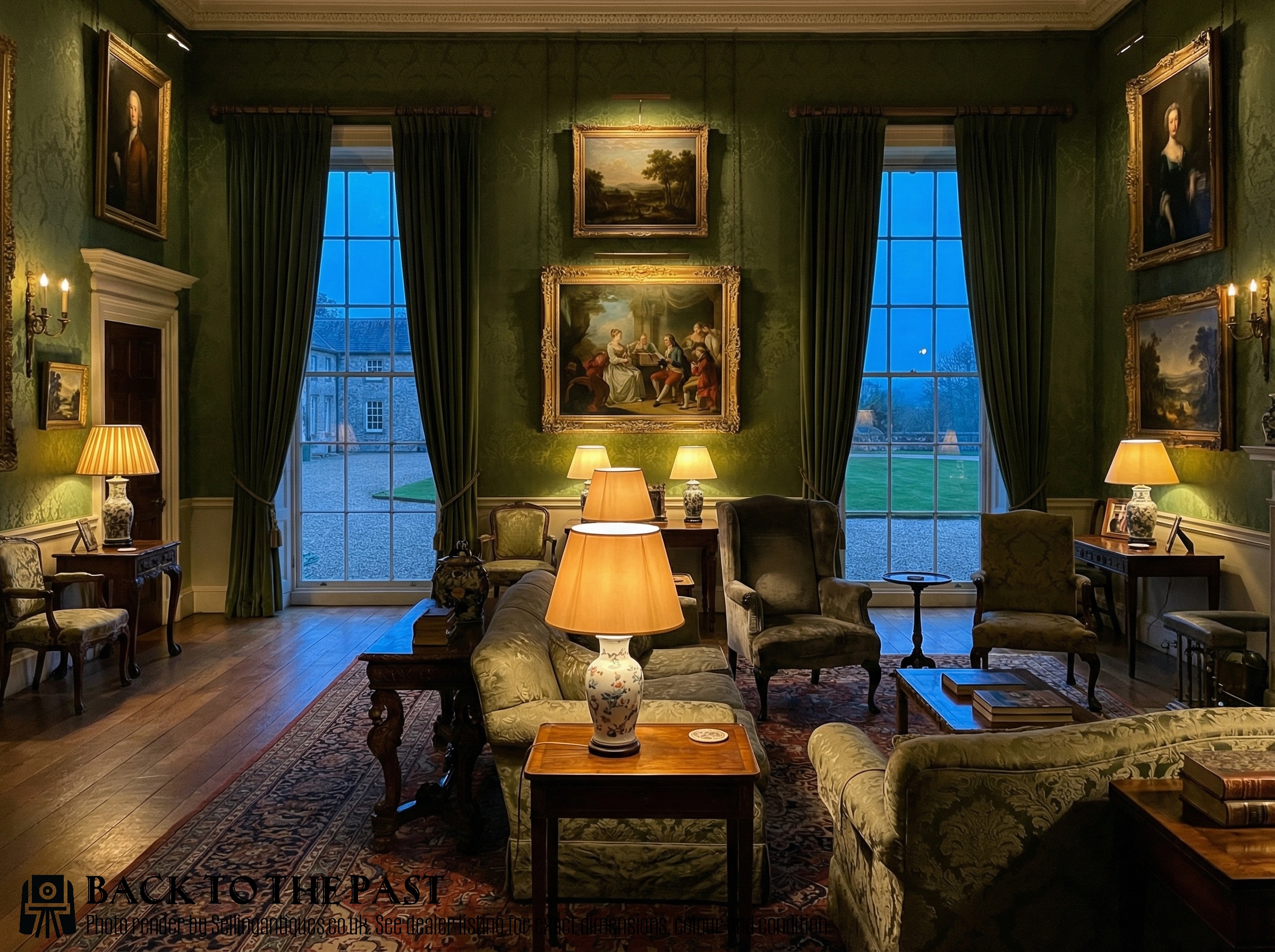
Georgian Upholstered Armchair
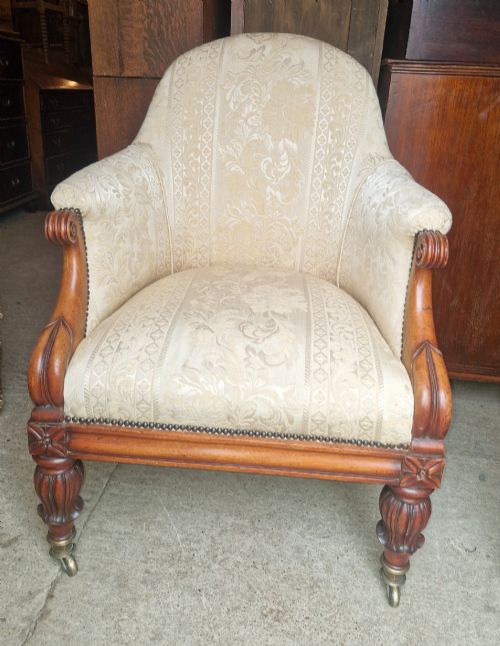
A georgian upholstered armchair encompasses substantial library chairs, wingback fireside seating, and open armchairs designed during the eighteenth century and subsequent revival periods. These pieces provide generous proportions and enclosed seating intended for comfort in studies, libraries, and drawing rooms.
The versions met most frequently on this page combine mahogany frames with traditional upholstery ranging from old leather to patterned silk and tapestry fabrics. Examples span authentic eighteenth-century productions to later nineteenth-century and Edwardian revivals that replicate earlier forms.
Makers and workshops of the period utilised robust hardwoods to construct frames that support padded seats, armrests, and high backs. Surviving pieces demonstrate the enduring appeal of traditional seating designs adapted for domestic leisure across successive centuries.

What varies in quality
The caliber of a georgian upholstered armchair depends upon the crispness of the timber carving and the architectural balance of the frame. Superior examples display fluent lines in the arm supports and leg terminals that reflect precise hand-tooling.
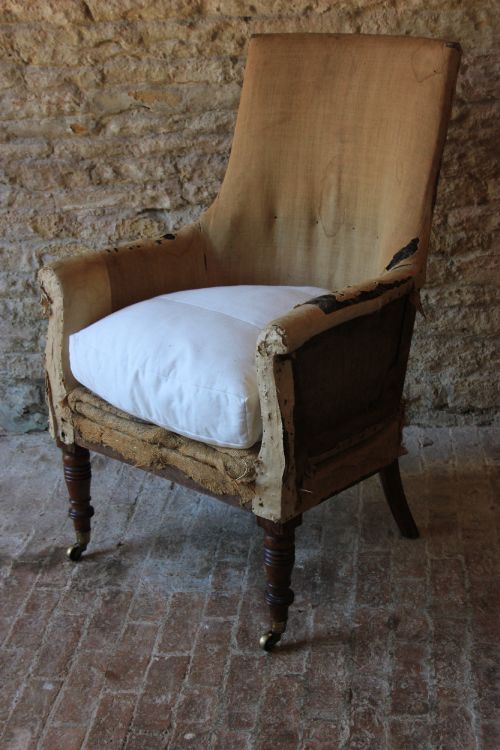
The integrity of the original timber frame and the historical accuracy of the upholstery materials determine the standing of individual pieces. Well-proportioned seating with undisturbed structural members commands greater interest than altered or heavily rebuilt frames.
Georgian Upholstered Armchair Retail Price Guide 2026
Typical asking prices for georgian upholstered armchair among the pieces listed under this phrase on Sellingantiques today, from the lower quarter to the upper quarter. They describe what is for sale here now, not the wider market.
Some library chairs hide worn horsehair stuffing beneath centuries of attentive sitting.
Whytock and Reid·Gillows
The Georgian Upholstered Armchair Glossary
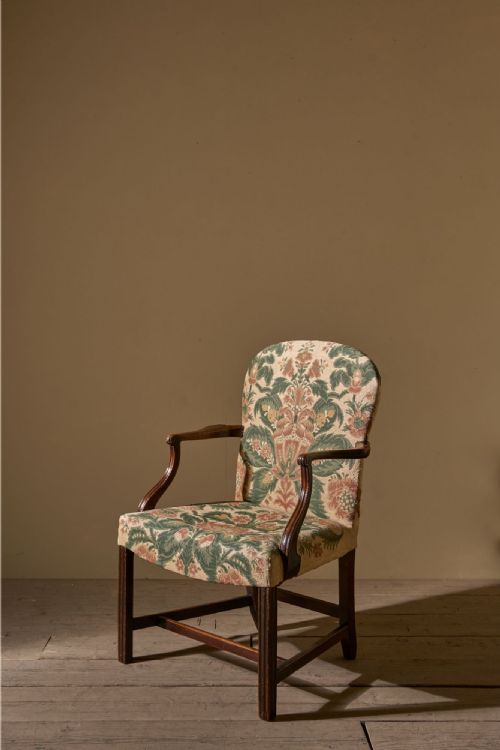
- Gainsborough chair
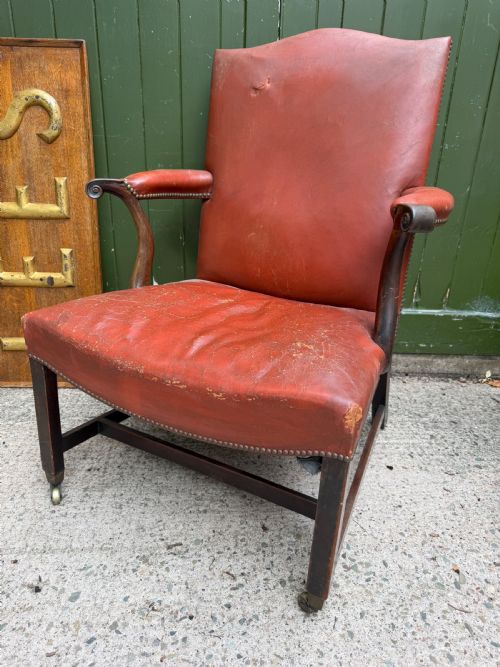
- An open-framed armchair with a wide seat, padded armrests, and a low back designed for eighteenth-century writing desks and libraries. These forms feature exposed mahogany woodwork and upholstered panels.
- Wingback armchair
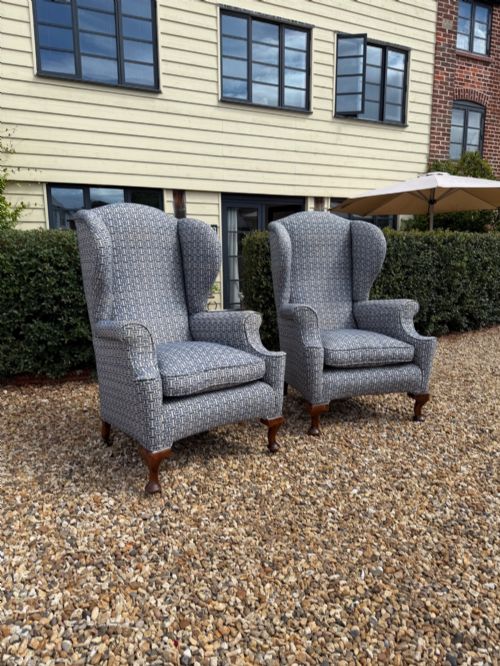
- A tall-backed fireside chair featuring projecting side panels designed to shield the occupant from draughts. This form relies on substantial upholstery over a wooden frame.
- Carver
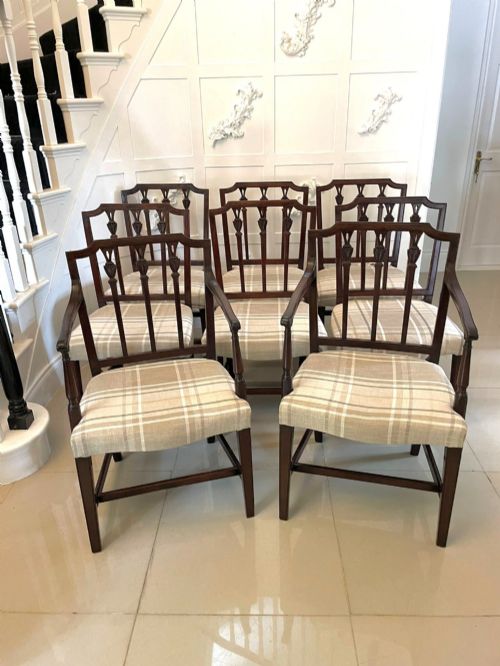
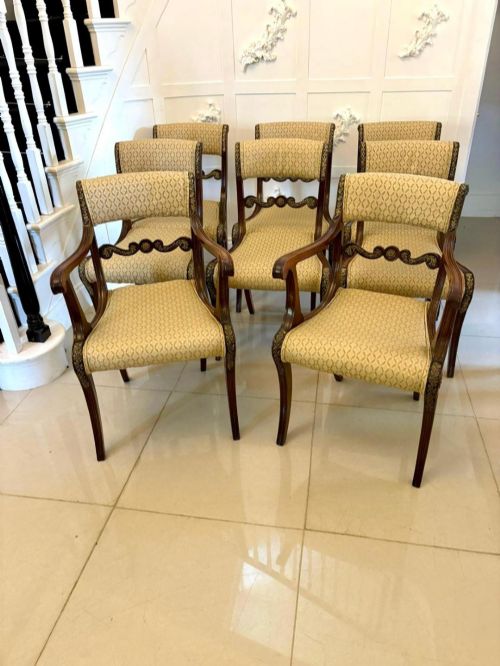
- An armchair, often found as part of a dining set, featuring elongated armrests to accommodate formal clothing. These chairs match simpler side chairs in the same suite.
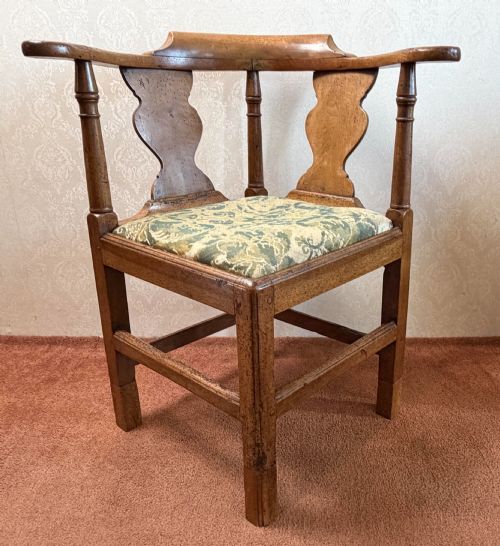
- Splat
- The vertical central strip of wood within a chair back connecting the seat to the top rail. In these seats, splats often exhibit pierced or carved decorations characteristic of specific periods.
- Cabriole leg
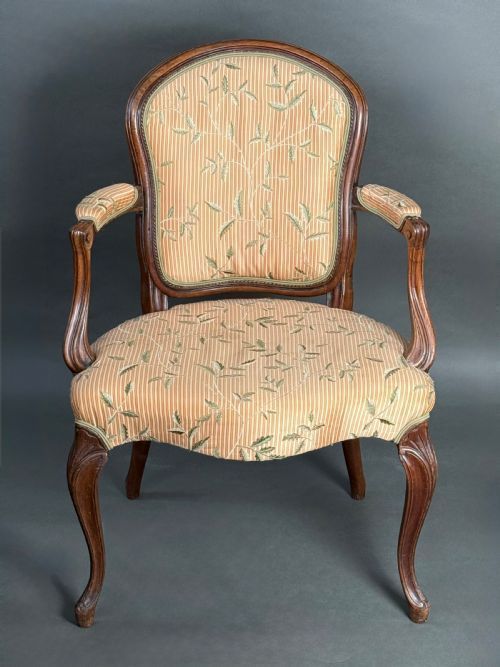
- A furniture leg that curves outward at the knee and tapers inward toward the foot, mimicking animal limbs. This shape appears frequently on eighteenth-century seating frames.
Georgian Upholstered Armchair: Frequently Asked Questions
What is a Gainsborough chair?
A Gainsborough chair is a wide, open-armed library chair featuring upholstered armrests and a padded back on a wooden frame.
These pieces were built during the eighteenth century for use at writing desks or in study rooms.
How do I spot a revival piece?
Revival pieces date from later periods like the Victorian or Edwardian eras but copy earlier eighteenth-century designs.
Examinations of timber oxidation and internal construction methods usually reveal whether a chair is eighteenth-century or a later interpretation.
Where were these armchairs placed?
Original locations included libraries, studies, and formal drawing rooms where seating needed to provide both comfort and status.
Wingback versions typically sat near fireplaces to block draughts, while library chairs stood beside desks.
What woods were used?
Mahogany and walnut form the primary structural timbers for these frames, chosen for their strength and rich grain.
Secondary woods often appear in internal framing and support structures hidden beneath the upholstery.