










Georgian Twist Stemware
Georgian twist stemware brings together the tactile elegance of eighteenth-century drinking vessels and intricate internal glass filaments.
Georgian Twist Stemware
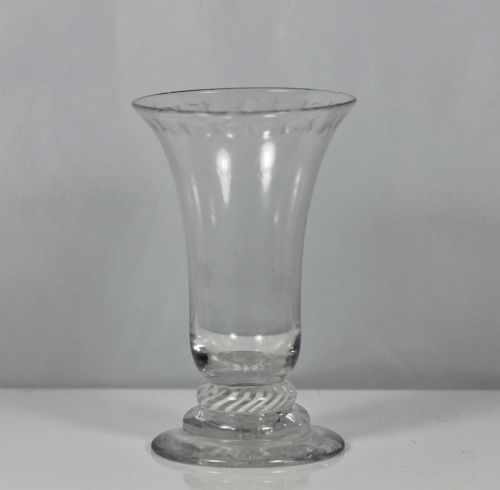
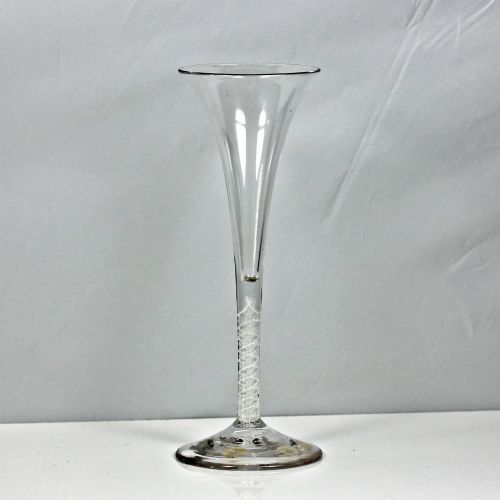
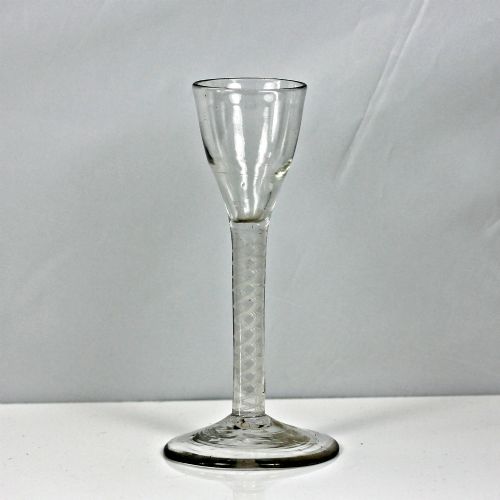
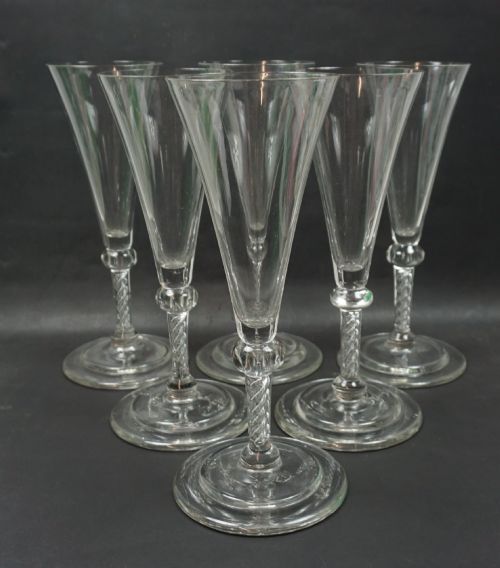
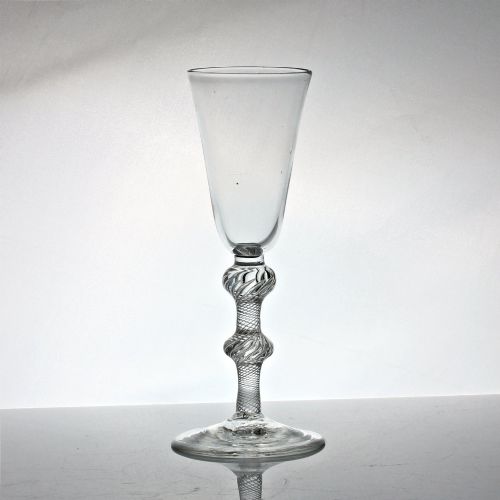
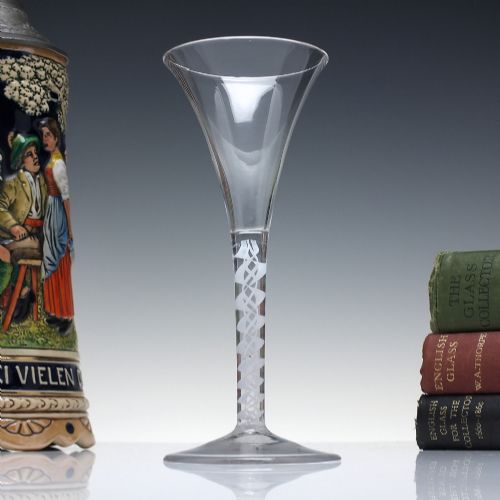
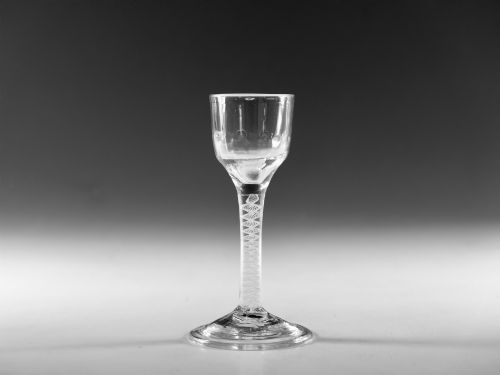
Georgian twist stemware comprises drinking vessels produced predominantly during the eighteenth century, featuring slender stems enclosing complex internal threads of air or enamel. These drinking glasses serve various functions, appearing as ale glasses, wine glasses, jelly glasses, ratafia glasses, and large goblets with distinct bowl forms such as trumpet, ogee, bell, and rounded funnel shapes.
The specimens seen here span the eighteenth century alongside a revival period from nineteen thirty, capturing both original period production and later craftsmanship. Forms range from simple single series opaque twists to elaborate mixed twists and tall wine flutes on air twist stems.
Materials and construction methods
Maker operations utilised lead glass, lead crystal, and flint glass to achieve high clarity and refractive brilliance in the bowl and foot. White enamel and coloured glass formed the internal threads, manipulated while molten before being drawn and twisted into shape.
Glassblowers incorporated air bubbles trapped within the metal, stretching and twisting the material to create multi-spiral air twists and opaque twist stems. Final pieces often received supplementary wheel engraving or gilding, displaying motifs like hops and barley.
Georgian Twist Stemware Retail Price Guide 2026
Typical asking prices for georgian twist stemware among the pieces listed under this phrase on Sellingantiques today, from the lower quarter to the upper quarter. They describe what is for sale here now, not the wider market.
Listings feature eighteenth-century periods alongside nineteen thirty revival pieces, executed in lead glass, clear glass, and white enamel.
What distinguishes finer examples
Quality rests upon the crispness and complexity of the internal twist formation, with dense multi-spiral threads and well-defined double series structures commanding attention. Clarity of the metal itself, free from excessive cloudiness or heavy bubbles, dictates visual success.
Proportion between the bowl, stem, and foot also matters, alongside the intricacy of any exterior wheel engraving such as Jacobite symbols or botanical details.
The Georgian Twist Stemware Glossary
- Air twist
- A stem containing spiral channels or threads of trapped air created by drawing and twisting the molten glass. This technique produces delicate internal filaments that catch the light.
- Opaque twist
- A stem incorporating white enamel or coloured glass threads twisted internally within the clear metal. These opaque white filaments create striking linear patterns against the transparent glass.
- Ogee bowl
- A bell-shaped vessel contour curving outward at the rim and inward toward the base. This profile appears frequently on eighteenth-century wine and ale glasses.
- Ratafia glass
- A tall, narrow vessel designed for serving sweet cordial liqueurs. These slender glasses often feature elongated stems and engraved decoration.
Georgian Twist Stemware: Frequently Asked Questions
What is a double series twist?
A double series twist combines two distinct twist formations within a single stem, such as an outer cable enclosing an inner spiral thread. This method demands advanced glassmaking skill.
These complex stems often pair opaque white enamel lines with finer air threads to create intricate optical effects.
How were these glasses used originally?
These vessels functioned primarily for consuming wine, ale, and cordials during eighteenth-century dining and social gatherings. Specific bowl shapes suited particular drinks.
Smaller vessels held potent liqueurs or jellies, while larger goblets served formal toasts and communal drinking customs.
Can I use antique stemware today?
Using antique stemware requires careful handling due to the delicate nature of eighteenth-century lead glass and slender twisted stems. Hand washing in lukewarm water prevents thermal shock.
Storing the glasses securely away from vibrations protects the fragile foot rims and delicate optical stems from accidental damage.