







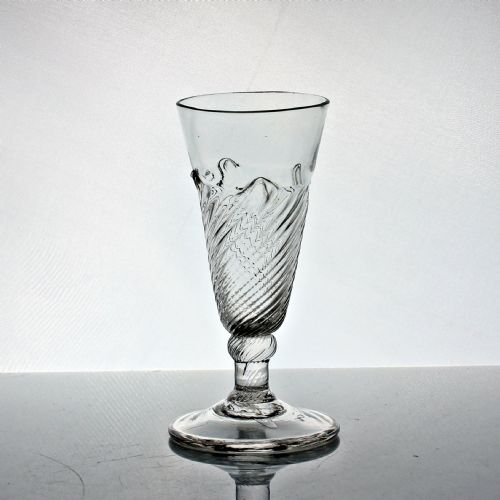


Engraved Ale Flute
These engraved ale flute pieces are tall drinking vessels designed for grain brews, offering collectors a tactile link to Georgian and Edwardian taverns.
Engraved Ale Flute
When you search for an engraved ale flute, you are looking at tall drinking glasses designed specifically for serving ale, stout, and similar brews. The selection brings together Georgian and Edwardian examples that showcase traditional British stemware forms.
You are most likely to meet 18th Century pieces featuring characteristic narrow bowls and robust feet. These antique specimens often display detailed floral or agricultural motifs across the clear glass surface.
How they were made
These vessels rely primarily on lead glass, clear glass, and flint glass manipulated by skilled hands to create distinctive forms. Craftsmen shaped the metal while hot, applying folded feet and cutting facets to catch the light.
Decoration often involved wheel engraving to depict hops and barley directly onto the bowl. More intricate examples incorporated enamel or coloured elements within the stem to add visual contrast.
Engraved Ale Flute Retail Price Guide 2026
Typical asking prices for engraved ale flute among the pieces listed under this phrase on Sellingantiques today, from the lower quarter to the upper quarter. They describe what is for sale here now, not the wider market.
What varies in quality
The sophistication of the engraving separates ordinary items from superior examples. Crisp, deeply cut motifs of hops and barley show a higher level of artisan skill than shallow, hasty surface scratches.
The complexity of the stem structure also dictates worth within the range. Double series opaque twists and coloured strands demand greater mastery than plain or simple balustroid stems.
The Engraved Ale Flute Glossary
- Ale flute
- A tall, narrow drinking glass specifically shaped to serve ale and retain carbonation. This form keeps the head lively.
- Balustroid stem
- A heavy, swelling stem shape reminiscent of architectural balusters popular in earlier periods. It provides a sturdy grip for the drinker.
- Opaque twist
- A decorative technique inside the glass stem using white or coloured enamel threads drawn into spirals. This creates a striking optical effect.
- Folded foot
- A base edge turned underneath during manufacture to thicken and strengthen the rim. This prevents chipping during everyday tavern use.
- Hop and barley
- Traditional agricultural motifs commonly engraved onto beer and ale vessels. They celebrate the primary ingredients of the brew.
Engraved Ale Flute: Frequently Asked Questions
What is an engraved ale flute?
An engraved ale flute is a tall, narrow drinking glass designed to serve historical brews. They feature long bowls and sturdy feet suited to tavern tables.
Most examples in this selection date from the Georgian and Edwardian periods. Their surfaces often display detailed wheel-engraved motifs celebrating agricultural themes.
How were these glasses used?
These vessels served ale, beer, and stout during social gatherings and tavern meals. The narrow profile helped maintain the head on the beverage.
Collectors today usually display them in cabinets rather than using them for dining. Their delicate stems and antique glass require careful preservation.
How do I spot an 18th Century piece?
Eighteenth-century examples typically show characteristic pontil marks on the underside of the foot. The metal often exhibits small bubbles and imperfections unique to early hand-blown glass.
Stem construction also offers strong clues regarding age. Complex opaque twists and balustroid forms generally point firmly toward the Georgian era.
Why are hops and barley engraved?
Hops and barley represent the core ingredients used in brewing traditional British ales. Artisans engraved these botanical themes to honour the agricultural origins of the drink.
Such motifs serve as a reliable indicator of tavern glassware. They connect the drinking vessel directly to its historical purpose.