
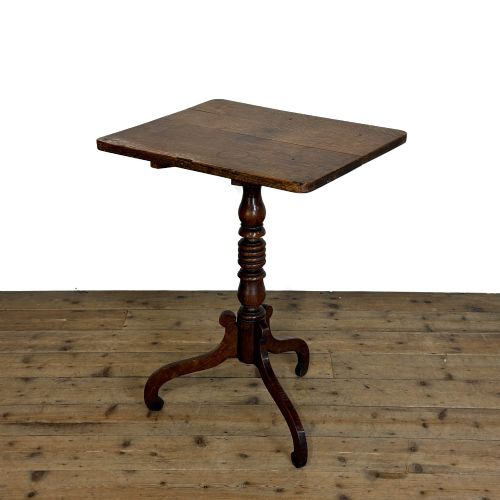
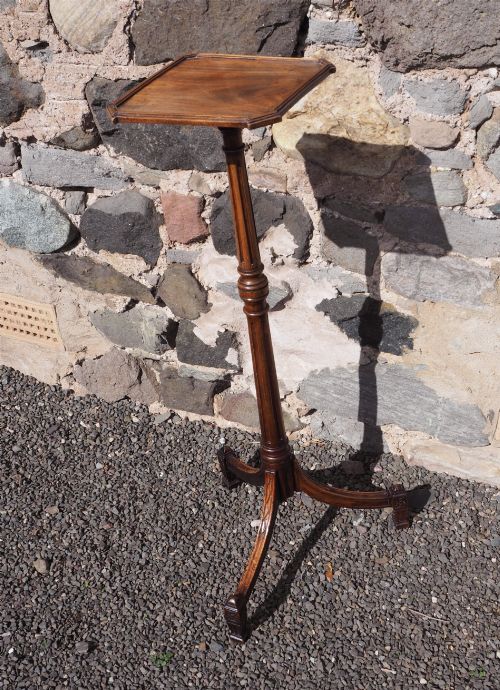
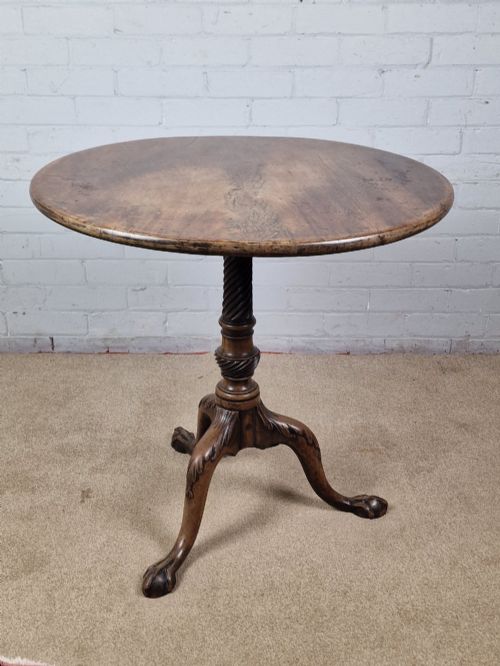
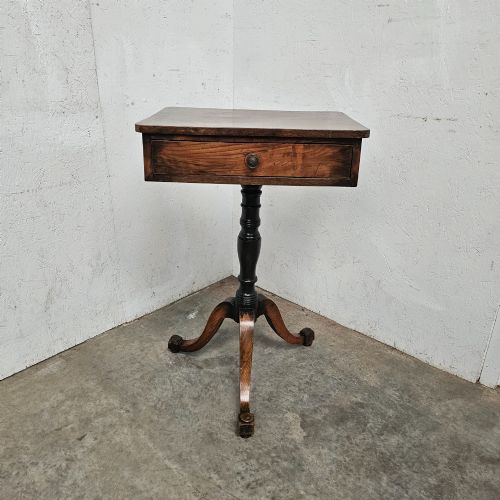
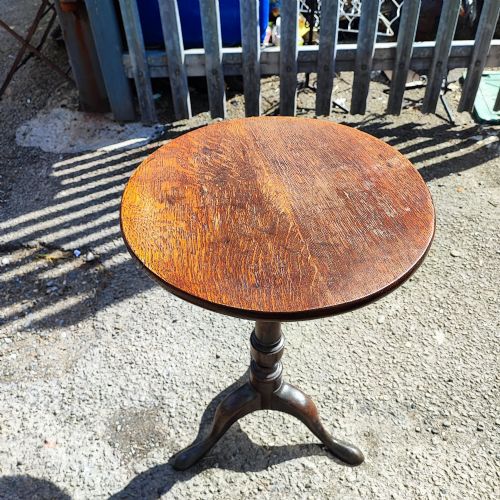
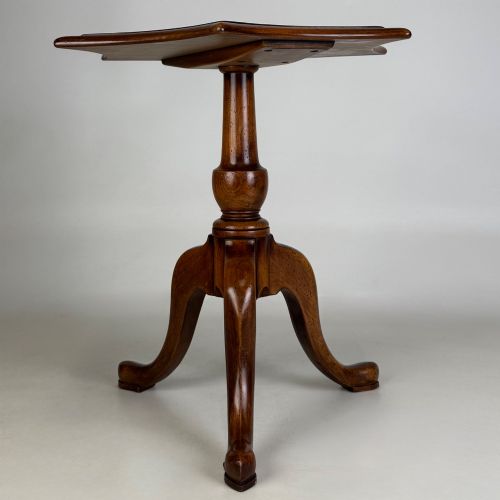
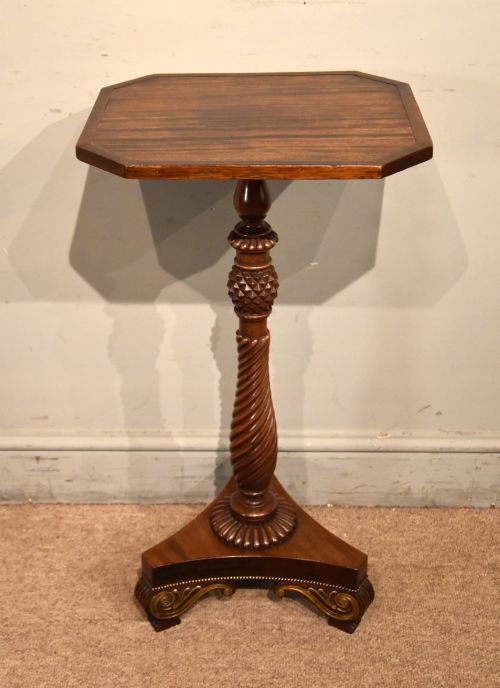
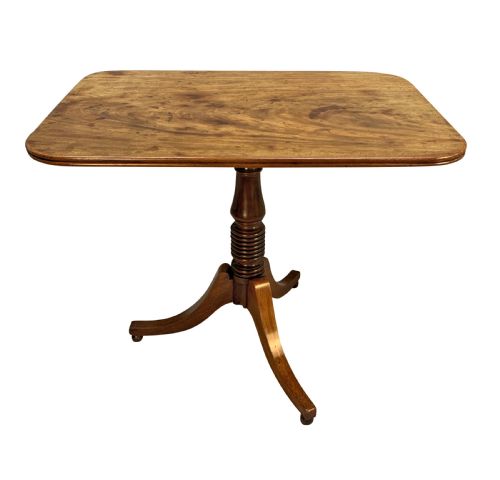
Georgian Tripod Pedestal
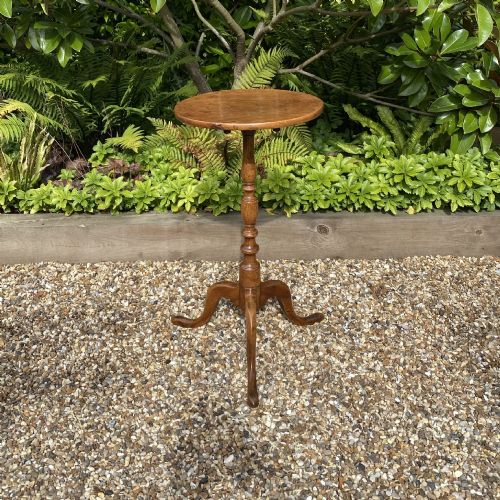
A georgian tripod pedestal brings sturdy three-legged balance and a central column to small tables designed for wine, tea and books.
Georgian Tripod Pedestal
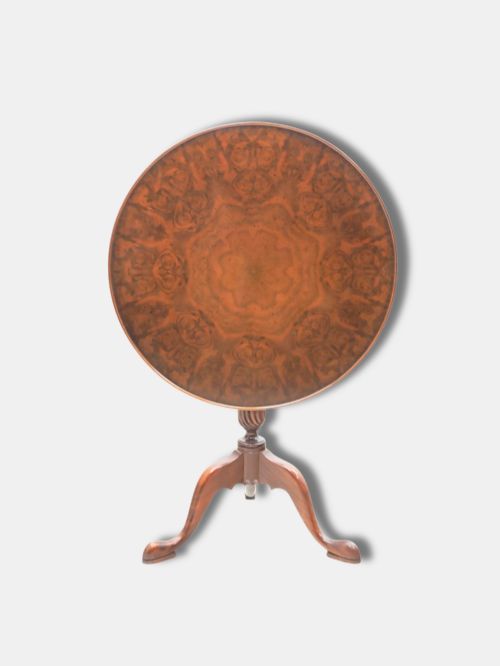
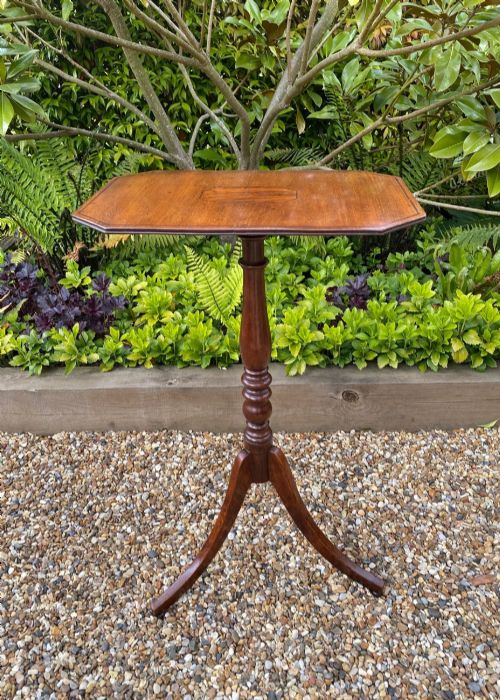
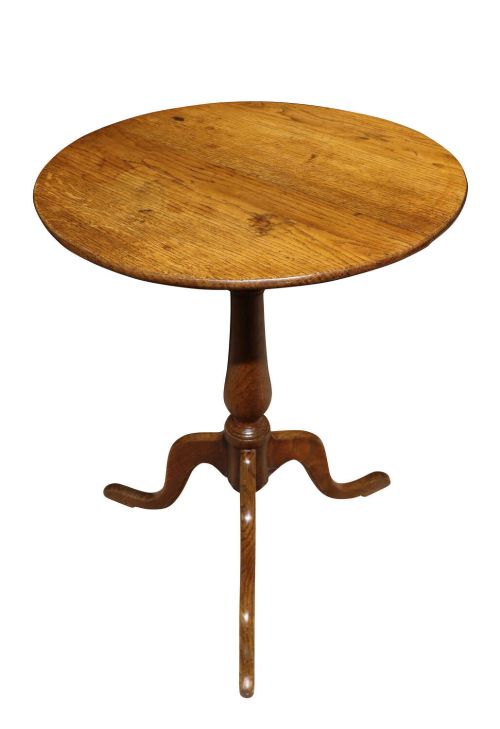
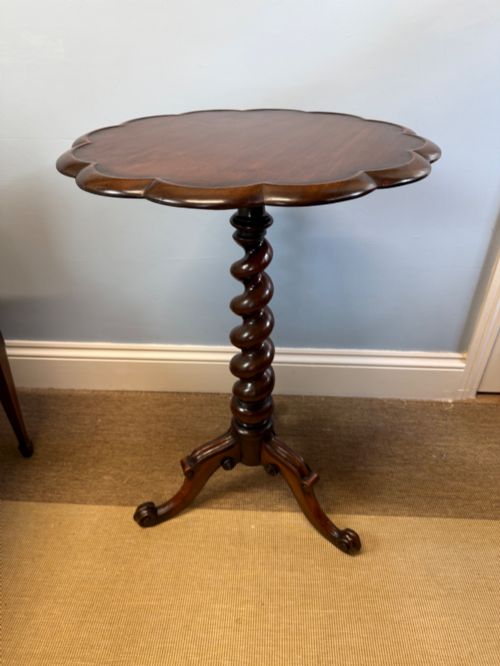
A georgian tripod pedestal unites a central upright shaft with three splayed legs beneath circular or shaped tops, serving as wine tables, candle stands and occasional tables. These pieces emerge chiefly from the eighteenth and nineteenth centuries, spanning George II, George III and Regency periods.
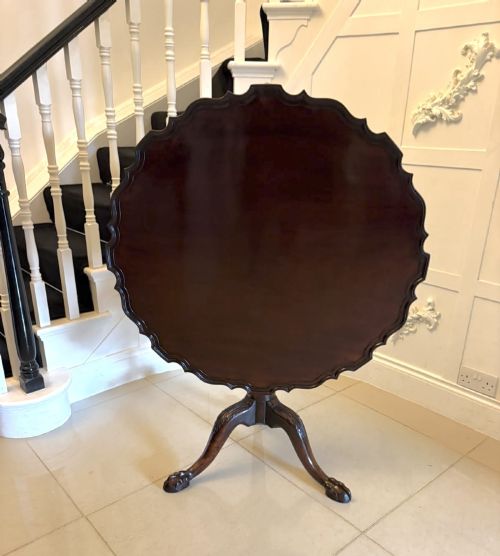
Mahogany dominates the surviving examples, alongside walnut, oak, elm and fruitwood. Tables appear with fixed tops or tilting mechanisms, sometimes featuring pie crust edges or trays adapted for domestic service.
Later revivals from the Edwardian era and twentieth century continue the tripod format using walnut and oak. Buyers encounter authentic eighteenth-century originals alongside nineteenth-century interpretations and subsequent period revivals.
Materials and Construction
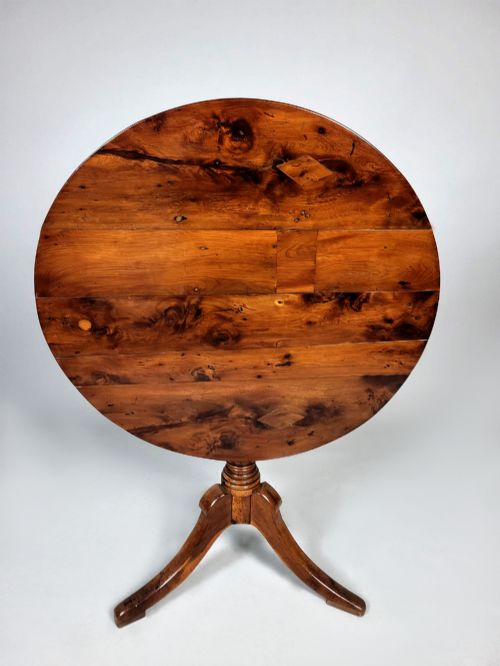
Cabinetmakers constructed these pieces using dense hardwoods like mahogany, walnut and oak for stability along the central shaft and slender legs. Timbers were selected for grain pattern, particularly in tabletop surfaces and fiddle-back veneers.
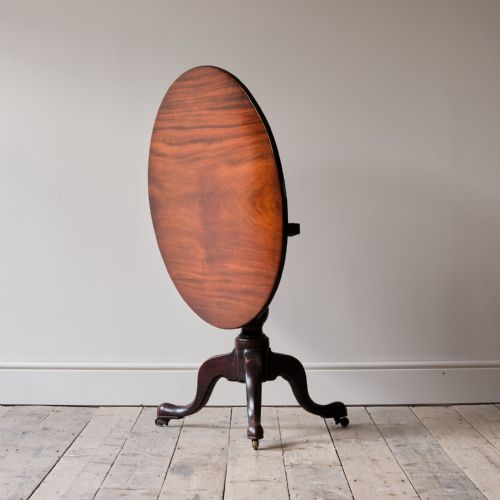
Joinery combined turned pedestals with dovetail or tenon joints connecting the three legs to the central column. Tilt-top mechanisms utilised wooden or brass catches to allow tops to pivot upright when not in use.
Current listings span the eighteenth, nineteenth and twentieth centuries, using mahogany, walnut, oak, elm, fruitwood and brass.
Distinctions in Quality
Construction fidelity separates standard utilitarian tables from finer examples, visible in the snugness of the leg joints and the turning of the central column. Superior pieces maintain absolute rigidity in the tripod base without wobble.
Timber selection and surface finish dictate the standing of a piece, with figured mahogany and walnut showing depth through traditional polishing methods. Carved details on knees and feet, such as claw and ball motifs, indicate higher workshop ambition.
Gillow
The Georgian Tripod Pedestal Glossary
- Tilt top
- A tabletop mounted on a hinge mechanism that pivots vertically to save space against a wall when not in use.
- Tripod base
- A support structure composed of three splayed legs radiating from a central pedestal column.
- Torchere
- A tall, slender stand designed to elevate a candle or lamp, often sharing the tripod pedestal form.
- Pie crust edge
- A raised, carved rim around a circular tabletop featuring decorative scalloped or undulating curves.
Georgian Tripod Pedestal: Frequently Asked Questions
What were georgian tripod pedestal tables used for?
These tables served primarily for holding wine glasses, tea equipment or candles during evening gatherings in eighteenth-century reception rooms.
Their lightweight construction allowed servants to move them easily around a room depending on the immediate requirements of guests.
How do I tell an original from a revival?
Examination of the timber shrinkage, fixings and secondary woods reveals the age of the piece beneath the polish. Eighteenth-century examples show hand-cut joinery and signs of historical wear appropriate to their handling.
Revival pieces from the Edwardian era or later exhibit machine-turned uniformity and different internal construction methods.
Why do some tops tilt?
Tilting mechanisms allowed households to store tables flat against walls or in corners to maximise floor space in smaller parlours.
This practical feature also protected polished timber surfaces from accidental damage when the furniture was unoccupied.
How do I care for mahogany and walnut surfaces?
Keep these pieces away from direct heat sources and strong sunlight to prevent the timber from drying out or splitting. Regular dusting with a soft cloth preserves the polish without needing heavy chemical treatments.