






Georgian Transfer Printed Plate
A georgian transfer printed plate brings pictorial blue and white ceramic history directly to the table.
Georgian Transfer Printed Plate
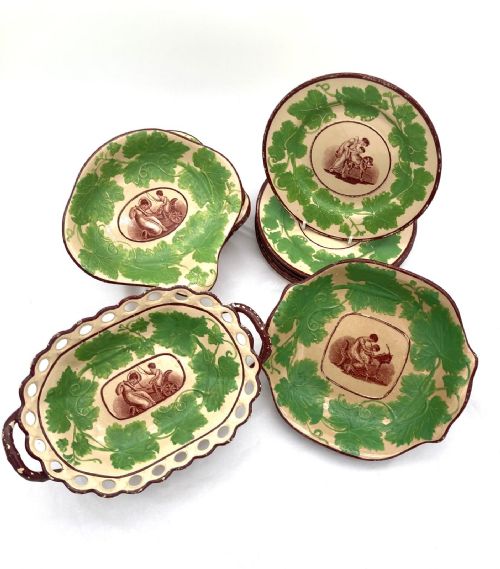
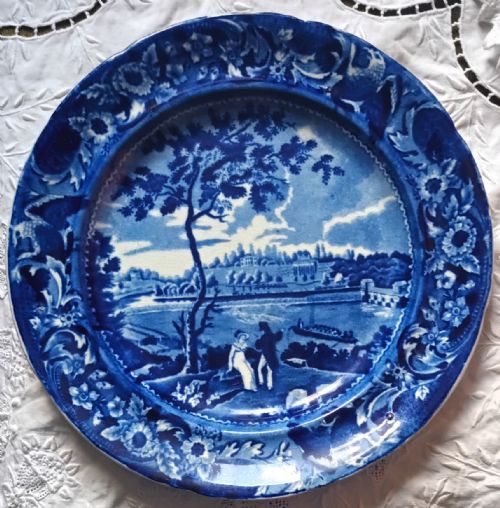
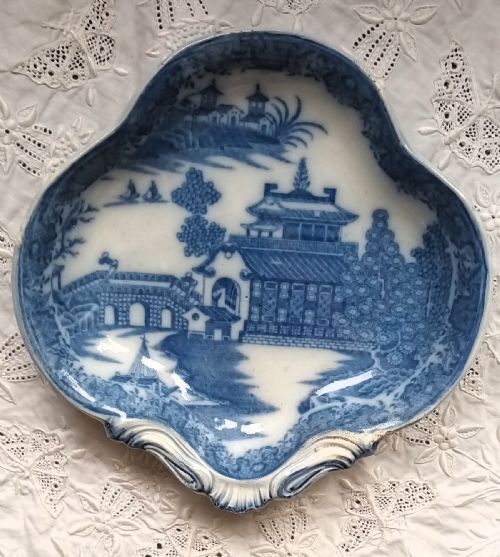
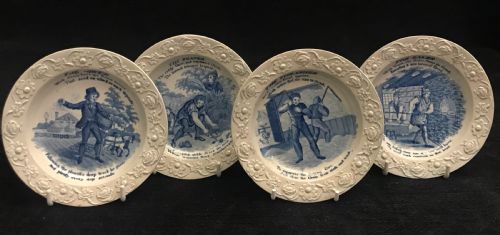
A georgian transfer printed plate comprises earthenware and pearlware ceramic bodies decorated with blue and white printed imagery. These tablewares depict topographical views, classical ruins, architectural scenes, and rustic subjects such as The Beemaster and The Cowman.
The objects on this page span the georgian, regency, and nineteenth-century periods, taking the form of individual plates, serving dishes, platters, and dessert services. Makers apply transfer-printing techniques to ceramic glazes to produce detailed pictorial narratives across each earthenware surface.
Collectors encounter named topographical views alongside romantic chinoiserie patterns and pastoral designs like the Returning Woodman. These items function as decorative plates or serving vessels, carrying cobalt pigment designs fired beneath lead glaze.
How they were made
Potters shape earthenware and pearlware bodies before applying cobalt pigment transfers to the ceramic surface. Engraved copper plates press the blue design onto tissue paper, which transfers the pigment onto the biscuit ceramic before glazing.
A protective lead glaze seals the transfer print during kiln firing, producing the glossy finish characteristic of these nineteenth-century ceramics. The interaction between the cobalt pigment and the glaze creates the distinct blue and white tones seen on each plate.
Listings feature earthenware, pearlware, and ceramic glaze materials across the georgian, regency, and nineteenth-century periods.
What varies in quality
The sharpness and clarity of the blue and white transfer print determine the visual success of the piece, with finer lines distinguishing superior examples. Smudging during the transfer process or uneven application of the lead glaze alters the crispness of the pictorial scene.
The complexity of the subject matter, ranging from intricate architectural ruins to simple pastoral figures, influences the artistic merit of the ceramic. The presence of a known maker mark or a specific named pattern elevates the historical interest of the earthenware.
Stubbs·Thomas Lakin·Brameld and Co·John Rogers and Son·Spode
The Georgian Transfer Printed Plate Glossary
- Transferware
- A pottery decoration technique where an engraved copper plate prints a design onto paper, which is then transferred onto the unglazed ceramic body. This method allows intricate pictorial scenes to be applied rapidly to earthenware.
- Pearlware
- A refined earthenware developed by Josiah Wedgwood featuring a bluish-white lead glaze that masks the yellowish tint of the clay body. It serves as the primary ceramic material for many early nineteenth-century tablewares.
- Cobalt pigment
- A metallic oxide used to achieve the deep blue colour in underglaze ceramic decoration. It withstands high kiln temperatures without losing its distinct hue.
- Lead glaze
- A liquid silica and lead mixture applied over the decorated ceramic body and fired to create a shiny, protective surface. It seals the earthenware and enhances the vibrancy of the blue pigment underneath.
- Buffet
- A raised earthenware dish or stand used for serving bread or food items during meals. These stands share the same blue and white transfer-printed aesthetics as standard plates.
Georgian Transfer Printed Plate: Frequently Asked Questions
What is a transfer printed plate?
A transfer printed plate is a ceramic dish decorated by pressing an inked paper design onto the surface before glazing and firing.
Potters use copper plates to transfer detailed blue scenes onto earthenware and pearlware bodies.
How do I date these plates?
Dating relies on stylistic clues, ceramic bodies like pearlware, and specific maker marks or named historical patterns.
Most examples date from the georgian and regency eras through the early nineteenth century.
Can I use them for dining?
These historical ceramics function primarily as decorative display items rather than everyday tableware.
Gentle hand washing preserves the lead glaze and the delicate earthenware bodies.
What subjects appear on the patterns?
Popular designs feature architectural ruins, foreign landscapes, and pastoral scenes with figures and animals.
Named views often reference specific locations or literary and artistic themes of the period.