



Georgian Tin Glazed Earthenware
Georgian tin glazed earthenware brings together soft ceramic bodies and opaque white surfaces carrying hand-painted pigments from the eighteenth century.
Georgian Tin Glazed Earthenware
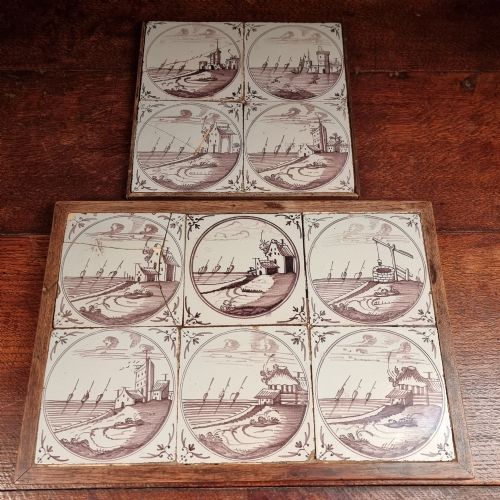
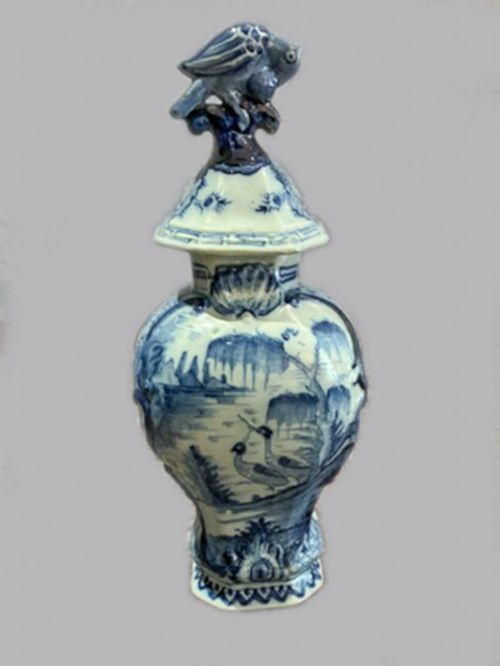
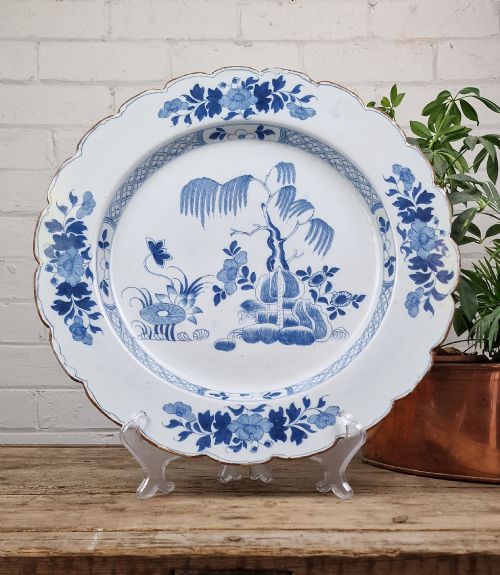
When searching for georgian tin glazed earthenware, collectors encounter domestic and decorative vessels produced across the eighteenth century and into the nineteenth century. The selection centres on chargers, plates, bowls, tiles, and apothecary jars originating from English potteries in London, Bristol, and beyond, alongside continental counterparts.
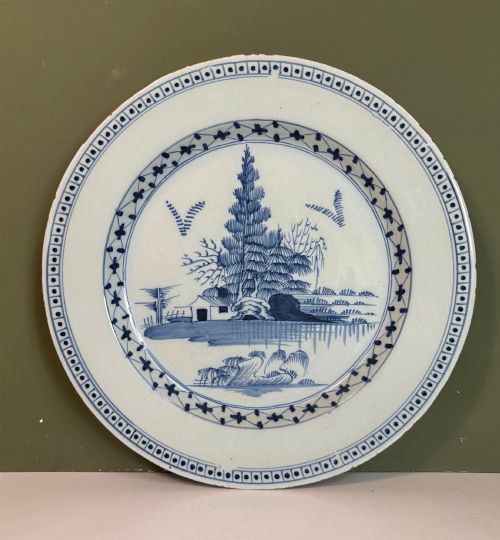
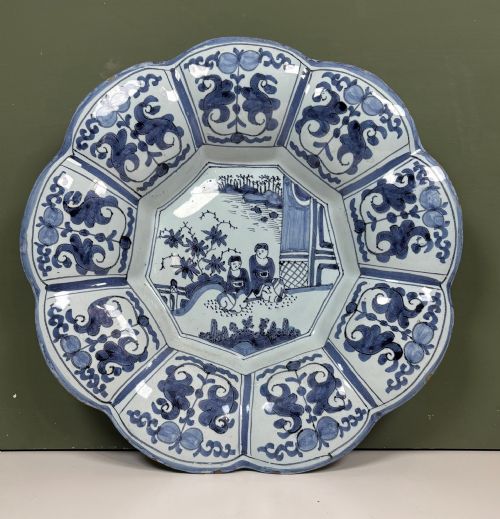
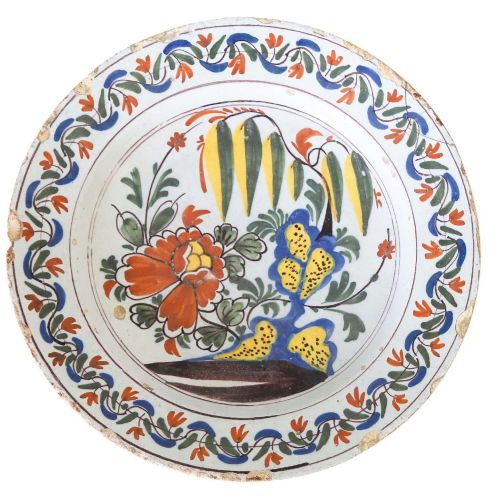
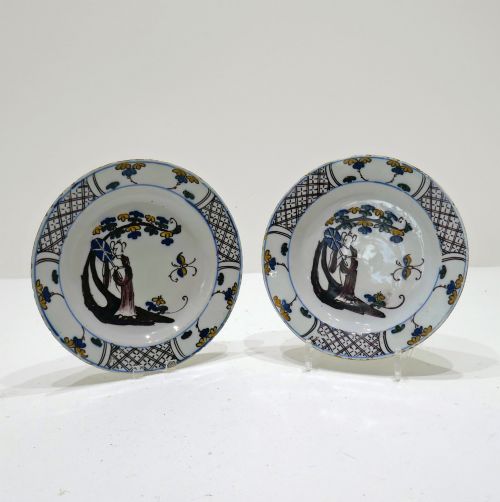
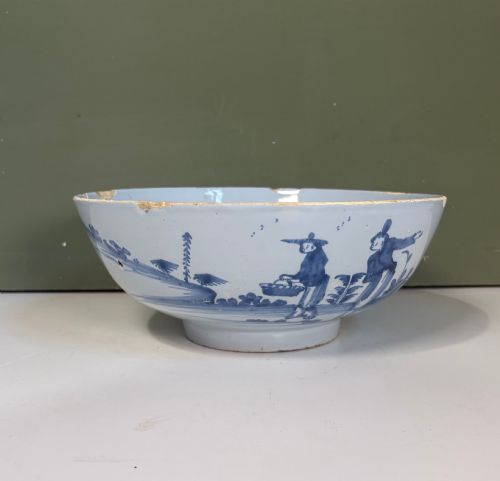
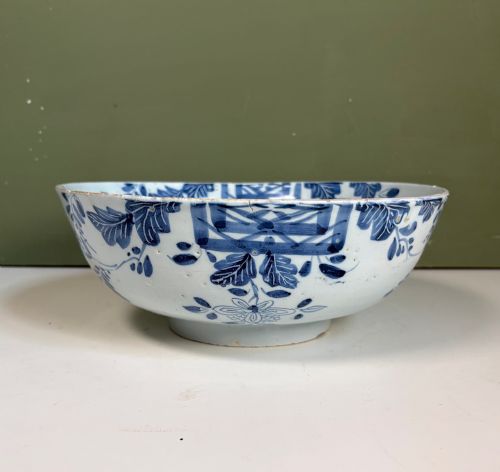
The most common formats on this page are circular chargers and plates, frequently painted with blue and white motifs or polychrome floral and Chinoiserie designs. Larger wall plaques, drug jars, and inkwells also appear, reflecting the diverse domestic and apothecary uses of the period.
Materials and production methods
Potters formed these ceramic objects from local earthenware clay bodies, shaping them on the wheel or pressing them into moulds. Once dried and bisque-fired, artisans coated the pieces in an opaque tin glaze that provided a smooth, milky white background for decoration.
Painters applied cobalt pigment, manganese, and other metal oxide colours directly onto the absorbent unfired glaze surface before a final kiln firing fixed the design. This technique required swift precision, as the porous glaze immediately absorbed the liquid paint.
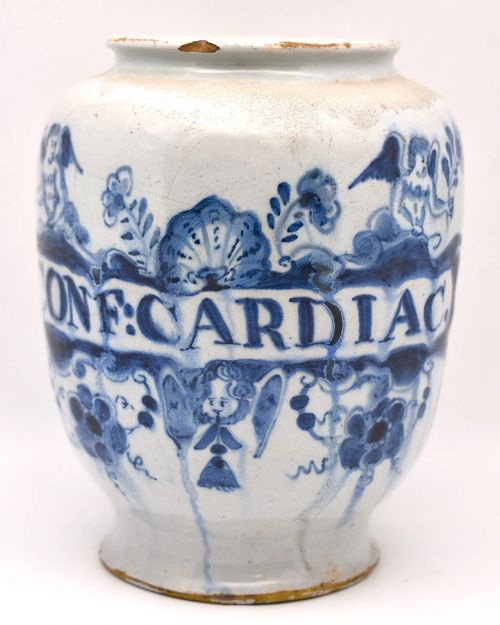
Drug jars labelled with cardiac remedies remind us that eighteenth-century medicine relied heavily on sweetened syrups and mysterious herbal extracts.
Distinctions in quality and execution
Quality in these ceramics rests primarily upon the skill of the brushwork and the stability of the glaze during firing. Superior examples display confident, fluid hand-painted decoration with crisp botanical or figural details, whereas lesser pieces show rushed or blurred pigment application.
The smoothness and opacity of the tin glaze itself dictate visual success, with finer specimens exhibiting minimal surface pitting or kiln debris. The complexity of the palette, particularly in multi-coloured polychrome and Chinoiserie compositions, further separates standard wares from exceptional examples.
Lambeth Pottery·Bristol Delft
The Georgian Tin Glazed Earthenware Glossary
- Tin-glazed earthenware
- Earthenware pottery covered with a glaze made opaque by the addition of tin oxide. This creates a white surface suitable for painted decoration.
- Charger
- A large decorative plate intended for display on a wall or sideboard rather than for everyday dining use.
- Chinoiserie
- European artistic styles reflecting Chinese motifs and decorative themes. Potters frequently painted these whimsical landscapes in blue or polychrome palettes.
- Apothecary jar
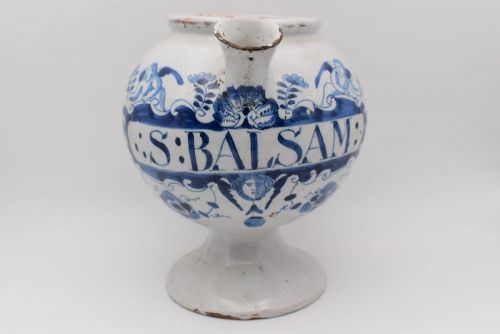
- A ceramic vessel used by chemists and pharmacists to store dry drugs, wet medicines, or ointments. These containers often bear Latin inscriptions or identifying labels.
Georgian Tin Glazed Earthenware: Frequently Asked Questions
How were apothecary jars used?
Apothecary jars held dry drugs, syrups, and ointments in eighteenth-century pharmacies and dispensaries. Pharmacists identified the contents using painted labels or Latin inscriptions directly on the ceramic surface.
These jars sat upon wooden shelves in shops and hospitals before finding their way into modern collections as decorative objects.
Are these pieces safe for food?
These antique ceramics are intended for display and collection rather than daily culinary use. The historic earthenware bodies and tin glazes can be delicate and vulnerable to modern detergents.
Displaying them on walls or within cabinets preserves the fragile glaze and prevents damage to the hand-painted surfaces.
How do I identify English versus continental pieces?
English pieces often exhibit distinct clay bodies and palette choices associated with London and Bristol potteries. Continental examples, such as Dutch or Spanish wares, frequently display different rim profiles and glaze characteristics.
Comparing the potting weight and blue tones helps determine the probable geographic origin.