

Georgian Tabletop Drawers
Georgian tabletop drawers comprise compact mirrors and small chests built to sit on a surface, offering neat storage and refined period detail for the home.
Georgian Tabletop Drawers
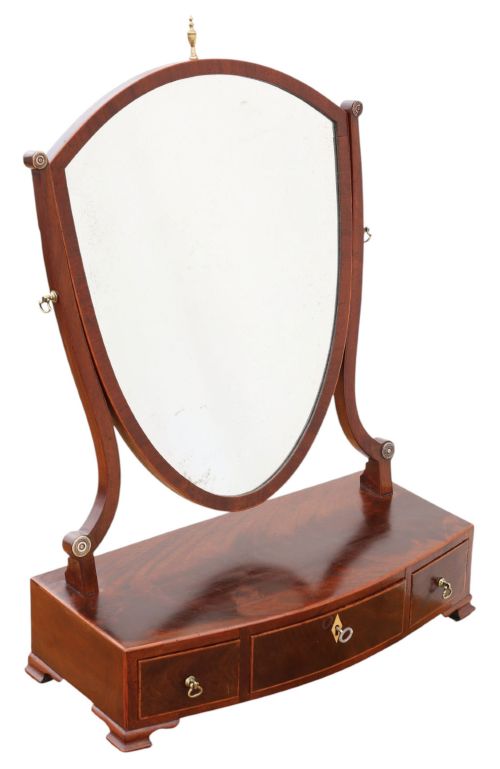
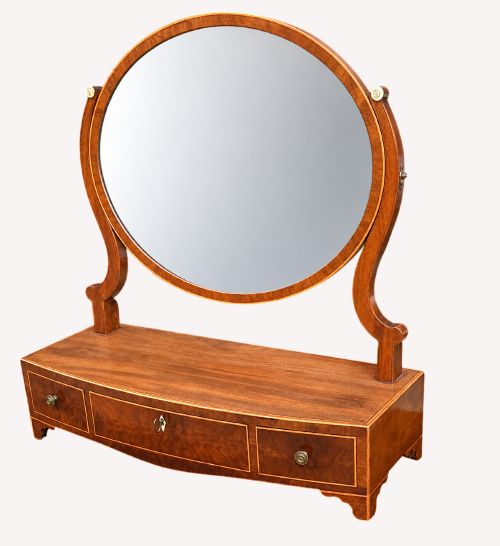
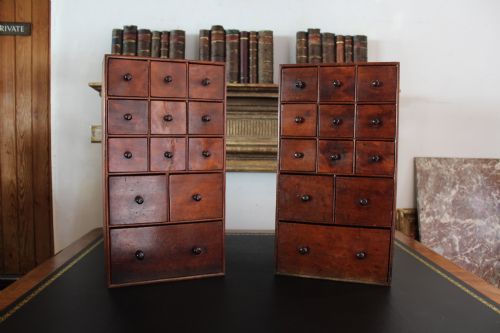
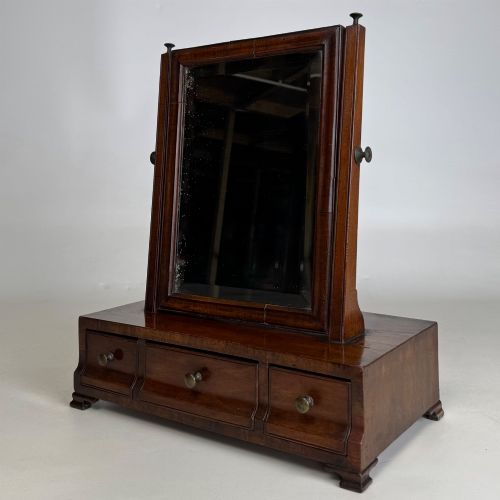
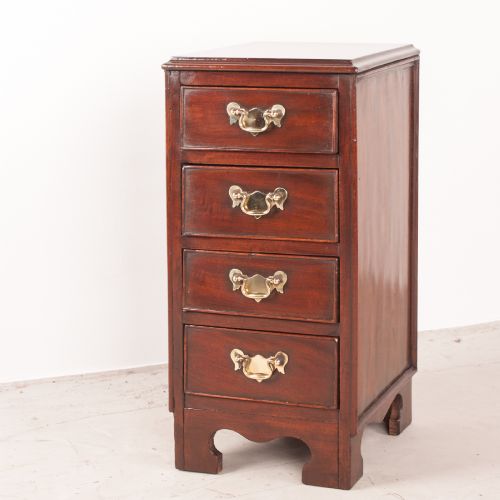
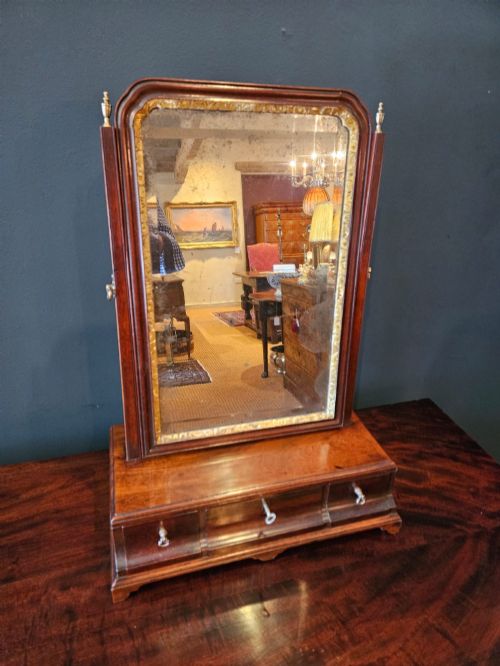
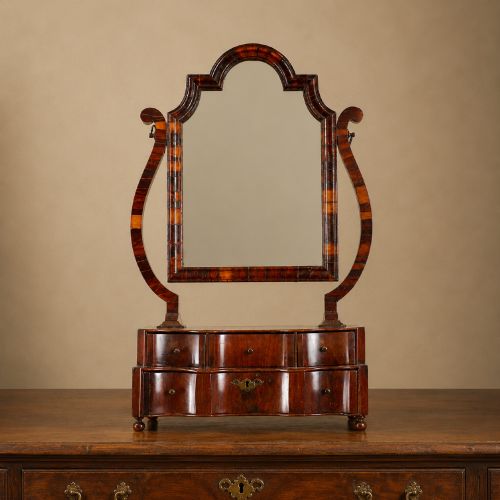
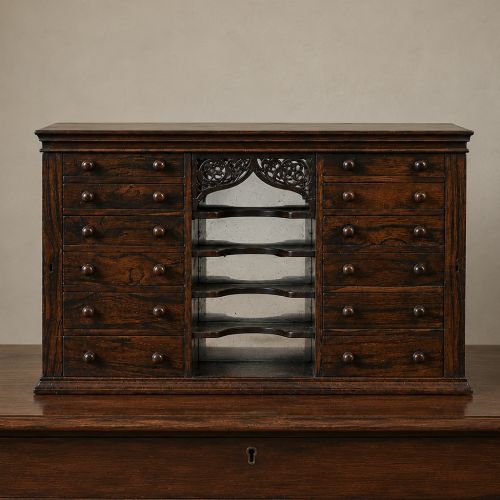
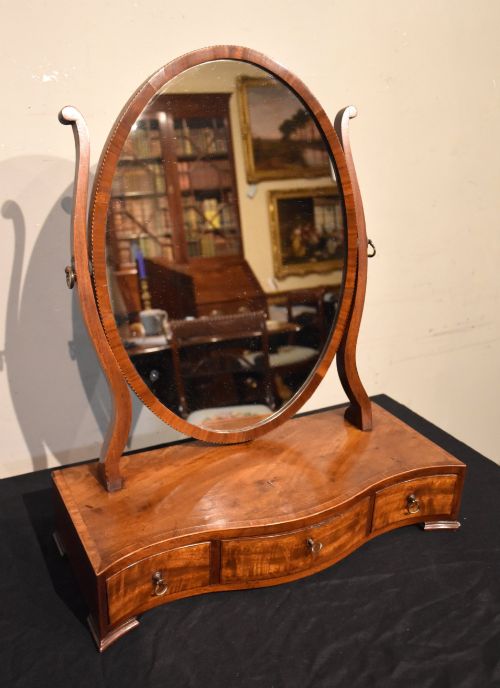
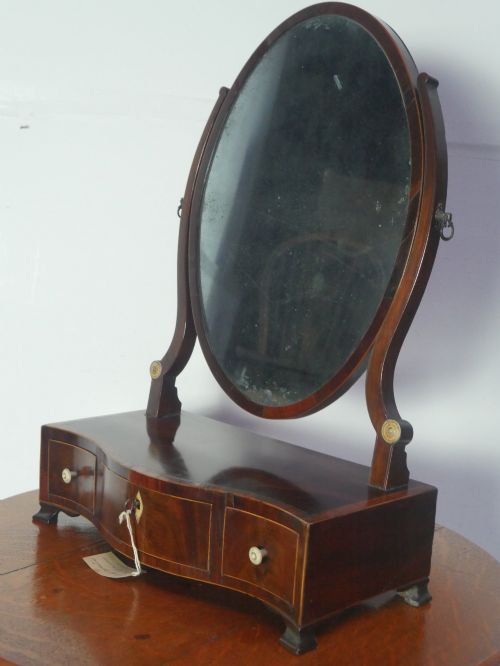
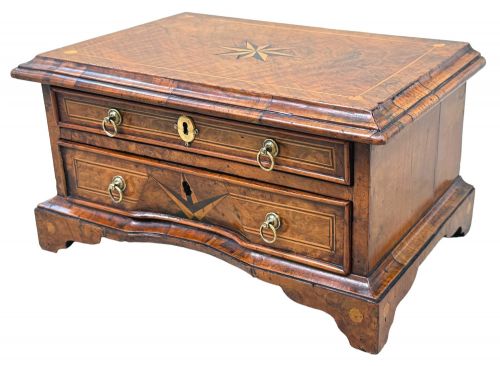
When searching for georgian tabletop drawers, collectors encounter a diverse group of small storage pieces and mirrors designed for desktop or dressing table use. The selection spans miniature chests of drawers, spice cabinets, and apothecary chests alongside dressing table mirrors fitted with small drawer bases. These objects date primarily from the eighteenth and nineteenth centuries, encompassing George II, George III, Regency, and Edwardian periods.
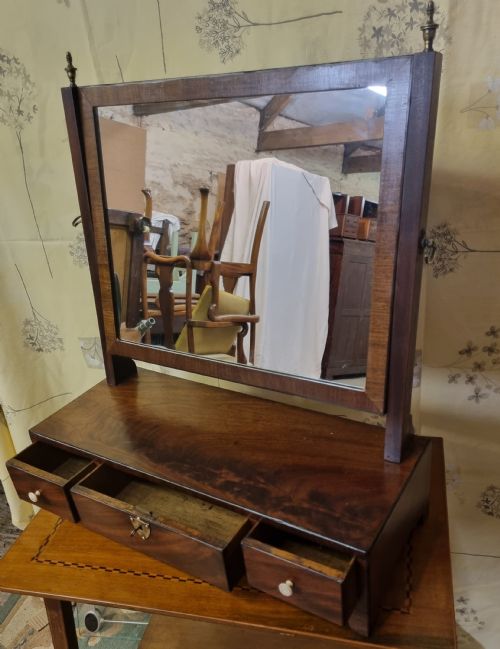
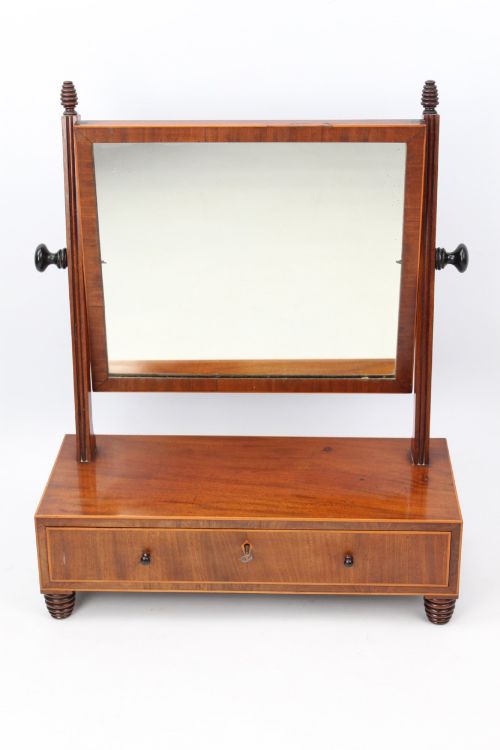
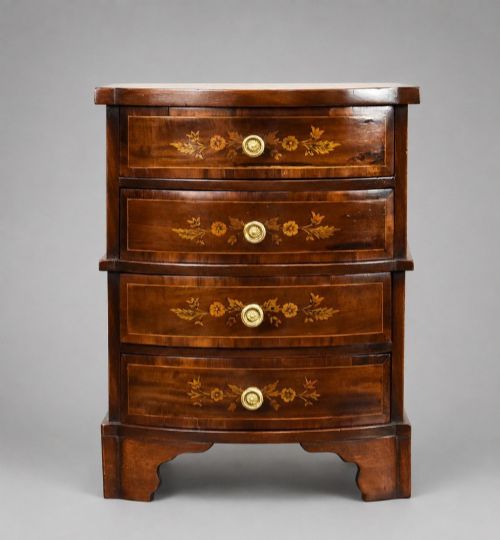
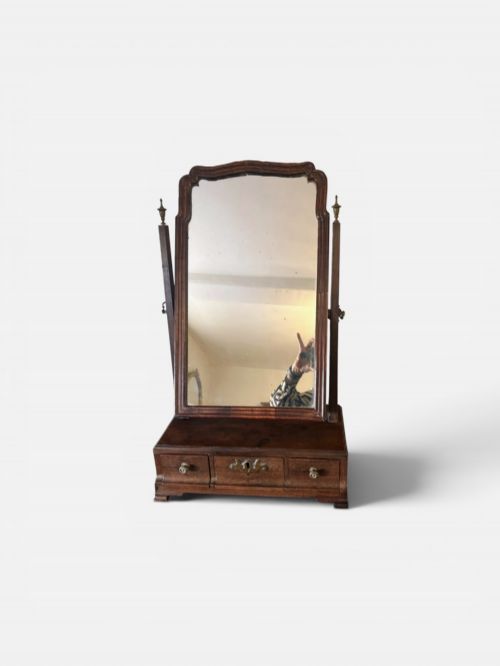
The most common forms on this page are dressing mirrors and toilet mirrors featuring small drawer bases in mahogany and walnut. Miniature chests of drawers, including bow front and serpentine designs, appear alongside spice cabinets and collector cabinets. Most examples follow traditional forms intended to hold cosmetics, trinkets, or small valuable items.
How they were made
Cabinetmakers constructed these pieces predominantly using native and imported timbers such as mahogany, walnut, oak, and elm, often applying crossbanding, marquetry inlay, and satinwood to enhance the visual appeal. Drawer construction typically relied on traditional dovetail joints, reflecting careful craftsmanship suited to miniature and tabletop scales.
Mirrors incorporated glass plates held within swinging frames, supported by upright arms attached to the drawer bases. Brass hardware, including small knobs, handles, and swing hinges, finished the pieces, while secondary woods like pine or oak formed internal drawer linings and back panels.
What varies in quality
Quality in these pieces rests on the choice of timber and the precision of the cabinetwork. Finer examples display carefully selected grain patterns, intricate crossbanding, and delicate marquetry inlay that elevate the appearance of a small chest or mirror base.
Proportion and execution of detail distinguish superior work from simpler items. Well-executed drawer dovetails, original brass hardware, and balanced mirror frames demonstrate the skill of the maker and maintain the integrity of the period design.
The Georgian Tabletop Drawers Glossary
- Toilet mirror
- A small mirror mounted on a miniature chest of drawers or a box base, designed to sit on a dressing table. These pieces often feature pivoting swing frames and small compartments.
- Dressing table mirror
- A freestanding glass mirror attached to a tabletop base containing one or more small drawers. They gained popularity during the eighteenth century for grooming and personal care.
- Miniature chest of drawers
- A small-scale chest built with working drawers, often created as an apprentice piece or a detailed desk accessory. They replicate the full-sized furniture styles of their respective periods.
- Marquetry
- A decorative technique of applying thin veneers of different woods to form geometric or pictorial patterns on the surface. It appears frequently on drawer fronts and cabinet tops.
- Crossbanding
- A narrow strip of veneer applied around the border of a panel or drawer front with the grain running perpendicular to the main surface. This frames the wood and adds visual depth.
- Serpentine front
- A furniture front featuring a concave centre flanked by two convex ends, creating a gentle wave shape. This curved form requires advanced woodworking skill to execute on small drawers.
Georgian Tabletop Drawers: Frequently Asked Questions
What were georgian tabletop drawers used for?
These small pieces served practical storage needs on tabletops and dressing surfaces. Owners kept cosmetics, jewellery, trinkets, spices, or small medical items inside the drawers.
Mirror bases provided a dual function by offering enclosed storage beneath the pivoting glass. Their compact size allowed them to be moved easily between rooms or placed on desks.
How do you date a tabletop mirror?
Dating relies on observing the timber species, construction methods, and overall furniture style. Walnut and early mahogany indicate eighteenth-century origins, while satinwood inlay points towards later periods.
Hardware details, such as the shape of the mirror uprights and the presence of hand-cut dovetails, offer further clues to the decade of manufacture.
Where should I place a tabletop chest?
These compact chests suit dressing tables, sideboards, chests of drawers, and desks. Their small footprint allows them to sit comfortably on narrow surfaces without overwhelming a room.
They function well for organising modern accessories like watches, keys, and small keepsakes while adding period character to an interior.
What is the difference between a toilet mirror and a dressing mirror?
The terms are often used interchangeably to describe a mirror mounted on a small drawer base. Both variants sat upon tables to assist with personal grooming.
Some historical contexts distinguish them by slight variations in size and drawer configuration, but both combine a pivoting glass frame with functional storage.