

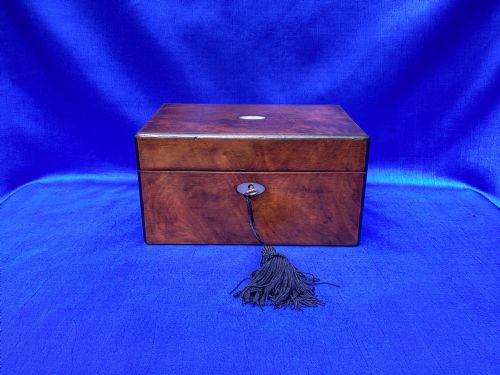
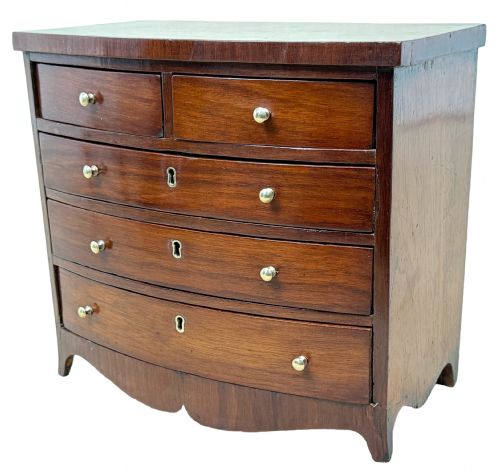

Mahogany Jewellery Chest
A mahogany jewellery chest brings small-scale cabinetry into daily use, offering fitted drawers for keepsakes and trinkets.
Mahogany Jewellery Chest
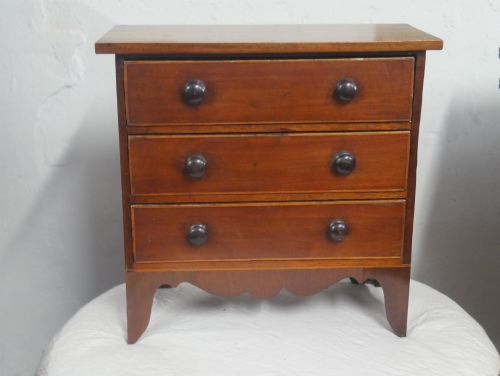
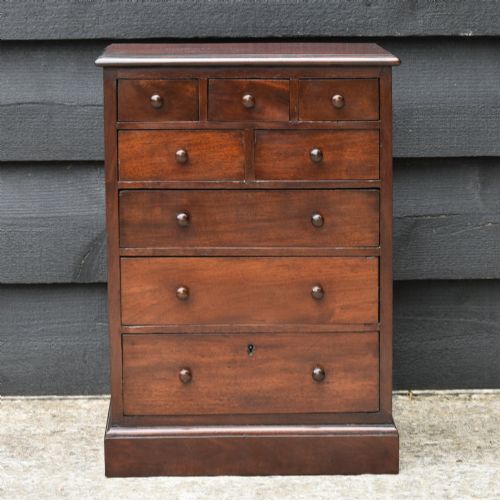
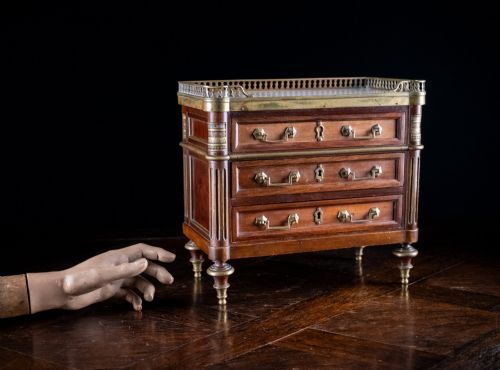
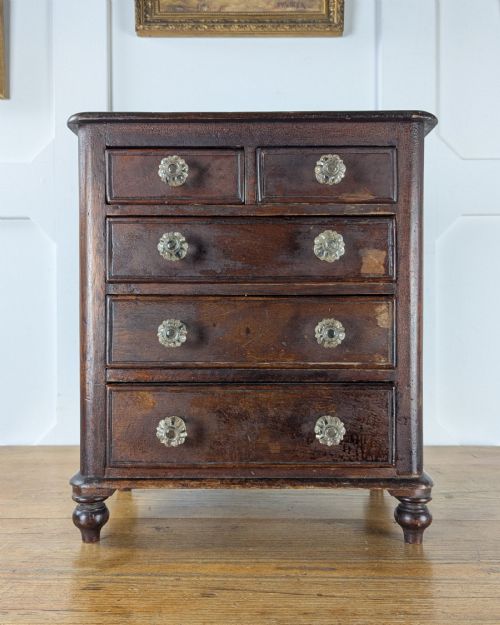
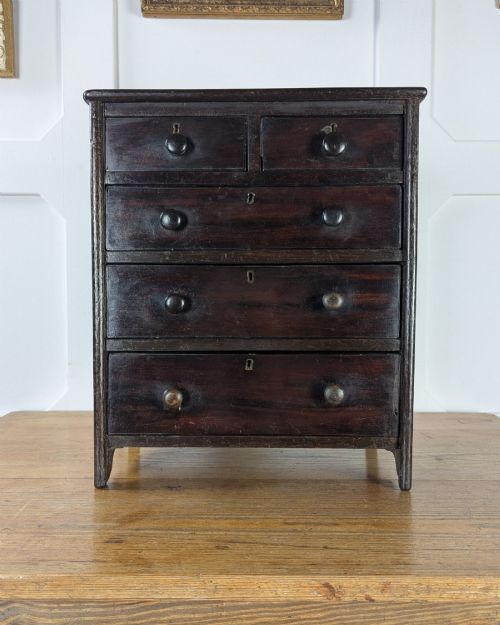
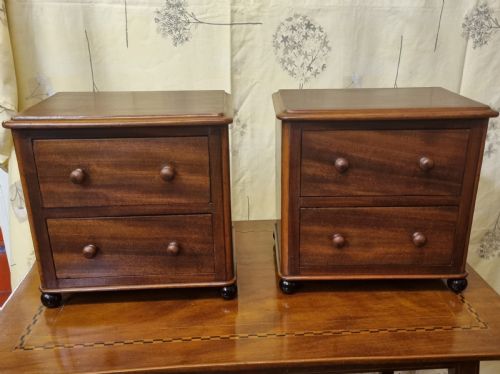
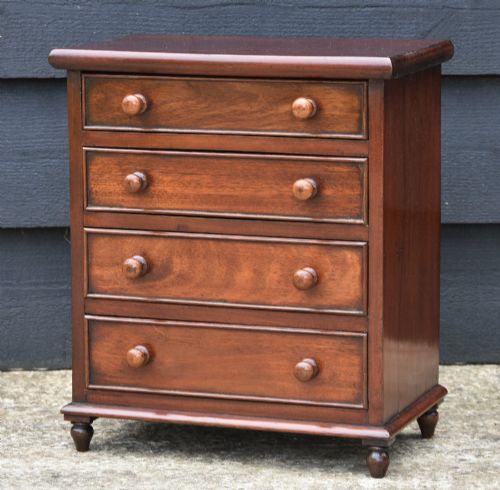
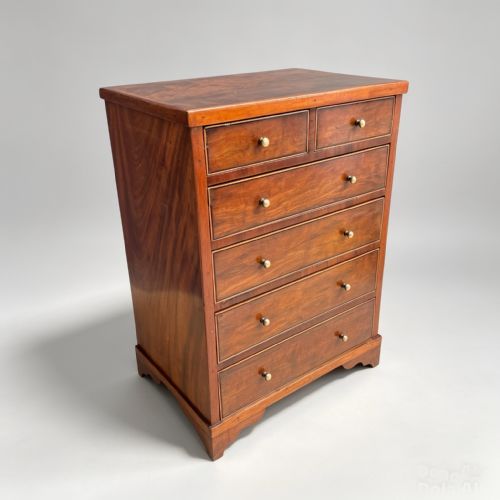
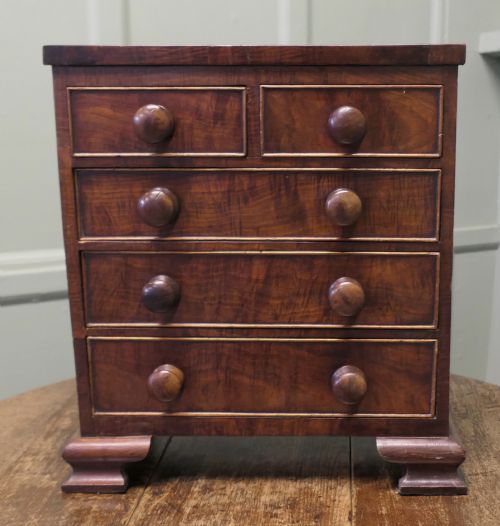
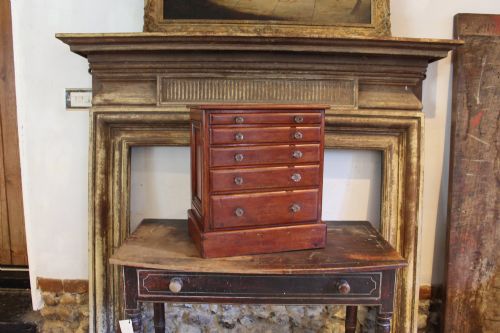
A mahogany jewellery chest takes the form of a scaled-down cabinet, often resembling a miniature chest of drawers or a tabletop commode. These pieces date across the Georgian, Victorian, and Edwardian periods, appearing in workshops as master pieces or specialised containers.
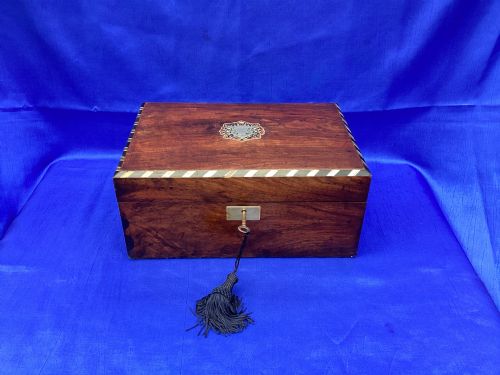
The most frequent examples on this page are Victorian and nineteenth-century miniature chests of drawers, alongside dedicated jewellery boxes and watch chests. Makers also produced small cabinets, sewing boxes, and specimen cases to hold modest valuables.
Originating as practical items for dressing tables or horological workbenches, these small chests served to secure rings, watches, and personal papers. Their domestic role persists today as collectors seek them for compact storage.
How They Were Made
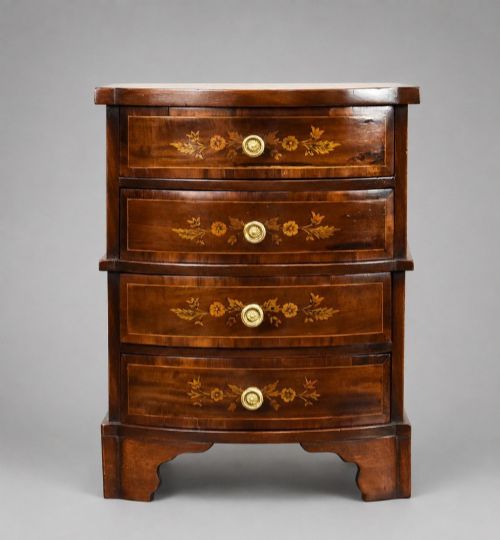
Cabinet makers built these pieces primarily using solid mahogany, frequently pairing it with secondary woods such as oak and pine for drawer linings and carcase backs. Artisans applied boxwood stringing, marquetry, and mother-of-pearl inlay to decorate drawer fronts and top panels.
Construction relied on traditional joinery, including dovetailed drawer construction and turned wooden feet supporting small frames. Brass handles, escutcheons, and glass elements added functional detail to table cabinets and watch repairer chests.
Listings feature mahogany, oak, pine, and boxwood alongside decorative mother-of-pearl and glass elements.
What Varies in Quality
The distinction between standard utility items and finer examples rests upon the precision of the timber selection and the crispness of the joinery. Superior pieces display well-figured mahogany grain, balanced proportions, and careful attention to secondary timbers.
Decorative additions such as intricate marquetry, fine boxwood inlay, and original brass hardware elevate a piece from simple workshop output to accomplished cabinet work. The depth of the surface patina and the integration of specialised interiors further define the upper tier.
Edwards & Roberts
The Mahogany Jewellery Chest Glossary
- Apprentice piece
- A piece of furniture created by a craftsman to demonstrate skill for guild admission or trade proficiency. These often mirror full-scale chests of drawers in miniature.
- Marquetry
- Decorative veneer work forming pictorial or geometric patterns using various coloured woods. Craftsmen applied this technique to drawer fronts and tabletops.
- Escutcheon
- A protective plate surrounding a keyhole, usually fashioned from brass. It prevents the surrounding wood from wearing down through repeated use of the key.
- Wellington chest
- A tall, slender chest of drawers secured by a hinged locking side stile that fastens with a key. This form appears in miniature formats for secure storage.
- Patina
- The surface sheen and coloration developed by wood over decades through handling and polishing. Collectors value undisturbed surfaces that show age honestly.
Mahogany Jewellery Chest: Frequently Asked Questions
What is a mahogany jewellery chest used for?
These chests provide compact storage for rings, necklaces, and small keepsakes within fitted drawers or lined compartments. They sit neatly upon dressing tables and sideboards.
Historically, similar small cabinets held pocket watches, sewing gear, or specialised collection specimens. Today they fulfill the same organising role while displaying period craftsmanship.
Are apprentice pieces real furniture?
Apprentice pieces are fully functional miniature items built by woodworkers to prove their technical competence. They employ the exact same joinery methods as full-sized furnishings.
These small chests demonstrate precise dovetailing and turning on a reduced scale. They were kept by makers or patrons as examples of fine trade skill.
How do I date a mahogany chest?
Dating relies on observing the hardware, secondary woods, and overall architectural style of the piece. Georgian examples often feature cleaner lines, while Victorian pieces incorporate turned feet and richer carved details.
Examining the drawer construction and interior linings provides further clues. Hand-cut dovetails and timber choices help narrow the decade of manufacture.
How should I care for antique mahogany?
Keep the wood away from direct sunlight and sudden temperature shifts to prevent warping and fading. Maintaining a stable indoor climate protects the delicate veneer and structure.
Apply occasional traditional wax polish to nourish the surface and preserve the patina. Avoid modern silicone sprays that can damage historic finishes.