

Georgian Style Urns
Georgian style urns bring neoclassical balance to a room, appearing across this selection as decorative vessels, stands, and architectural ornaments.
Georgian Style Urns
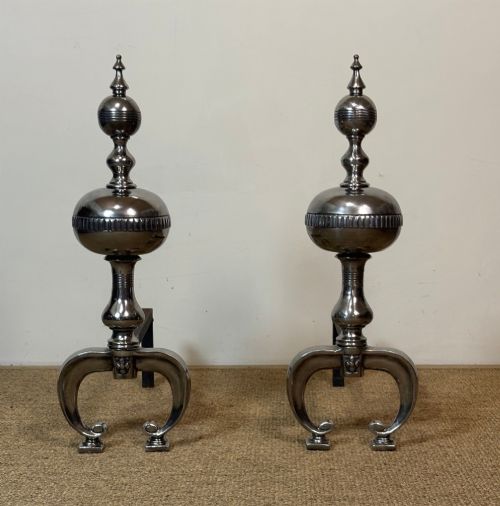
When you search for georgian style urns, you encounter a distinct vocabulary of classical antiquity interpreted through eighteenth and nineteenth-century design. The pieces span functional vessels like tea urns and cutlery urns alongside the stands, pedestals, and garden ornaments created in the same architectural spirit.
The selections on this page draw from the Georgian period itself as well as later revivals, including Adam, Sheraton, and Federal movements. You find mahogany and satinwood vessels alongside cast iron garden urns placed on plinths.
Forms range from lidded table pieces designed for dining rooms to large outdoor garden ornaments. The overarching neoclassical influence dictates symmetrical proportions, urn profiles, and crisp carving or inlay.
How they were made
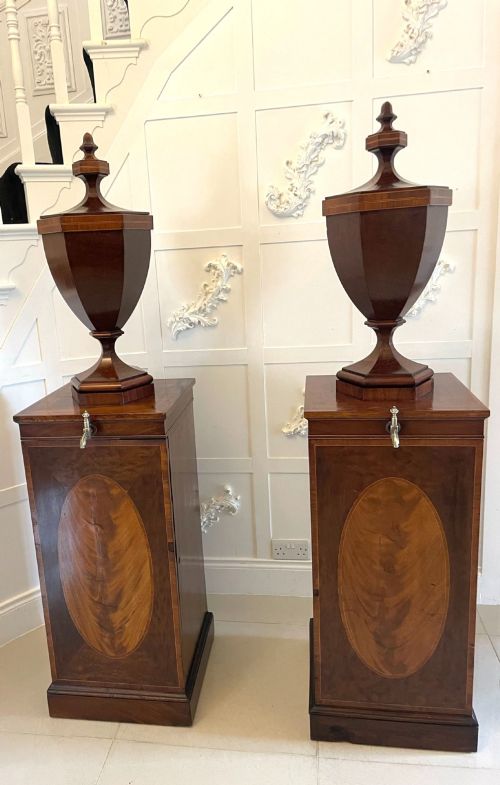
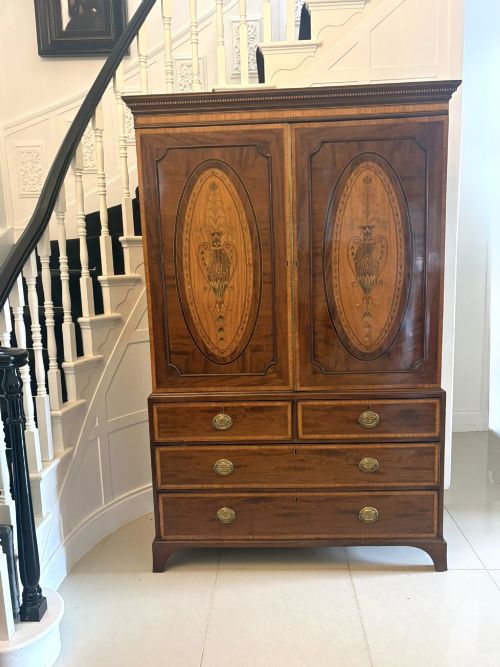
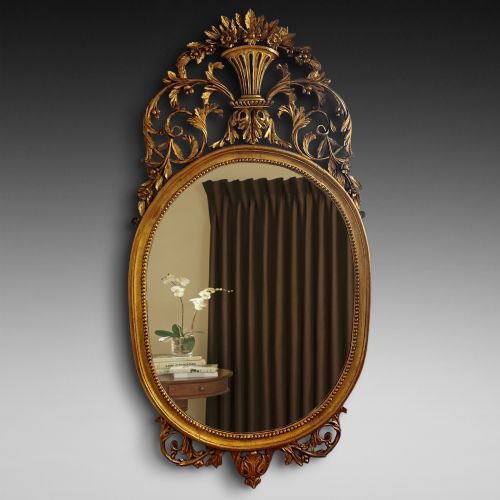
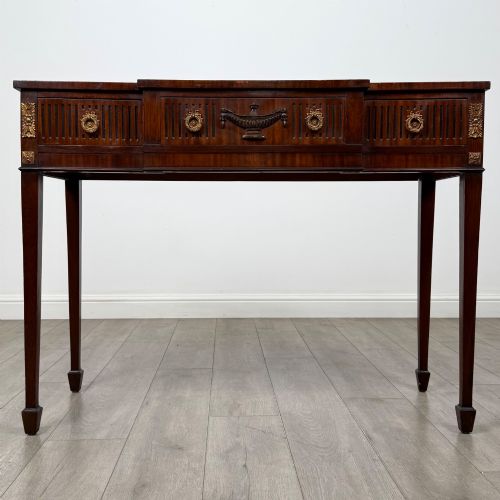
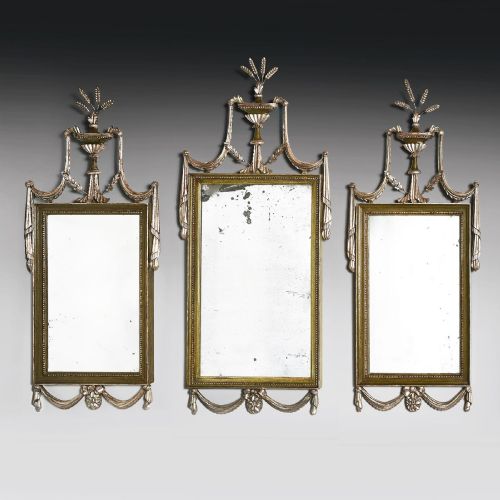
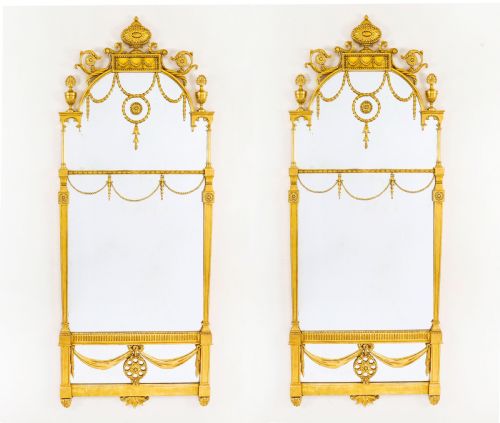
Cabinetmakers constructed indoor urns and their matching stands using dense timbers such as mahogany and satinwood, frequently employing elaborate marquetry and decorative inlay. Giltwood and gesso appear on the frames and decorative mounts associated with neoclassical wall mirrors and display pieces.
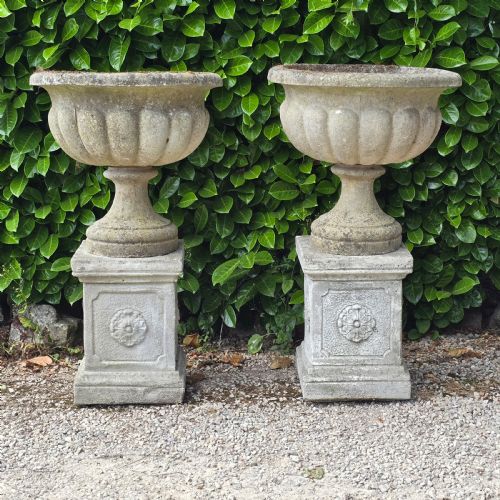
Outdoor garden urns and related architectural elements rely on durable cast iron capable of withstanding the elements while retaining sharp neoclassical relief details. Surface treatments range from polished wood finishes to painted and weathered exterior patinas.
Garden urns on this page weigh enough to anchor a small ship yet began life as polite classical ornaments.
What varies in quality
The distinction between ordinary and exceptional georgian style urns lies in the crispness of the carving and the precision of the timber inlay. Finer examples display meticulous attention to classical proportions and grain selection, particularly in satinwood and mahogany pieces.
Original mounts, hardware, and structural integrity dictate the standing of a piece. Later revivals vary according to the fidelity of their neoclassical ornament and the depth of the casting or hand-carving applied to the surface.
Gillows Of Lancaster·Chamberlain Worcester
The Georgian Style Urns Glossary
- Neoclassical
- A style inspired by the classical art and architecture of ancient Greece and Rome. It dominates the decorative vocabulary of these urns and associated furniture.
- Campana
- A bell-shaped garden urn design rooted in classical antiquity. These cast iron vessels typically rest upon stone or iron plinths.
- Marquetry
- The art of applying pieces of veneer to a structure to form decorative patterns. It frequently enhances the surfaces of satinwood and mahogany urn stands.
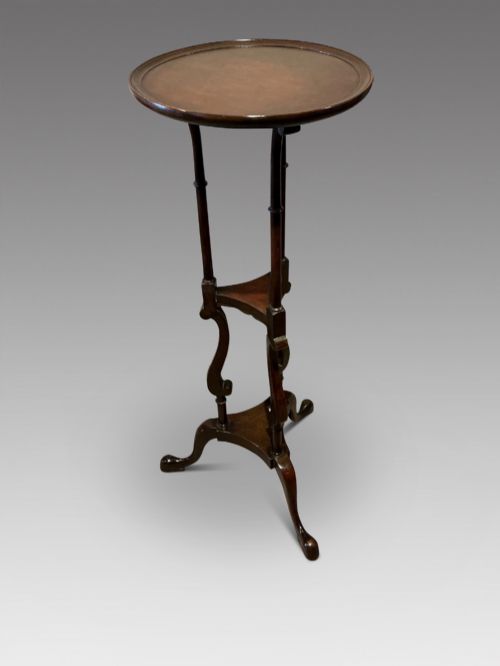
- Torcheres
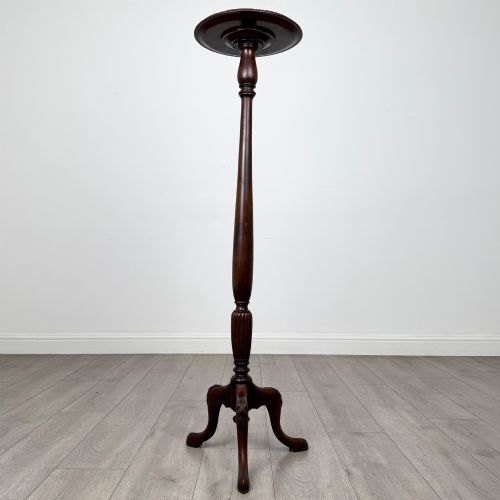
- Tall ornamental stands originally designed to support lighting. They often share the slender proportions and neoclassical detailing found near urn displays.
- Gesso
- A plaster-like mixture applied to wood surfaces as a base for gilding. It allows craftsmen to create sharp, low-relief ornamentation on mirror frames and decorative urns.
Georgian Style Urns: Frequently Asked Questions
What were antique urns used for?
Indoor urns served practical and decorative functions in wealthy households, including holding tea, cooling wine, or storing cutlery. Garden urns were placed on terraces and lawns to provide a classical architectural focal point.
Over time, many of these vessels transitioned into purely decorative objects, valued for their adherence to neoclassical symmetry and proportion rather than utility.
How do I distinguish Georgian from revival pieces?
Examining the timber construction, secondary woods, and tool marks helps differentiate eighteenth-century pieces from nineteenth and twentieth-century revivals. Revival pieces often display machine-sawn elements or standardised construction methods.
Stylistic cues also provide guidance, as Adam and Sheraton revivals frequently exaggerate classical motifs with nineteenth-century interpretations of proportion and finish.
Where should I place an urn stand?
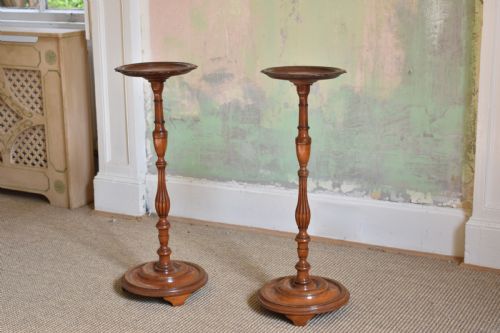
Urn stands and torcheres suit corners or flanking positions in dining rooms, hallways, and drawing rooms. Their slender profiles allow them to hold decorative objects without dominating the floor space.
Pairing a stand with an appropriate vessel recreates the intended neoclassical display arrangement popular in Georgian and revival interiors.
Can garden urns stay outside year-round?
Cast iron garden urns tolerate outdoor placement well, developing a weathered patina over decades of exposure to the elements. They require stable, level placement on plinths to prevent shifting.
Periodic inspection ensures that painted or natural iron surfaces remain protected against excessive moisture accumulation during harsher winter months.