





Cast Iron Pedestal Planters
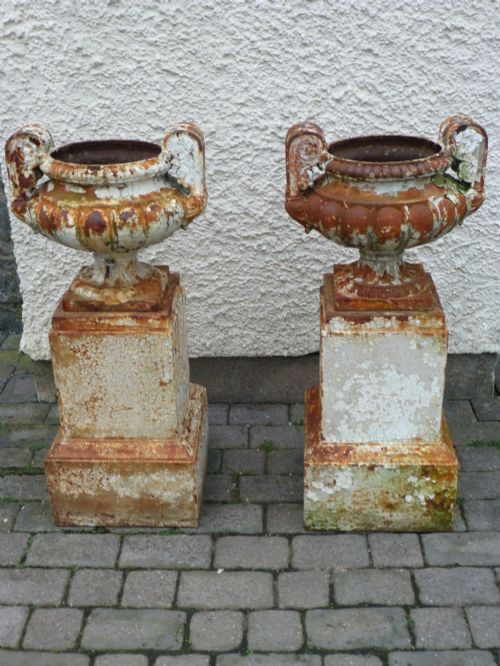
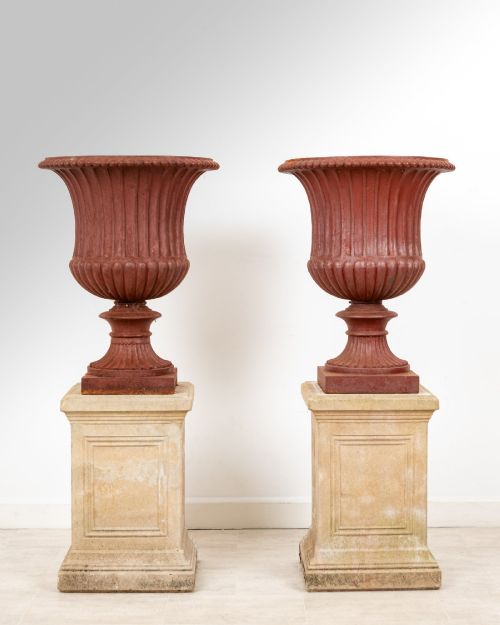
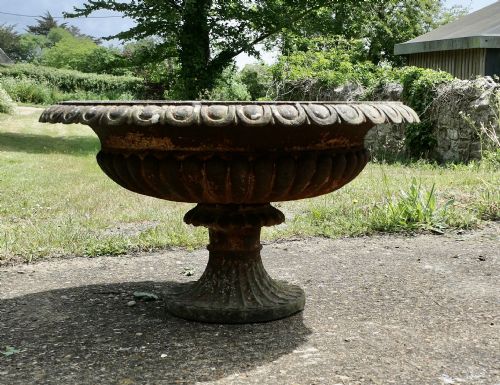
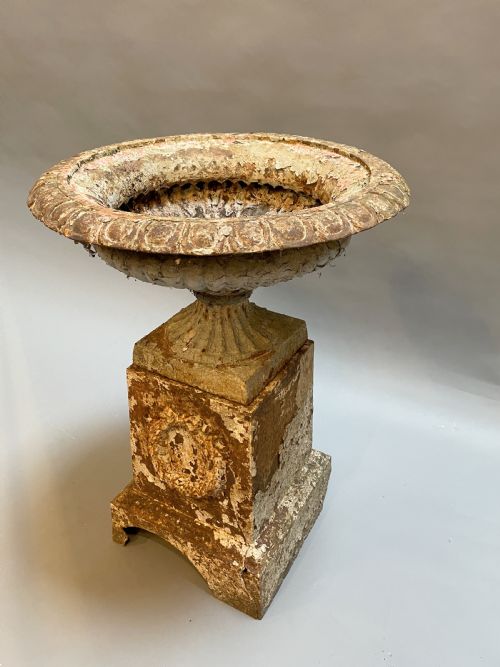
Cast iron pedestal planters are robust garden urns and plant stands raised on plinths, designed to elevate outdoor foliage with classical form.
Cast Iron Pedestal Planters
Cast iron pedestal planters combine a robust metal bowl or urn with a matching base, serving as focal points for garden displays. Buyers searching for cast iron pedestal planters encounter pieces designed to hold trailing plants and floral arrangements securely above ground level.
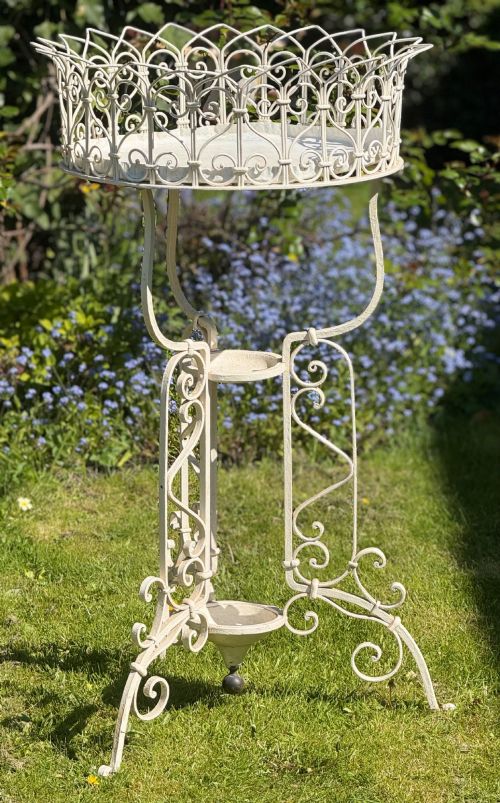
The selections span the nineteenth century, including Victorian, Regency and Edwardian eras, alongside pieces from the early twentieth century. Forms range from campana urns and gadrooned vessels to column planters and plant stands.
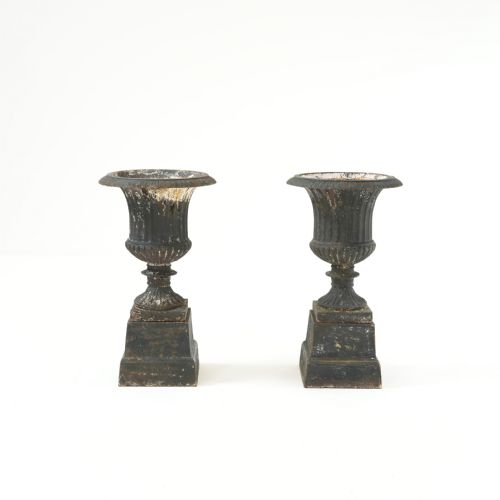
Many examples appear as matched pairs, frequently united with original plinths or stone pedestals. Simpler garden pots and jardinieres also populate the group, offering versatile options for outdoor display.
How they were made
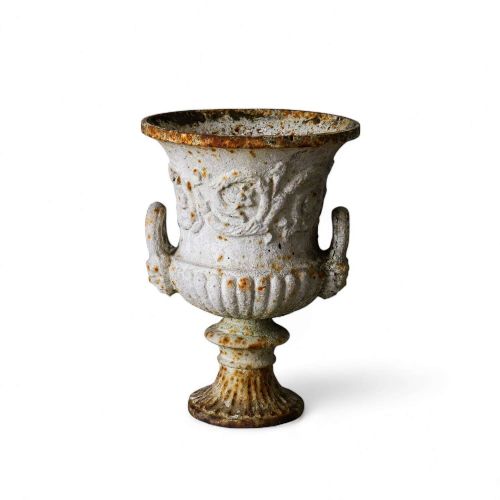
Foundries poured molten iron into sand moulds to form the heavy walls of the urns and their supporting plinths. This casting process allowed workshops to incorporate crisp decorative motifs such as acanthus leaves directly into the metal.
Finished pieces frequently received protective coats of paint to withstand outdoor weathering. Certain examples combined cast iron bowls with stone pedestals or incorporated wrought iron elements into plant stands and jardinieres.
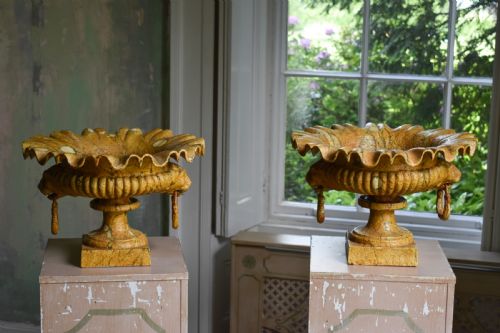
Some heavy iron urns double as sturdy portico tables.
What varies in quality
The refinement of the casting defines the upper tier of these pieces, showing sharp detail in classical ornamentation like acanthus leaves and gadrooning. Poorer examples exhibit softer contours and shallower relief from worn or hurried moulds.
Completeness alters the standing of a piece, particularly the presence of matching original plinths or bases rather than mismatched substitutes. Surface condition also plays a role, distinguishing weathered metal with stable paint from heavily pitted iron.
Falkirk Carron foundry·Coalbrookdale·Andrew Handyside
The Cast Iron Pedestal Planters Glossary
- Campana urn
- A bell-shaped garden vessel with an everted rim and a tapering lower body, frequently mounted on a stem and foot.
- Plinth base
- A heavy rectangular or square block that elevates an urn or planter above the ground level.
- Gadrooned
- Decorated with a series of convex curves or flutes moulded along the rim or body of the urn.
- Jardiniere
- An ornamental pot or stand designed to hold growing plants or flowers.
- Regency
- A British design period spanning the early nineteenth century characterised by classical revival motifs.
Cast Iron Pedestal Planters: Frequently Asked Questions
How do I care for cast iron planters outdoors?
These robust pieces withstand outdoor conditions well, though periodic repainting helps prevent deep rust formation.
Ensuring proper drainage inside the urn prevents trapped water from expanding during freezing weather.
Are these planters usually sold in pairs?
Many surviving examples appear as matched pairs intended for framing doorways, pathways or formal garden vistas.
Single urns and jardinieres also occur frequently for standalone placements.
How can I tell a Victorian planter from a Regency one?
Regency pieces often display crisper neoclassical restraint, while Victorian examples frequently embrace heavier classical revival ornamentation.
Foundry marks and stylistic details within the acanthus leaf or gadrooned motifs help clarify the period.
Do these planters come with their original plinths?
Certain examples retain their matching iron or stone plinth bases, which significantly enhances their architectural presence.
Other pieces are paired with later or associated pedestals gathered over time.