



Iron Urns on Plinths
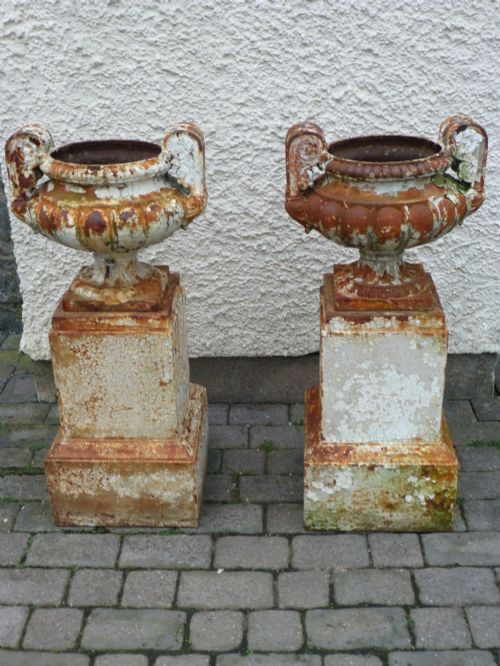
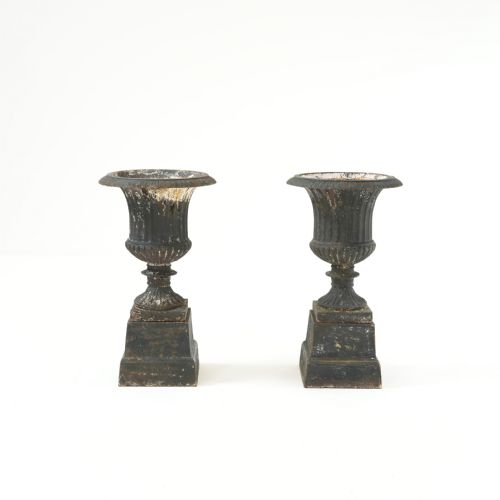
These iron urns on plinths are garden vessels cast in iron and raised on pedestals, bringing classical proportion straight to the lawn.
Iron Urns on Plinths
When you search for iron urns on plinths, you find garden vessels designed to sit raised upon matching pedestals or stands. They appear most frequently as campana or gadrooned forms reflecting classical revival tastes across the nineteenth and early twentieth centuries.
The pieces on this page span the Georgian, Regency, Victorian, and Edwardian periods, alongside later twentieth-century examples. You will frequently encounter them as matched pairs, though single garden urns on stands also emerge from the foundry traditions.
Originating primarily from British workshops and French foundries, these garden urns combine structural ironwork with classical ornament such as acanthus leaves. They serve as monumental focal points for formal gardens, terraces, and entranceways.
How they were made
Foundries produced these garden vessels using molten metal poured into sand moulds, creating the durable cast iron body that defines the group. Paint was frequently applied to the finished iron surface for both decoration and protection against the outdoor elements.
Some examples combine the cast iron body with integrated or separate stone plinths to elevate the planter from the ground. The casting process allowed workshops to repeat intricate neoclassical details like fluting and gadrooning with consistent precision.
Listings feature cast iron urns paired with stone plinths alongside all-iron compositions from the Regency and Victorian eras.
What varies in quality
Quality in these cast iron pieces rests upon the crispness of the original moulding and the survival of the original plinth. Finer castings preserve sharp relief in decorative motifs like acanthus leaves, whereas lesser examples lose detail through worn foundry patterns.
The presence of matching original pedestals alters the integrity of the piece, as urns and plinths were sometimes paired together long after leaving the foundry. Heavier, thicker metal walls indicate a more substantial casting intended for prominent architectural placement.
Falkirk Carron foundry·Andrew Handyside
The Iron Urns on Plinths Glossary
- Campana urn
- A bell-shaped garden vessel with an everted rim and a tapering lower body. This classic silhouette originates from ancient pottery and bronze forms.
- Gadrooned
- Decorated with a series of convex curves or flutes moulded in a parallel pattern around the body of the urn. It adds texture and visual weight to the lower bowl.
- Plinth
- A heavy rectangular or square base block that elevates the urn above ground level. Original matching plinths complete the classical architectural proportion.
- Neoclassical
- A style drawing inspiration from the art and architecture of classical antiquity. It dominates the decorative vocabulary of nineteenth-century garden ironwork.
- Regency
- A British design period spanning the early nineteenth century characterised by strict classical restraint. Pieces from this era often display clean lines and refined proportions.
Iron Urns on Plinths: Frequently Asked Questions
Can iron urns stay outside all year?
Cast iron garden urns are built to withstand outdoor conditions throughout the changing seasons. The heavy metal construction handles weathering well, though painted surfaces may require periodic maintenance.
Ensuring proper drainage inside the bowl prevents water from collecting and freezing during winter months. This simple precaution protects the structural integrity of the casting over decades of garden use.
How do I identify a Victorian iron urn?
Victorian examples often display heavy classical detailing such as prominent acanthus leaf ornament and gadrooned bodies. The weight and thickness of the cast iron typically reflect nineteenth-century foundry standards.
Comparing the decorative motifs with documented foundry catalogues helps confirm the period. Many pieces from this era follow established Victorian classical revival patterns.
Are the plinths always original to the urns?
Some pieces retain their original matched plinths supplied by the foundry as a single suite. In other instances, urns and pedestals from similar periods are paired together later.
Examining the cast iron composition and weathering patterns across both elements reveals whether they originated together. Original combinations maintain a unified proportion and surface character.
What plants suit a campana urn?
The wide opening and deep bowl of a campana urn accommodate trailing plants, structured box balls, or seasonal floral displays. Their classic silhouette provides a striking contrast to soft foliage.
Using a nursery pot inside the iron bowl makes seasonal replanting straightforward. It also keeps damp soil away from the interior walls of the casting.