
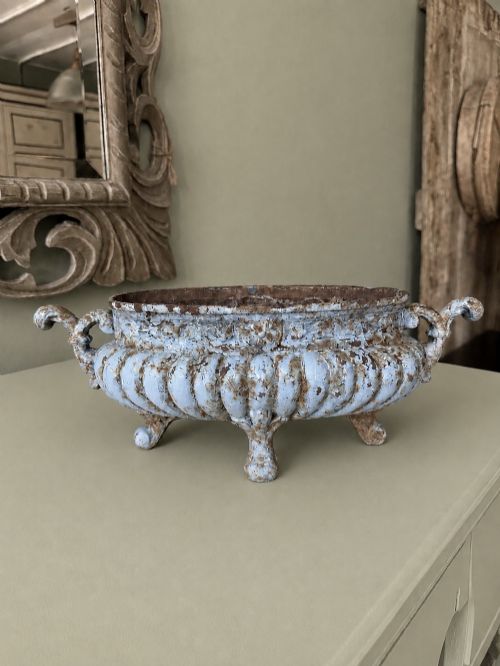
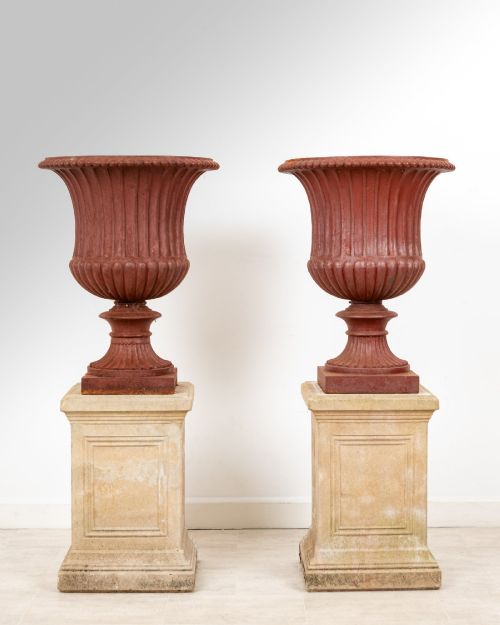
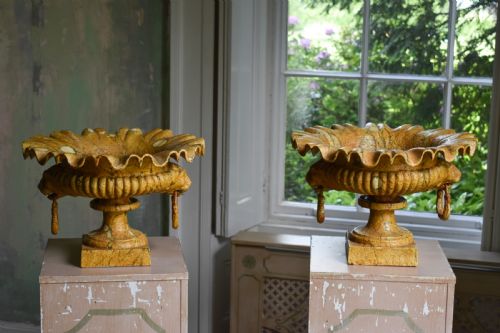
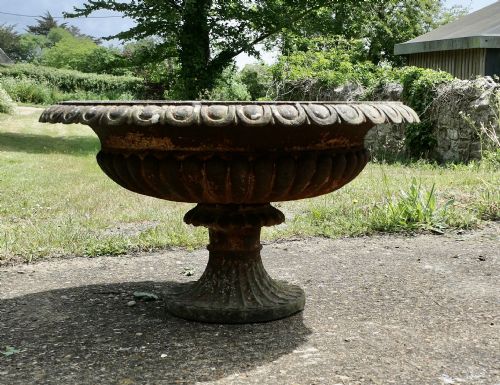
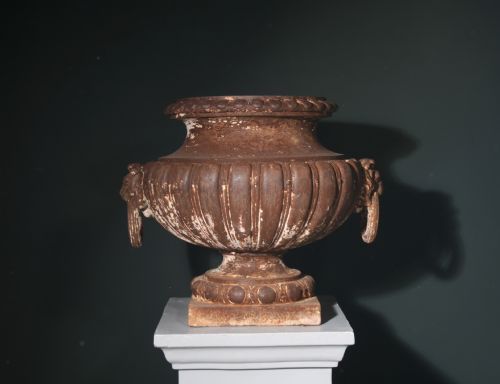
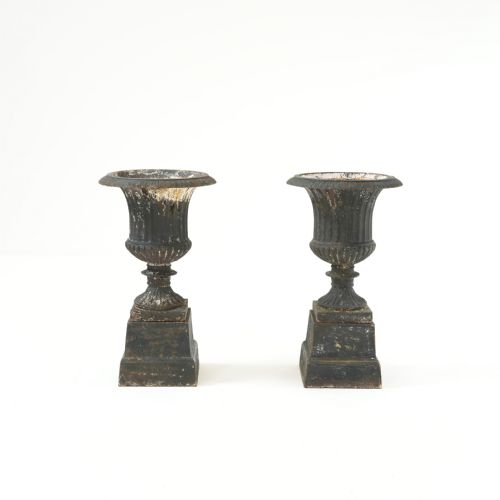


Fluted Iron Garden Urn
These heavy fluted iron garden urn vessels anchor a terrace or lawn with classical lines and enduring presence.
Fluted Iron Garden Urn
A fluted iron garden urn brings formal architecture into domestic grounds through classical vessel forms mounted on pedestals or plinths. The selection spans the nineteenth century, Victorian era, Georgian period, and early twentieth century with French and English origins.
Buyers encounter campana shapes, jardinieres, and planters displaying vertical fluting across the body. These pieces frequently appear as matched pairs intended for symmetry beside paths, doorways, or formal lawns.
The objects combine utilitarian planting vessels with monumental sculptural presence. Iron provides the durability required for outdoor placement through changing seasons.
Factors determining quality
The crispness of the casting defines the visual strength of the piece, separating sharp fluting and deep relief ornament from softened, worn profiles. Thick-walled iron castings provide greater longevity and substantial weight compared to lighter alternatives.
Proportion and scale distinguish standard garden vessels from monumental pairs designed for civic or grand estate settings. The presence of matching original plinths or stone pedestals completes the intended architectural silhouette.
Documented foundry attribution adds historical weight to specific castings. The integration of structural handles and well-formed rims demonstrates superior workshop execution.
Val d'Osne foundry catalogued hundreds of garden ornaments, meaning your ferns might sit in a nineteenth-century Parisian park cousin.
Val d'Osne Foundry·Andrew Handyside
The Fluted Iron Garden Urn Glossary
- Campana urn
- A bell-shaped garden vessel with an everted rim and tapered body, frequently mounted on a pedestal. This form originates from ancient Roman marble vases.
- Fluting
- Parallel vertical grooves cut or cast into the surface of a column or urn body. This decorative feature derives from classical architecture.
- Jardiniere
- An ornamental pot or stand designed to hold growing plants or flowers. These receptacles function both indoors and within garden settings.
- Plinth
- A heavy rectangular block or pedestal that elevates an urn above ground level. These bases provide architectural stability and visual presence.
- Neoclassical
- A style spanning the eighteenth and nineteenth centuries that revives the classical forms and motifs of ancient Greece and Rome. Garden ornaments from this movement emphasise symmetry and proportion.
Fluted Iron Garden Urn: Frequently Asked Questions
How do I clean a cast iron urn?
Remove loose dirt and debris with a soft brush, taking care not to damage historic paint surfaces.
Wash gently with mild soap and water if needed, then dry thoroughly before applying protective wax or fresh outdoor paint.
Can these urns stay outside in winter?
Cast iron withstands cold temperatures well, but water freezing inside soil can crack containers. Ensure adequate drainage holes remain clear.
Elevate the base slightly off the ground during freezing months to prevent moisture absorption.
How do I date a cast iron urn?
Examine the casting seams, fastener types, and surface texture for indicators of nineteenth-century production methods. Victorian and Georgian examples often display heavier walls and hand-finished details.
Compare the decorative motifs, such as fluting styles and handles, against documented foundry catalogues from the period.
Should I paint my garden urn?
Historic painted surfaces provide valuable evidence of age and should be preserved whenever possible. Inspect the existing finish to determine if stabilisation rather than repainting is appropriate.
If bare metal is exposed to prevent rust, select a breathable exterior paint suited for cast iron.