


Georgian Stick Back Chair
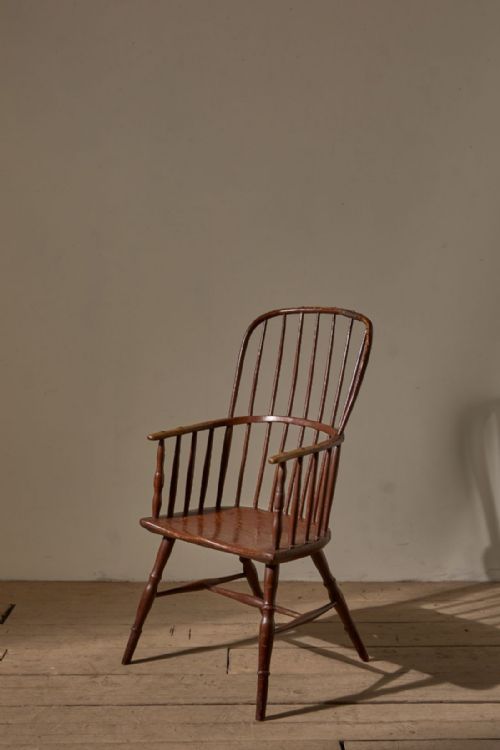
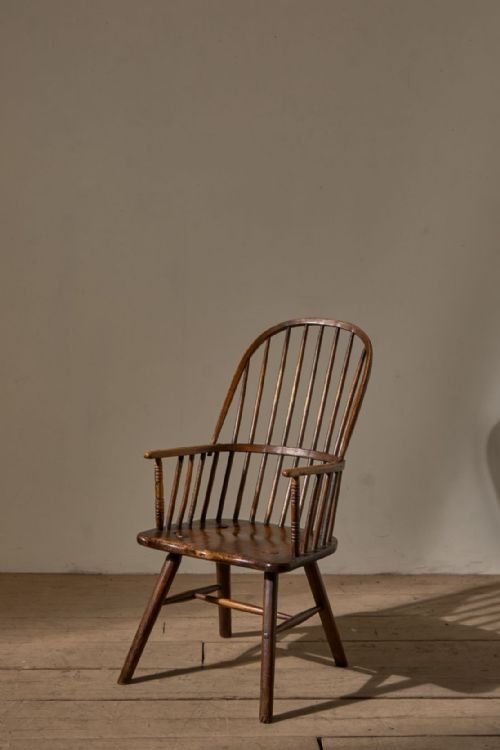
A georgian stick back chair brings regional British craftsmanship into a room with sturdy timbers and honest construction.
Georgian Stick Back Chair
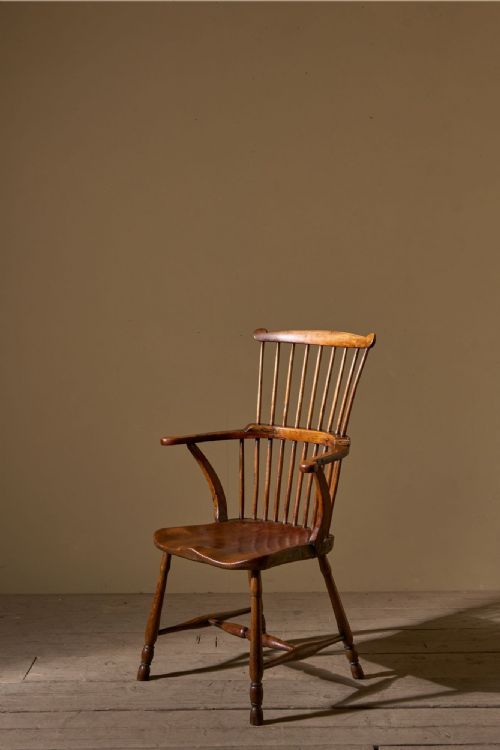
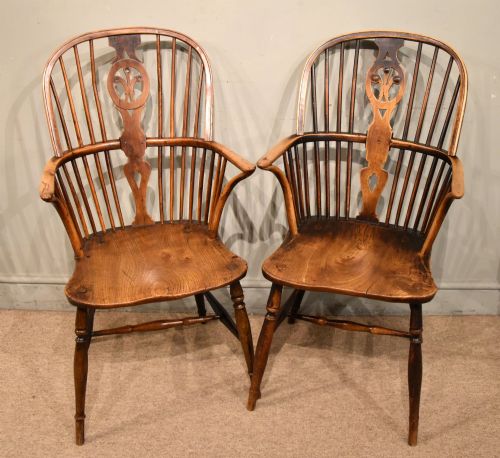
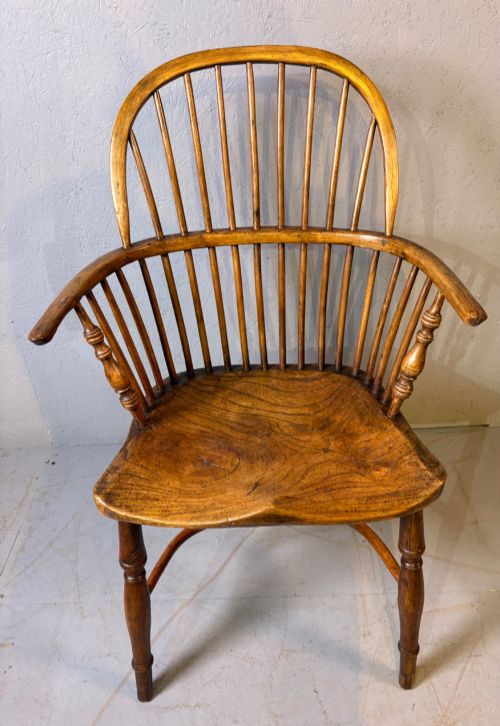
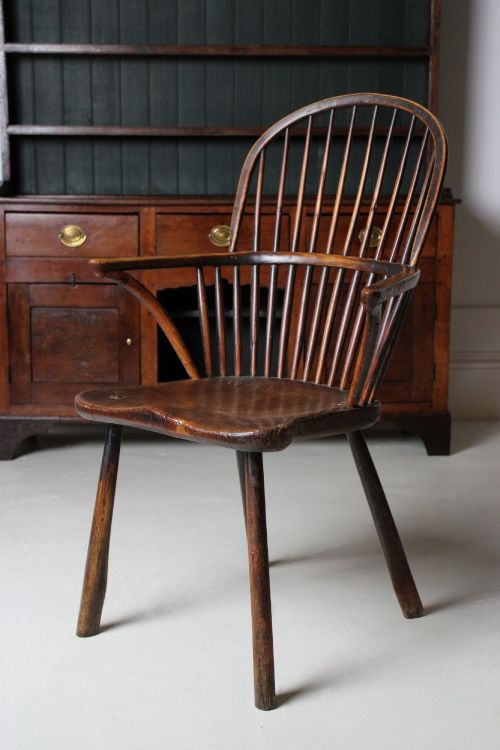
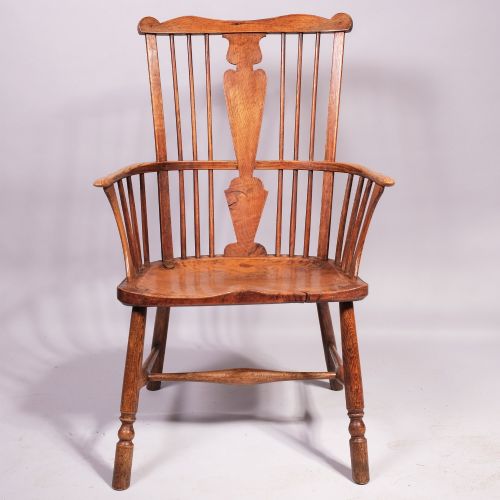
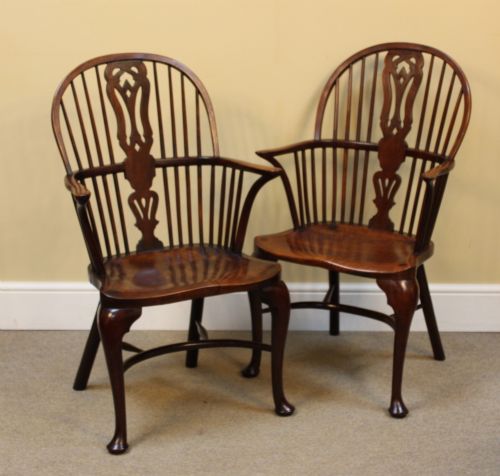
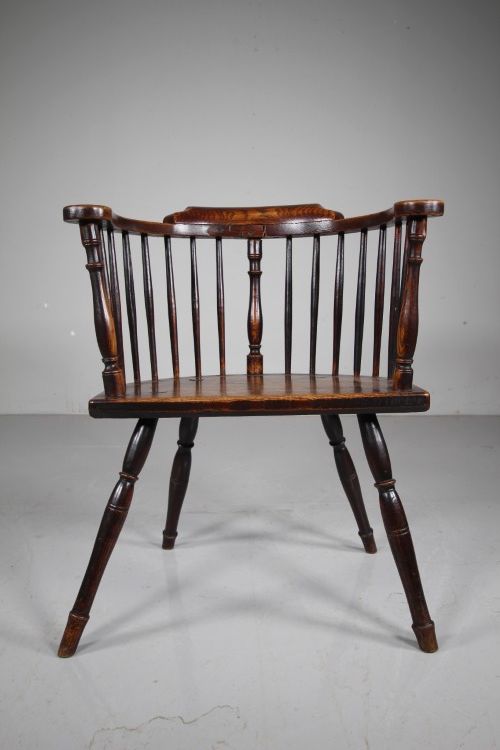
A georgian stick back chair is a form of Windsor seating rooted in regional British vernacular traditions, featuring upright spindles inserted directly into a solid wooden seat. These pieces emerge from eighteenth and nineteenth century workshops across the country, ranging from simple farmhouse seating to substantial high back armchairs.
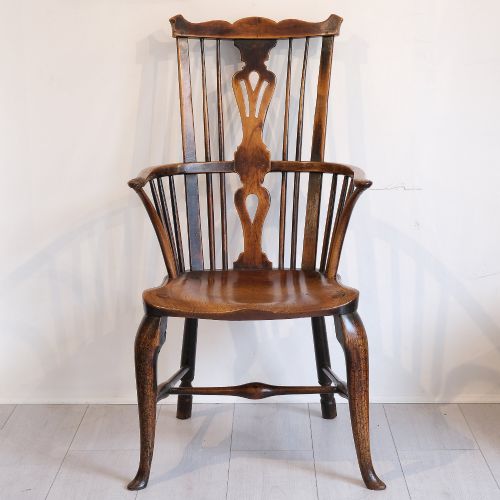
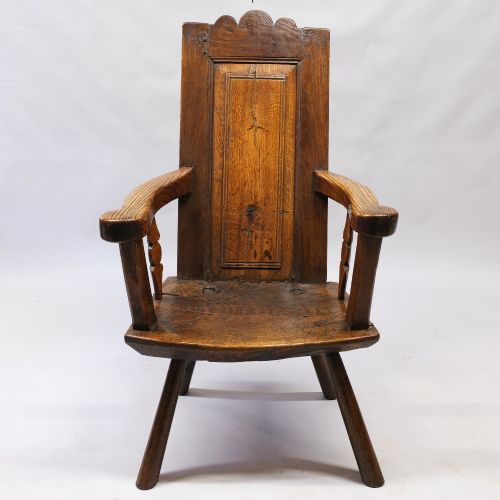
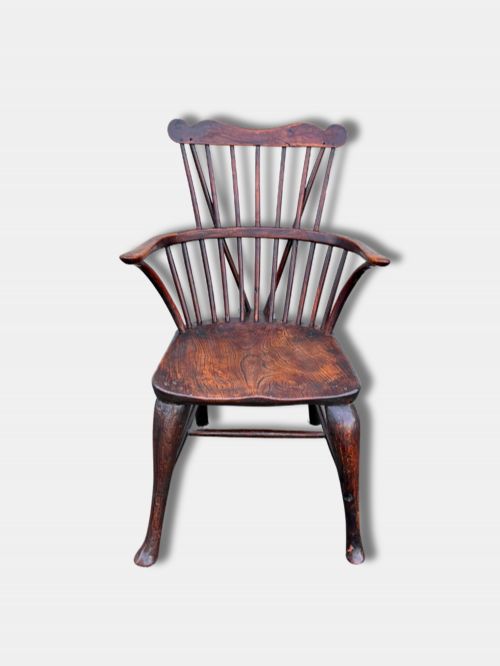
Buyers will encounter various regional iterations, including West Country armchairs, Thames Valley designs, and Welsh comb backs. The selection spans armchairs, side chairs, low backs, and smaller children's variants made for domestic use.
How They Were Made
Maker traditions rely on contrasting native timbers, typically combining elm for solid saddle seats with ash, beech, or fruitwood for the bent bow frames and slender spindles. Yew appears in finer regional pieces, valued for its rich grain and strength in slender sections.
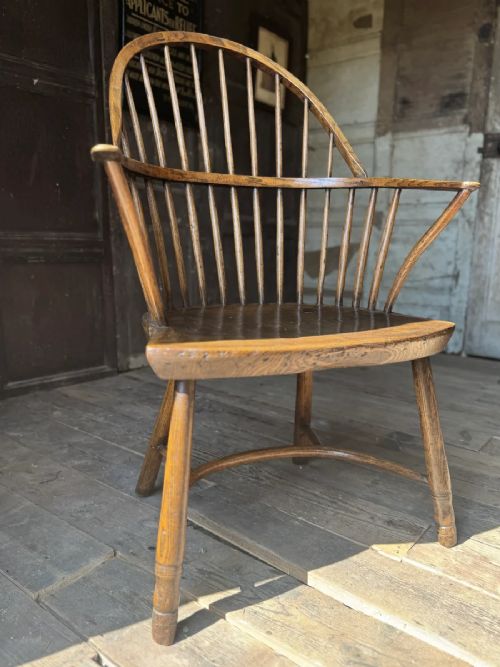
The construction employs turned legs wedged into the underside of the plank seat alongside steam-bent back rails and crinoline stretchers. Many examples retain traces of early paint or develop a deep patination across the unadorned timber surfaces through centuries of handling.
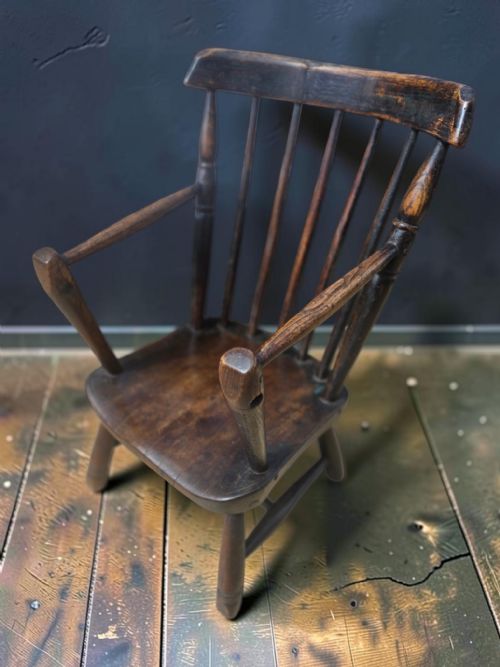
Several miniature child and doll armchairs survive alongside full-sized seating, proving that miniature rustic furniture was built with identical care.
What Varies in Quality
The distinction between ordinary and superior examples lies in the fluidity of the comb back bow and the balance of the spindle arrangement. Master makers achieved harmonious proportions where the rake of the legs and the curve of the arm supports create a unified silhouette.
Timber selection and surface preservation dictate the standing of a piece, with well-figured burr elm seats and untouched patinated finishes commanding greater interest. Structural integrity in the joints and minimal replacement of the original wedged components also separate robust survivors from heavily restored examples.
John Brand of Sleaford·Gabbitass of Worksop
The Georgian Stick Back Chair Glossary
- Comb back
- A Windsor chair variant where the central spindles extend upward to support a horizontal top rail resembling a traditional hair comb. This profile offers additional head support.
- Crinoline stretcher
- A curved wooden brace connecting the legs of a chair in a horseshoe or bow shape. It adds rigidity to the undercarriage.
- Saddle seat
- A thick wooden seat base sculpted with deep depressions for comfort. Makers hollowed out these elm slabs using adzes and scorps.
- Vernacular
- Objects made by regional craftsmen following local traditions rather than strict academic design patterns. These pieces prioritise utility and available local materials.
- Patina
- The surface sheen and colour acquired by wood over long periods through handling, wax, and light. It indicates age and honest use.
Georgian Stick Back Chair: Frequently Asked Questions
How do I date a stick back chair?
Dating relies on observing construction methods, tool marks, and timber wear alongside stylistic clues like comb back profiles. Earlier pieces often display more primitive tool work and distinct regional traits.
Undated or transitional pieces can sometimes be narrowed down by comparing the turning of the legs and the curvature of the arm supports to documented examples from specific decades.
What is the difference between a Windsor and a stick back?
A stick back is a specific subset of Windsor chair where the upright spindles form the back without a central pierced splat. All stick backs belong to the broader Windsor family.
Traditional Windsors may incorporate solid splats or elaborate bow formations, whereas stick backs focus entirely on the repetitive rhythm of turned or cleft spindles.
Are these chairs comfortable for daily use?
The sculpted wooden saddle seats and raked backs provide surprising ergonomic support despite the lack of upholstery. Many owners use them daily at dining tables or desks.
Adding a simple squab cushion can soften the seat for longer periods of sitting while preserving the visible timber grain.
Why do some chairs have mixed woods?
Regional makers utilised different native timbers based on the mechanical properties required for each part of the chair. Elm was chosen for seats because it resists splitting when nailed or wedged.
Ash and fruitwood offered the flexibility needed for steam-bending bows, while harder woods like yew were selected for slender, high stress spindles.