

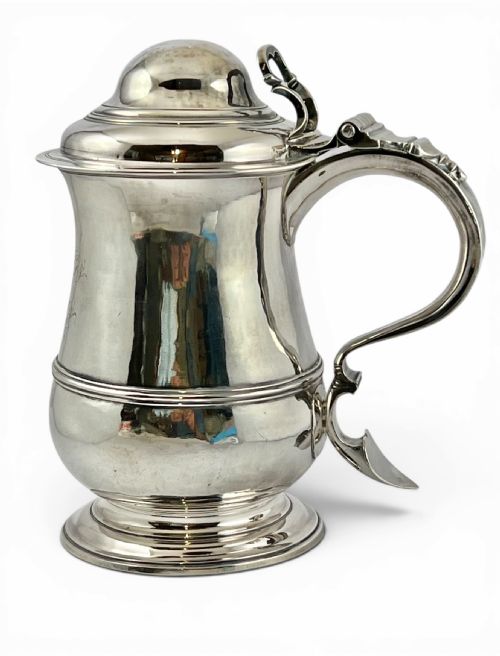
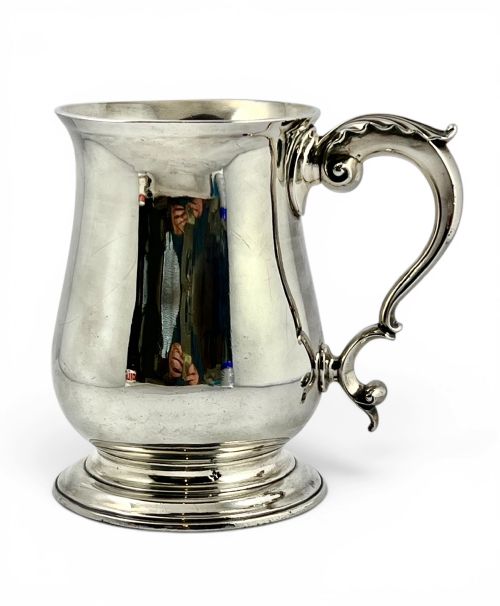


Georgian Sterling Silver Tankard
A georgian sterling silver tankard brings tangible weight and historic character to any table, offering substantial domestic metalwork made to last centuries.
Georgian Sterling Silver Tankard
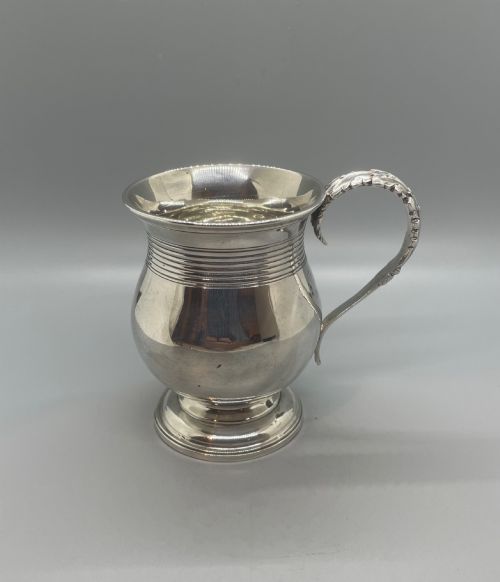
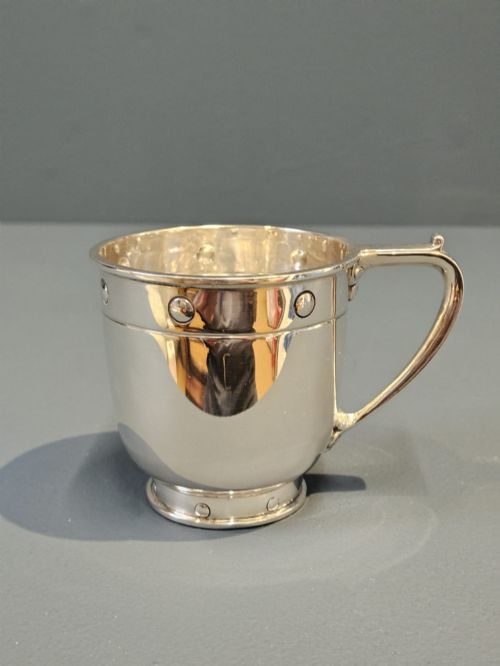
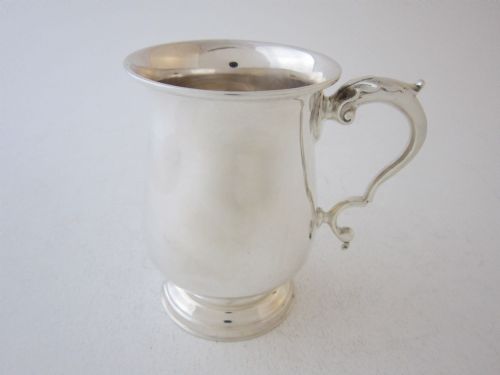
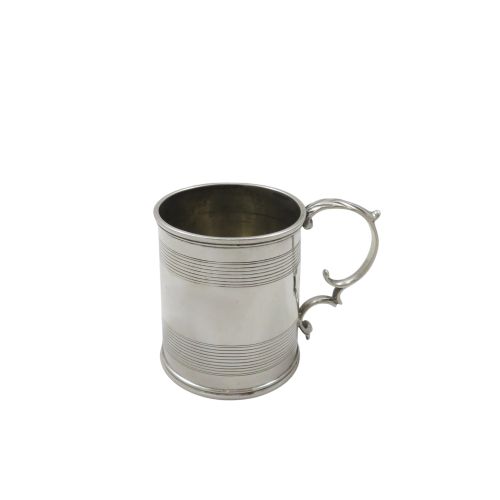
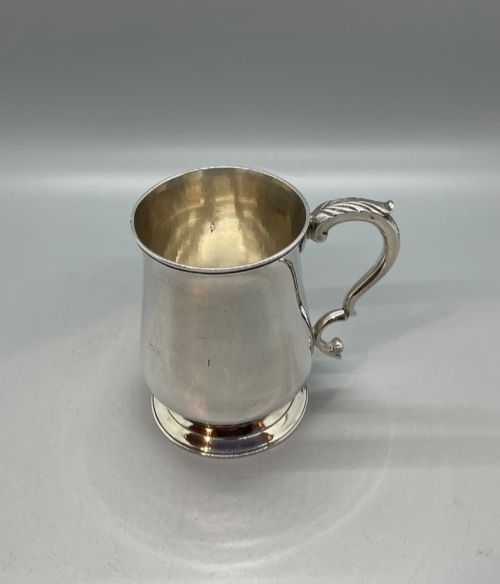
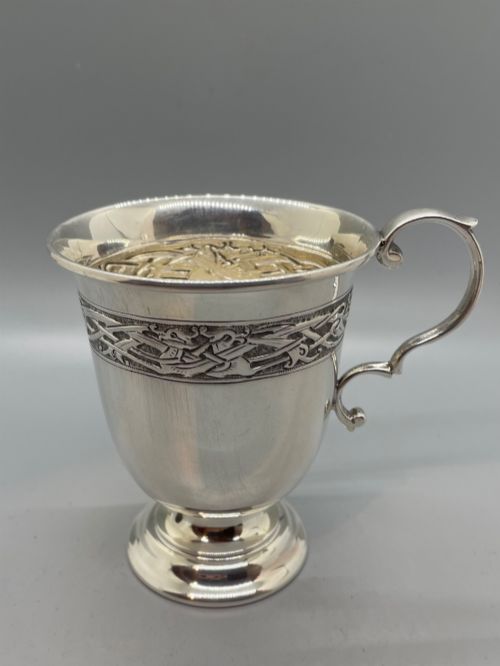
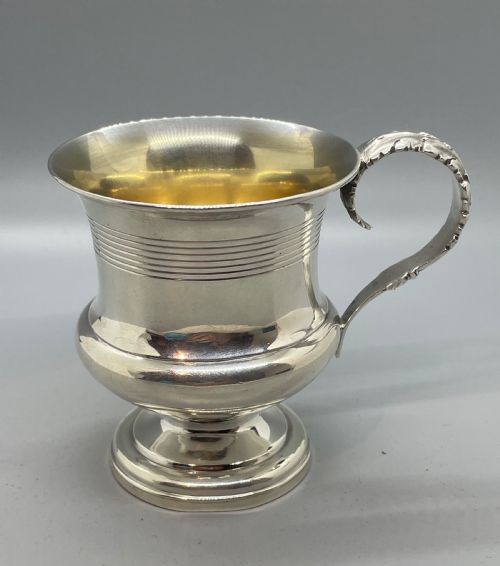
When people search for a georgian sterling silver tankard, they encounter solid drinking vessels originating primarily in the eighteenth and early nineteenth centuries. These pieces span standard pint and half-pint capacities alongside smaller christening mugs made for family milestones.
The selection here includes both lidded and open forms, featuring baluster bodies and scroll handles shaped for daily use. Makers from London, Newcastle and provincial assay offices stamped these pieces with period hallmarks indicating their exact origin.
Most examples reflect the changing stylistic tastes of the reigns from George II through George V, alongside later revival pieces produced in the twentieth century. Collectors find domestic drinkware ranging from plain utilitarian vessels to heavily embossed presentation items.
How they were made
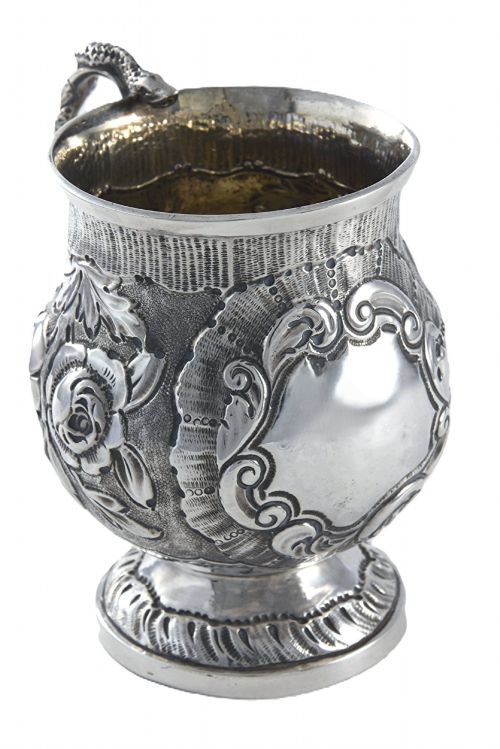
Silversmiths constructed these vessels using solid sterling silver, hammering and raising sheets of metal into cylindrical or baluster forms. Handles were cast separately and soldered securely to the body, often incorporating ornate scrollwork or serpent motifs.
Many lidded examples required hinged thumbpieces fitted with precise pins to ensure smooth operation of the cover. Surface decoration involved hand engraving, chasing and embossing to produce pictorial hunting scenes or floral scrollwork.
Listings include solid silver items produced in London, Newcastle and Birmingham across multiple centuries.
What varies in quality
The distinction between ordinary and exceptional pieces rests upon the crispness of the original chasing and the weight of the metal utilised in the body. Thicker walls maintain their structural integrity and prevent distortion around the handle joint over generations of use.
Maker marks and town hallmarks that remain clear and legible indicate a higher grade of preservation. The balance of the vessel, particularly the proportional weight of the base relative to the rim, determines its physical presence on the surface.
Barker Bros·John Payne·William Grundy·William Bateman·Charles Price·Jasper Kelly
The Georgian Sterling Silver Tankard Glossary
- Sterling silver
- A silver alloy containing ninety-two point five percent pure silver and seven point five percent other metals, typically copper, to increase durability. This standard metal purity appears on British domestic silver through mandatory hallmarking.
- Baluster form
- A vertical architectural shape featuring a rounded lower body that tapers inward toward the neck. This distinctive silhouette frequently defines domestic drinking vessels from the mid-eighteenth century.
- Hallmark
- An official stamp applied by an assay office to certify the metal purity, origin city and year of manufacture. These small stamped marks provide the primary evidence for dating antique silver.
- Christening mug
- A small presentation vessel given to mark an infant's naming ceremony, often engraved with initials or dates. These scaled-down pieces mirror the design of full-sized drinking tankards.
- Chasing
- A metalworking technique where a silversmith pushes and displaces silver from the exterior surface using punches and hammers to create raised ornamental designs.
Georgian Sterling Silver Tankard: Frequently Asked Questions
What is the difference between a tankard and a mug?
A tankard traditionally refers to a lidded drinking vessel fitted with a hinged cover and a thumbpiece. A mug lacks a lid entirely, though many antique examples share the same cylindrical or baluster body shape.
Historical makers and modern collectors sometimes use both terms interchangeably when describing open drinking vessels. The presence of the hinge mechanism remains the definitive structural distinction.
Were these pieces used for everyday drinking?
Domestic drinking vessels served functional roles in period households for consuming ale, beer and cider before mass-produced glass became common. Heavy construction allowed them to withstand daily service at the dining table.
Smaller christening variations served primarily as celebratory gifts rather than functional tableware. Their survival reflects careful preservation by families over successive generations.
How do I identify the date of a piece?
Dating relies entirely upon the official town marks, maker stamps and date letters struck into the silver by the assay office. Each letter corresponds to a specific year under the jurisdiction of offices such as those in London or Newcastle.
Stylistic indicators like baluster proportions and handle designs offer a secondary guide to the manufacturing period. Combining the physical hallmarks with the stylistic evidence yields an accurate timeline.
Why do some examples feature animal scenes?
Engraved or embossed hunting dogs, rabbits and serpents reflect popular decorative motifs favoured by silversmiths during the eighteenth and nineteenth centuries. These pictorial designs transformed utilitarian vessels into decorative works of art.
Naturalist themes appealed directly to wealthy patrons who participated in rural sports and country life. The execution of these scenes often highlights the skill level of the individual artisan.