
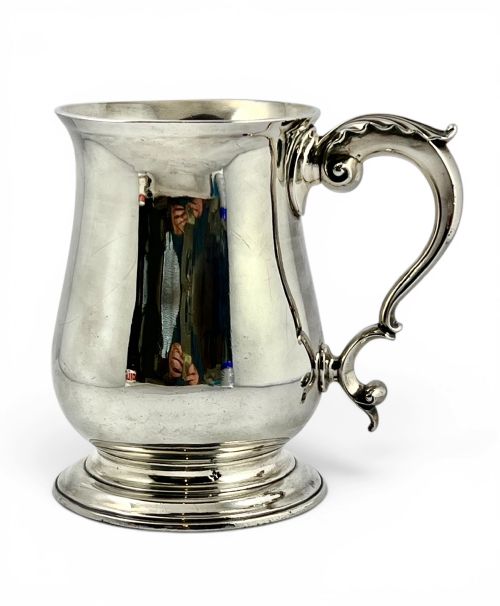


London Silver Tankard
A London silver tankard carries centuries of drinking history, from heavy lidded vessels of the Georgian era to smaller Victorian christening pieces.
London Silver Tankard
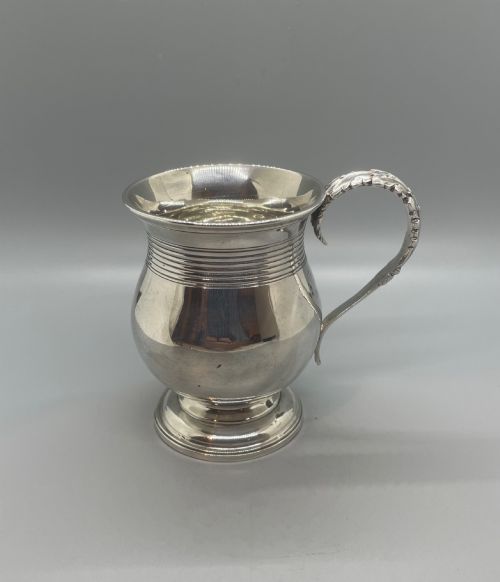
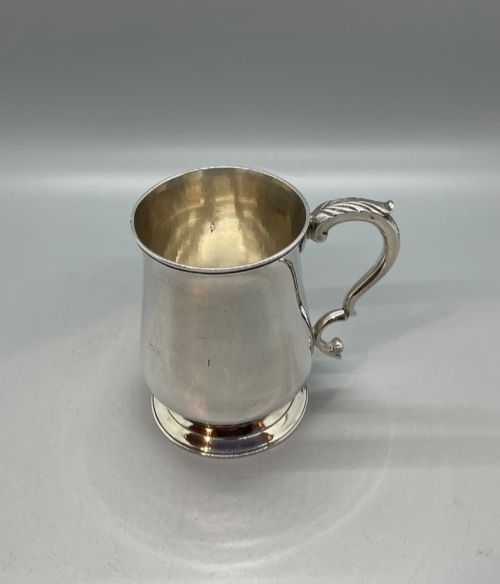
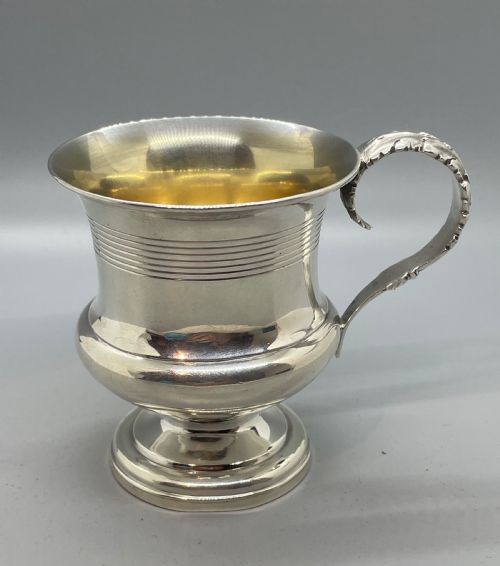
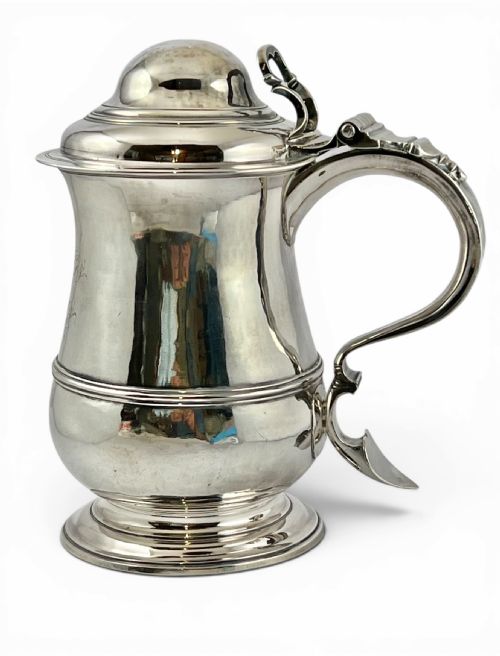
A london silver tankard is a drinking vessel produced in the capital, appearing across this selection in forms ranging from substantial lidded beer mugs to smaller christening cups and pint jugs.
The pieces on this page span the Georgian, Regency, and Victorian periods, alongside Edwardian and later examples, reflecting centuries of silversmithing output from the city.
Buyers encounter both large drinking tankards with scroll handles and diminutive christening mugs, often grouped under overlapping categories of drinkware and silverware.
Quality variations
Quality rests in the weight of the metal, the crispness of maker marks, and the balance of the scroll handle against the baluster or straight-sided body.
Subtleties in hand-engraving, the secure fit of lidded elements, and the preservation of original maker signatures distinguish standard production from the finest surviving examples.
Some pint tankards feature hidden spouts, proving past drinkers appreciated precision engineering in their beer.
John Payne·William Grundy·William Bateman·Thomas Whipham·Charles Wright·Carrington and Co·John Swift·William Tuite·Gabriel Sleath·Shaw and Priest·George Smith II
The London Silver Tankard Glossary
- Sterling silver
- A silver alloy containing ninety-two point five percent pure silver by mass, forming the primary material for these vessels.
- Baluster
- A vase-like architectural form with a swelling lower portion, frequently describing the graceful curve of these drinking mugs.
- Christening mug
- A small presentation cup intended as a gift for a child, sharing scale and form with smaller tankards.
- Hallmark
- The official stamp applied to precious metals in London, confirming the standard of silver and the year of manufacture.
- Scroll handle
- An S-shaped curved handle soldered to the side of the tankard, designed for a secure grip.
London Silver Tankard: Frequently Asked Questions
How do I identify the date?
Look for the assay office marks and date letters stamped directly into the silver surface. These official symbols reveal the precise year the piece was tested and finished in London.
Matching the stamped letter against historical London hallmark tables gives the exact year of production.
Were these used for beer?
Many larger examples served as everyday drinking vessels for ale and beer in homes and taverns. The solid silver construction kept contents cool during use.
Smaller lidded and open versions functioned as presentation pieces or christening gifts rather than working tavern gear.
What is a christening mug?
A christening mug is a scaled-down version of a standard drinking tankard, traditionally given to mark the birth or baptism of a child. They often feature engraved names, dates, or decorative motifs.
Silversmiths produced these in large numbers throughout the Victorian era alongside traditional pint tankards.
How do I clean silver tankards?
Wash the vessel gently using warm water and mild soap, drying it thoroughly with a soft cloth. Avoid harsh chemical dips that strip away the aged character of the metal.
Regular handling naturally maintains a soft sheen on sterling silver without requiring abrasive polishing agents.