




Georgian Silver Pocket Box
A georgian silver pocket box offers a tactile glimpse into personal grooming habits of the past, combining portable utility with exquisite metalwork.
Georgian Silver Pocket Box
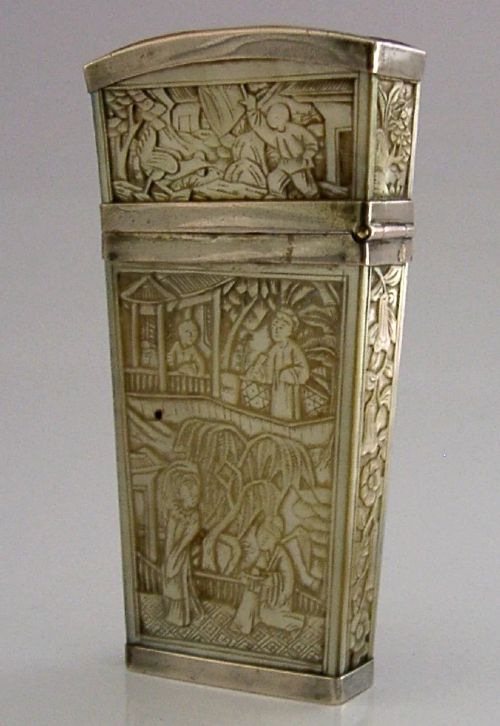
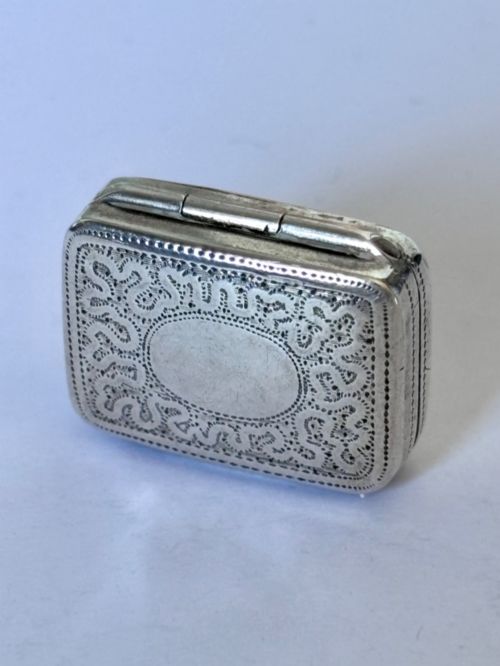
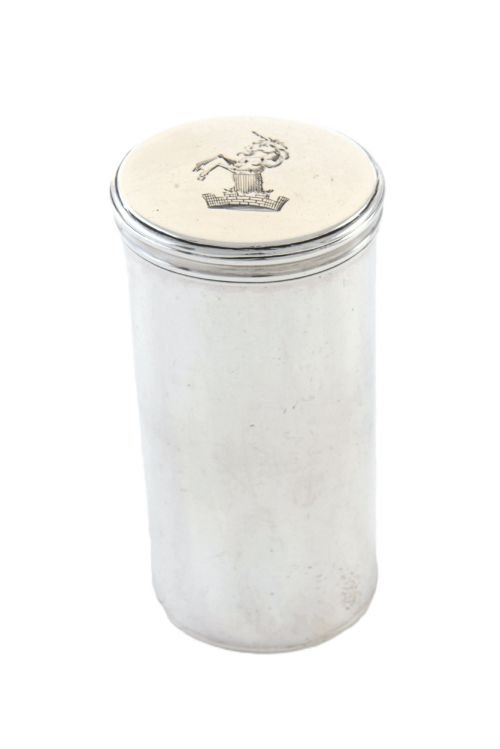
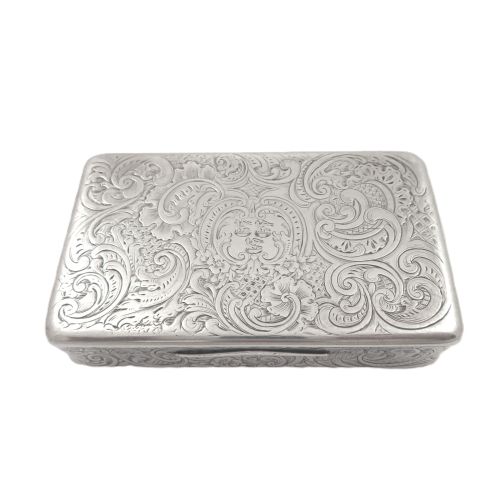
When you search for a georgian silver pocket box, you encounter small personal containers designed to hold snuff, nutmeg, pills, or perfume-soaked sponges. These items span the Georgian, Regency, and Victorian periods, often taking the form of snuff boxes, vinaigrettes, and etuis.
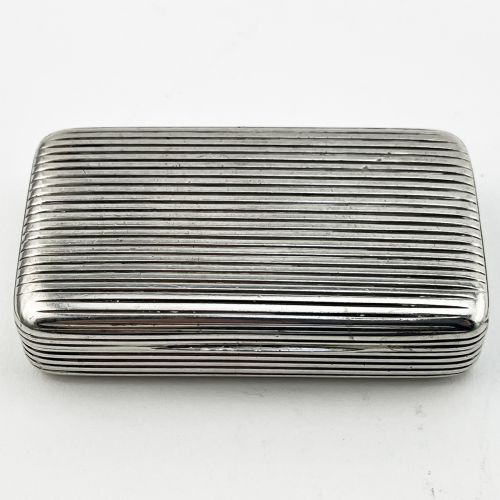
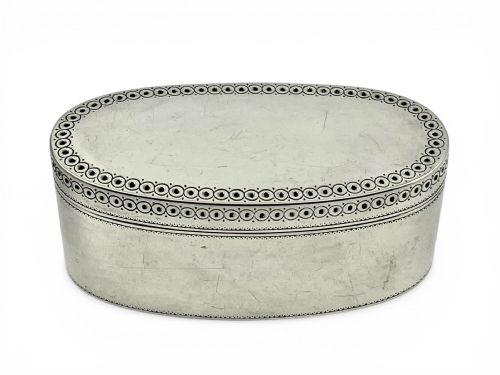
The pieces on this page originate from English, Scottish, Irish, and Chinese Export workshops, reflecting diverse regional styles. The forms range from simple pocket ovals and barrels to elaborate shell shapes and double-lidded containers.
Materials and technique
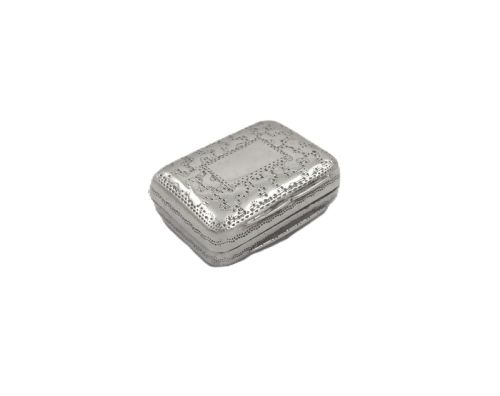
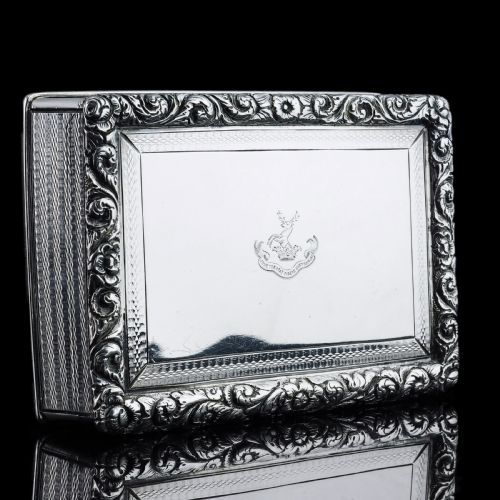
Silversmiths utilised sterling silver and silver-gilt, frequently pairing the metal with agate, leather, bone, tortoiseshell, and steel. Many items feature detailed engraving, floral chased borders, and engine-turned surfaces produced by specialised mechanical turning.
Makers constructed vinaigrettes with internal pierced grilles to hold sponges soaked in aromatic vinegar, whilst nutmeg graters incorporated internal steel rasping grates designed for grating spice at the dining table.
Listings feature sterling silver, silver-gilt, tortoiseshell, agate, and bone across Georgian, Regency, and Victorian periods.
Variations in quality
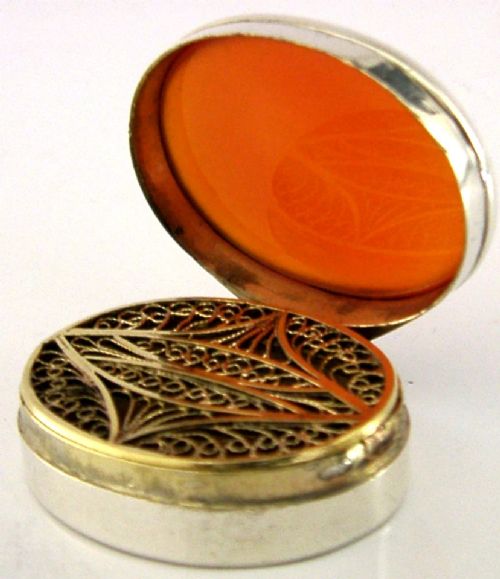
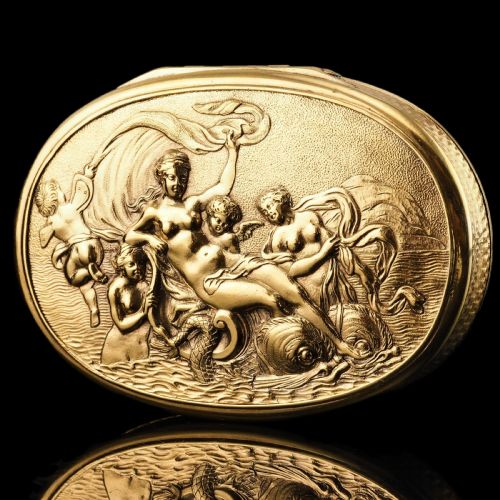
Quality rests upon the crispness of the chasing, the precision of the engine-turning, and the clarity of the hallmarks stamped into the silver. Pieces featuring figural scenes, figural reliefs, or specialist materials such as orange agate sit at the upper end of the range.
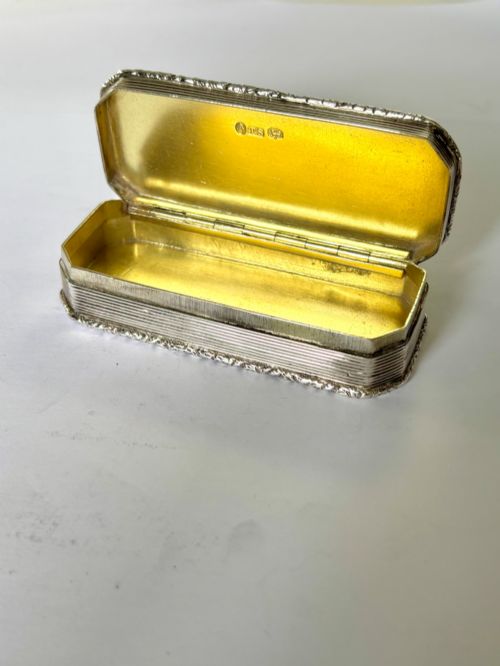
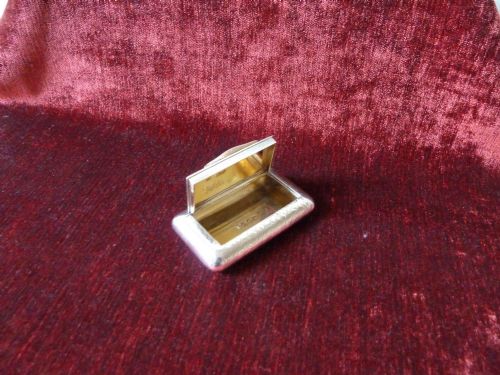
The integrity of internal elements, including fully functional gold-wash interiors, original sponges inside vinaigrettes, and tight-fitting hinged lids, distinguishes standard production items from master silversmith output.
Thomas Johnson·Thomas Shaw·Nathaniel Mills·Joseph Willmore·Edward Edwards·John Bettridge·Samuel Pemberton·Matthew Linwood·Joseph Ash
The Georgian Silver Pocket Box Glossary
- Vinaigrette
- A small pocket container fitted with a hinged, pierced internal grille for holding a vinegar-soaked sponge. These were carried to mask unpleasant odours in public spaces.
- Silver-gilt
- Sterling silver that has been coated with a thin layer of gold through fire gilding or electroplating. This technique imparts a rich, warm yellow hue to the interior or exterior of the box.
- Engine-turned
- A decorative surface pattern produced by a machine that cuts precise geometric lines into the metal. This technique was popular on nineteenth-century pocket accessories.
- Etui
- A small case designed to hold needles, tweezers, scissors, and other small personal implements. They represent the more multifunctional side of pocket silver.
- Bright cut engraving
- A surface decoration technique utilising faceted cuts made with a sharp graving tool to catch the light. It creates a sparkling, geometric border or central motif.
Georgian Silver Pocket Box: Frequently Asked Questions
What was a pocket box used for?
These containers held dry substances like tobacco snuff or grated nutmeg for culinary use. Others stored pills, patches, or aromatic vinegar-soaked sponges.
Owners carried them daily in pockets or waistcoats for personal refreshment and convenience.
How do I identify a Georgian box?
Examine the hallmarks stamped on the metal, which typically indicate the assay office, date letter, and maker's mark. Stylistic clues include bright-cut engraving and floral chased borders typical of the eighteenth and early nineteenth centuries.
Matching the maker's mark against historical registry records confirms the exact working period.
Why do some silver boxes have gold interiors?
Silver-gilt interiors protected the base silver from the corrosive chemical properties of moist snuff, vinegar, or tobacco. The gold wash prevented the metal from tarnishing too rapidly through constant use.
This treatment also added a decorative flourish when the lid was opened.
Are all these pieces English?
While many originated in Birmingham and London workshops, the selection includes pieces made in Scotland, Ireland, and by Chinese Export silversmiths for Western markets. Regional hallmarks help pinpoint the exact geographic origin.
Each region often employed distinct decorative motifs and casting techniques.