



Georgian Salt Box
A georgian salt box is a domestic container built to keep salt dry, and collectors prize these timber and metal pieces for their utilitarian charm.
Georgian Salt Box
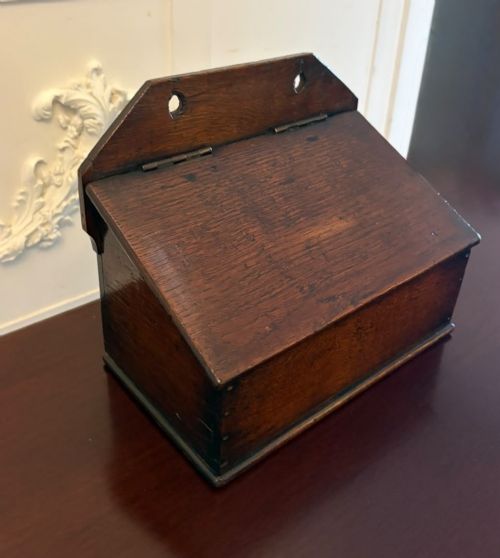
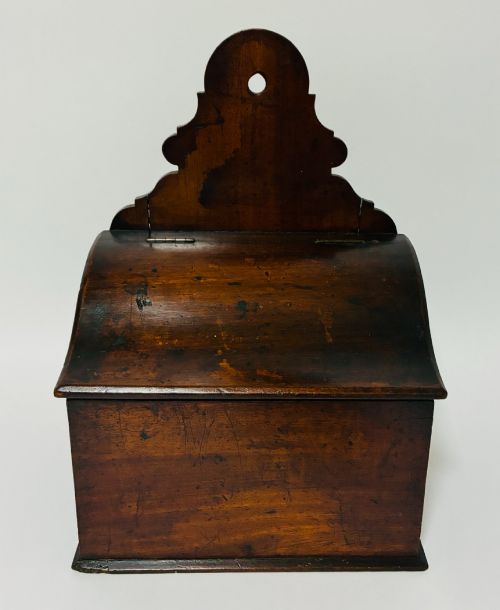
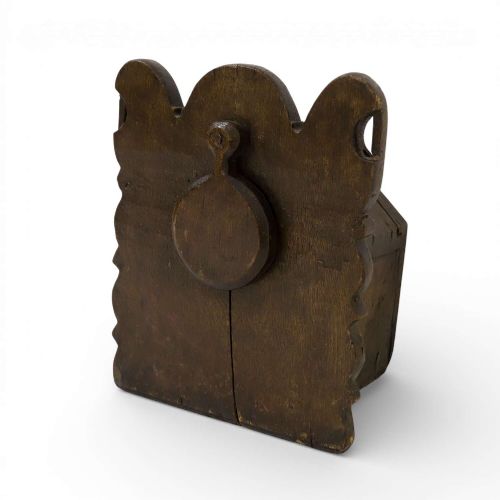
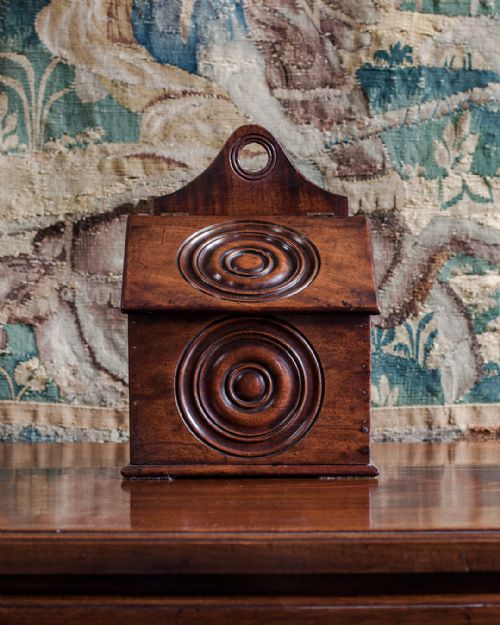
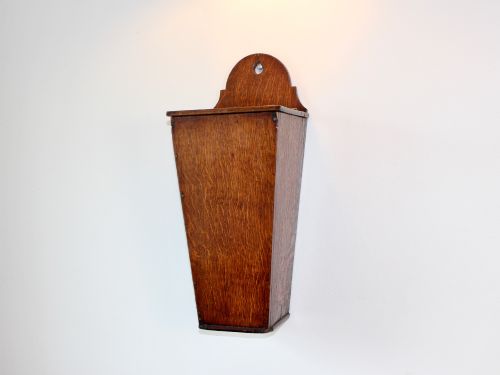
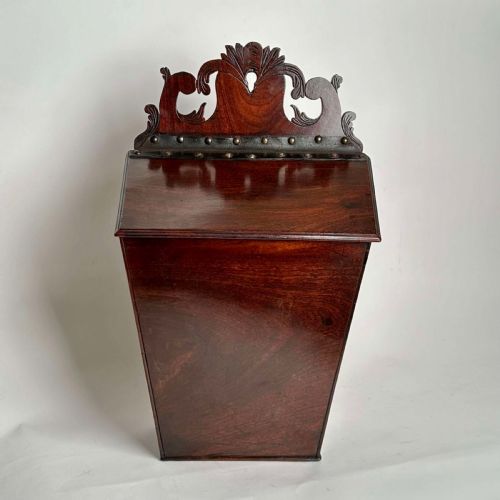
A georgian salt box is primarily a wall-hanging domestic container designed to protect coarse salt from kitchen dampness. The versions found on this page span from simple rustic timbers to finely figured hardwoods.
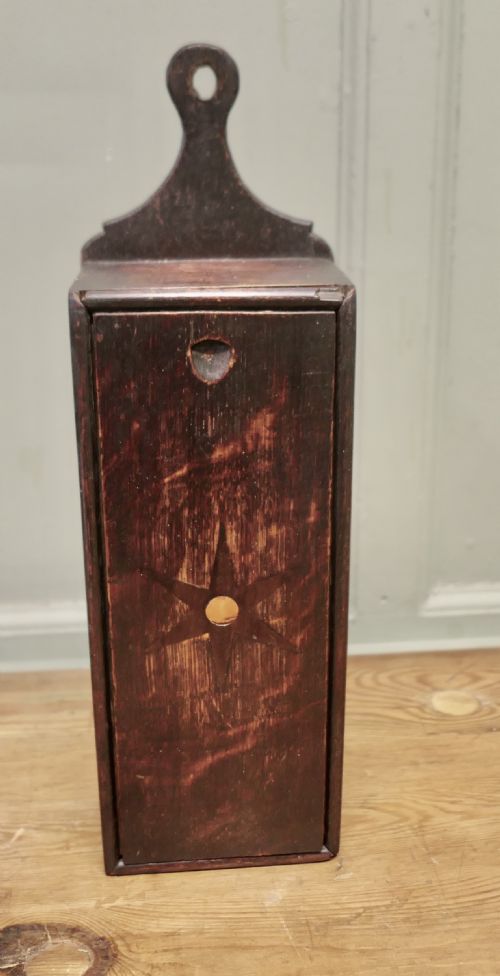
Most examples originate from the eighteenth and early nineteenth centuries, reflecting the periods commonly termed Georgian. They appear alongside related domestic receptacles such as candle boxes and wall boxes.
The dominant material in these pieces is oak, often shaped in vernacular country styles. Mahogany variants also occur, sometimes displaying flame grain patterns suited to more formal interiors.
How They Were Made
Cabinetmakers and country joiners constructed these boxes using solid timbers like oak and mahogany, fastened with traditional joints. Many retain original iron hardware, including hinges and hanging loops.
Surface treatments vary from plain waxed wood to traces of early red paint. More refined mahogany pieces rely on skilled polishing to highlight the natural grain rather than applied finishes.
Listings combine oak and mahogany timbers alongside iron hardware and painted surfaces from the seventeenth through the nineteenth centuries.
What Varies in Quality
Quality rests in the depth of the surface patina and the originality of the hardware. Boxes that retain their original iron hinges and mounting points hold greater integrity than those with replaced parts.
Timber selection dictates the distinction between vernacular pieces and finer cabinetwork. Plain oak utility boxes contrast with richly figured flame mahogany versions intended for more visible spaces.
Samuel Pemberton·Thomas Johnson·Jacob Amyand·Nathaniel Mills·John Bettridge·John Thwaites·James Delasalle
The Georgian Salt Box Glossary
- Salt Box
- A wall-mounted container with a sloping lid designed to dispense coarse salt easily. These pieces typically feature a high backboard with a drilled lug for hanging.
- Vernacular
- Objects made by local craftsmen for everyday domestic use rather than following strict high-style architectural rules. This term describes the utilitarian character of country-made furniture.
- Treen
- Small handmade wooden domestic objects produced before the widespread adoption of plastics and modern manufacturing. The term encompasses boxes, spoons, and small household containers.
- Patina
- The surface sheen and colour developed by wood and metal over decades of handling, cleaning, and exposure to light. A deep patina indicates long-term care and genuine age.
- Fusee
- A conical pulley mechanism used in clockwork to ensure even tension as the mainspring unwinds. This movement appears in specific timepiece listings associated with wall clocks.
Georgian Salt Box: Frequently Asked Questions
What is a georgian salt box?
A georgian salt box is a wall-mounted wooden container made to keep kitchen salt dry during the eighteenth and nineteenth centuries. They were standard fixtures in domestic kitchens before modern packaging.
Most examples feature a hinged sloping lid and a high backboard with a hole for hanging near the hearth. Their design kept the contents accessible while protecting them from moisture.
How were salt boxes used?
These boxes hung on kitchen walls within easy reach of the hearth or food preparation areas. Salt was stored in bulk and scooped out as needed for cooking and curing.
Because salt attracts moisture from the air, keeping it in a covered wooden box near a warm fire helped maintain its usability.
How do I date a salt box?
Dating relies on timber species, construction methods, and hardware style. Oak construction with iron hand-wrought hinges typically points to earlier periods, while mahogany often suggests later Georgian or Regency dates.
Examining the backboard, nail types, and tool marks provides further clues to the manufacturing era.
Are salt boxes and candle boxes the same?
While both hang on walls and share similar wooden construction, salt boxes generally feature a sloping lid designed for scooping. Candle boxes often have flat or sliding lids and different interior proportions.
Historical listings sometimes group them together due to overlapping domestic forms and materials.