

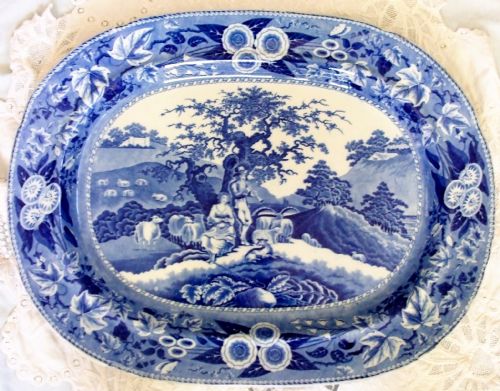


Georgian Pottery Platter
These pieces of georgian pottery platter heritage offer a glimpse into dining tables of the eighteenth and nineteenth centuries.
Georgian Pottery Platter
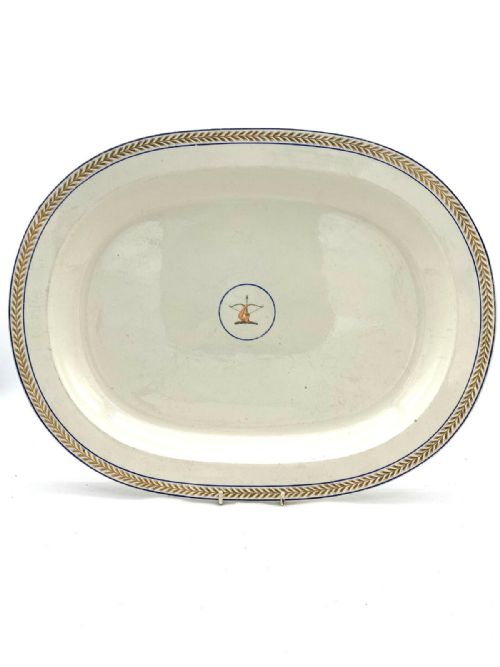
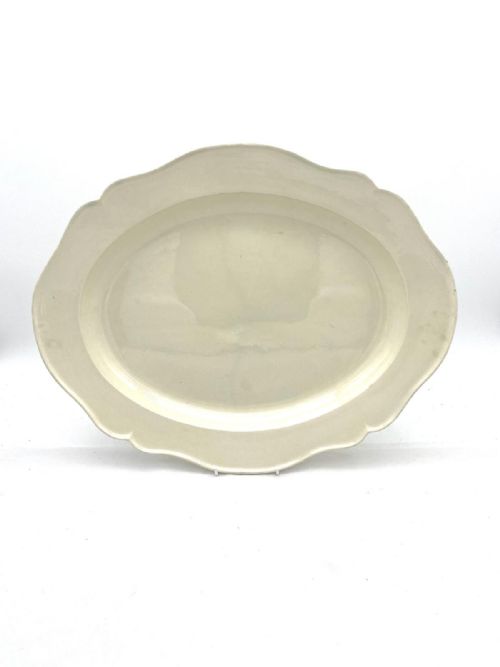
A georgian pottery platter functions primarily as a serving vessel for meat or table provisions, spanning forms such as chargers, meat dishes, and draining trays. The selection here reflects manufacturing traditions originating across the eighteenth and nineteenth centuries, taking shape as earthenwares finished in slip or transfer prints.
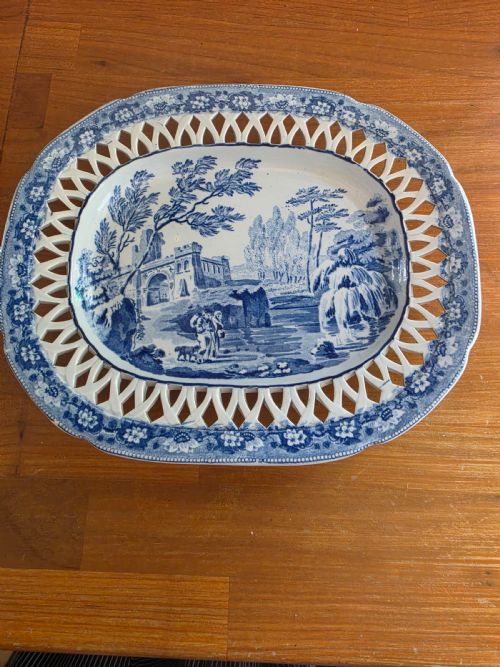
Buyers will encounter wares attributed to Regency and Georgian periods, alongside examples displaying Dutch Baroque or Chinoiserie styles. These objects originate from Staffordshire potteries and wider English ceramic centres, carrying patterns that range from pastoral scenes to classical architectural ruins.
How They Were Made
Potters shaped these vessels from earthenware, creamware, and pearlware bodies, applying lead glazes and tin enamels to seal the porous clay. Cobalt pigment provided the blue coloration for transfer printing techniques, which transferred detailed copperplate engravings onto the ceramic surface before firing.
Makers utilised polychrome pigments on delftware chargers, painting designs directly onto the raw glaze. Firing took place in bottle kilns, where potteries managed heat to fix the transfer prints and glossy finishes onto the serving dishes.
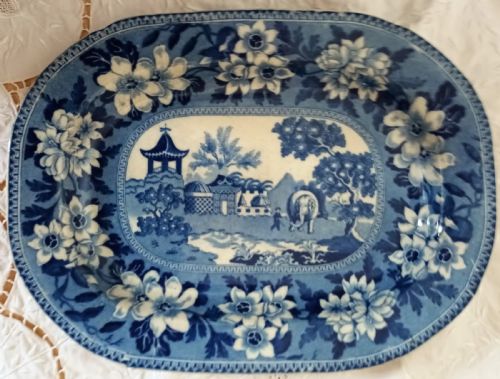
Platters frequently depict exotic ruins and roaming elephants alongside domestic English landscapes.
What Varies in Quality
Clarity of the transfer print defines the visual standard of a piece, separating sharp, deeply inked patterns from blurred or smudged impressions. The crispness of moulded details, such as pierced rims or silver-shaped edges, demonstrates the skill involved in shaping the raw clay.
The uniformity of the glaze application and the absence of kiln faults determine the finish of the surface. Wares possessing well-balanced proportions and clear cobalt tones represent the upper tier of production from established potteries.
Davenport·Wedgwood·John Rogers & Son·Caughley·Spode·Thomas Lakin·Brameld & Co·Mason·J. & R. Clews·Elkin Knight & Bridgwood·J. & W. Ridgway·Robert Hamilton of Stoke
The Georgian Pottery Platter Glossary
- Creamware
- A refined earthenware developed in the eighteenth century with a pale yellowish straw-coloured lead glaze. This body replaced heavier salt-glazed stonewares on many dining tables.
- Pearlware
- An improved earthenware body introduced in the late eighteenth century containing a small amount of cobalt in the glaze to create a bluish-white appearance that imitated Chinese porcelain.
- Transfer printing
- A decoration technique where an engraved copper plate applied ink to tissue paper, which was then pressed onto the unfired ceramic surface to transfer the design.
- Charger
- A large decorative plate or serving dish used on dining tables or displayed on sideboards throughout the Georgian era.
- Delftware
- Tin-glazed earthenware produced in England and the Netherlands, featuring opaque white surfaces painted with pigments.
Georgian Pottery Platter: Frequently Asked Questions
How were these platters used?
These vessels served roasted meats, fish, and large courses at the centre of dining tables during formal meals. Their wide surfaces and deep wells contained juices and allowed servants to present food efficiently.
After dining, many chargers and large dishes were displayed upright on sideboards or dresser shelves as decorative items. Their printed scenes provided conversation pieces for guests examining the tableware.
How do I identify creamware from pearlware?
Creamware displays a warm, pale yellow hue where the transparent lead glaze pools in crevices and along the foot rim. This body was perfected in Staffordshire during the middle of the eighteenth century.
Pearlware exhibits a faint bluish tint in the glaze, particularly around the rims and handles, resulting from added cobalt. Potters developed this formulation to achieve a whiter background for blue and white transfer prints.
What is a meat drainer?
A meat drainer is a pierced ceramic insert designed to sit inside a matching platter. It allowed meat juices to drain away from the joint during carving and serving.
These inserts often feature intricate pierced patterns and finger holes for lifting them out of the main dish. They represent specialised table pottery from the Regency period.
Can I use these platters for serving food?
Antique earthenware and pearlware can be used for serving dry foods, though historic glazes may be sensitive to modern detergents and cutlery. Hand washing in warm water preserves the ceramic body and prevents crazing.
Most collectors choose to display these pieces rather than use them for daily dining. Their age and historic glazes make careful handling essential.
What are Chinoiserie patterns?
Chinoiserie patterns depict European interpretations of Chinese landscapes, architecture, and figures. These designs appeared widely on blue and white transfer-printed pottery during the Georgian period.
Wares featuring these scenes often show pagodas, bridges, and exotic foliage arranged across the surface of the platter. This aesthetic reflected a broad eighteenth-century fascination with East Asian design.