




Georgian Pillar Table
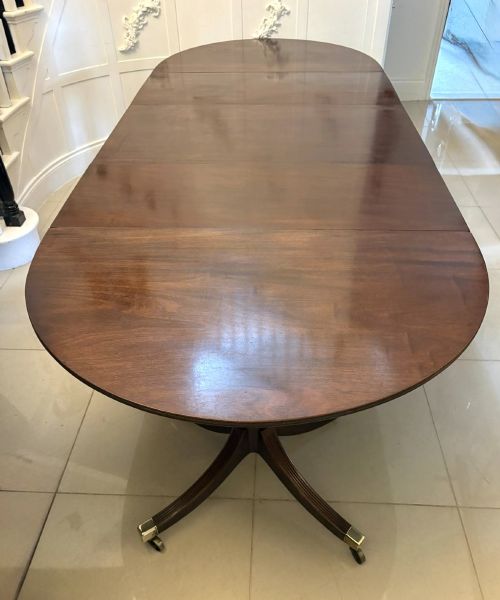
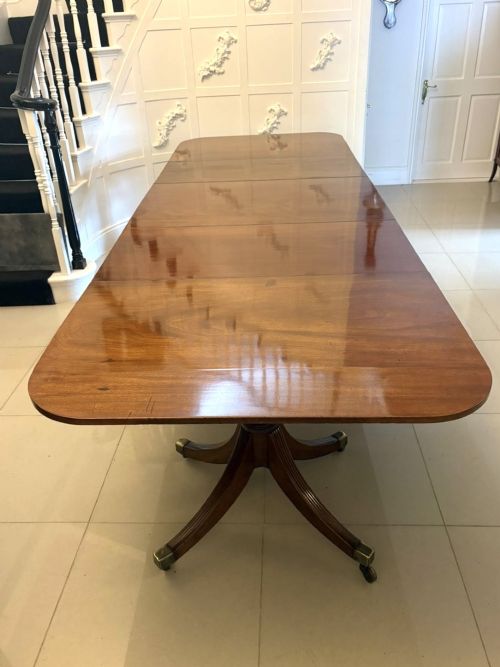
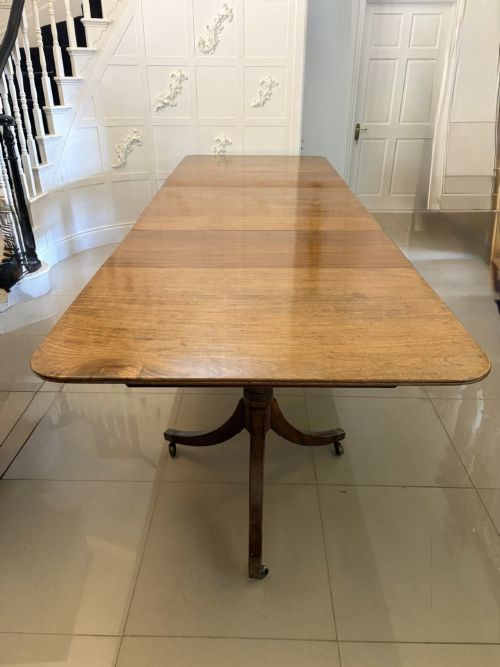
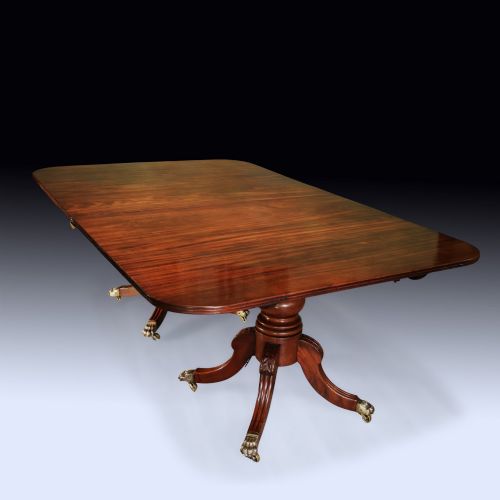
When you want a georgian pillar table, you are looking at substantial mahogany extending dining furniture designed to seat large numbers.
Georgian Pillar Table
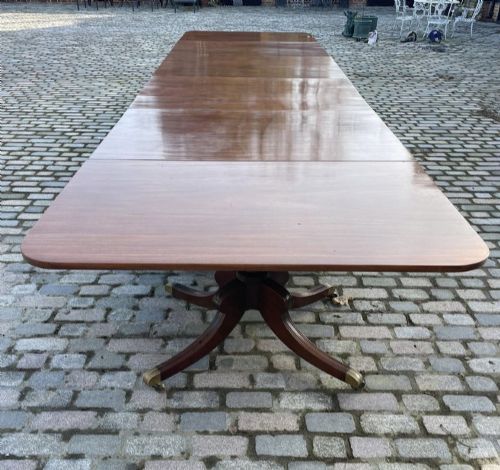
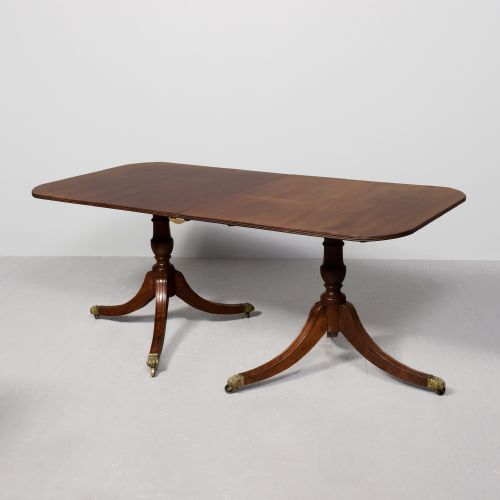
A georgian pillar table is a substantial dining surface supported by one, two, or three central pedestals rather than standard corner legs. These tables appear primarily in configurations designed to extend using removable leaves and pillar supports, accommodating gatherings from twelve to over twenty-eight guests.
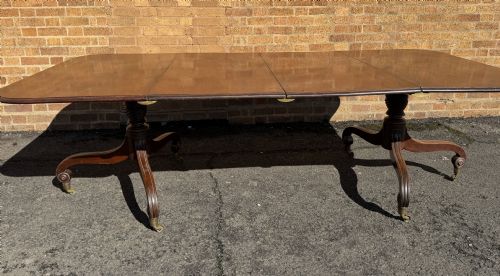
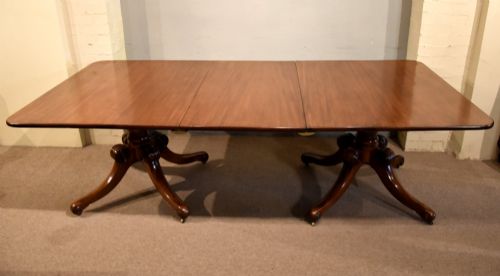
The most common examples on this page are mahogany twin-pillar and triple-pillar dining tables dating from the Georgian, Regency, and George III periods, alongside later revival pieces. Alongside large dining tables, the evidence includes smaller tripod tables and Pembroke variations resting on single central pillars.
Originating to provide versatile dining arrangements that could be shortened or lengthened easily, these pedestal forms allowed diners more legroom without interference from traditional corner table legs. The heavy timber construction ensures stability even when fully extended with multiple leaves in place.
How They Were Made
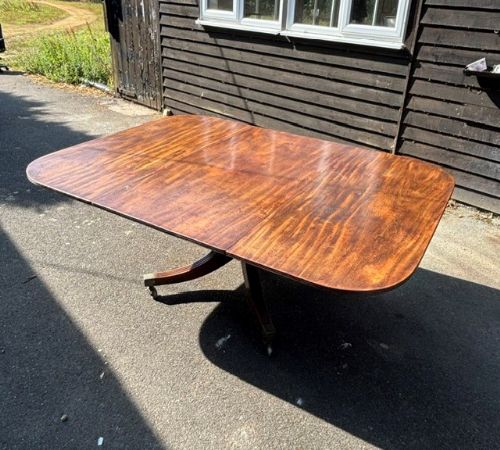
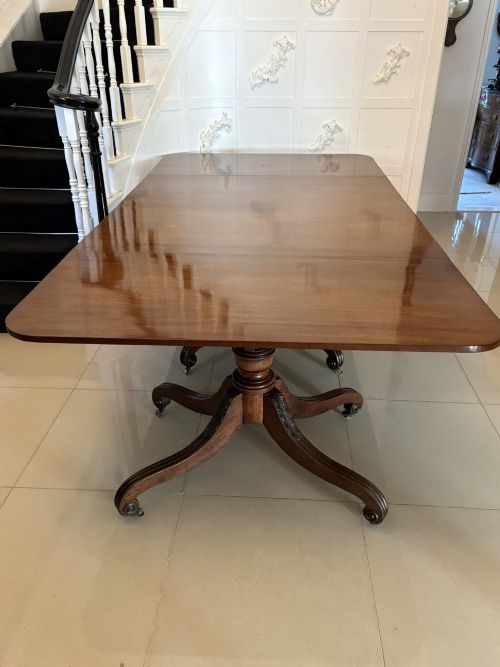
Makers constructed these pillar tables predominantly from solid and figured mahogany, utilising the dense grain for stability across wide tabletops and central pedestals. Brass castors frequently fitted to the base of the pillar feet allowed heavy extending tables to move smoothly across floors.
Extending mechanisms relied on pull-out wooden runners and stable pillar bases to support removable leaves without sagging. Cabinet makers joined timber using traditional joinery methods, matching figured mahogany veneers across table tops to maintain a continuous visual grain pattern.
Some dining tables stretch past twenty-eight seats, requiring serious teamwork just to rearrange the room.
What Varies in Quality
The selection of timber grain separates standard production from exceptional examples, with figured mahogany and Spanish mahogany commanding high regard for visual depth. The precision of the pillar turning and the complexity of the brass or bronze fittings dictate the standard of execution.
Original mechanisms and matching removable leaves that retain uniform colour and patina represent the upper tier of surviving examples. Tables produced by documented makers or retaining provenance demonstrate superior cabinet making compared to generic workshop output.
Thomas Butler·William Trotter
The Georgian Pillar Table Glossary
- Twin-pillar
- A dining table supported by two central pedestals. This design provides balanced support for medium-length extending tables.
- Triple-pillar
- A dining table utilising three central columns. These larger frameworks support extensive dining surfaces designed for large numbers of guests.
- Tripod table
- A small occasional table supported by a single central pillar resting on three spreading feet. These pieces serve flexible roles as side tables or stands.
- Pembroke table
- A drop-leaf table featuring hinged flaps on opposing sides and a central pillar or leg configuration. They often include a frieze drawer for storage.
- Ormolu
- Gilded bronze ornamentation applied to furniture mounts and decorative items. This technique adds metallic contrast to timber surfaces.
Georgian Pillar Table: Frequently Asked Questions
How do twin pillar and triple pillar tables differ?
Twin pillar tables utilise two central pedestals to support the top and any inserted leaves, making them suitable for moderate seating lengths. Triple pillar tables add a third column to handle much longer spans and greater seating capacity.
Both formats use similar mechanisms, but the choice depends entirely on the dining room scale and the number of guests you intend to seat regularly.
Were these tables always used for dining?
While large pillar tables served primarily as formal dining furniture in country houses and town residences, smaller single-pillar formats functioned as side tables, Pembroke tables, or tripod lamp stands.
The modular nature of extending pillar tables allowed households to adapt room layouts easily between large dinner parties and everyday family use.
How do I identify a George III pillar table?
George III examples typically feature dense figured mahogany timber, hand-turned pedestals, and original brass castors beneath splayed legs. The construction methods reflect late eighteenth or early nineteenth-century cabinet making techniques.
Matching colour across the removable leaves and the main table sections also indicates period construction rather than later adaptation.
Can I use extending leaves regularly?
Extending leaves are designed to be inserted and removed as needed using the internal wooden pull-out runners. Regular use of the mechanism is safe provided the table stands on a level floor and weight is distributed evenly.
Storing extra leaves in a stable environment with consistent humidity prevents warping and maintains proper alignment with the main pedestals.