

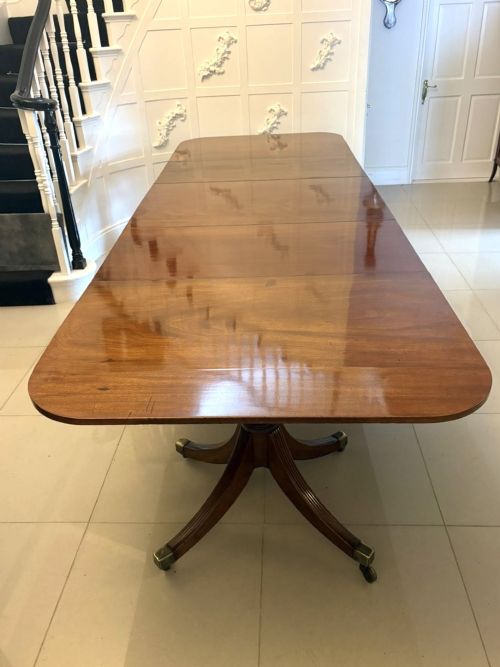


Georgian Triple Pillar Table
A georgian triple pillar table is a grand dining table built for large gatherings, offering modular versatility and rich timber grain.
Georgian Triple Pillar Table
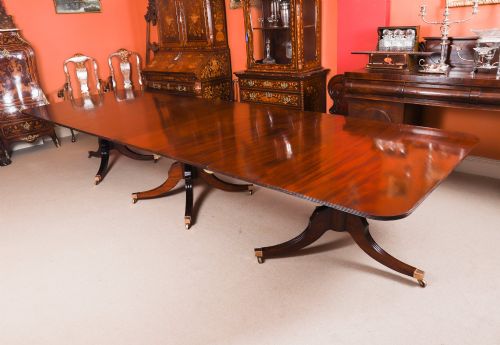
A georgian triple pillar table is a substantial dining table designed to seat twelve to eighteen people comfortably using extending leaves and multiple pedestal supports. These pieces mostly originate from the Georgian, George III, and Regency periods, alongside later twentieth-century reproductions built in the same classical idiom.
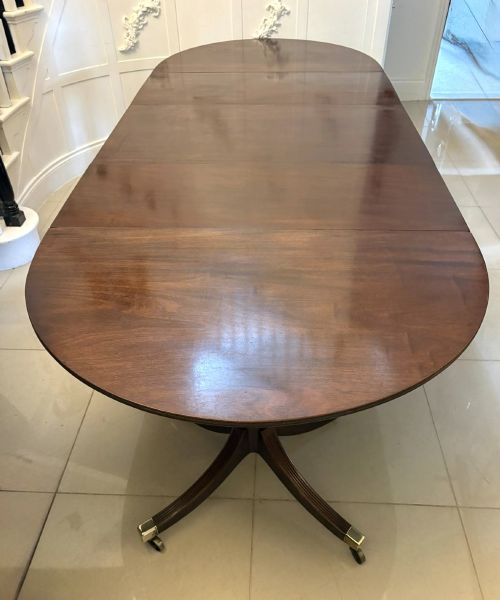
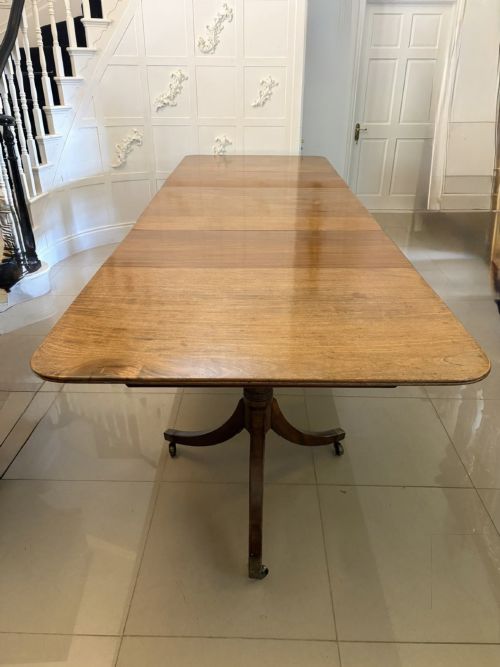
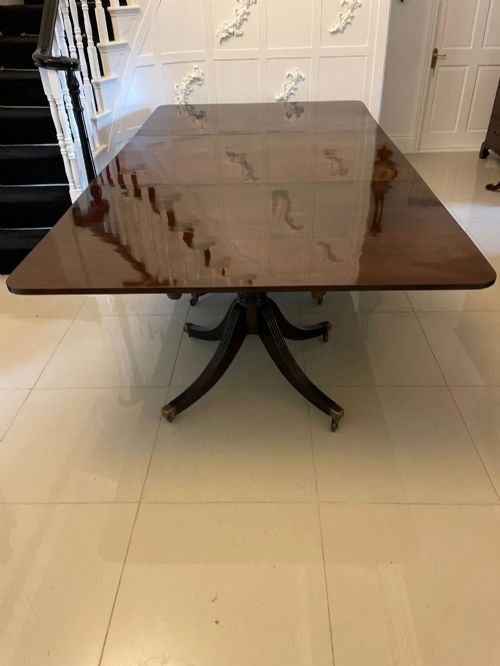
The primary form involves three distinct turned pedestals standing on brass castors, supporting long mahogany boards that expand to accommodate large dinner parties. Buyers frequently encounter versions fitted with removable leaves that allow the length to be adjusted according to the occasion.
Originating in dining rooms of substantial country houses and town residences, these tables survive in various formats from around eighteen hundred to the nineteenth century. The typical example seen here utilises figured mahogany timber and spans considerable lengths to serve as the focal point of a large dining room.
Materials and construction
Cabinet makers constructed these dining tables using solid and veneered mahogany, selected for its deep reddish-brown tone and prominent grain patterns. Figured timber was prized for table tops to create visual impact under candlelight.
The central and outer pedestals rely on turned wooden pillars supported by multi-legged bases fitted with brass castors for mobility. Joinery techniques allowed sections to separate or lock together securely with brass clips when extended with leaves.
Georgian Triple Pillar Table Retail Price Guide 2026
Typical asking prices for georgian triple pillar table among the pieces listed under this phrase on Sellingantiques today, from the lower quarter to the upper quarter. They describe what is for sale here now, not the wider market.
Listings for this phrase feature mahogany timber exclusively, spanning the Georgian, Regency, and early twentieth-century eras.
What separates the best from the rest
The distinction in quality rests upon the selection of figured mahogany timber and the crispness of the turning on the pillars. Superior examples display symmetrical grain patterns across the top boards and substantial brass castors on the feet.
Proportion and stability define the superior table, ensuring the three pillars distribute weight evenly without sagging when fully extended with leaves. Lesser pieces show simpler timber selection and less refined joinery detail around the pedestal mounts.
The Georgian Triple Pillar Table Glossary
- Triple pillar
- A dining table supported by three separate pedestals rather than four corner legs. This arrangement provides greater legroom for diners seated along the sides.
- Extending table
- A dining table designed to take removable leaves in the centre. This mechanism alters the overall length to suit different numbers of guests.
- Figured mahogany
- Timber cut to highlight rippled or decorative grain patterns. Cabinet makers reserved this wood for prominent surfaces like table tops.
- Regency
- A stylistic period spanning the early nineteenth century. Furniture from this era often incorporates classical proportions and brass mounts.
- Castor
- A small wheel fitted to the base of each pillar leg. It allows heavy dining tables to be moved across floors with minimal effort.
Georgian Triple Pillar Table: Frequently Asked Questions
How many people does a triple pillar table seat?
These large dining tables generally accommodate twelve to eighteen guests depending on the presence of extending leaves. The three-pillar structure provides ample space along the length without interfering with chair placement.
Buyers often select these formats specifically for hosting large dinner parties in spacious dining rooms.
What periods do these dining tables come from?
The listings span the Georgian, George III, and Regency periods around eighteen hundred and the nineteenth century. Later twentieth-century examples also appear, reproducing the traditional pedestal format.
Understanding these eras helps buyers distinguish authentic period pieces from later interpretations built in similar styles.
How do the extending leaves work?
Removable wooden boards insert into the centre of the table top to bridge the gap between the pedestals. Brass mechanisms or clips beneath the surface hold the sections firmly in place.
This modular design allows households to shorten the table for everyday use and lengthen it for larger gatherings.