




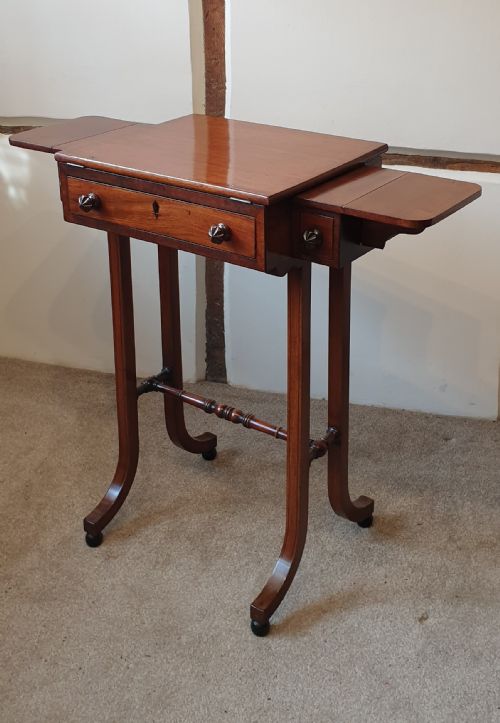
Georgian Pull Out Table
A georgian pull out table is a clever mechanism of solid mahogany made for dining or writing, built to expand quietly when guests arrive.
Georgian Pull Out Table
When you search for a georgian pull out table, you encounter dining tables, desks, and bedside pieces designed with sliding mechanisms or leaves. These objects combine formal proportion with practical utility, serving daily domestic life in period interiors.
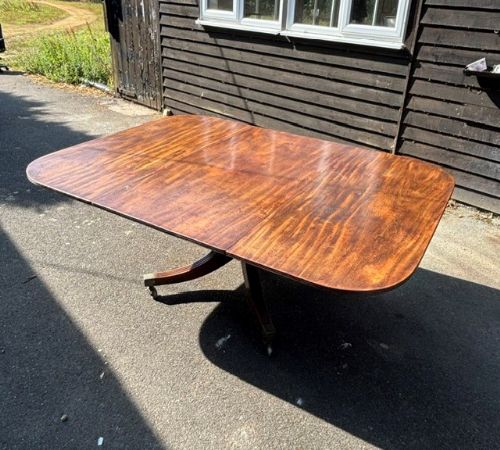
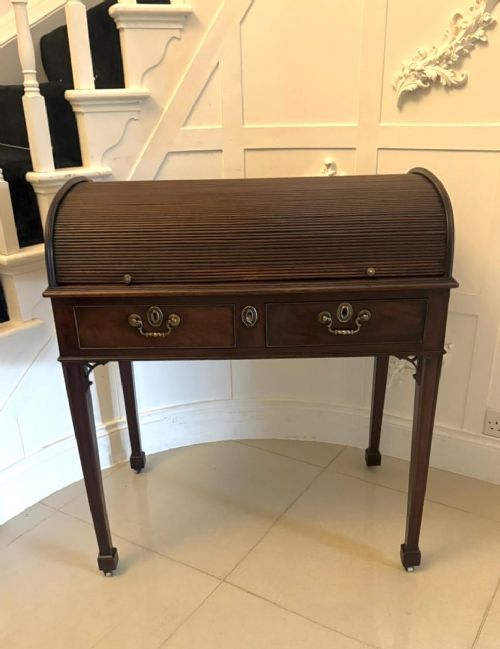
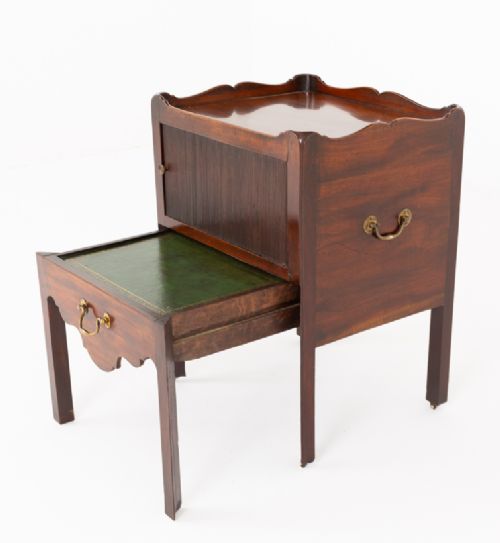
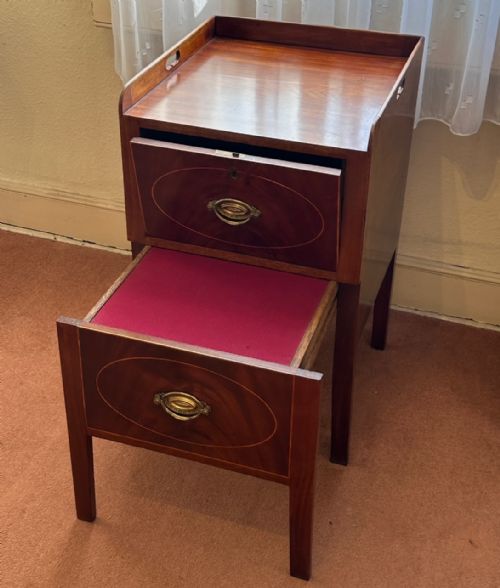
The versions most commonly met on this page span the eighteenth century and the regency period, executed primarily in mahogany. They range from large extendable dining tables with multiple leaves to compact bedside cabinets and cylinder desks fitted with pull-out slides.
Makers such as Thomas Butler and Gillows appear in the record, demonstrating the high level of cabinet-making applied to these adaptable forms. Smaller occasional pieces and side tables also feature pull-out elements, offering surface space on demand.
How they were made
Carpenters constructed these tables using solid mahogany, often paired with brass hardware and leather or fabric inserts for writing surfaces. The timber was selected for grain and stability, essential for components that slide and extend repeatedly.
Mechanisms rely on precise joinery, including draw-leaf configurations, pillars, and tracked runners concealed beneath the main top. This engineering allowed large dining tables to expand smoothly while maintaining structural balance across multiple legs.
Object types range widely from large multi-leaf dining tables to compact bedside cabinets and architectural desks.
What varies in quality
Quality rests on the integrity of the sliding mechanism and the smoothness of the draw action. Superior examples maintain alignment and stability across extended leaves without sagging or binding.
The grade of mahogany timber and the crispness of the turned or tapered legs distinguish finer workshops from standard production. Original brass fittings and untouched secondary woods further separate exceptional pieces from later adaptations.
Thomas Butler of London·Gillows
The Georgian Pull Out Table Glossary
- Pull-out slide
- A secondary board that extends from beneath a main surface to provide extra writing or serving room. It moves smoothly on internal runners.
- Draw-leaf
- A table design where end leaves pull out from beneath the central top, dropping into place to lengthen the surface. This system keeps leaves stored within the frame.
- Tambour
- A surface made of narrow strips of wood glued to canvas, allowing a desk top or cylinder to slide around a curve. It conceals interior compartments when closed.
- Pillar table
- A freestanding table supported by a central column resting on tripod or multi-legged feet. This format often incorporates tilting or extending mechanisms.
- Cylinder desk
- A writing desk featuring a rounded, rolling shutter that encloses the desk interior. It frequently incorporates pull-out writing slides for immediate use.
Georgian Pull Out Table: Frequently Asked Questions
How do pull-out dining tables work?
These tables utilise internal tracks and runners that allow the main sections to part evenly. Additional leaves are then inserted or drawn out from within the frame to expand the surface area.
Once fully extended, locking pins or stable leg supports secure the structure for dining, ensuring the table remains balanced under weight.
Where were these tables used in the home?
Large extending versions belonged in the formal dining room, where they adapted easily from family meals to large dinner parties. Smaller pull-out formats served in studies, libraries, and bedrooms as desks or bedside cabinets.
Their adaptability made them valuable in multi-use rooms throughout Georgian and Regency households.
How do I care for mahogany surfaces?
Keep mahogany timber away from direct heat sources and strong sunlight to prevent the wood from drying out or fading. Regular dusting with a soft, dry cloth preserves the polished finish.
Apply traditional beeswax occasionally to nourish the grain, avoiding silicone-based polishes that can build up over time.
How can I tell a Georgian table from a later copy?
Examine the secondary woods used inside drawers and beneath runners, such as oak or pine, which match period practices. Hand-cut dovetails and timber movement indicators point towards eighteenth or early nineteenth-century construction.
Wear patterns around the sliding mechanisms should look natural and consistent with long periods of domestic use.