
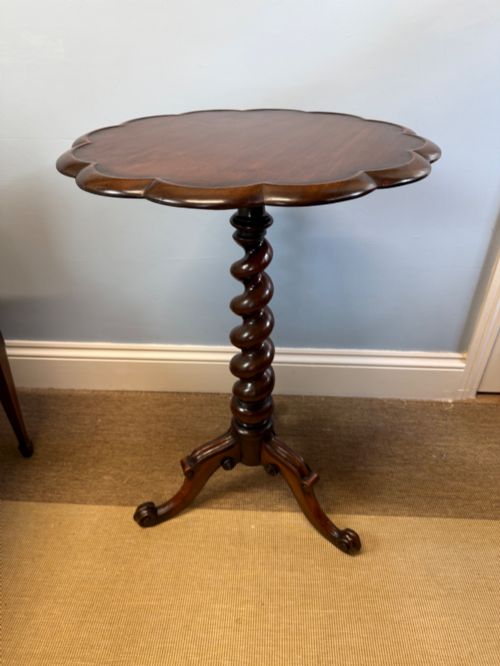
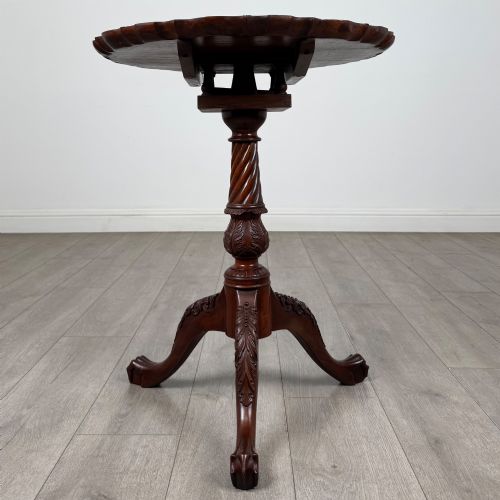
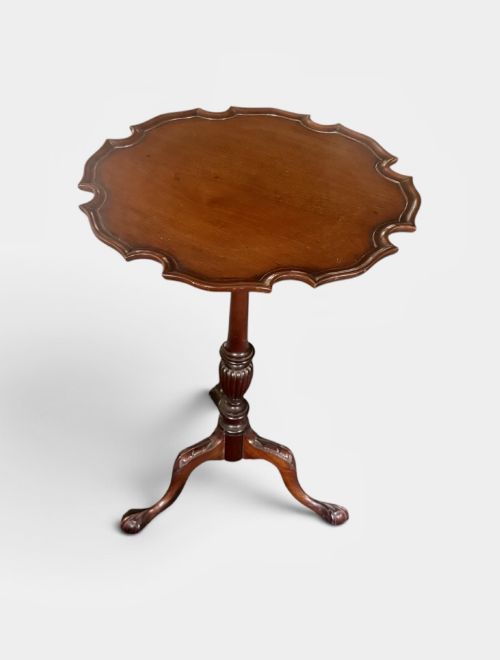
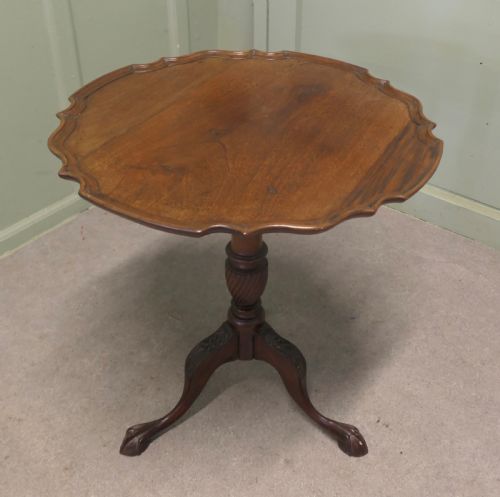

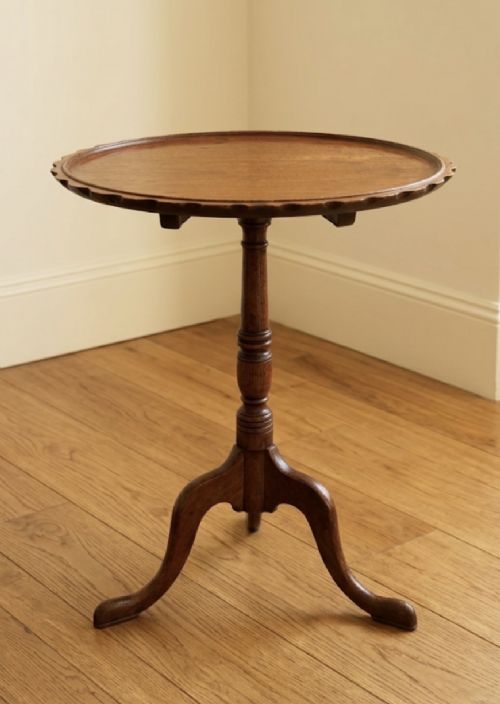


Georgian Piecrust Wine Table
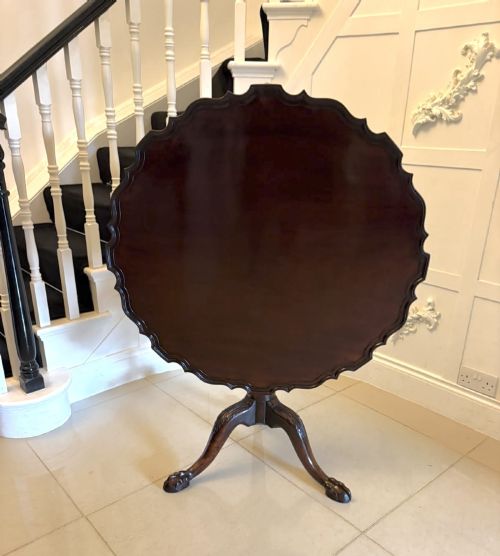
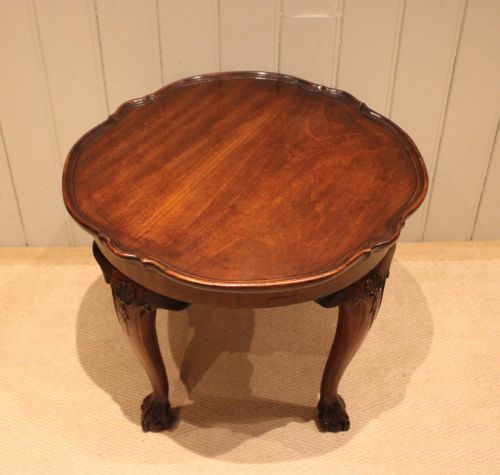
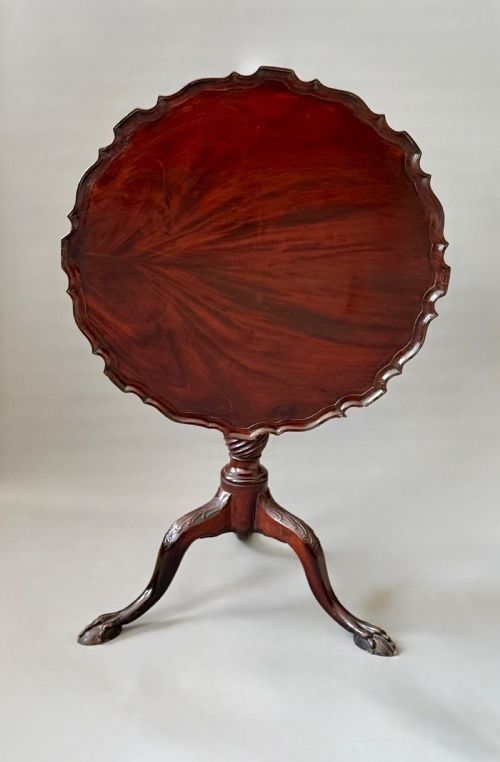
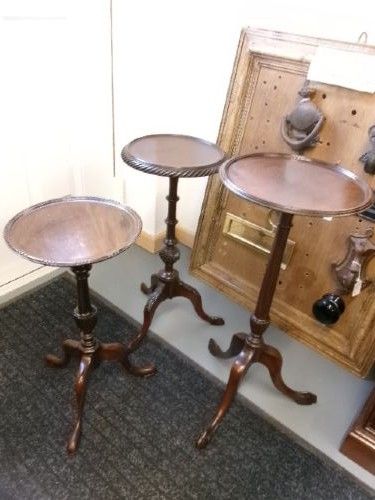
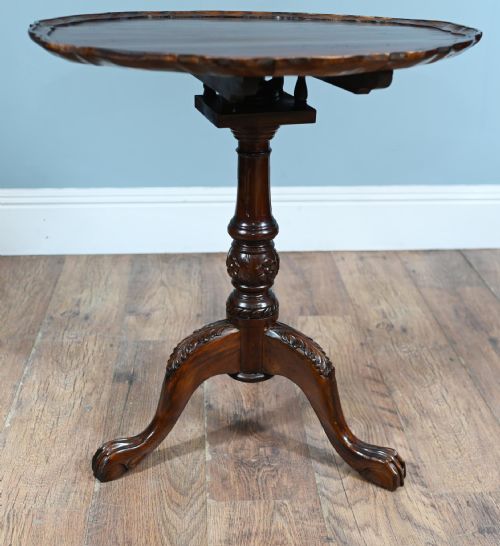
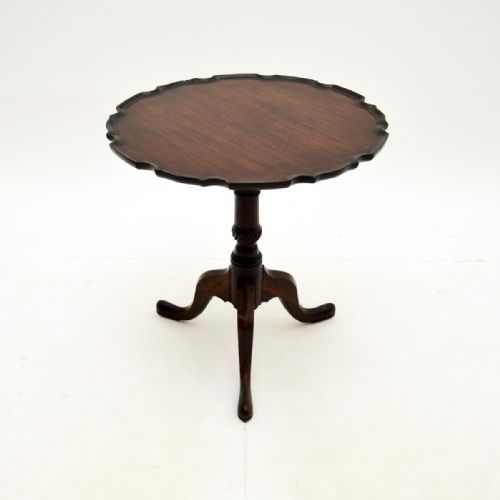
A georgian piecrust wine table is a compact pedestal piece designed for holding glasses, defined by its raised carved rim.
Georgian Piecrust Wine Table
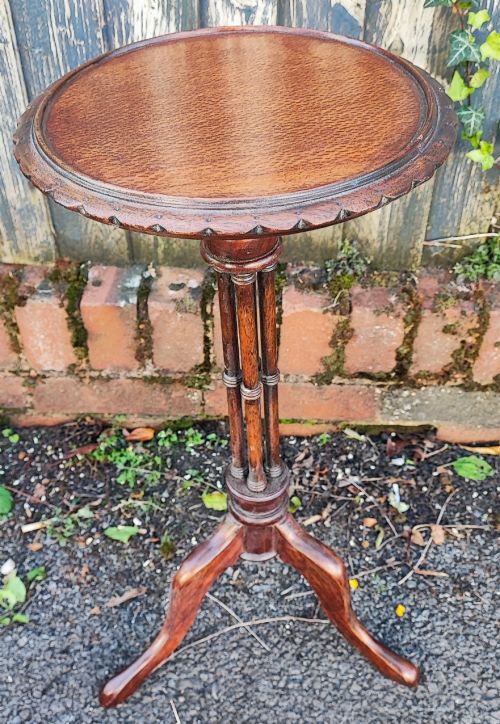
A georgian piecrust wine table serves as a portable surface for holding drinks or small items near seating. Buyers searching for a georgian piecrust wine table frequently encounter tripod tables with circular tops and raised scalloped edges.
The selections span original pieces from the eighteenth century alongside later nineteenth century interpretations and twentieth century revivals. Forms range from simple occasional tables to tilt-top variants fitted with birdcage mechanisms.
Most examples appear in mahogany, though figures show occasional pieces fashioned from figured walnut, solid walnut, and satinwood. The primary configurations include wine tables, tripod tables, and side tables designed for domestic interiors.
Materials and construction
Makers relied predominantly on mahogany for its density and suitability for intricate edge carving. Timber preparation involved selecting solid boards or applying flame mahogany veneer to achieve varied surface figures.
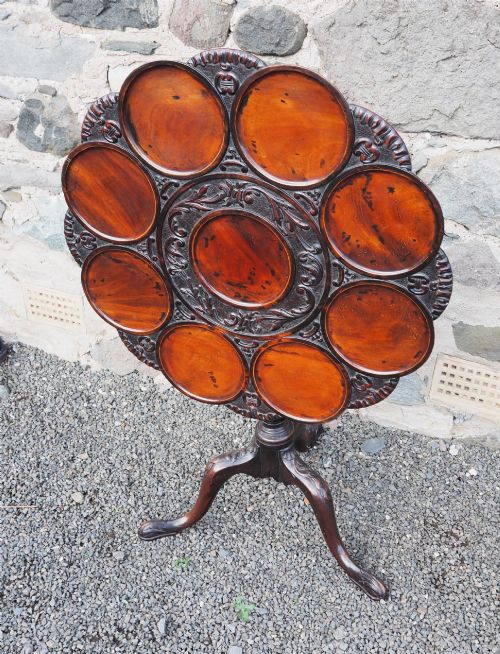
Structural engineering incorporated three-legged tripod bases that provided stability on uneven floors. Many tops utilised birdcage mechanisms, allowing the surface to tilt vertically when not in use.
Materials recorded across current pieces include mahogany, brass, oak, iron, figured walnut, and satinwood.
Assessing quality
Quality rests in the crispness of the carved rim and the proportions of the turned pedestal. Superior examples display fluent carving along the raised edge and well-proportioned cabriole legs terminating in distinct feet.
The integrity of the tilt-top mechanism and the richness of the polished timber surface dictate the standing of an individual piece. Original patination and balanced joinery separate standard production from exceptional examples.
The Georgian Piecrust Wine Table Glossary
- Piecrust rim
- A raised, decoratively carved edge resembling the crust of a pie. This feature required skilled hand chiselling from a solid timber blank.
- Tilt-top
- A hinged table top that pivots to a vertical position. This allows the furniture to be stored compactly against a wall when not in use.
- Birdcage
- A wooden framework beneath the table top that enables both rotation and tilting. It consists of small vertical spindles enclosed within upper and lower plates.
- Tripod base
- A support structure comprising three legs radiating from a central pillar. This design prevents rocking on uneven historical flooring.
- Patina
- The surface sheen and colour developed through age, handling, and waxing. It indicates the historical depth of the polished timber.
Georgian Piecrust Wine Table: Frequently Asked Questions
What is a piecrust table used for?
These pieces served as portable tea or wine tables in reception rooms, providing a stable surface close to seating.
The raised rim prevented glassware and porcelain from sliding off when the table was in use.
What is a birdcage support?
The birdcage is an assembly of small turned posts connecting the table top to the central pillar.
It permits the surface to revolve horizontally in addition to tilting upward.
How do I distinguish eighteenth century pieces?
Eighteenth century examples display hand-carved details, traditional timber preparation, and signs of age in the joints.
Later nineteenth century and Edwardian revivals often utilise machine finishing or different internal construction methods.
Where should I place a wine table?
These compact tables fit easily beside armchairs, sofas, or in corners as lamp stands.
Their small footprint makes them practical for functional use in modern living spaces.