

Mahogany Piecrust Side Table
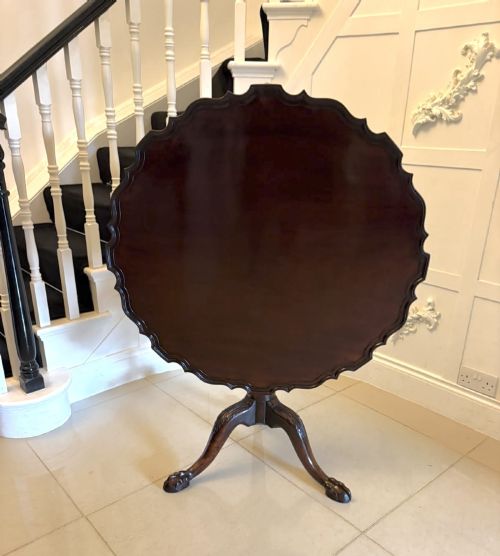
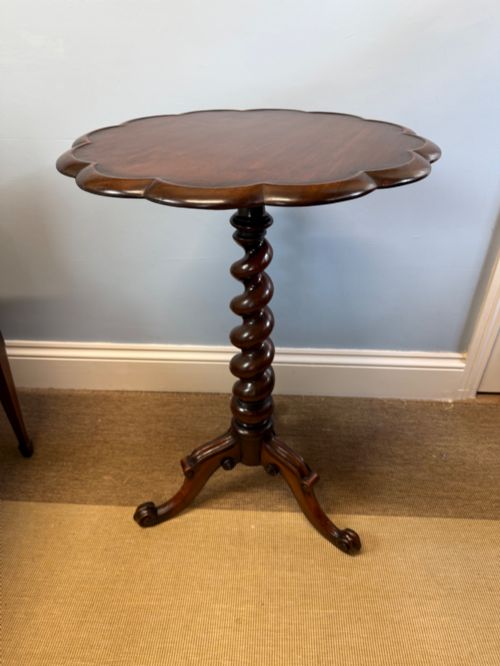
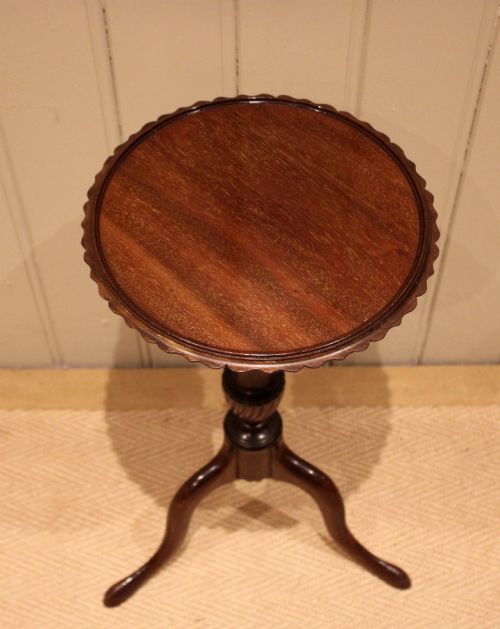
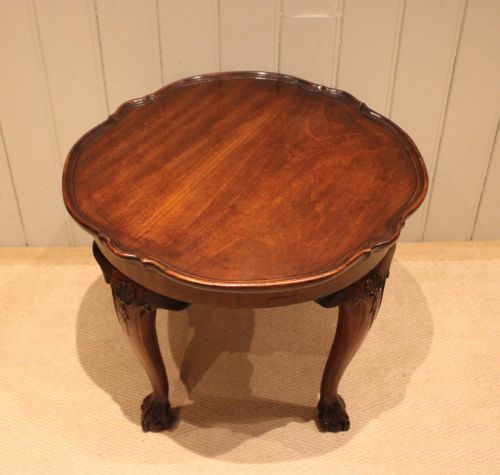
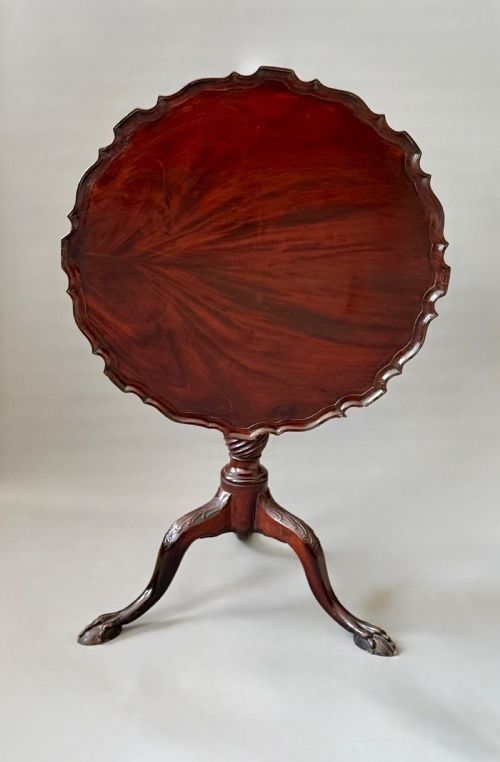
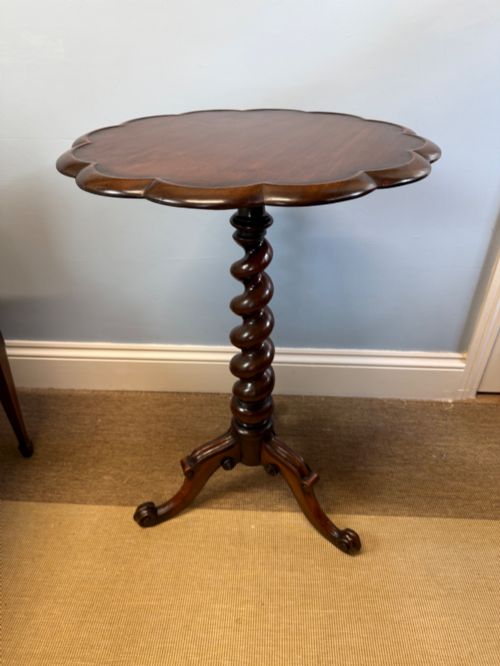
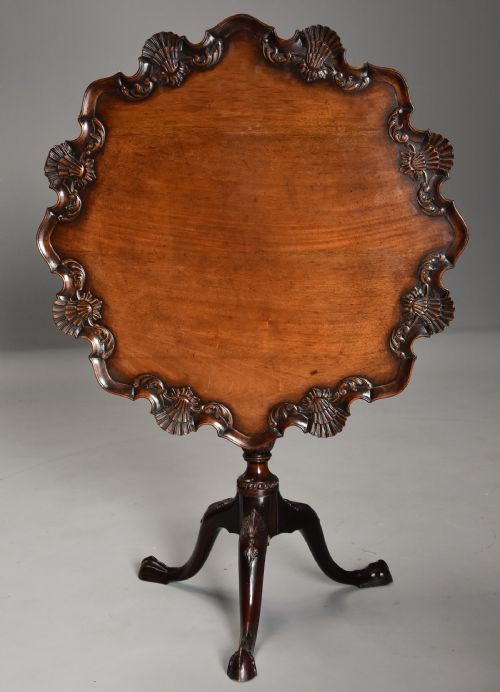
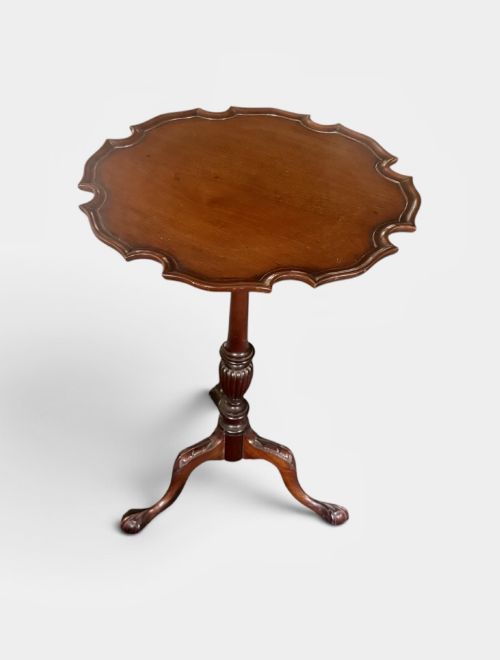
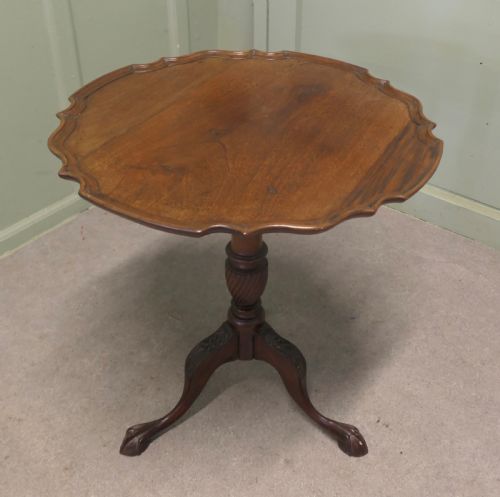
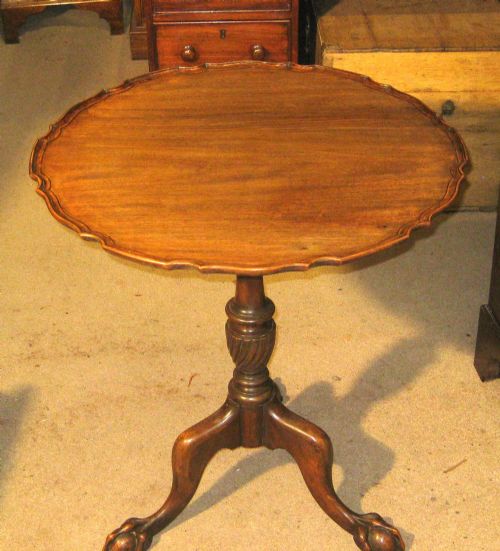
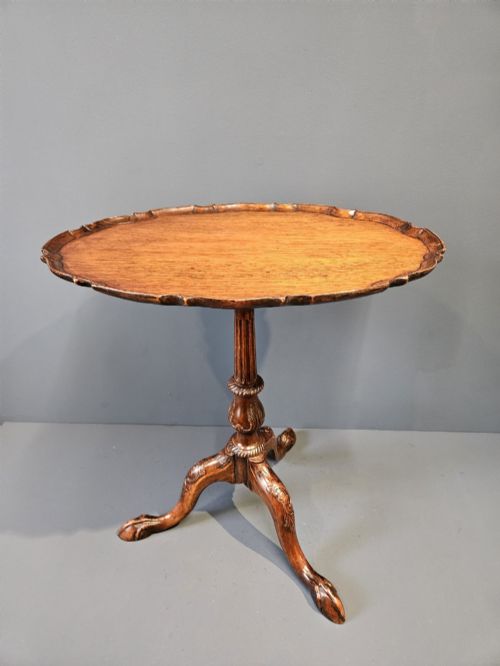
Mahogany piecrust side table examples combine rich timber with a characteristic raised, scalloped edge designed to keep glassware from sliding.
Mahogany Piecrust Side Table
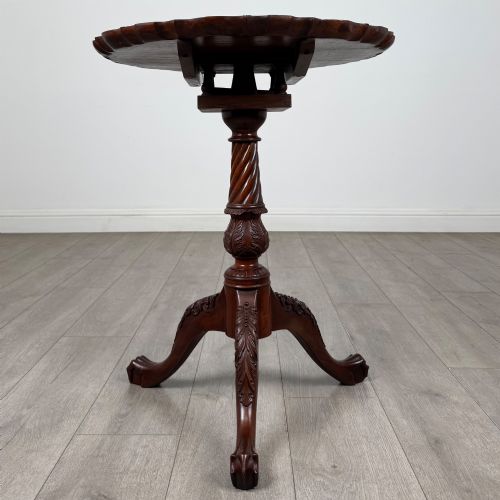
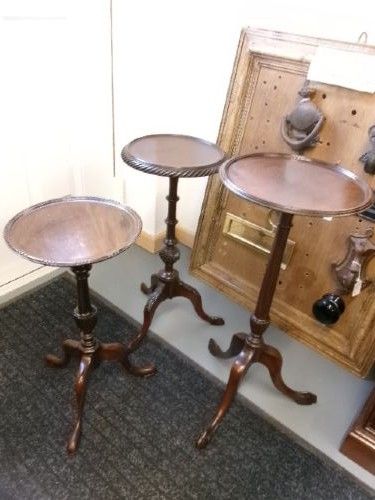
A mahogany piecrust side table is typically encountered as a tripod table, wine table, or occasional table supported by a central pillar and three legs. These versatile pieces served historically for dining, serving wine, or displaying silver in formal rooms.
The selections span the 18th century through to the Edwardian period and the 1920s and 1930s, encompassing Georgian originals alongside later revivals in the Chippendale style. Buyers will find variations featuring tilt-top mechanisms, birdcage supports, and shaped edges.
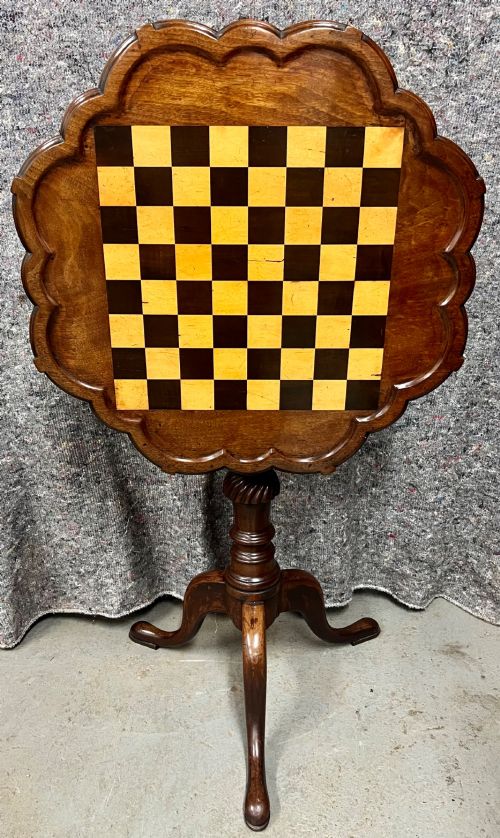
While many retain standard circular tops, others present oval surfaces or incorporate inlaid chess boards. The underlying forms remain compact, designed to sit beside seating or in corners as functional accent furniture.
Materials and construction
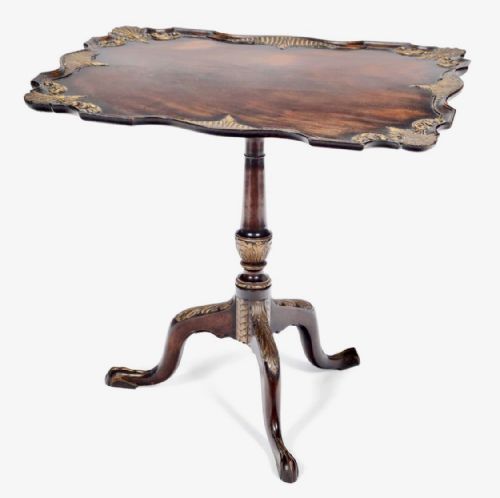
Makers utilised solid mahogany and flame mahogany veneer, sometimes enhanced by parcel gilt, wood inlay, marquetry, and brass elements. Oak also appears in secondary framing structures underneath the main timber surfaces.
The distinct piecrust edge requires careful hand-carving from a solid timber blank or a thick board, following the undulating outline of the rim. This labour-intensive method creates the raised moulding that defines the silhouette.
Many examples incorporate a tilt-top or birdcage mechanism, allowing the table top to pivot and lock vertically for storage against a wall. Joinery relies on traditional turning, dovetailing, and sturdy tripod leg assemblies fitted to a central turned column.
Listings span the 18th century, 19th century, Edwardian era, and the 1920s to 1930s, featuring materials such as mahogany, oak, brass, and veneer.
Assessing quality and finish
Quality rests upon the crispness of the carved edge and the depth of the timber's natural patina, distinguishing finely worked examples from simpler utilitarian pieces. Sharply defined moulding along the scalloped rim demonstrates superior craftsmanship.
The sophistication of the turning on the central pillar and the proportions of the tripod legs indicate the maker's skill. Robust mechanism joints that operate smoothly without excessive wobble separate better preserved or constructed pieces from lesser ones.
Shapland and Petter
The Mahogany Piecrust Side Table Glossary
- Piecrust edge
- A raised, scalloped moulding carved around the perimeter of a table top. This decorative profile resembles the pastry edge of a pie.
- Tilt-top
- A hinged table top mechanism that pivots to a vertical position. It allows the furniture to be stored flat against a wall when not in use.
- Birdcage
- A revolving wooden framework beneath a tilt-top table that permits the surface to rotate as well as tilt. This mechanism utilises small wooden spindles resembling a cage.
- Tripod table
- A small freestanding table supported by a central column resting on three legs. These legs frequently terminate in pad or claw and ball feet.
- Flame mahogany
- A figured wood veneer cut from timber where the branch meets the trunk. It displays a distinctive flickering flame-like pattern across the surface.
Mahogany Piecrust Side Table: Frequently Asked Questions
What was a piecrust table used for?
These tables served primarily as movable stands for tea, wine, or candles in 18th-century reception rooms. Their light portable frames allowed servants to shift them easily.
The raised rim prevented cups and decanters from sliding off when the furniture was in active use. Later periods maintained them as decorative occasional or lamp tables.
What is a birdcage support?
A birdcage is a small wooden assembly situated just beneath the table top, containing four tiny vertical columns. It enables the surface to rotate horizontally.
This revolving function works in tandem with the tilt mechanism. It represents a mark of finer construction on period tripod tables.
How do I date an antique mahogany table?
Dating relies on examining the timber species, construction techniques, hardware, and overall style. Georgian pieces often display rich patination and hand-carved details.
Edwardian and later revival items show different secondary woods and machine-tool marks. Comparing the turning style and foot design helps clarify the period of origin.