

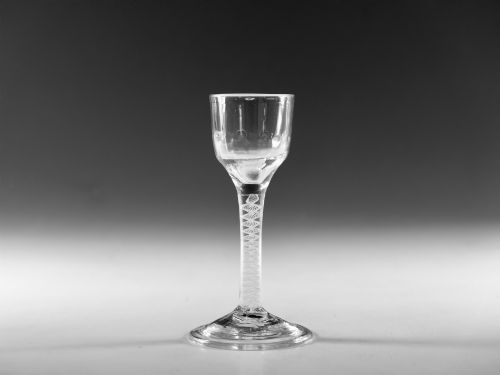
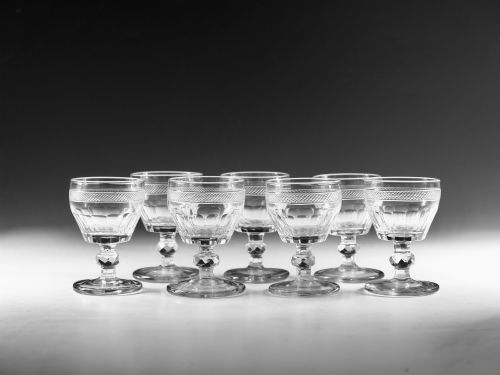
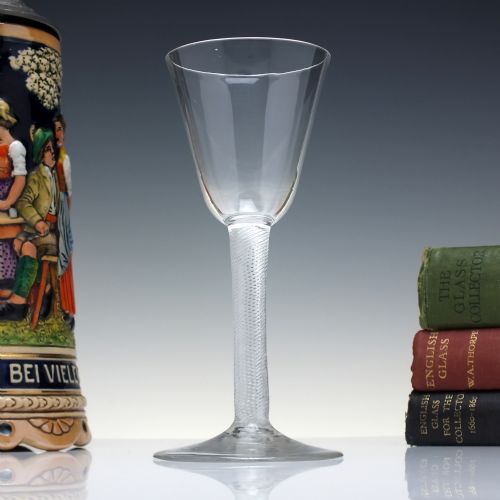
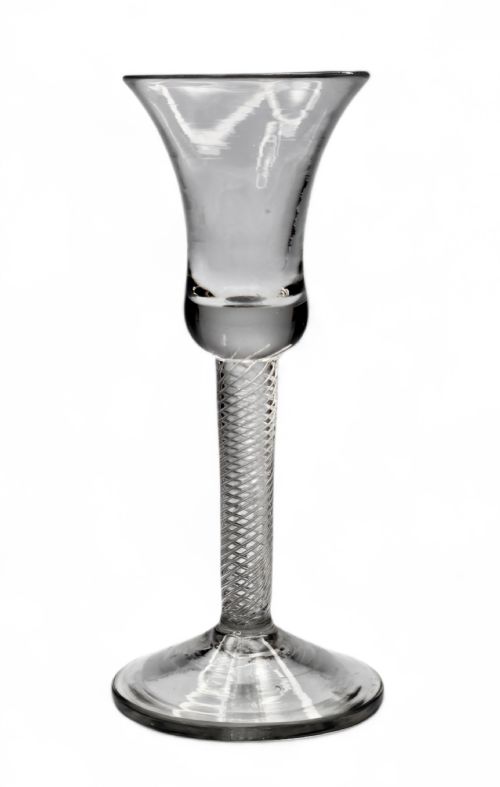
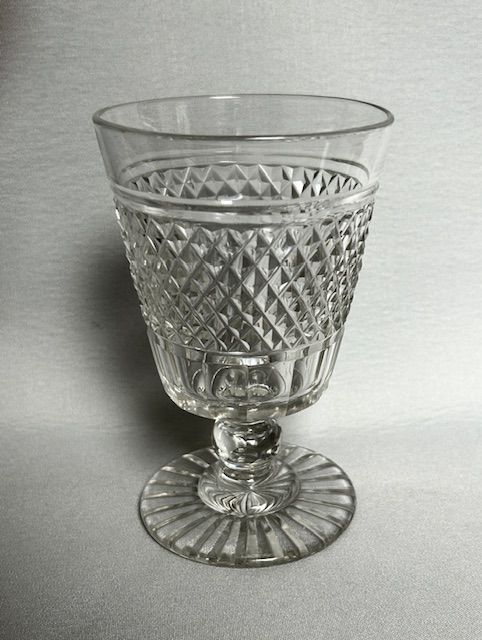


Georgian Period Stemware
Georgian period stemware brings eighteenth-century drinking vessels into modern rooms with hand-blown clarity and distinctive twists.
Georgian Period Stemware
Georgian period stemware encompasses drinking glasses made throughout the eighteenth century and into the Regency era, featuring wine glasses, port glasses, ale glasses, and rummers. These drinking vessels serve collectors seeking authentic period forms from the seventeen-thirties onwards.
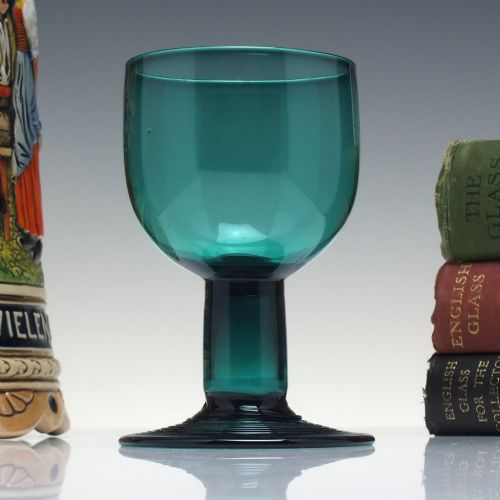
The pieces appearing on this page span several decades, moving from early baluster forms to mid-century air twists and later facet-cut or engraved designs. Buyers encounter clear glass alongside green and peacock blue colourways in various bowl shapes.
Most items belong to the eighteenth century, with specific examples carrying dates from seventeen-thirty-five through to the Regency period. Forms range from trumpet and bell bowls to bucket rummers and small oil lamps.
Materials and construction
Makers utilised lead glass and lead crystal to achieve the clarity and weight characteristic of Georgian period stemware. Hand-blown glass techniques allowed artisans to shape bowls and stems while incorporating air bubbles and twist patterns.
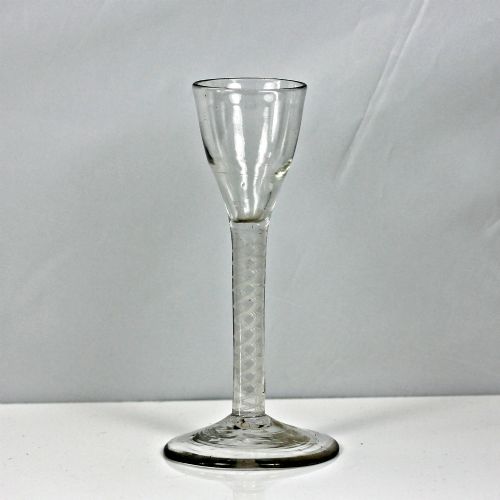
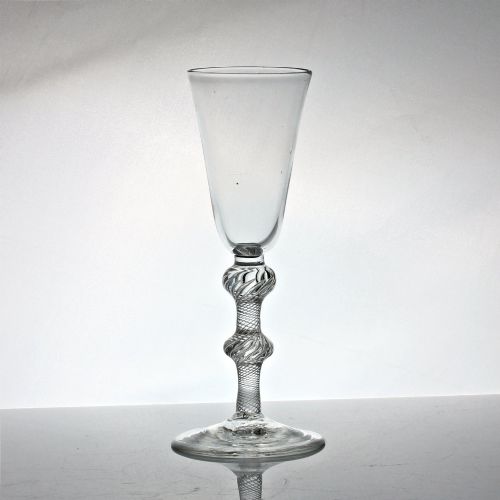
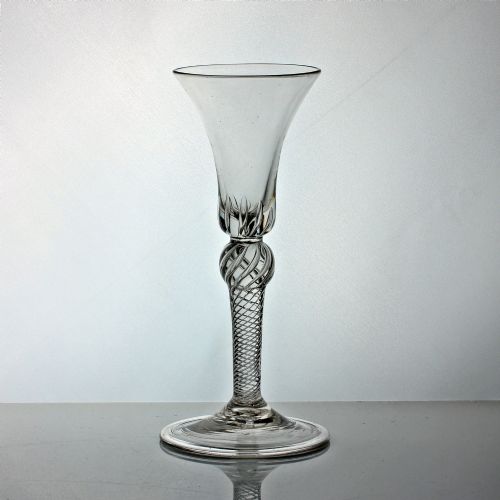
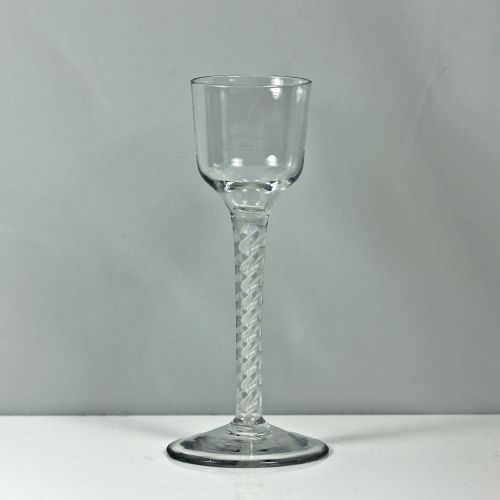
Stems were formed using air twist, opaque twist, mixed twist, and incised twist methods, sometimes featuring shoulder knops or vermicular collars. Foot rims were frequently folded during shaping to add strength and finish.
Object forms include wine glasses, ale glasses, port glasses, rummers, and small oil lamps.
Assessing quality and form
Quality in these drinking vessels rests upon the precision of the twist formation within the stem and the overall clarity of the metal. Multi spiral air twists and single or double series opaque twists require high skill to maintain uniformity.
Proportion between the bowl, stem, and foot dictates the visual success of each piece. Engraving quality, such as hop and barley motifs or facet cutting on bucket rummers, separates standard domestic examples from finer productions.
The Georgian Period Stemware Glossary
- Air twist
- A stem formation created by drawing out internal bubbles into spiral threads within the glass. This technique produces delicate linear patterns visible through the clear metal.
- Opaque twist
- A stem style incorporating white or coloured enamel rods twisted inside clear glass. These opaque threads create striking monochrome or polychrome patterns.
- Baluster
- A heavy, turned stem style popular in early eighteenth-century drinking vessels. The profile resembles architectural supports with swelling nodes.
- Folded foot
- A base construction where the outer edge of the glass foot is turned underneath itself. This process creates a smooth, rounded rim that strengthens the base.
- Facet cut
- A decorative surface treatment featuring flat geometric planes ground into the glass. This technique catches light across stems and bowls.
Georgian Period Stemware: Frequently Asked Questions
How do I date Georgian stemware?
Dating relies on stylistic shifts in bowl shapes, stem formations, and metal composition across the eighteenth century. Early baluster stems give way to air twists and opaque twists, followed by later facet-cut designs.
Changes in pontil marks and foot construction also assist in establishing a chronological window for each individual drinking vessel.
Were these glasses used for wine?
These vessels served various alcoholic beverages depending on their specific bowl shape and capacity. Wine glasses, port glasses, and ale flutes each accommodated different drinks consumed at the table.
Larger vessels like rummers handled punch or beer, while smaller forms suited fortified wines.
Can I use Georgian stemware daily?
Using antique drinking vessels requires careful handling due to their age and delicate hand-blown construction. Hand washing in lukewarm water without abrasive cleaners protects the fragile lead crystal and enamel twists.
Avoiding sudden temperature changes prevents thermal shock to the historical glass.
What is an air twist stem?
An air twist stem contains elongated bubbles trapped inside the molten glass and pulled into a spiral. Makers twisted the hot metal to form continuous threads running down the length of the stem.
This method created light-reflecting patterns without adding coloured materials to the clear lead glass.