


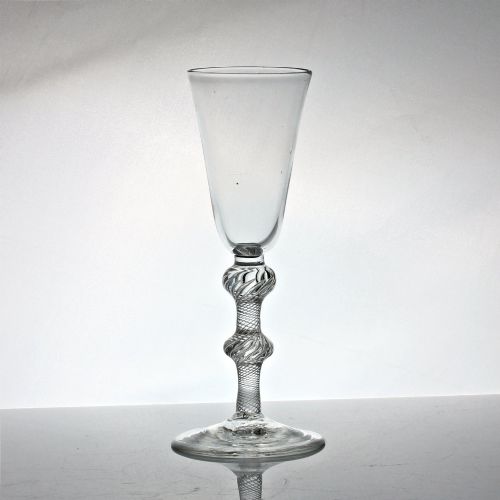

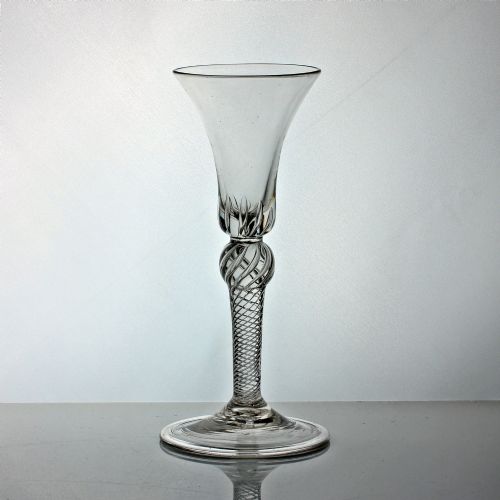
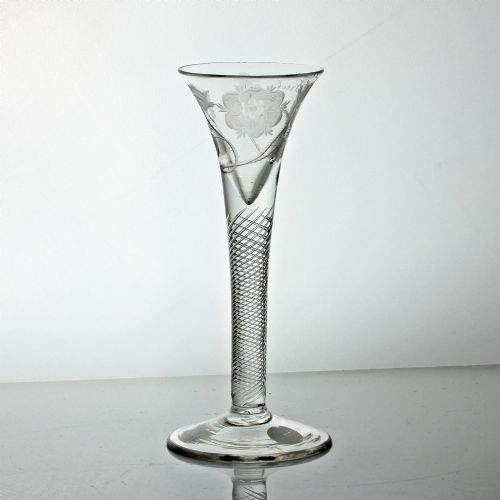
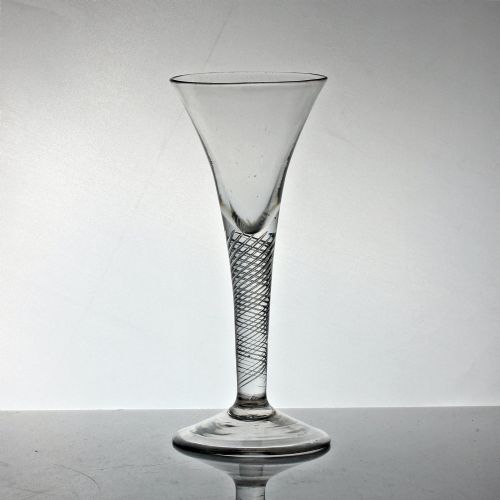



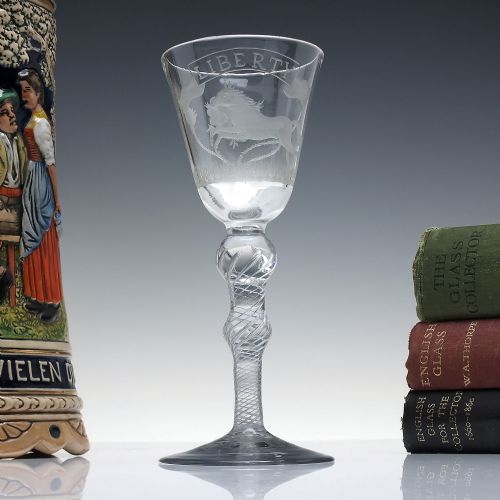
Air Twist Goblet
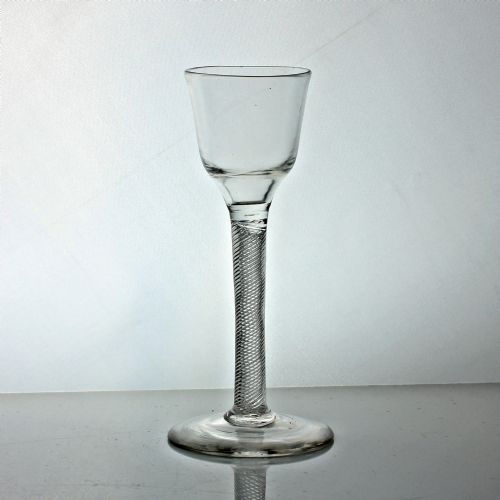
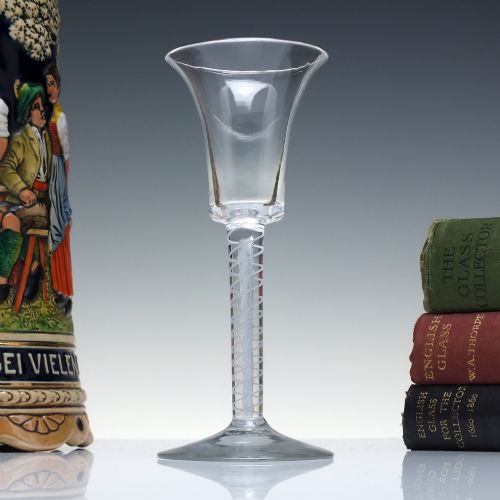
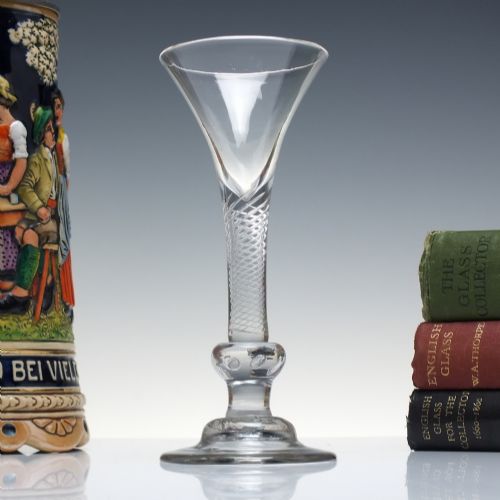
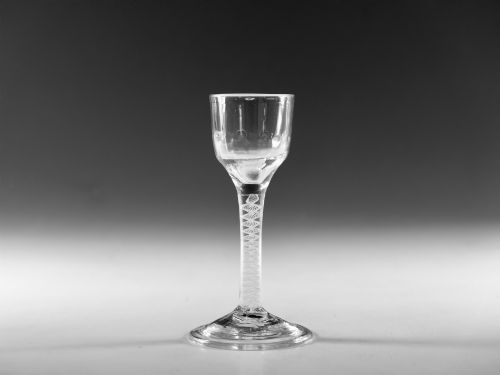
An air twist goblet carries the delicate glass stems of the eighteenth century, drawing the eye into spiralling threads trapped within clear lead glass.

Air Twist Goblet
When you search for an air twist goblet, you enter the world of Georgian drinking vessels produced during the eighteenth century. These stemware pieces include wine glasses, cordials, and ale glasses alongside larger goblets, all sharing the distinct optical trick of trapped air channels inside the stem. Most examples found here belong to the Georgian period, taking forms from pan top bowls to ogee and bell shapes.
The stems themselves demonstrate varying complexity, from a simple multi spiral air twist to double knops, shoulder knops, and composite formations. Some carry historical engagement through Jacobite engraving, hunting scenes, or plain clear surfaces. Collectors encounter these items as drinking glasses, champagne flutes, and substantial goblets originating from English workshops.
How they were made
Glassmakers produced these stems using lead glass, clear glass, and flint glass, relying on the high clarity of the material to showcase the internal patterns. Air threads were drawn out from tiny bubbles trapped within the molten metal before the craftsman twisted and shaped the stem. Additional decorative elements like white enamel twists or mercury twists occasionally joined the design, whilst bowls were blown and shaped separately before being joined to the stem and foot.
The listings span the eighteenth century, featuring clear lead glass, flint glass, and enamel twists across various bowl forms.
What varies in quality
Quality rests upon the clarity of the metal and the precision of the internal twist. A superior piece exhibits clean, regular air spirals without distortion in the glass, paired with a well-balanced bowl and a folded or domed foot. Engraving depth and historical association, such as Jacobite symbols or hunting scenes, further elevate certain pieces above standard drinking vessels.
The Air Twist Goblet Glossary
- Air twist
- A type of glass stem containing internal elongated bubbles formed into spirals. This technique defines the visual character of Georgian drinking glasses.
- Lead glass
- A heavy, clear glass formulation containing lead oxide that increases brilliance and weight. It provides the ideal medium for capturing light within twisted stems.
- Knop
- A knob or swelling on the stem of a glass. Makers used single, double, or triple knops to add weight and decorative rhythm.
- Ogee bowl
- An S-curve bowl profile curving inward at the rim and outward below. This shape appears frequently on eighteenth-century wine glasses.
- Folded foot
- A glass foot with the outer edge folded underneath to create a smoother, stronger rim. This feature denotes earlier Georgian manufacture.
Air Twist Goblet: Frequently Asked Questions
What is an air twist goblet?
An air twist goblet is an eighteenth-century drinking vessel featuring clear lead glass with spiralling air threads trapped inside the stem. These pieces represent a high point of English glassmaking.
They span various forms including wine glasses, ale glasses, and champagne flutes, often displaying sophisticated knops and engraved bowls.
How do you date an air twist glass?
Dating relies on stylistic details such as bowl shape, foot construction, and the complexity of the stem twist. Eighteenth-century pieces typically exhibit lead glass composition and specific bowl forms like pan top or ogee.
Folded feet and multi spiral air twist configurations point firmly toward the Georgian era, distinguishing them from later revivals.
How were air twist stems created?
Glassmakers formed air twist stems by trapping tiny air bubbles within hot metal and drawing the glass out while twisting it. The resulting threads were then encased as the stem was shaped.
This required immense skill to ensure the spirals remained uniform and clear within the surrounding flint glass.