


Georgian Oak Wall Storage
Georgian oak wall storage brings enduring utility into a room through sturdy corner cupboards, hanging spice cabinets, and candle boxes.
Georgian Oak Wall Storage
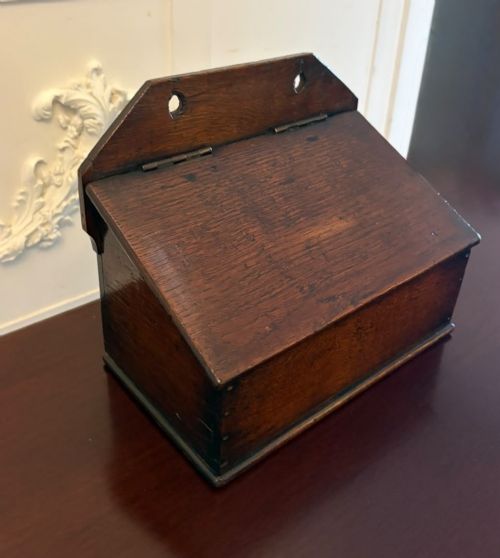
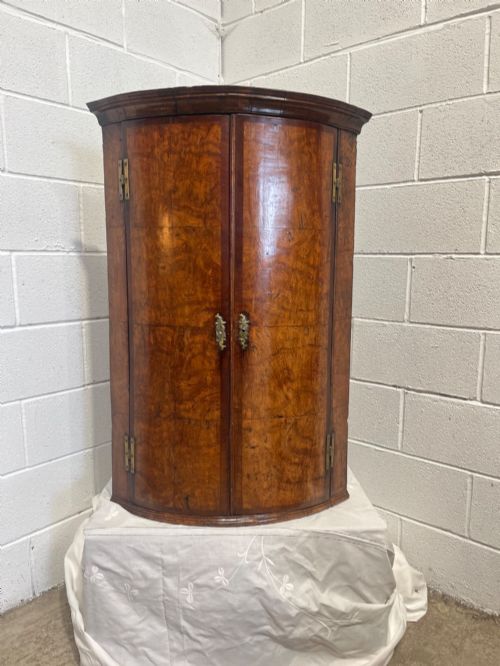
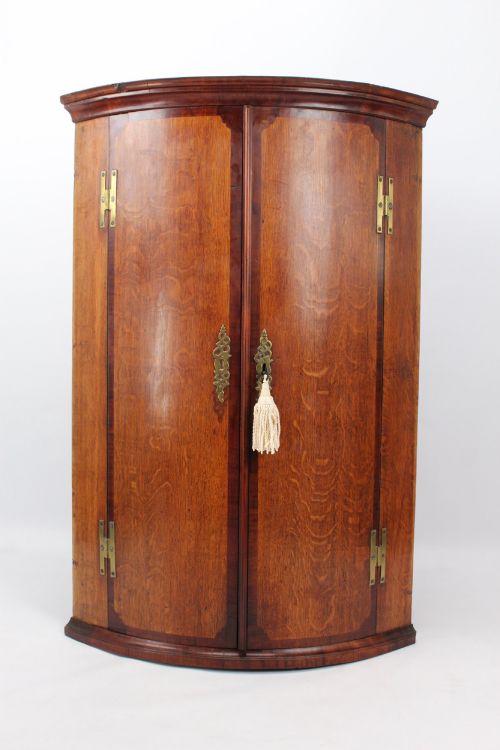
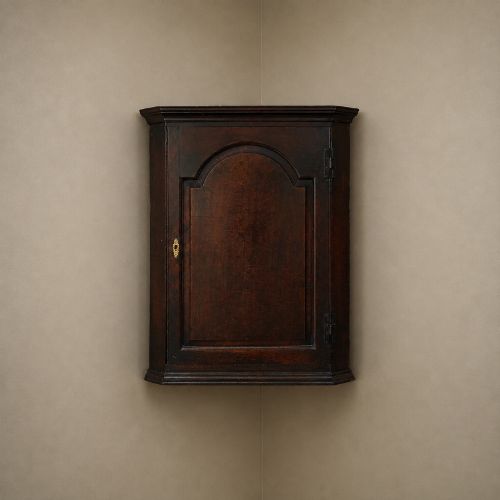
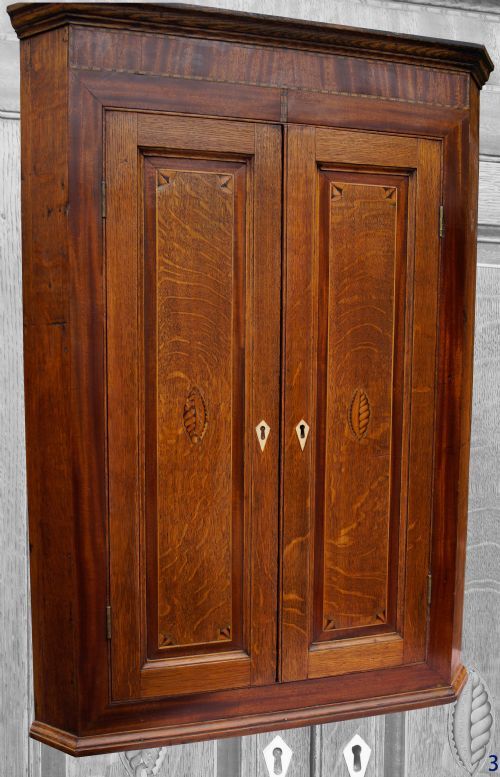
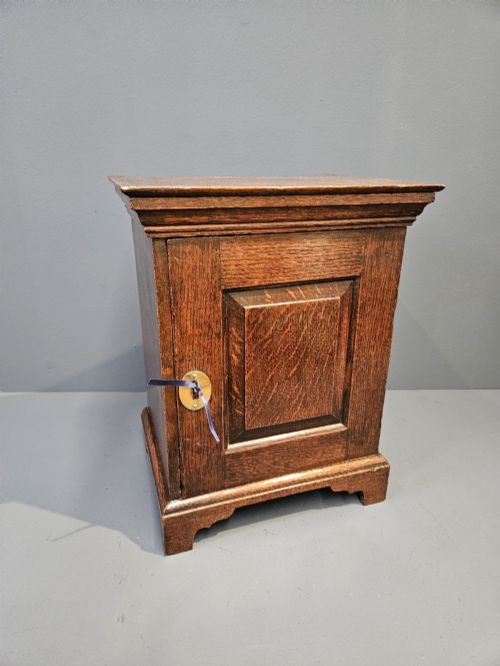
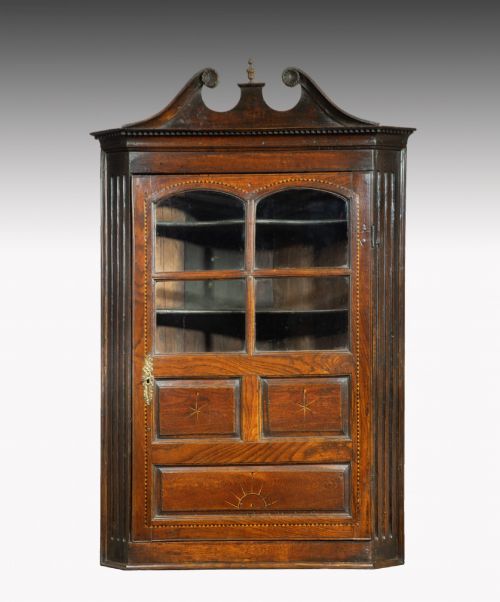
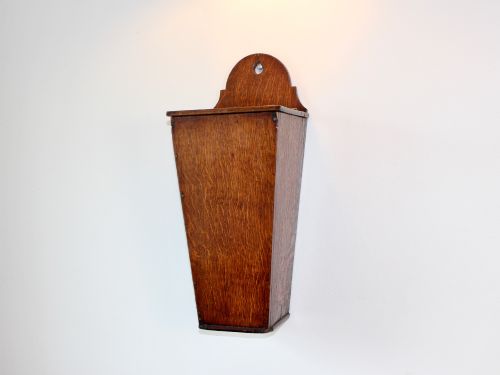
When searching for Georgian oak wall storage, a buyer is looking at functional timber pieces designed to maximise floor space by mounting directly to the wall or fitting neatly into a room angle. These practical items include hanging corner cupboards, flat-backed spice boxes, and wall-mounted candle boxes originating from the eighteenth and nineteenth centuries. The selection here predominantly comprises corner cupboards and wall cabinets built to hold household provisions, documents, or valuables.
The objects span styles from plain provincial vernacular to George II and George III designs, reflecting both rural English and Welsh workshop traditions. Alongside standard oak, pieces occasionally incorporate burr oak, fruitwood, mahogany, or pine secondary elements to vary the visual texture. Many feature shaped panel doors, hanging hooks, and interior shelving adapted for domestic storage long before modern fitted furniture existed.
Judging the quality
Quality rests heavily on the selection of timber, particularly where figured burr oak or subtle wood inlay elevates a utilitarian box into a piece of decorative art. The integrity of the original joints, backboards, and brass or iron hardware distinguishes untouched examples from heavily restored or assembled items.
Proportion and carving depth define the upper tier of these pieces, seen in crisp raised panels, well-balanced bow fronts, and interior arrangements featuring small drawers or pigeon holes. Finer examples maintain their original hanging points and structural bracing, whereas lesser pieces often show extensive timber replacement and stripped surfaces.
The Georgian Oak Wall Storage Glossary
- Corner cupboard
- A cabinet specifically constructed with a triangular plan to fit into the internal angle of a room. These saved valuable floor space in smaller domestic interiors.
- Spice cupboard
- A small wall-mounted box with a hinged door enclosing multiple tiny drawers or shelves. They stored valuable culinary and medicinal spices in secure conditions.
- Candle box
- A narrow hanging receptacle with a shaped backboard and sliding or hinged lid. They protected tallow and beeswax candles from household pests.
- Raised panel
- A wooden panel with edges thinned to fit into a grooved frame, allowing the wood to expand and contract with humidity without splitting. This technique added depth and shadow lines to cupboard doors.
- Treen
- Small handmade wooden household objects of utility. This category encompasses domestic items like boxes and small containers made before the era of mass production.
Georgian Oak Wall Storage: Frequently Asked Questions
How were corner cupboards used?
These wall-mounted units stored table ceramics, glassware, and dry goods safely away from damp floors and domestic activity.
Their triangular footprint utilised dead space in cottage and parlour corners efficiently.
What is a spice cupboard?
Spice cupboards served as secure internal lockboxes for expensive imported seasonings, medicines, and written recipes.
They typically hung near the hearth or in the parlour where the master or mistress dispensed provisions.
How do I date an oak cupboard?
Dating relies on construction methods, hinge types, and timber choice alongside known stylistic periods like George II or George III.
Hand-cut joints, original brass hardware, and pegged frame construction generally indicate eighteenth-century origin.
Are these pieces suitable for modern walls?
Most wall-hanging cabinets and corner cupboards feature original fixing points or sturdy mounting structures built for solid masonry.
Weight distribution requires proper wall anchors matched to the dense oak timber and contents.