


Georgian Oak Kitchen Dresser
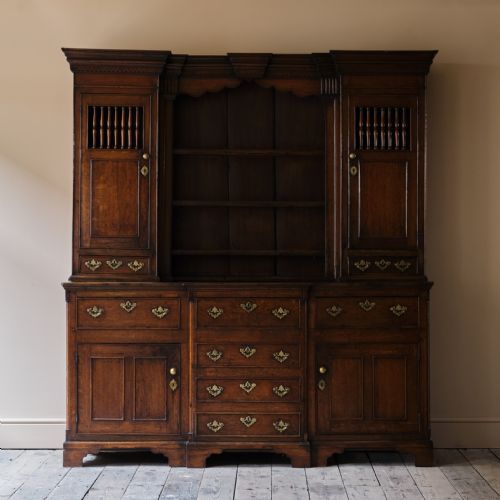
A georgian oak kitchen dresser combines working storage and open display, built by country makers to hold family china and provisions.
Georgian Oak Kitchen Dresser
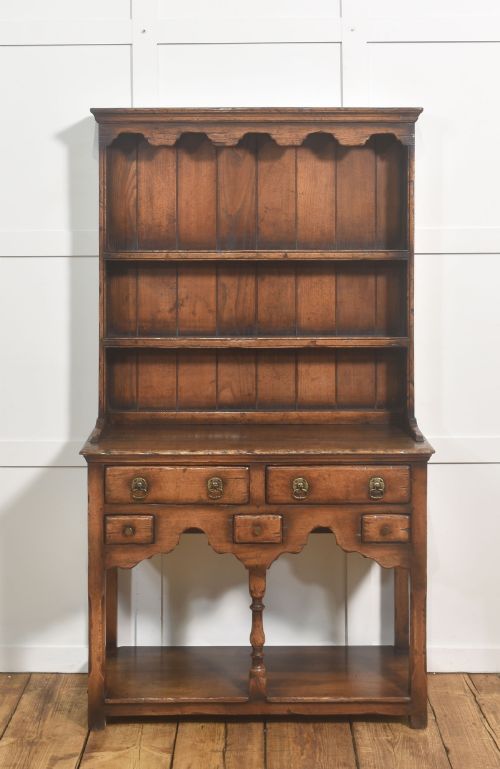
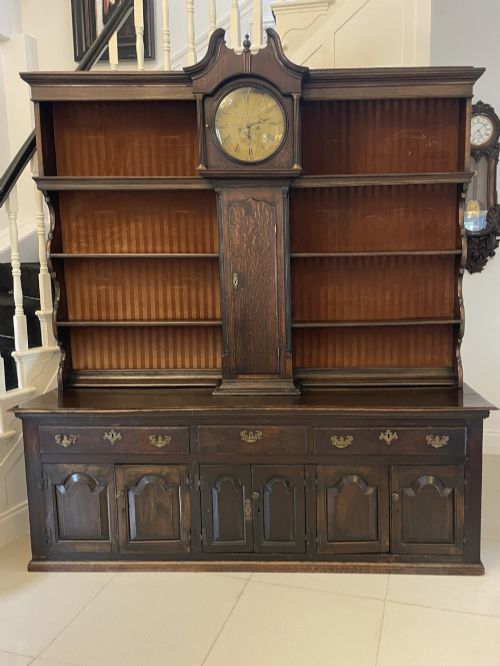
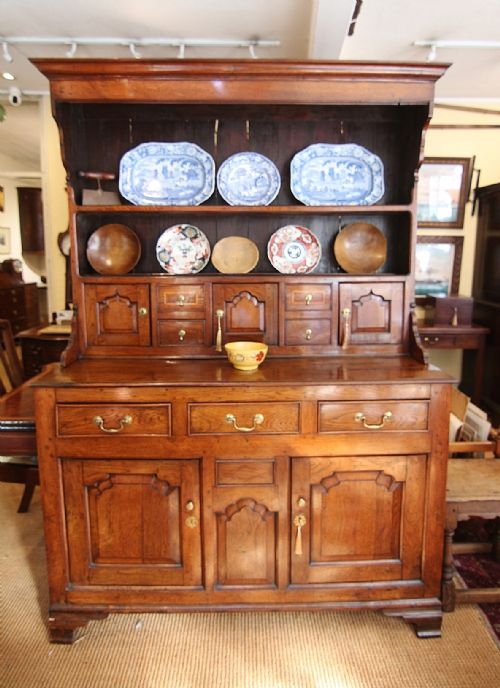
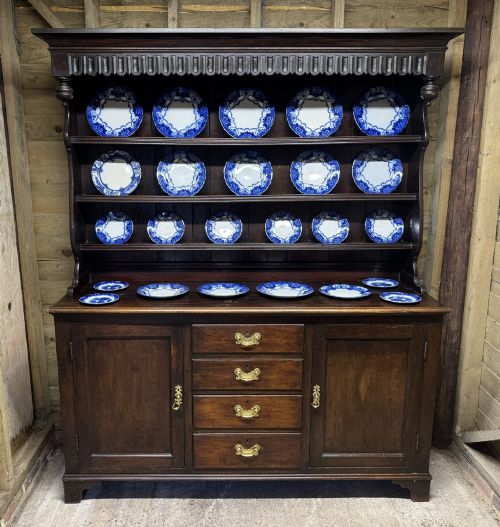
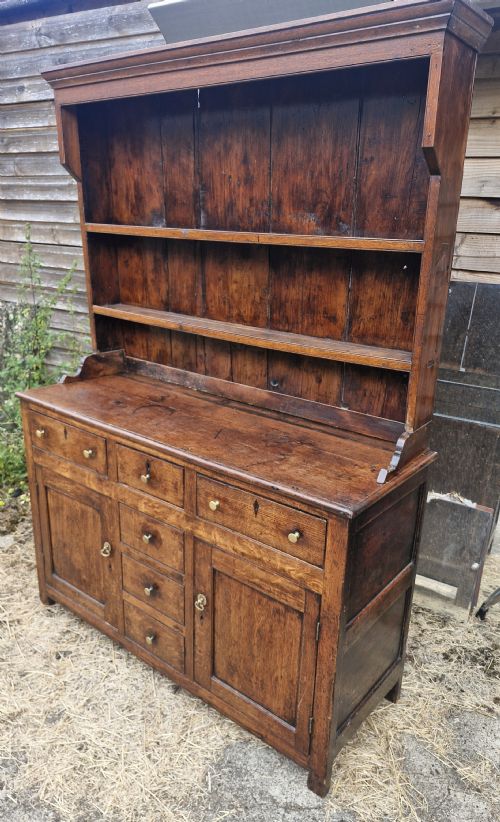
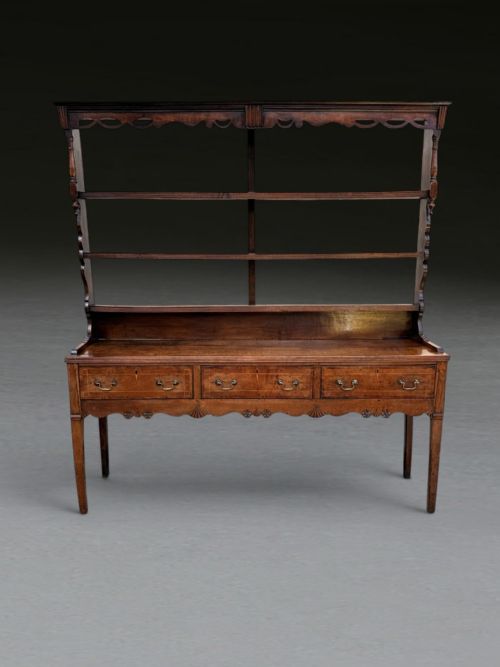
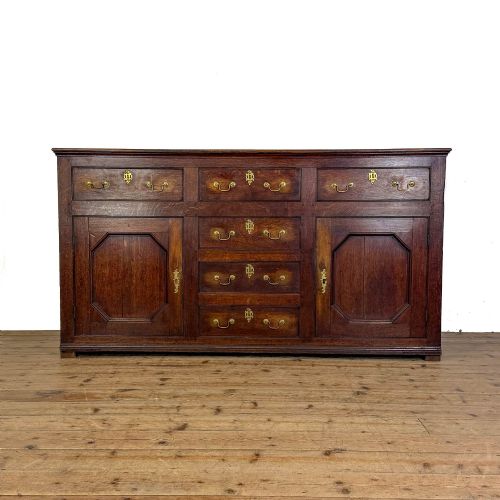
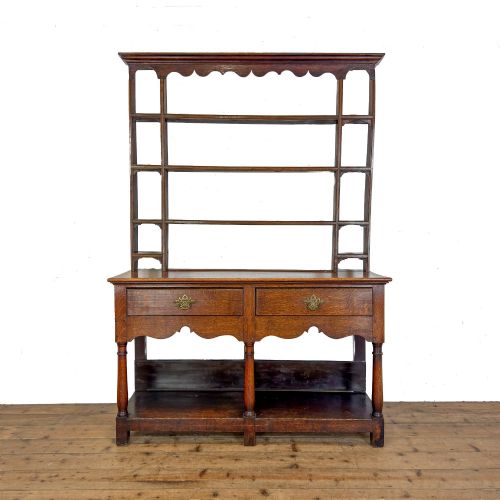
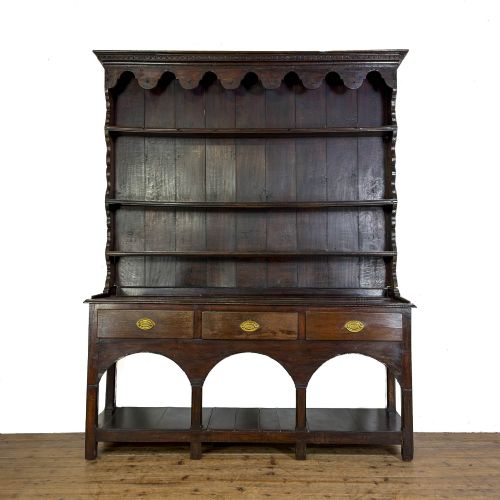
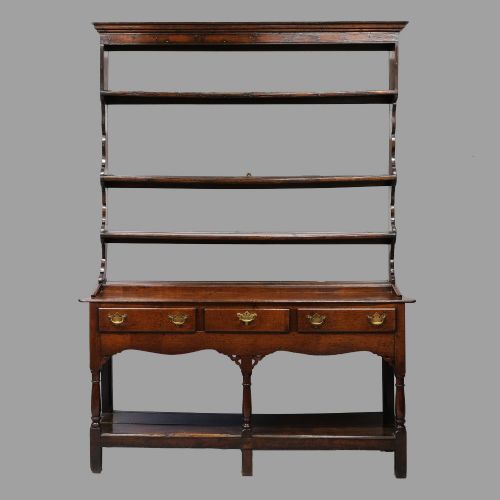
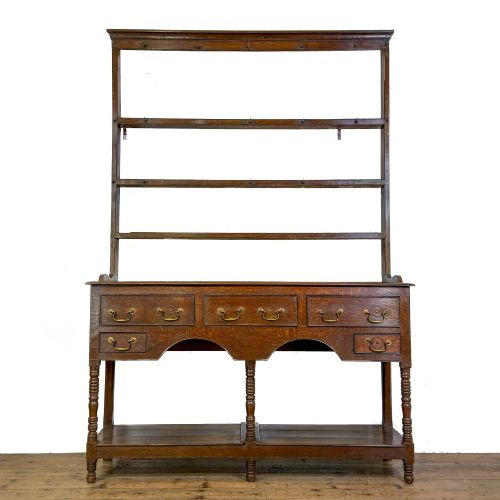
A georgian oak kitchen dresser is a substantial utilitarian furniture form originating in British rural households during the eighteenth and nineteenth centuries. These pieces typically combine a lower base of drawers and cupboards with an upper plate rack for displaying ceramic delftware.
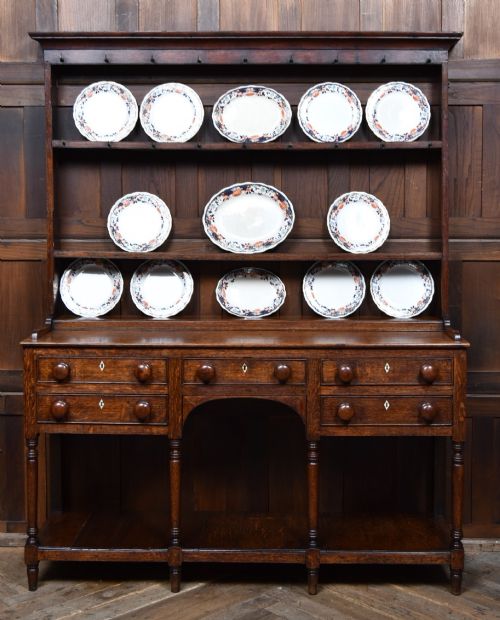
The domestic workspace of the country kitchen demanded durable furniture built from local timber. Regional variations such as Welsh, Shropshire, and West Country examples appear across the inventory alongside potboard bases and housekeeper variants.
Makers constructed these sturdy items for daily use rather than formal reception rooms. Over generations, the timber develops a rich patination reflecting heavy handling in farmhouses and cottages.
How They Were Made
Local joiners built the carcasses predominantly from solid oak, supplementing structural elements with pine, mahogany, and iron hardware. Drawer linings and secondary boards often utilise softer woods while exterior surfaces rely on dense English and Welsh oak.
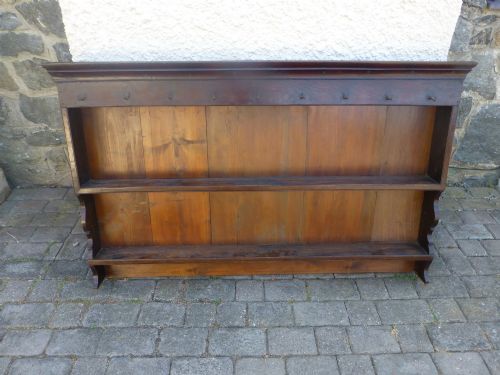
Construction techniques combine traditional hand-cut dovetails for drawers with pegged mortise and tenon joints for the main frames. Plate racks were integrated or hung above, featuring grooved shelves to support plates upright and vertical boards at the back.
Listings feature oak alongside pine, mahogany, and iron, spanning the eighteenth to early twentieth centuries in various regional styles.
What Varies in Quality
The integration between base and superstructure dictates much of the standing within this category. Pieces retaining their original plate racks command greater interest than marriages where upper and lower sections were joined at a later date.
Regional distinctiveness and timber selection also divide standard utilitarian examples from finer workshops. Items featuring inlaid details, breakfront configurations, or integrated potboards demonstrate superior cabinet-making ambition.
The Georgian Oak Kitchen Dresser Glossary
- Potboard
- A low slatted shelf fitted between the lower legs of a dresser base, traditionally used for storing heavy pots and pans. This open platform distinguishes many eighteenth-century country examples.
- Delft rack
- The upper shelving unit attached to a dresser designed for displaying ceramic plates and platters. Grooves cut into the timber keep plates from sliding forward.
- Potboard dresser
- A specific form featuring a low open shelf near the floor beneath the main counter surface. It provides sturdy horizontal support without enclosed cupboards.
- Vernacular furniture
- Domestic items made by local country joiners following regional traditions rather than metropolitan academic designs. These pieces prioritise practical utility and local materials.
- Parnian
- An alternative term occasionally applied to regional storage furniture, though oak remains the defining material for this group.
Georgian Oak Kitchen Dresser: Frequently Asked Questions
Are the plate racks original to the dressers?
Many dressers retain their original plate racks, though some upper sections were paired with bases during later periods. Examining the timber grain, wear patterns, and fixing methods helps determine if the components started life together.
Matching patination between the top and bottom sections provides the strongest indication of originality. Replacements remain common because rack units suffered more damage from daily kitchen moisture and heavy crockery.
How do I identify a Welsh dresser?
Welsh dressers typically exhibit specific regional characteristics, including particular drawer arrangements, proportions, and local timber usage. Pieces originating from areas like Snowdonia or Anglesey often display distinctive cornice details and specific local construction habits.
Regional variations also include specific wood combinations, such as oak paired with mahogany accents in Anglesey pieces. These local idioms separate Welsh workshop production from English county equivalents.
What is a potboard base?
A potboard base incorporates an open slatted shelf running horizontally near the floor beneath the main counter. Country households utilised this lower level to store heavy earthenware and metal cooking vessels.
This open design differentiates traditional country dressers from enclosed sideboard alternatives. The absence of doors allowed quick access to heavy items used constantly in large farm kitchens.
How do I care for antique oak furniture?
Antique oak benefits from stable indoor humidity and minimal exposure to direct sunlight or strong heat sources. Applying traditional beeswax periodically maintains the moisture balance in the timber and preserves the historic surface.
Avoid modern silicon polishes which can penetrate the grain and damage the natural patination built up over centuries. Gentle dusting with a dry cloth keeps the surface clean without wearing away the aged finish.