



Georgian Nesting Tables
Georgian nesting tables offer a clever stack of graduated surfaces, bringing versatile tiered tables into a room without cluttering the floor.
Georgian Nesting Tables
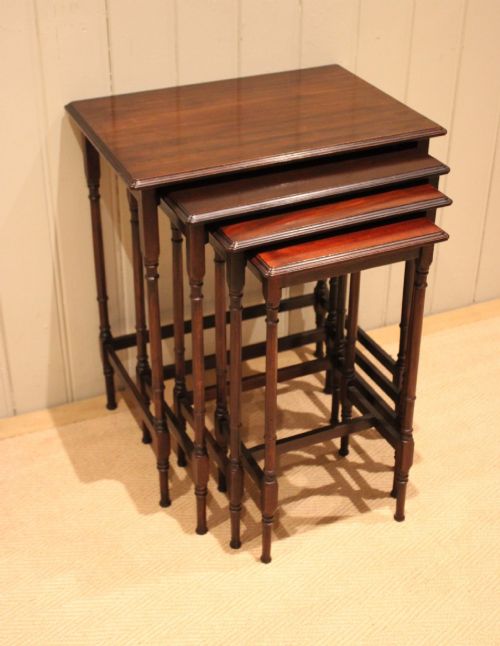
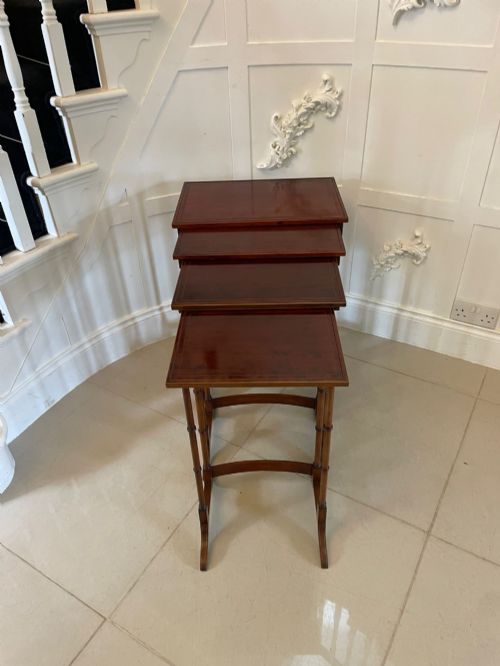
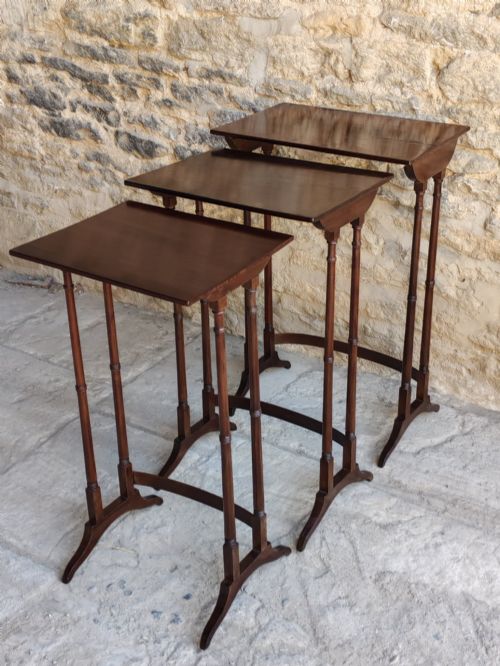
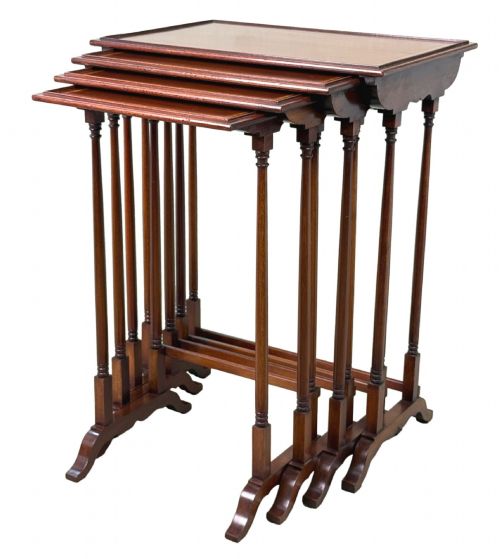
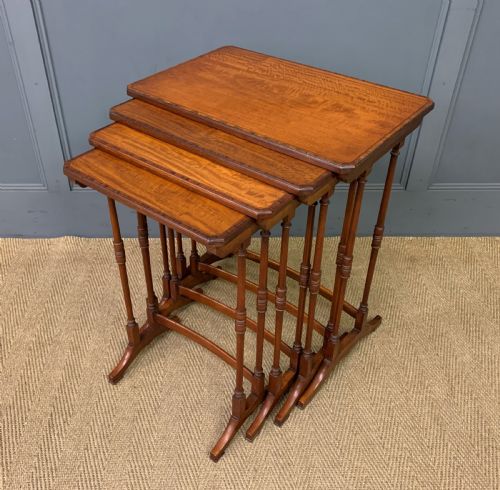
Georgian nesting tables, also known as quartetto tables, comprise sets of graduated small tables that slide neatly beneath one another when not in use. These practical items serve efficiently as occasional, coffee, or lamp tables in sitting rooms.
The versions met most frequently on this page span several eras, including genuine Georgian pieces alongside Edwardian, Victorian, and later revivals inspired by earlier designs. Most sets consist of three or four individual tables, though occasional five-tier variations appear.
Makers fashioned these pieces primarily as occasional surfaces for tea, writing, or display. Their intelligent stacked design remains the defining characteristic that unites the selection.
How they were made
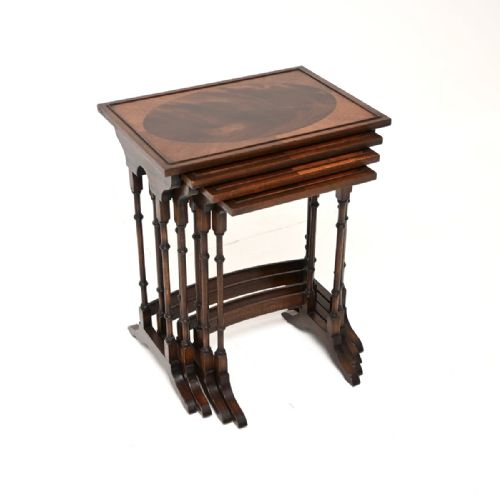
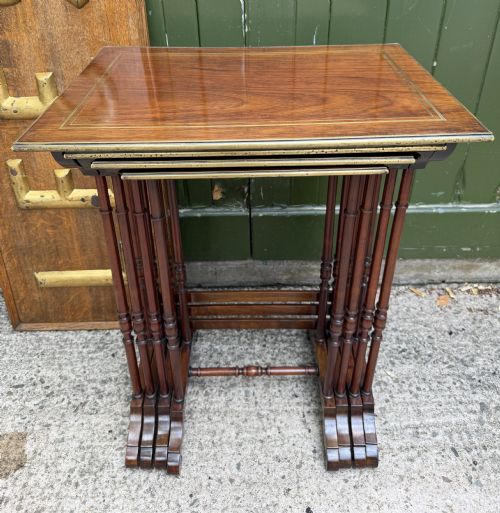
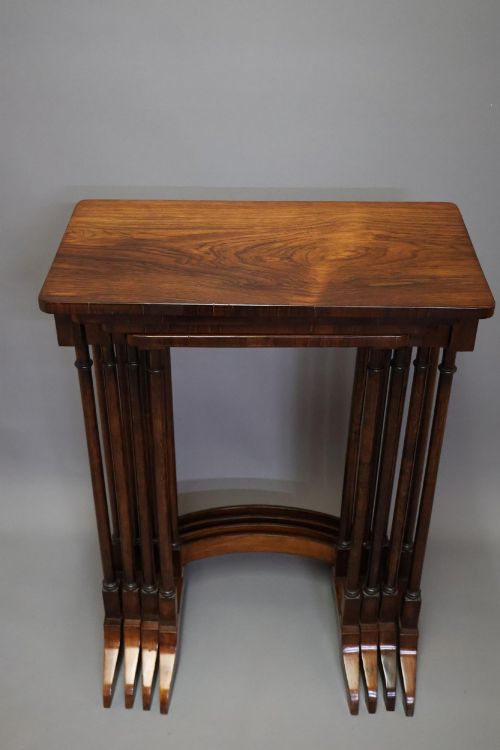
Cabinet makers utilised fine timbers such as mahogany, rosewood, and satinwood, often applying decorative veneers to the upper surfaces. Selected pieces incorporate delicate boxwood inlay or brass details to enhance the visual appeal of the timber.
Construction relies on precise joinery to ensure the graduated frames descend smoothly from the largest outer frame to the smallest inner table. Timbers are selected for grain pattern and durability, supporting daily use while maintaining stability.
Listings feature mahogany, rosewood, and satinwood across periods from the Georgian era through the nineteen-thirties.
What varies in quality
The division between standard examples and the finest pieces rests upon the choice of timber and the precision of the inlay work. Finer sets display carefully matched grain patterns across all graduated surfaces, alongside crisp boxwood or brass detailing.
Structural integrity also separates the range, where superior examples maintain tight joints and smooth sliding action across every tier. The subtlety of the turned or column supports further distinguishes master craftsmanship from simpler workshop production.
Gillows·Waring & Gillow
The Georgian Nesting Tables Glossary
- Quartetto
- A matched set of four graduated tables designed to stack inside one another. This term appears frequently in nineteenth-century and revival descriptions.
- Veneer
- A thin slice of decorative wood applied to a stable timber base. This technique allows cabinet makers to display striking grain patterns on table tops.
- Inlay
- Contrasting materials set flush into the wood surface to create decorative borders or motifs. Boxwood and brass frequently serve this purpose on period tables.
- Occasional table
- A small, movable table designed for specific, temporary uses such as holding drinks or books. These versatile pieces move easily around a room as needed.
Georgian Nesting Tables: Frequently Asked Questions
What are quartetto tables?
Quartetto tables are a set of four graduated stacking tables designed to slide neatly into one another.
Cabinet makers developed this format to provide multiple surfaces in a compact footprint.
How were nesting tables used?
These tables served as flexible occasional surfaces for tea, sewing, or writing.
Owners pulled out individual tiers as needed and stacked them away to save space when finished.
Which woods appear most often?
Mahogany, rosewood, and satinwood dominate the selection of period and revival pieces.
Craftsmen often enhanced these timbers with boxwood inlay, veneer, or brass details.
How do I spot a revival piece?
Revival pieces often date from the Edwardian era or the early twentieth century while adopting earlier Georgian or Regency styles.
Detailed examination of the timber and construction methods helps determine the precise period of manufacture.