


Bamboo Turned Side Tables
Bamboo turned side tables bring tactile warmth and slender elegance into a room.
Bamboo Turned Side Tables
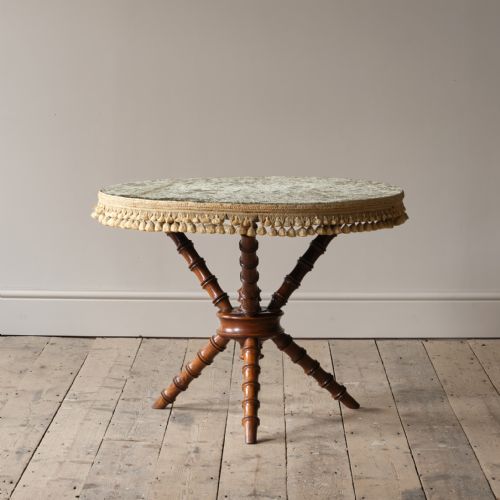
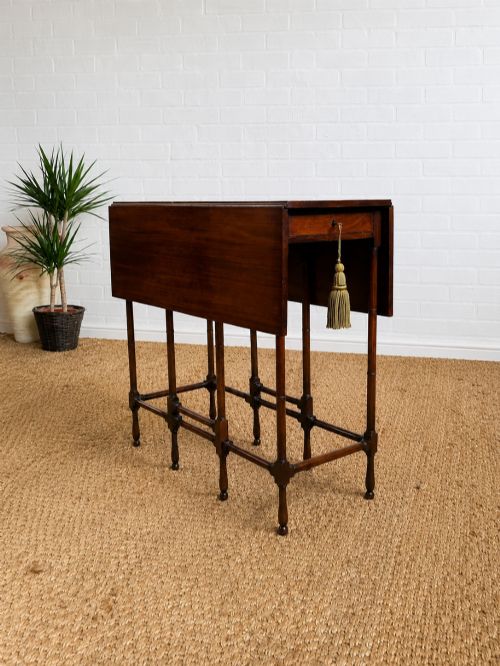
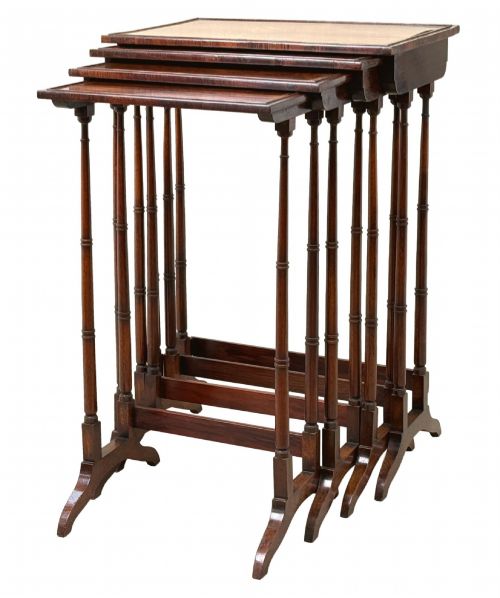
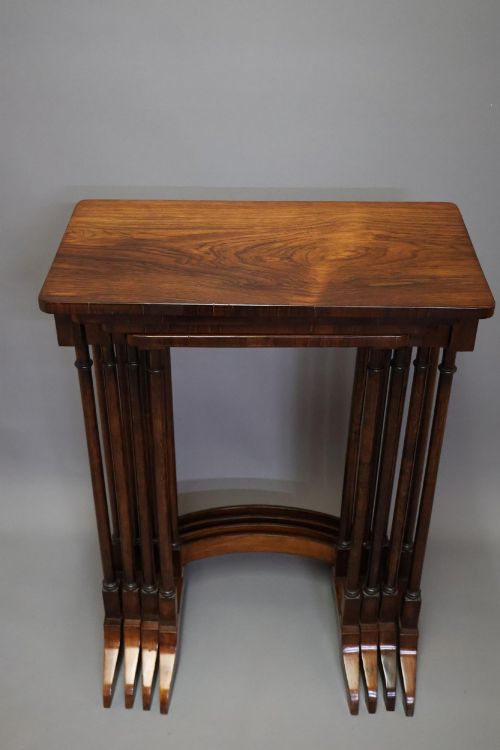
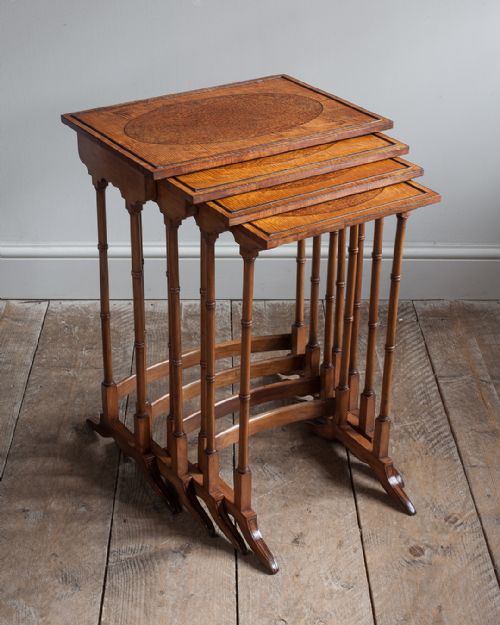
The materials recorded in these pieces include mahogany, rosewood, satinwood, and simulated bamboo, reflecting English country, French provincial, and Chinoiserie stylistic influences. Single side tables frequently feature drop leaves, drawers, or velvet tops, whilst nests of four tables offer versatile tiered surfaces for a sitting room.
How they were made
Cabinetmakers utilised hardwoods such as mahogany and rosewood, alongside lighter satinwood and turned timber, shaping the legs to imitate the segmented nodes of natural bamboo. Some examples employ simulated or faux bamboo finishes, painting and carving wood to achieve the distinctive ornamental profile.
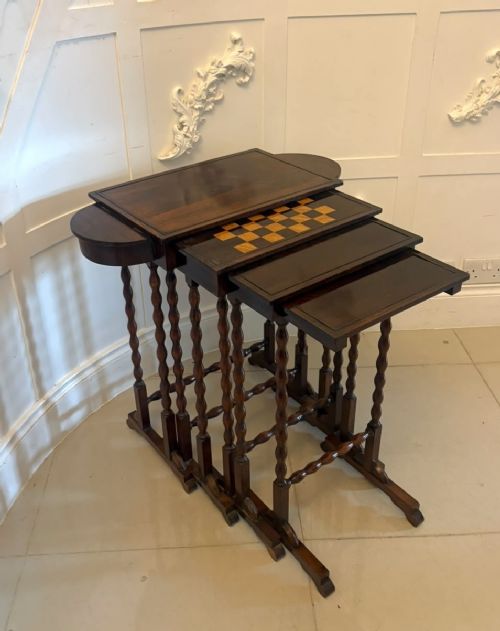
Construction techniques involve drop leaves, folding mechanisms, and integrated details like chess boards or velvet surfaces. Brass fittings and boxwood stringing occasionally accent the timber framework of these occasional tables.
Some nineteenth-century tables cleverly double as game boards, hiding integrated chess tables beneath the tea cups.
What varies in quality
Quality rests in the precision of the turning and the selection of timber, distinguishing simple simulated pieces from dense rosewood or satinwood constructions. The choice of secondary woods and the crispness of the bamboo-turned nodes define the finesse of the work.
John Taylor Edinburgh
The Bamboo Turned Side Tables Glossary
- Quartetto
- A nested set of four occasional tables designed to fit neatly beneath one another. They became particularly popular during the Regency period.
- Simulated bamboo
- Wood carved, turned, or painted to imitate natural bamboo stalks. This technique was widespread in nineteenth-century European furniture making.
- Drop-leaf
- A table top with hinged flaps that fold down at the sides. This allows the surface area to expand or contract according to space.
- Occasional table
- A small, lightweight table designed for flexible use around a room. They serve various functions from holding books to displaying ornaments.
- Tray back
- A raised rim around the edge of a table top designed to prevent items from sliding off. It often appears on small side and occasional tables.
Bamboo Turned Side Tables: Frequently Asked Questions
How were quartetto tables used?
Quartetto sets consist of four graduating tables that nest together when not in use. They were pulled apart to serve tea or hold books around the drawing room.
Their clever stacking design saved space while offering multiple independent surfaces.
Are these tables sturdy?
Despite their slender turned legs, these tables use dense hardwoods like mahogany and rosewood for structural strength. Single occasional tables and nests remain remarkably durable when joints stay tight.
Careful placement away from extreme temperature changes helps preserve the timber frames.
How do I date a bamboo turned table?
Dating relies on timber choice, construction methods, and stylistic cues from periods like Regency, Victorian, and Edwardian. Regency pieces often utilise rich rosewood, while later Victorian and Edwardian examples frequently feature satinwood or simulated finishes.
Examining secondary woods and joinery helps confirm the era of production.