


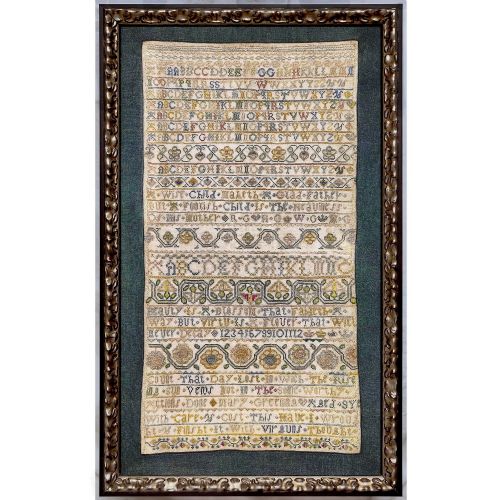


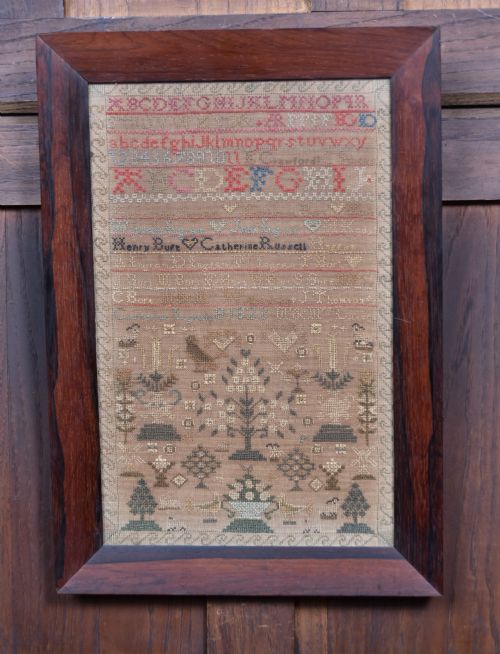

Georgian Needlework Framed
Georgian needlework framed pieces are historic textile works preserved behind glass in period mounts, bringing authentic eighteenth and nineteenth-century handcraft into modern rooms.
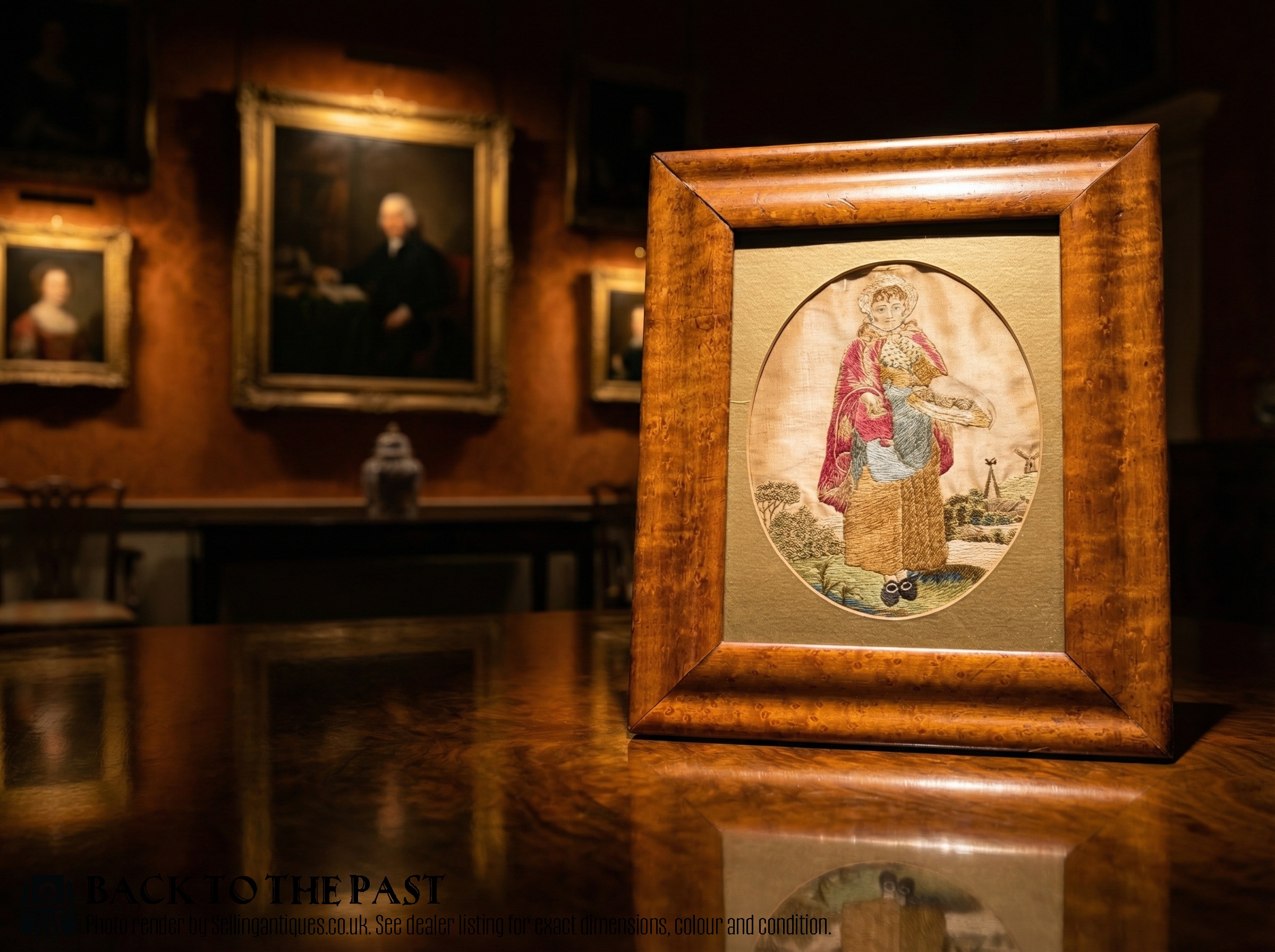
Georgian Needlework Framed
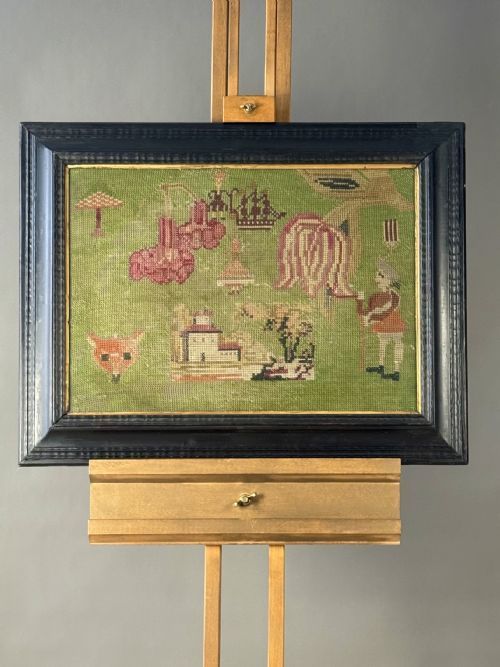
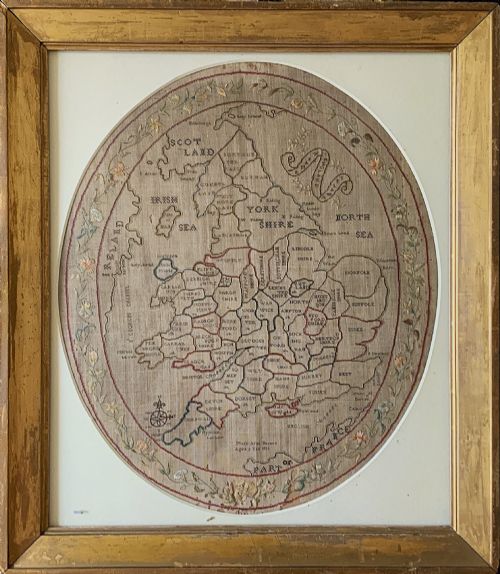
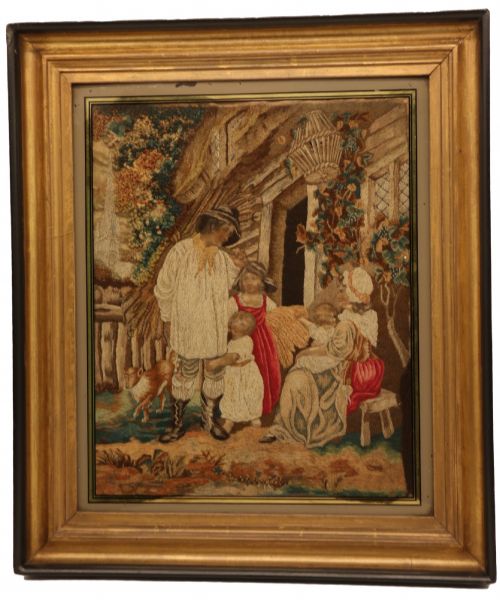
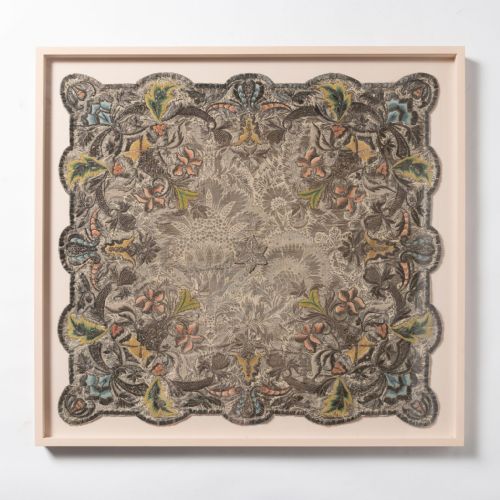
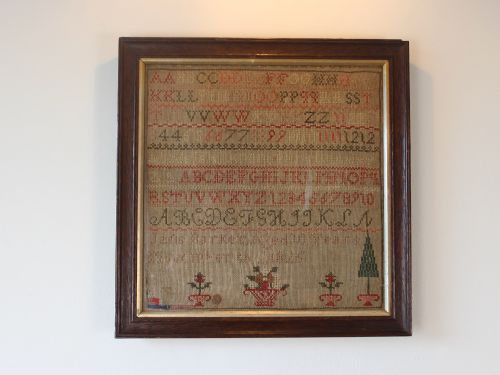
When you search for georgian needlework framed, you encounter a distinct category of textile art spanning the eighteenth and nineteenth centuries. These works include embroidered pictures, maps of England and Wales, alphabet samplers, and pastoral scenes created by hand.
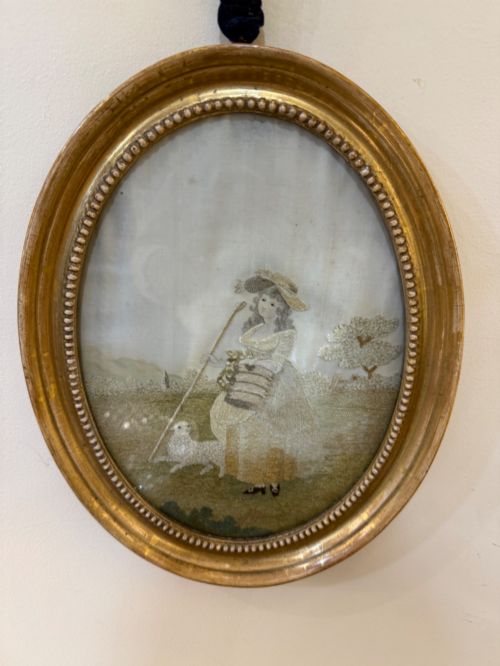
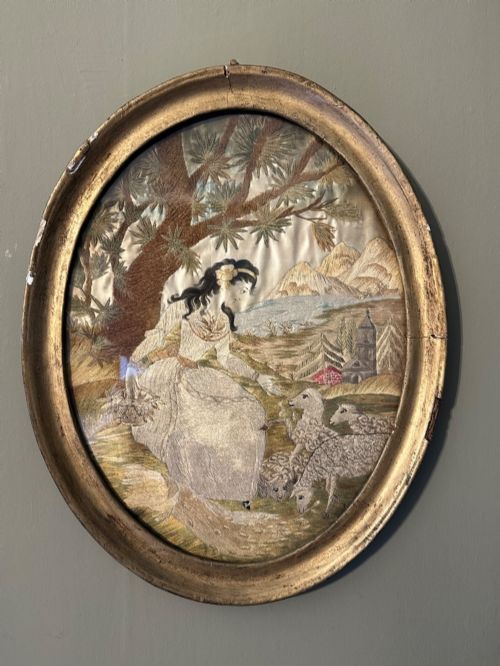
The selections on this page heavily feature Georgian and Regency examples alongside Victorian interpretations. Formats range from upright panels to oval woolwork pictures and detailed band samplers executed by young makers.
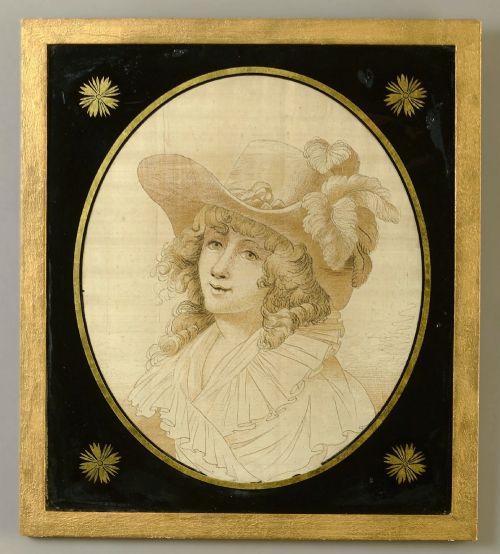
Subjects stretch from portraits of fashionable young ladies and religious themes to narrative scenes like Jack and the Beanstalk. Most examples arrive secured in period wooden or giltwood frames complete with protective glass.
Materials and Technique
The makers utilised a foundation of linen or wool fabric stretched across panels to receive the needlework. Silk thread, silk floss, and wool yarn provide the texture and colour across pictorial elements and lettering.
Techniques combine standard embroidery stitches with specialised long stitch, crewel work, and hand-painted silk sections. Finished panels found protection within giltwood frames, sometimes featuring verre églomisé borders to set off the textile.
Listings feature works spanning the 18th Century through the Victorian era, utilising glass, silk, wood, linen, and wool.
Assessing Quality
Quality rests upon the fineness of the stitching and the complexity of the composition. Pictorial pieces showing detailed figures or nuanced shading demonstrate superior technical discipline compared to basic exercises.
The condition of the silk and wool threads dictates the visual strength of the work. Well-preserved pieces retain vibrant tones and secure mounting within their original frames, whereas neglected examples suffer from fading and fibre degradation.
Mary Banion·Mary Greening·Elizabeth Horn·Sarah Baker·Mary Mason·Ann B Gilies·Martha Hall·Mary Street Didsbury·Louiss Elkins
The Georgian Needlework Framed Glossary
- Sampler
- A piece of needlework produced as a demonstration or test of skill in various stitches. These frequently record alphabets, numerals, and the maker's name alongside a date.
- Verre Églomisé
- A process of applying gold or silver leaf to glass along with cold painting to create a decorated border. It frequently frames Regency and nineteenth-century oval pictures.
- Crewel Work
- Embroidery executed using wool yarn on a heavy linen twill fabric. This technique creates textured designs often seen in pastoral and floral imagery.
- Band Sampler
- An early format where horizontal rows of distinct decorative stitch patterns are worked across a narrow strip of linen. These predate the more pictorial map and alphabet samplers.
- Silk Floss
- An untwisted silk thread used to achieve smooth, glossy surfaces in pictorial embroidery. It allows for subtle shading in portraits and floral motifs.
Georgian Needlework Framed: Frequently Asked Questions
How do I date a framed needlework piece?
Many samplers include embroidered dates, the maker's age, and specific years that anchor the timeline. Stylistic clues in the costumes, framing materials, and lettering styles help estimate the period when direct dates are absent.
Examining the reverse of the panel often reveals period woods and handmade fastenings typical of the eighteenth or nineteenth centuries. Comparing the specific embroidery techniques against known examples provides further confirmation.
Where should I hang textile art at home?
Needlework benefits from placement away from direct sunlight to protect delicate silk and wool threads from fading. Interior walls with stable temperature and humidity levels suit these historic fabric pieces best.
Keeping them out of damp areas like kitchens or bathrooms preserves the linen backing and prevents frame damage. Gentle ambient lighting highlights the fine stitches without causing thermal stress to the glass and frame.
Were these made by adults or children?
A large portion of surviving samplers were worked by young girls as part of their domestic education and refinement. Inscriptions often record the maker's age, frequently between nine and twelve years old.
More complex pictorial scenes and portraits in silk were executed by skilled needlewomen or professional artisans. Both categories reflect the high status placed on fine hand embroidery during the Georgian era.
What is the difference between a sampler and a picture?
Samplers primarily display alphabets, numbers, verses, and geometric band patterns intended to demonstrate stitch proficiency. They often incorporate decorative motifs like flora, fauna, and small figures arranged systematically.
Pictures focus on a single narrative, portrait, or pastoral scene without the alphabets or repeating border exercises. These pictorial works function as complete decorative art meant for display on walls.