





Georgian Embroidery Oval
A georgian embroidery oval brings eighteenth and nineteenth-century needlework into interiors within original giltwood and verre églomisé frames.
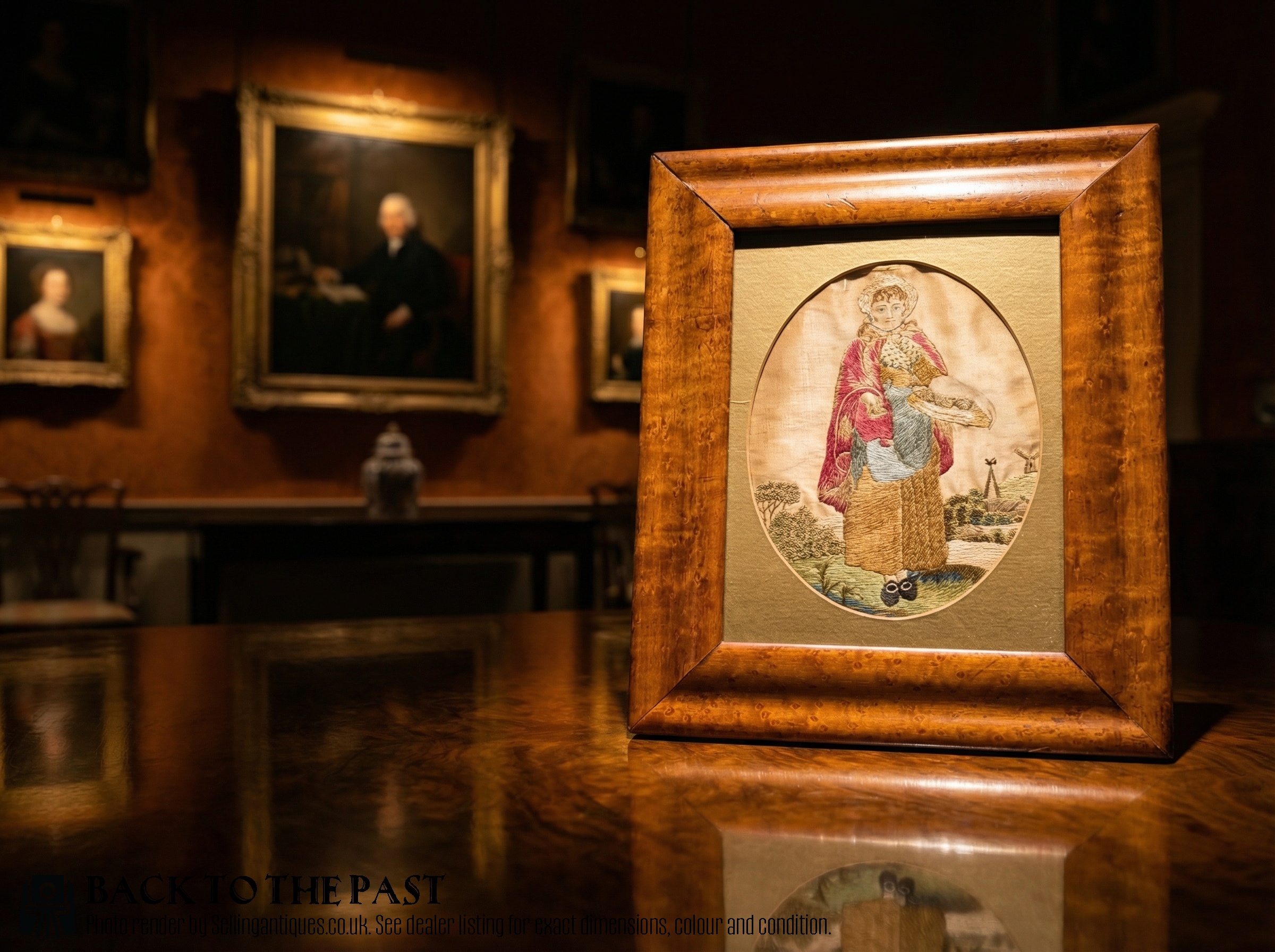
Georgian Embroidery Oval
These items comprise textile art, wall art, framed art, needlework pictures and needlework samplers produced during the Georgian and Regency periods. Buyers examining a georgian embroidery oval will encounter silk work, wool work, felt work and religious needlework set inside dedicated frames.
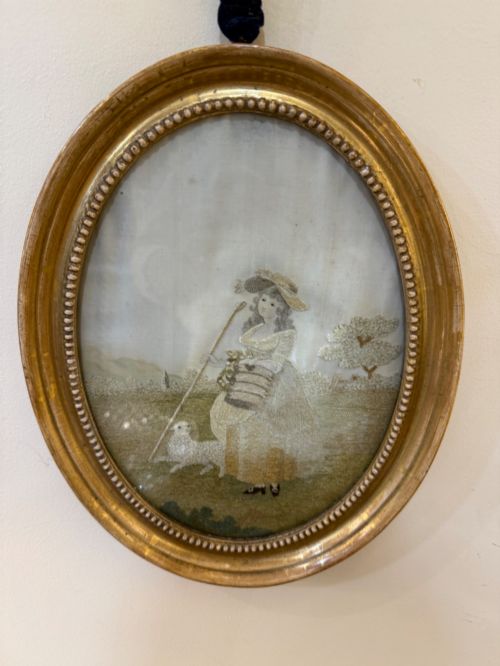
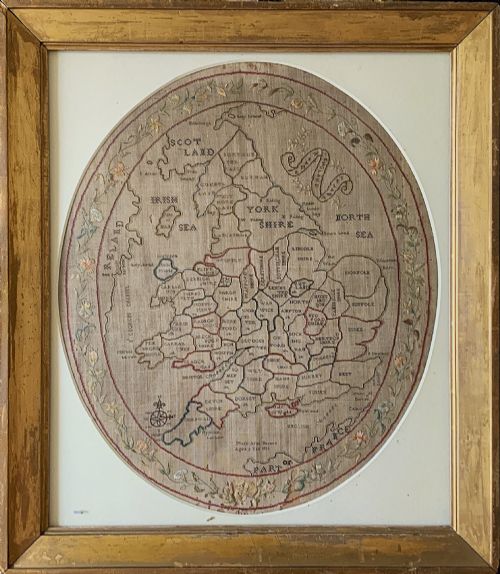
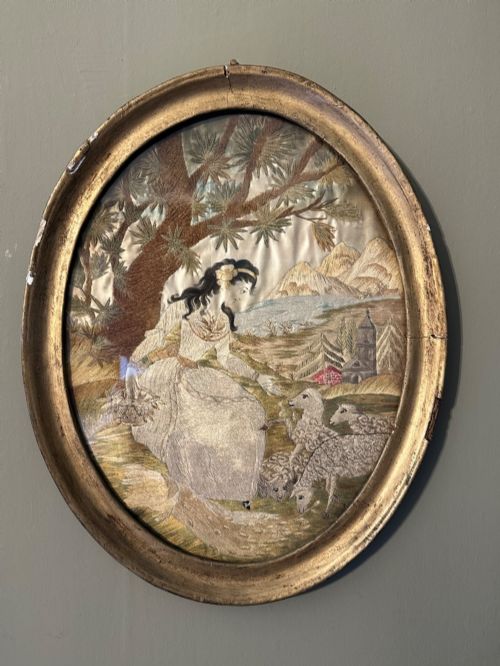
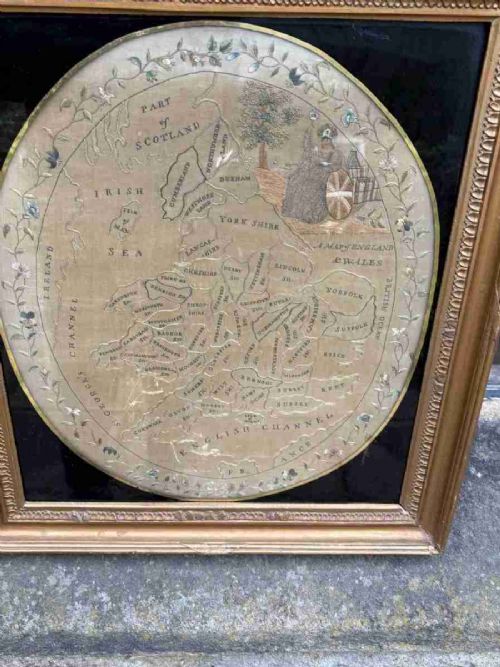
Map samplers depicting England and Wales, pastoral scenes of girls in gardens, and figural compositions like oyster sellers appear frequently among the listings. Most examples date from the eighteenth century through the early nineteenth century.
The dominant presentation is an oval format often paired with verre églomisé or water gilded frames. These pieces function as historic wall hangings that preserve early needlework techniques.
Materials and construction
Maker construction relies on natural textiles including silk, wool, linen and felt stitched onto ground fabrics using silk thread. Artisans worked pictorial and cartographic designs by hand, producing textured surfaces across maps, figures and landscapes.
Framing utilised wood, giltwood, gilt wood and gold leaf, occasionally incorporating mezzotint black glass borders. These protective surrounds completed the oval wall art pieces.
Georgian Embroidery Oval Retail Price Guide 2026
Typical asking prices for georgian embroidery oval among the pieces listed under this phrase on Sellingantiques today, from the lower quarter to the upper quarter. They describe what is for sale here now, not the wider market.
Listings incorporate items from both the Georgian and Regency periods, utilising silk, wool, felt and giltwood.
Assessing quality
Quality rests upon the intricacy of the needlework and the preservation of the textile surface. Finer executions display tighter, more controlled stitching across complex subjects such as cartography or figurative scenes.
The sophistication of the framing influences the overall character of the piece. Water gilded frames and verre églomisé glass panels demonstrate higher workshop input than plain wooden surrounds.
Mary Banion·Mary Pinfold
The Georgian Embroidery Oval Glossary
- Verre églomisé
- A process of applying gold or silver leaf to glass combined with engraving and painting on the back. It creates a dark, reflective border often seen on Regency frames.
- Needlework sampler
- A piece of textile work produced to demonstrate skill in various stitches. These frequently record alphabets, numbers, maps or moral verses.
- Silk work
- Embroidery executed primarily using silk threads upon a linen or silk ground. It provides a smooth and reflective surface texture.
- Water gilded
- A traditional framing technique using liquid size and gesso before laying gold leaf. The surface is then burnished to a high shine with an agate stone.
Georgian Embroidery Oval: Frequently Asked Questions
What subjects do these embroideries show?
The listings feature map samplers of England and Wales alongside figurative subjects like garden scenes and oyster sellers. Religious needlework pictures also appear among the textiles.
These varied themes reflect the educational and decorative pursuits of makers during the Georgian and Regency eras.
How are these pieces framed?
Many examples are housed in water gilded or giltwood oval frames designed specifically for the needlework. Some feature verre églomisé glass panels with dark painted or gilded borders.
Original frames remain an important component of the surviving textile art.
Which periods do these textiles span?
The inventory encompasses eighteenth-century and nineteenth-century examples, spanning the Georgian, Regency and Grand Regency eras. Dates stretch from the 1700s into the early 1800s.
This broad timeframe captures shifts in needlework styles and framing fashions.
What materials make up the pictures?
Needlework elements combine silk thread, wool and felt worked onto linen or silk backing fabrics. The surrounding structures employ wood, gilt wood and gold leaf.
Glass elements including mezzotint black glass frequently protect the textile surfaces.