


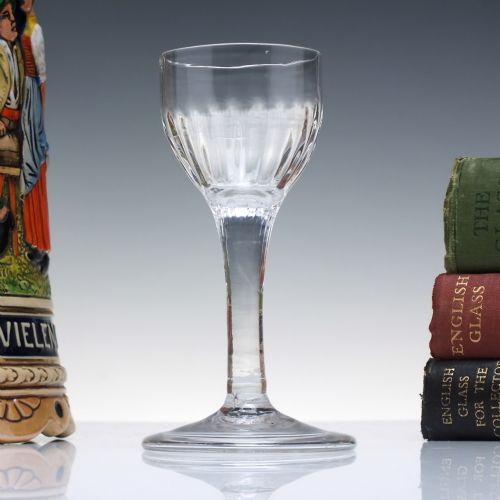


Georgian Moulded Glassware
Georgian moulded glassware brings tactile weight and optical rhythm to the table, offering drinking glasses, sweetmeats, and jelly jars shaped by historical metal moulds.
Georgian Moulded Glassware
When you search for georgian moulded glassware, you find functional and decorative vessels produced during the eighteenth century, spanning from the early decades through to the year one thousand eight hundred. These pieces encompass drinking glasses, wine glasses, ale glasses, dram glasses, sweetmeat glasses, jelly or custard glasses, decorative dishes, bonnet glasses, patch stands, and sugar bowls.
The objects on this page largely date from the eighteenth century and the Georgian period, including specific years like seventeen twenty, seventeen twenty-five, seventeen forty, seventeen fifty, and seventeen sixty. You encounter English and continental origins, notably Liege, alongside styles such as George II, early eighteenth-century, and eighteenth-century Baroque.
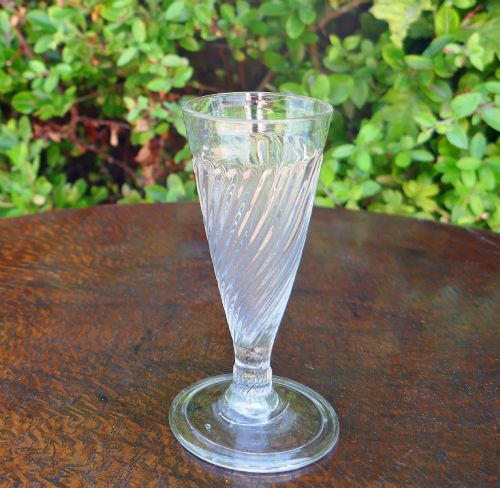
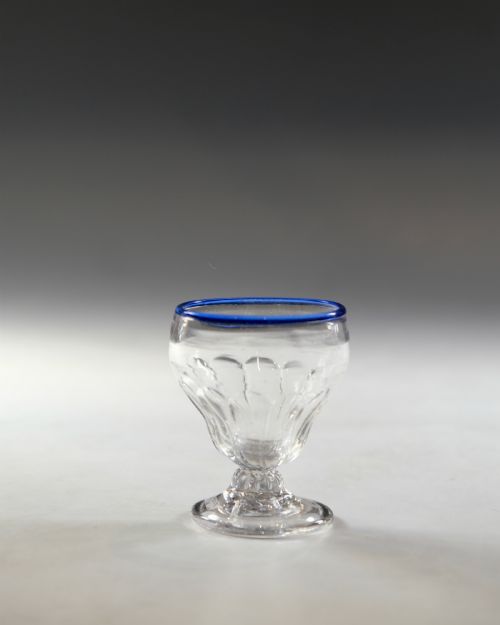
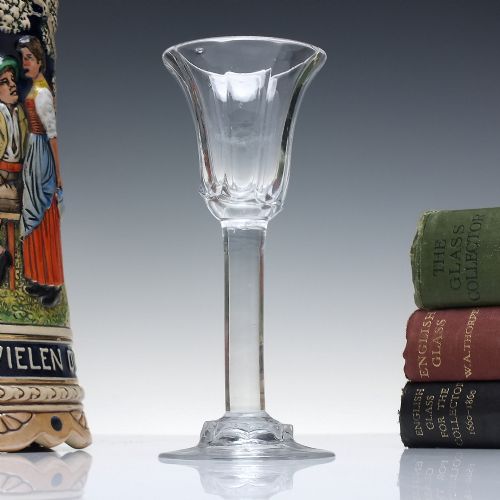
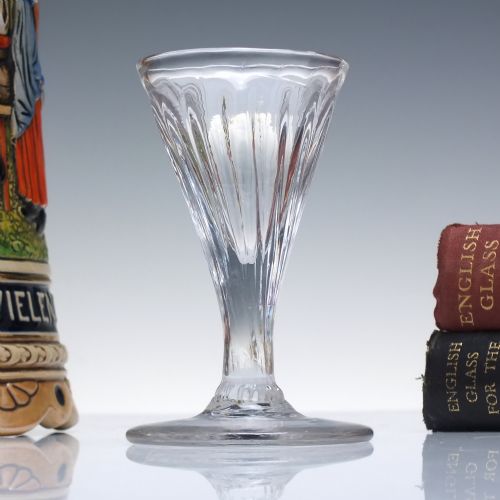
The forms show considerable variety in their moulded design elements, featuring wrythen, rib, inverted petal, honeycomb, panel, flute, and nut mouldings. Many examples incorporate plain stems, folded feet, single handles, and coloured elements like green or blue rims.
How they were made
The pieces listed here were formed using lead glass, clear glass, clear lead glass, flint glass, and cobalt glass, occasionally accented with enamel. Glassmakers utilised historic production methods where molten metal was pressed into half or full-size moulds to impart exterior patterns before being expanded and finished by hand.
Moulding techniques created distinct textural relief on the body of the vessel, producing honeycombs, ribs, panels, and wrythen twists across wine glasses, jelly dishes, and sweetmeats. The resulting blanks were then manipulated on the pontil iron to add stems, feet, folded rims, and handles as required by the specific form.
Listings feature lead glass, flint glass, and cobalt glass shaped into wine glasses, jelly dishes, and sugar bowls across the eighteenth century.
What varies in quality
The distinction between standard examples and the finest pieces lies in the crispness and definition of the moulded pattern against the vessel wall. Superior items retain sharp, tactile facets and ribs without blurring or softening from worn metal or repeated use of the mould.
The Georgian Moulded Glassware Glossary
- Moulded glassware
- Vessels shaped by pressing hot metal into a pattern-bearing mould. This technique creates raised decorative motifs such as ribs or honeycombs on the exterior surface.
- Lead glass
- A heavy, brilliant glass composition containing lead oxide. It provides high refractive power and durability suited to eighteenth-century drinking vessels.
- Flint glass
- An early British term for high-quality clear glass. It denotes clarity and brightness in decorative tablewares.
- Folded foot
- A base edge turned under during forming to create a thickened rim. This adds stability and reduces chipping on daily-use drinking glasses.
- Rib moulded
- A surface pattern of raised vertical or diagonal ridges. The molten glass receives these lines from the interior striations of a dip mould before blowing.
- Sweetmeat glass
- A specialised footed vessel designed for serving confectioneries, nuts, or preserves. These pieces often feature wide shallow bowls and elaborate stems.
Georgian Moulded Glassware: Frequently Asked Questions
What is georgian moulded glassware?
It comprises drinking vessels, sweetmeat glasses, jelly jars, and decorative dishes produced during the eighteenth century using pattern moulds. These items display distinct surface textures formed while the metal was hot.
Examples range from simple tablewares to decorative pieces featuring ribbing, honeycombs, and panels in clear or coloured glass.
Where were these pieces made?
The listings show English production alongside continental European origins, specifically noting workshops in Liege. Makers utilised local glasshouse traditions to shape lead glass and flint glass.
Regional differences often manifest in the specific choice of mould design and metal tint.
How should I care for eighteenth-century glass?
Wash these items by hand in warm water using mild soap, avoiding harsh detergents and modern dishwashers. The historic metal requires gentle handling to preserve its surface character.
Store them securely on stable flat surfaces away from temperature extremes.