
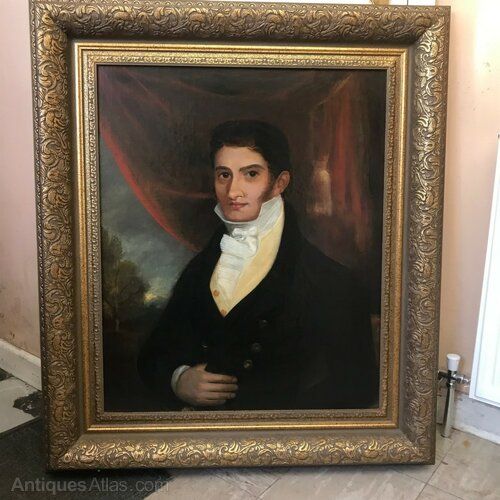
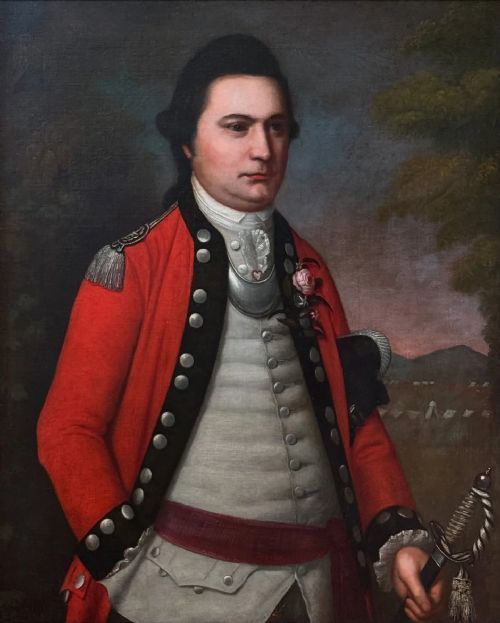
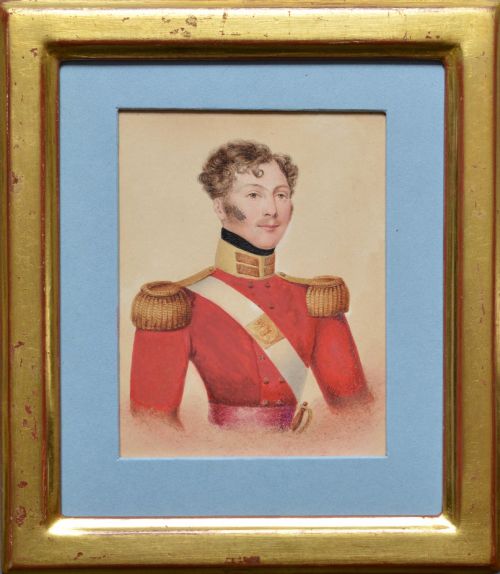
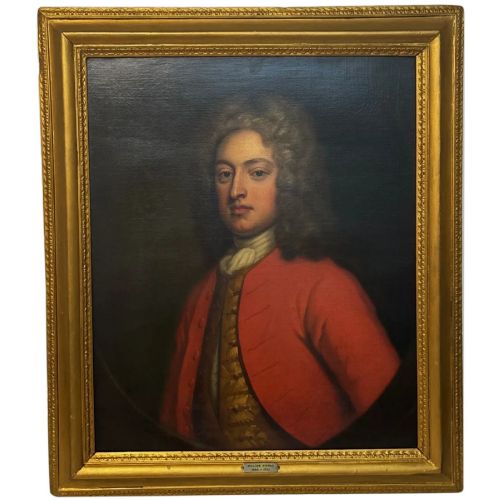



Georgian Military Officer Painting
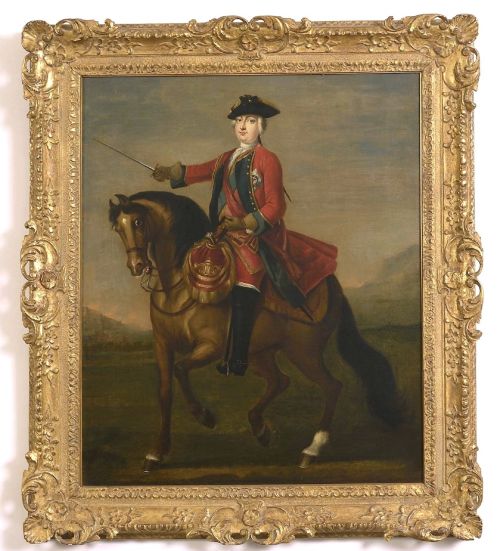
A georgian military officer painting captures the likeness of notable commanders and captains in oil or watercolour.
Georgian Military Officer Painting
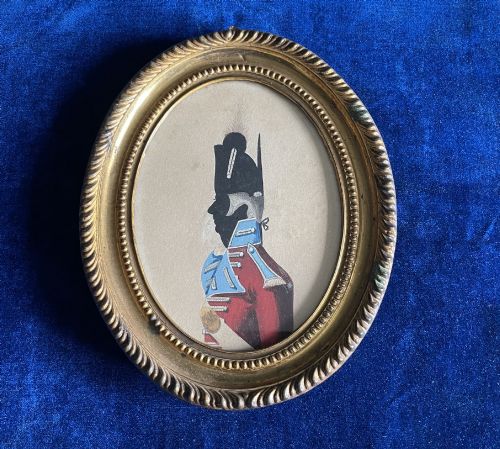
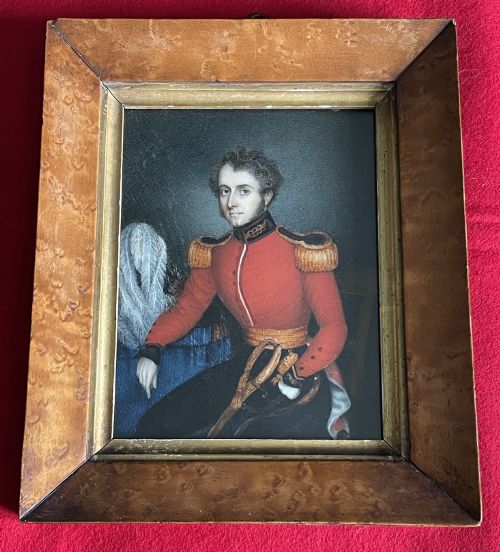
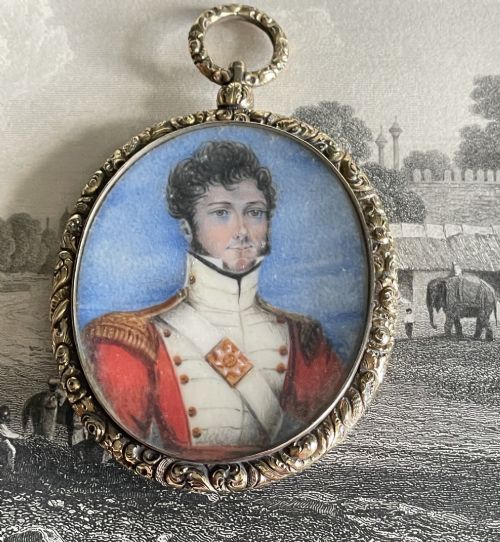
Buyers encounter both full-scale oil works on canvas and delicate portrait miniatures executed on paper, ivory, or agate panels. The selection ranges from formal half-length oils by named artists to intimate watercolours and primitive expressions.
Origins stretch from domestic British schools to continental European workshops and Anglo-Indian postings. Forms include framed rectangular canvases, oval formats, and portable miniatures housed in giltwood or gold frames.
Materials and Technique
Artists relied primarily on oil on canvas to achieve depth in coats, sashes, and facial expressions, often building rich layers of pigment for uniforms and gold braid. Watercolours on paper served for portable likenesses, while specialised pieces utilised agate panels.
Frames of giltwood or precious metal completed the works, protecting the painted surface and adding decorative presence. Support materials varied from woven canvas stretched over wooden frames to stiff paper and prepared wood panels.
Listings feature works spanning the eighteenth century, the Regency era, and the nineteenth century, executed in oil and watercolour.
Distinctions in Execution
The standard of portraiture rests upon the rendering of facial expression and the precise detailing of regimental lace, medals, and insignia. Master painters capture bone structure and character with acute observation, whereas lesser hands produce stiff or formulaic likenesses.
Condition of the canvas, panel, or paper surface dictates longevity, with untouched original surfaces and period frames commanding greater respect. The presence of a documented artist attribution or clear sitter identification elevates the historical importance of the piece.
Stickland Lowry·John Simmons·Sir Thomas Lawrence·Edward Pugh·Henry Hoppner Meyer·Sir William John Newton·Samuel Lane·George Duncan Beechey·Sir Richard Westmacott·Gerrit Schipper·Henry Wyatt·Robert Ker Porter·Harry Ashby·Ambrosini Jerome
The Georgian Military Officer Painting Glossary
- Portrait miniature
- A small-scale painting executed with fine detail, often worn as personal jewellery or kept in a travelling case. These works frequently utilised watercolour on vellum, paper, or ivory.
- Oil on canvas
- A painting medium where pigments are suspended in drying oils and applied to a woven fabric support. This technique allowed artists to blend tones smoothly and capture the texture of military wool and velvet.
- Giltwood
- Wood carved and coated with a thin layer of gold leaf or gilt gesso. It forms the decorative framing typical of formal eighteenth and nineteenth-century portraits.
- Regency
- A period in British history spanning the early nineteenth century, characterised by distinctive neoclassical art and military dress. Portraits from this era often display specific campaign uniforms and high-collared jackets.
- Folk art
- Works created by self-taught or provincial artists outside the academic tradition. These paintings emphasise bold outlines and primitive charm over strict anatomical proportion.
Georgian Military Officer Painting: Frequently Asked Questions
How can I identify the regiment?
Study the colour of the facings on the collar and cuffs, along with any visible cap badges or shoulder belt plates. These details correspond to specific British or European military units of the period.
Contemporary uniform regulations and portrait records often help match insignia to the exact campaign or regiment served by the officer.
Where were these displayed originally?
Officers commissioned these portraits to hang in country houses, family drawing rooms, or naval wardrooms as records of rank and service. Smaller miniatures travelled with the sitter during campaigns or stayed with family members at home.
Today, they suit studies, libraries, and living rooms with traditional interior schemes.
How do I date an undated portrait?
Examine the cut of the uniform coat, the shape of the lapels, and the style of the neckwear, as military fashion changed rapidly between seventeen-hundred and eighteen-fifty. Hair powder, wigs, and facial hair styles provide further chronological clues.
The canvas preparation, stretcher construction, and framing style also point to a specific decade.
What is the difference between oils and miniatures?
Full-scale oil paintings on canvas were designed for permanent wall display in formal rooms and allow for broad, expressive brushwork. Miniatures are intimate, highly detailed works intended to be held in the hand or worn.
Both mediums captured the likeness of military personnel with equal skill, but served different social functions.