


Officer Portrait Miniature
An officer portrait miniature captures the striking likeness of military men in watercolour, enamel, and oil across the eighteenth and nineteenth centuries.
Officer Portrait Miniature
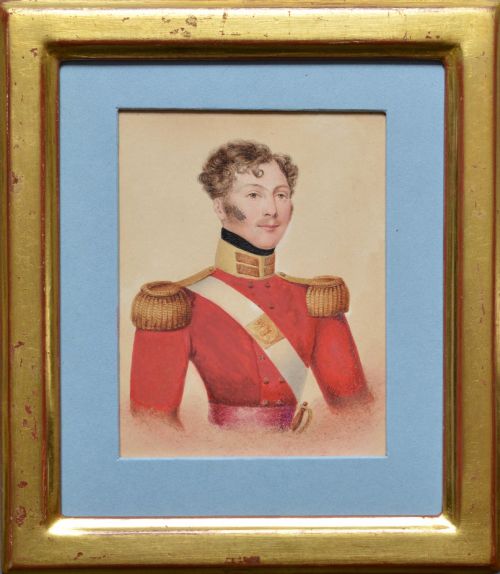
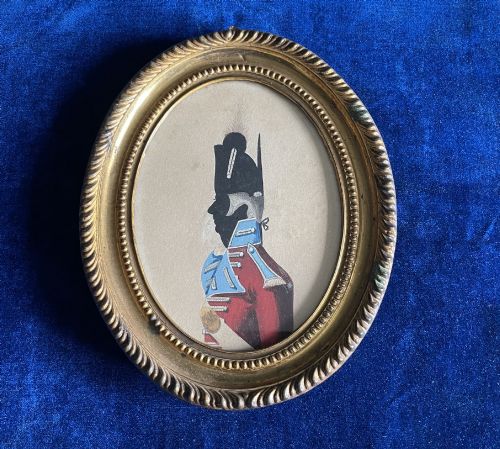
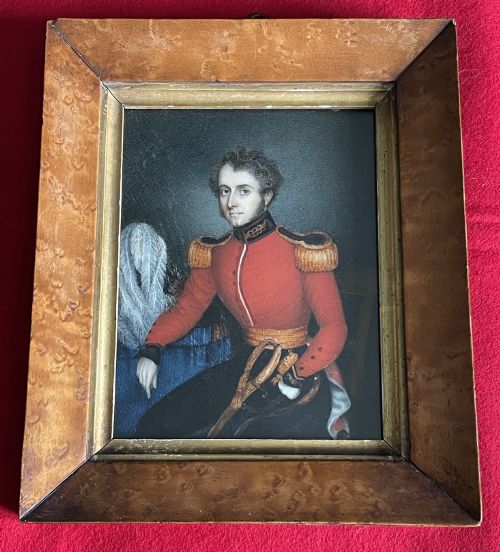
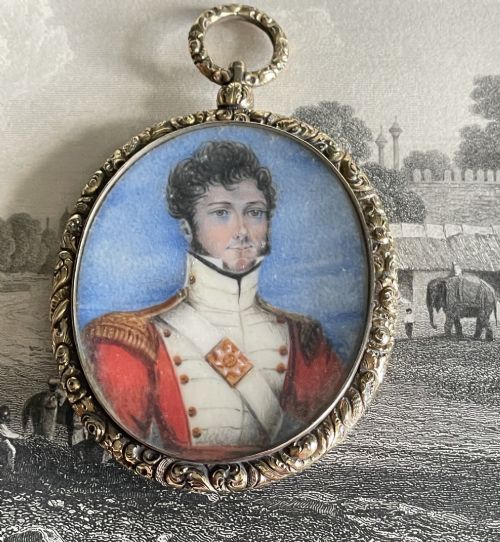
An officer portrait miniature represents a painted likeness of military personnel, predominantly depicting British naval, dragoons, artillery, and infantry officers. These works capture specific figures such as lieutenants, captains, and generals from the eighteenth and nineteenth centuries.
The pieces on this page appear in various formats including watercolour on paper or ivory, enamel on metal, and painting on agate panel. Many feature named subjects ranging from regimental officers to high-ranking commanders.
Framing is an integral component of the form, utilising materials such as giltwood, gilt metal, burl wood, and eighteen-carat gold. These settings range from simple protective cases to elaborate decorative frames designed for display or personal carriage.
Materials and technique
Artists utilised delicate watercolours applied to thin sheets of ivory or paper, capturing fine facial details and uniform insignia with exceptional precision. Enamel miniatures involved fusing powdered glass pigments to metal surfaces through high-temperature firing, ensuring the colours remained vibrant and permanent over centuries.
The physical support structures often combined precious metals like gold with glass faceplates to protect the delicate paint surface from moisture and physical damage. Backings frequently incorporated burl wood or simple paper layers, while the heavier frames utilised carved giltwood.
Naval and army officers trusted artists to immortalise their campaign scowls while crammed inside tiny gold frames.
Assessing quality in miniature painting
Quality rests heavily on the precision of the brushwork and the ability of the artist to render the precise details of military uniforms, facial expressions, and insignia. Works by documented painters demonstrate superior control over lighting and anatomical proportion compared to anonymous school pieces.
The choice of housing significantly influences the overall character of the piece, with heavy gold frames and specialised agate panels representing the upper tier of production. The condition of the underlying watercolour, ivory, or enamel surface without significant fading or cracking remains central to the integrity of the object.
Henry Bone ARA·Edward Pugh·Sir William John Newton·Leslie Moore·Gerrit Schipper·James Scouler·Frederick Buck·John Thomas Barber Beaumont
The Officer Portrait Miniature Glossary
- Watercolour
- A paint consisting of a pigment suspended in a water-based solution, commonly applied to paper or ivory for these portraits.
- Enamel
- A glassy substance fused to a metal backing through kiln firing, providing a durable and luminous surface for portrait painting.
- Agate panel
- A sliced piece of banded chalcedony mineral utilised as a hard stone painting support for specific eighteenth-century works.
- Giltwood
- Wood that has been coated with a thin layer of gold leaf or gold paint, frequently used for period picture frames.
- Gilt metal
- A base metal treated with a gold wash or plating to simulate solid gold housing around the miniature portrait.
Officer Portrait Miniature: Frequently Asked Questions
What periods do these pieces date from?
The selection spans primarily the eighteenth and nineteenth centuries, encompassing the Georgian and Regency eras. Specific dated examples range from the mid-eighteenth century through to the Victorian period.
Makers and schools from both British and Anglo-Indian origins are represented, showing stylistic shifts from simple profile silhouettes to highly finished full-colour uniform portraits.
How were these miniatures originally displayed?
Many works were designed to be worn close to the heart inside uniform pockets or waistcoat attachments. Others were housed in sturdy giltwood or gilt metal frames intended to hang upon domestic walls.
The inclusion of gold lockets and protective glass panels allowed officers to carry likenesses of themselves or their peers during military campaigns.
What subjects typically appear in the portraits?
Subjects include named military figures ranging from junior officers and captains to generals and commanders-in-chief. Regiments such as the Royal Artillery, the 80th Regiment of Foot, and various naval divisions feature prominently.
Unattributed pieces from the British School also record the likenesses of anonymous officers who served in various land and naval campaigns.
How do you distinguish between watercolours and enamels?
Watercolour miniatures utilise paper or ivory supports that exhibit a matte finish and delicate brush texture under magnification. They require protective glass coverings to prevent surface abrasion and moisture damage.
Enamel miniatures possess a glossy, vitreous surface created by fired glass pigments on metal, offering greater resistance to fading and environmental wear.