
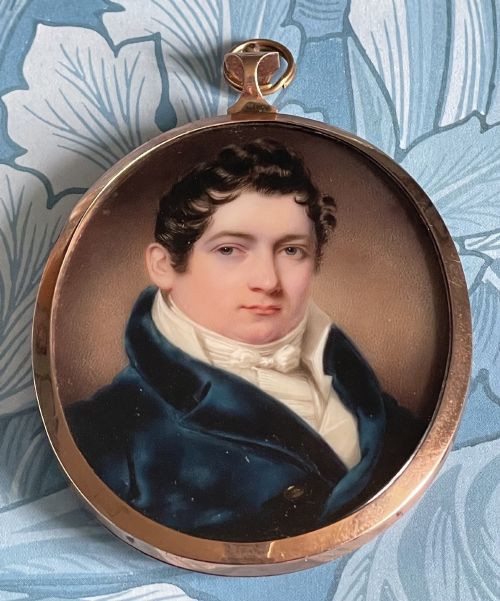
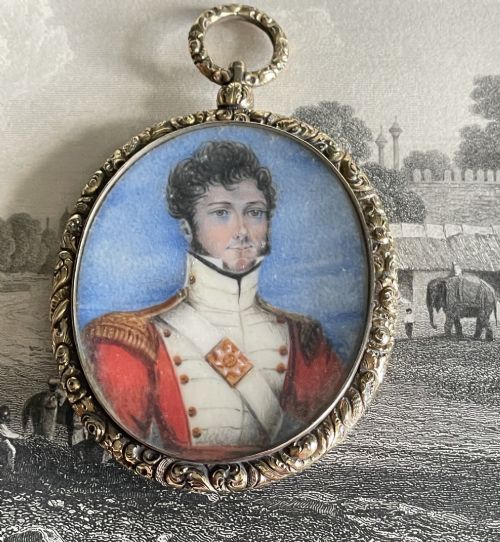


Gilt Pendant Portrait
These gilt pendant portrait pieces capture likenesses in miniature, offering a wearable piece of history.
Gilt Pendant Portrait
A gilt pendant portrait combines detailed miniature painting with metalwork designed to be worn close to the body. When you search for this phrase, you encounter works spanning the Georgian, Regency, and Art Nouveau periods, alongside 18th century examples.
The selection ranges from watercolour on ivory and glass silhouettes to enamel paint and oil on panel. Portrait miniatures and pendants dominate the forms available here, often housed in gilt frames or lockets.
How they were made
Artists painted likenesses using watercolour on ivory, enamel paint, or oil, applying fine detail to small surfaces. These delicate painted works were then set behind glass or within gold and gilt metal frames.
Metalworkers constructed hinged lockets and pendant mounts, sometimes incorporating silver gilt or cobalt blue enamel. Techniques varied from silhouette work on glass to complex romantic enamel designs.
Periods represented span from the 18th century and Georgian era through to Art Nouveau.
What varies in quality
The housing also marks the grade of the piece, with heavier gold or intricate silver gilt pendant settings and enamel work indicating higher atelier standards than simple metal frames.
John C D Engleheart·Charles Hayter·Christian Friedrich Zincke·William Naish·Meyle & Mayer
The Gilt Pendant Portrait Glossary
- Miniature
- A small-scale portrait painting executed with fine detail. These works were intended for private viewing or personal adornment.
- Gilt metal
- Base metal treated with a thin layer of gold to give the appearance of solid gold. It provides a durable and decorative housing for portraits.
- Silhouette
- A portrait represented as a solid shape of a single colour, typically black on a pale background. In these listings, examples appear painted on glass.
- Locket
- A small ornamental case worn on a chain around the neck, often opening to reveal a portrait or keepsake inside.
Gilt Pendant Portrait: Frequently Asked Questions
How were pendant portraits worn?
These pieces were typically suspended from ribbons or chains around the neck, allowing the wearer to keep a likeness of a loved one close to the heart.
They functioned as both personal tokens of affection and fashionable accessories of their respective eras.
What materials are used in these portraits?
The portraits themselves utilise watercolour on ivory, enamel paint, oil, and glass for silhouettes. The surrounding frames and pendants are formed from gold, silver gilt, and gilt metal.
Enamel details and glass covers protected the delicate painted surfaces from wear.
How do I date an 18th century miniature?
Dating relies upon the costume of the subject, the hairstyle, and the framing style typical of the period. Documentation or attribution to known artists also helps establish the era.
Many pieces from this time reflect Georgian aesthetics with simple yet elegant gilt metal surrounds.
Can I open these pendant lockets?
Many pendant pieces feature hinged locket designs intended to hold miniature portraits or small locks of hair. Art Nouveau examples often incorporate mirrored interiors.
Care should be taken when opening older metalwork to avoid straining the original hinges.