


Regency Military Miniature
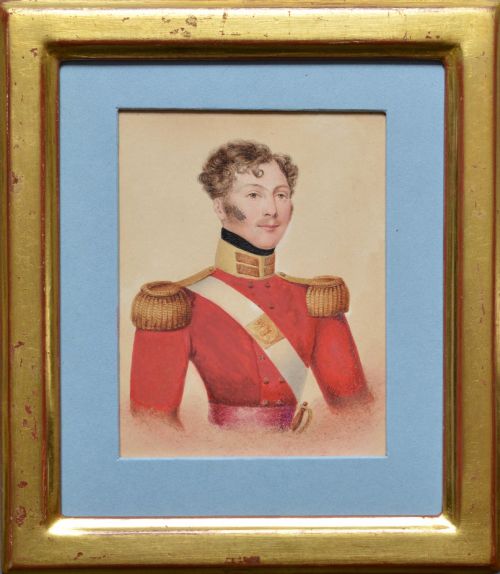
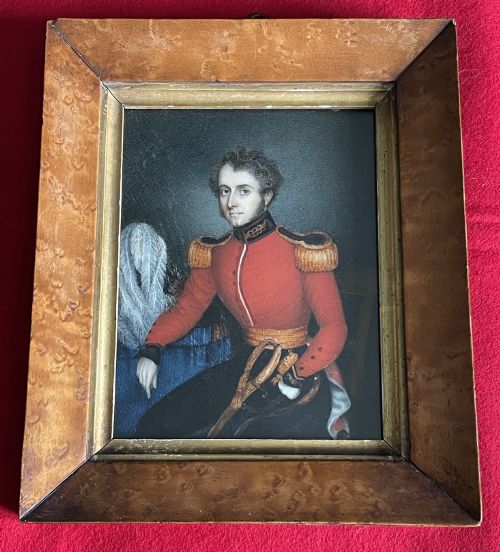
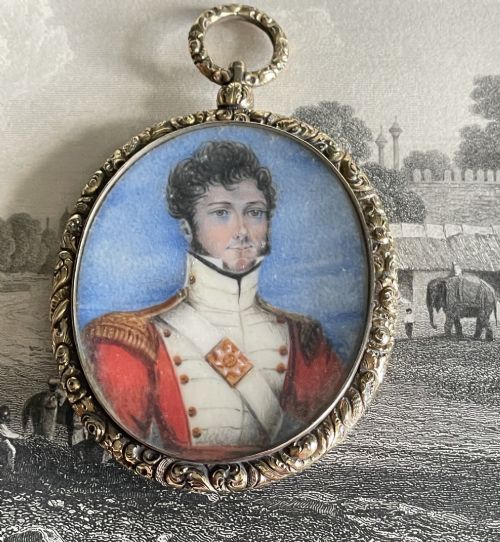
A regency military miniature captures the likeness of officers and commanders in small scale.
Regency Military Miniature
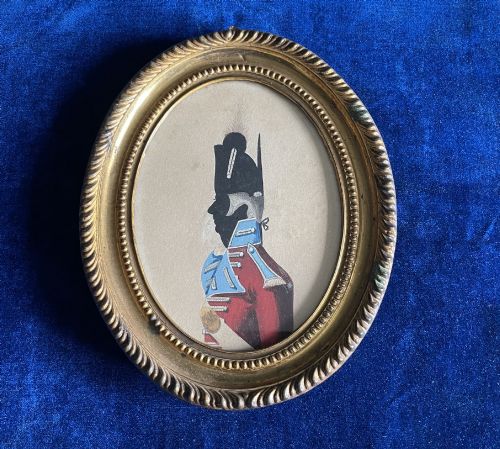
When you search for a regency military miniature, you encounter small-scale artworks depicting officers from regiments such as the Dragoons and the Staffordshire 80th Regiment of Foot. These items primarily take the form of portrait miniatures and portrait paintings created during the Georgian, Regency, and George IV eras.
The pieces on this page include examples attributed to known artists like Edward Pugh, Gerrit Schipper, and Sir William John Newton. Alongside framed portraits, the selections extend to desk ornaments such as a model of a muzzle loaded field gun.
Most entries originate from the late eighteenth and early nineteenth centuries, reflecting the military dress and ranks of the period. Buyers frequently find profile studies and watercolour paintings alongside works set in gilt metal, giltwood, or gold leaf.
Materials and construction methods
Artists painted these watercolours on paper, capturing fine details of uniforms and facial expressions within a compact surface. Many examples incorporate delicate mountings utilising glass, gilt metal, and gold leaf to frame the image.
Some pieces feature elaborate presentation mountings, including frames set with pearls and worked in burl wood. Desk ornaments involve metalwork techniques to replicate artillery equipment such as field guns from the period.
One unexpected inclusion among the framed portraits is a miniature metal model of a muzzle loaded field gun ready for action.
Distinctions in craftsmanship and presentation
The housing of the piece also dictates its standing, with original gold leaf frames, pearl settings, and intact glass protection elevating the presentation. Desk ornaments depend upon the casting quality and the preservation of the metal components.
Edward Pugh·Sir William John Newton·Gerrit Schipper
The Regency Military Miniature Glossary
- Watercolour
- A painting method using pigment suspended in water-based solution on paper. This medium defines the majority of portrait miniatures from this era.
- Portrait miniature
- A small-scale painting designed for personal keeping or desk display. These works focus closely on the subject's face and uniform.
- Giltwood
- Wood carved and treated with a thin layer of gold leaf or gold paint. Frames utilising this finish surround many period artworks.
- Profile
- A silhouette or side-view portrait study. This format appears frequently in eighteenth-century military representations.
- Desk ornament
- A decorative object placed upon a writing surface or table. Examples include small-scale models of military equipment like field guns.
Regency Military Miniature: Frequently Asked Questions
What is a regency military miniature?
A regency military miniature is a small-scale portrait painting depicting an officer, general, or naval commander from the Georgian and Regency periods. These artworks focus on military personnel in uniform, rendered primarily in watercolour.
Such pieces served as personal tokens or records of service for military families. They reflect the ranks and regiments active during the late eighteenth and early nineteenth centuries.
Who painted these military portraits?
Professional artists and portraitists of the era executed these works, sometimes signing their output or attributing subjects by regiment and rank. Names associated with these pieces include Edward Pugh, Gerrit Schipper, and Sir William John Newton.
Other works remain attributed to the British School or regional artists working in locations like India. Their training ensured accurate depiction of contemporary military dress.
How do I date a military miniature?
Dating relies on the style of the uniform, the sitter's recorded lifespan, and inscriptions noting specific years such as 1798 or 1829. Costume details help distinguish between late eighteenth-century Georgian fashion and subsequent Regency styles.
Frame materials and mounting techniques also provide clues to the period of manufacture. Documentation accompanying the artwork often confirms the active service years of the depicted officer.