



Regency Military Portrait
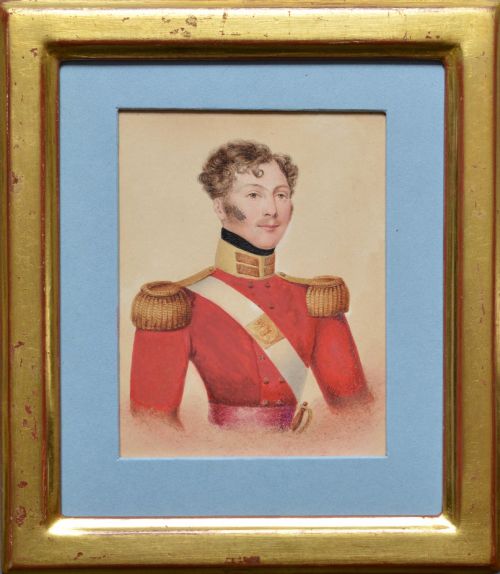
A regency military portrait captures the likeness of officers and commanders in oil, watercolour, or miniature form from the Georgian and Regency periods.
Regency Military Portrait
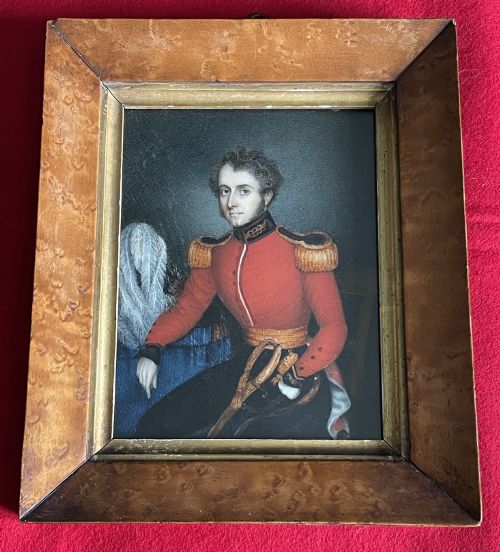
When you examine a regency military portrait, you encounter depictions of naval and army officers, generals, and commanders. These works originate primarily from the eighteenth and nineteenth centuries, spanning Georgian, Regency, and Victorian eras.
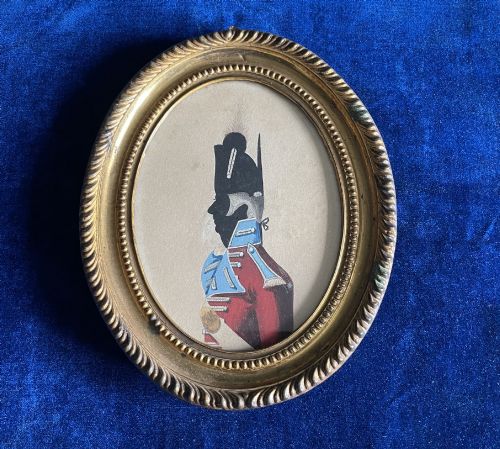
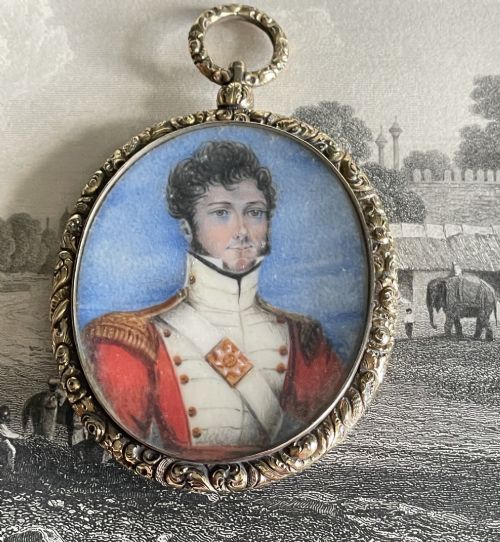
The pieces on this page appear in various formats, including oil paintings on canvas, delicate watercolours on paper, portrait miniatures, and reverse glass prints. Subjects range from named historical figures like the Duke of Wellington to anonymous officers of foot and dragoon regiments.
Alongside academic works by listed artists, you find folk art watercolours and primitive interpretations. These diverse forms record the military dress and uniforms worn during the Napoleonic conflicts and surrounding decades.
Materials and technique
Artists painted these works predominantly using oil on canvas or watercolour on paper, frequently framing them in wood, giltwood, or incorporating gold leaf. Portrait miniatures often utilise specialised supports housed in protective cases, sometimes featuring pearls and nine-carat gold settings.
The technical execution spans detailed portraiture by academic painters to simpler folk art watercolours and reverse glass prints. Pigments are applied to canvas, paper, or glass to record facial likenesses and precise regimental uniform details.
One listed pair of watercolours specifically records a soldier and a sailor equipped with wooden legs.
Distinctions in quality
Quality in a regency military portrait rests on the precision of the uniform depiction and the skill evident in the sitter's facial rendering. Works by documented portraitists show superior handling of light, expression, and posture compared to simpler folk art examples.
The choice of medium also shapes the piece, from large oil paintings on canvas to intricate portrait miniatures framed in gold and pearl. Condition of the canvas, paper, or glass surface influences how clearly the historical details survive.
Sir Thomas Lawrence·Edward Pugh·Ramsay Richard Reinagle·Henry Hoppner Meyer·Sir William John Newton·Samuel Lane·William Salter·Gerrit Schipper·Henry Wyatt·Robert Ker Porter·Harry Ashby·Ambrosini Jerome
The Regency Military Portrait Glossary
- Portrait Miniature
- A small-scale painting executed on ivory, vellum, or paper, designed for intimate viewing or portable display.
- Reverse Glass Print
- An image transferred and painted on the underside of a glass panel, creating a glossy finished surface.
- Oil on Canvas
- Pigment mixed with drying oil applied to a stretched woven fabric support, prevalent in formal military commissions.
- Watercolour
- Pigments suspended in a water-based solution applied to paper support, common for portable military likenesses.
- Giltwood
- Wood carved and surfaced with thin gold leaf or gilt composition, used extensively for period frames.
Regency Military Portrait: Frequently Asked Questions
What periods do these portraits cover?
The works span the eighteenth and nineteenth centuries, capturing the Georgian, Regency, and Victorian eras.
Dates stretch from the seventeen-fifties through the Napoleonic wars and into the mid-nineteenth century, with occasional later interpretations.
Are all the sitters identified?
Many portraits name specific historical figures, including admirals, generals, and commanders such as the Duke of Wellington.
Other listings depict anonymous officers and soldiers from specific regiments, identified solely by their uniform details.
What mediums are available?
The selection includes oil paintings on canvas, watercolours on paper, and portable portrait miniatures.
Uncommon variants such as reverse glass prints also appear alongside folk art and primitive interpretations.