
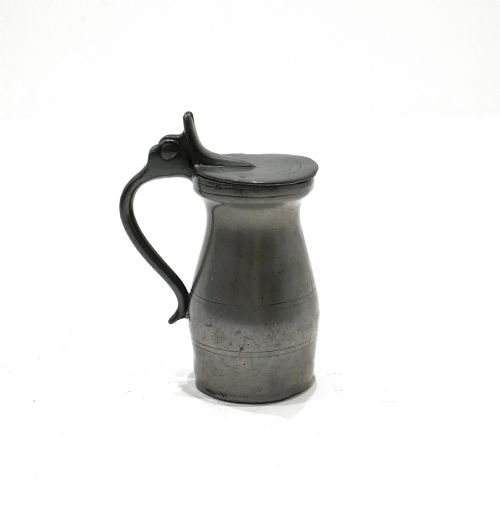
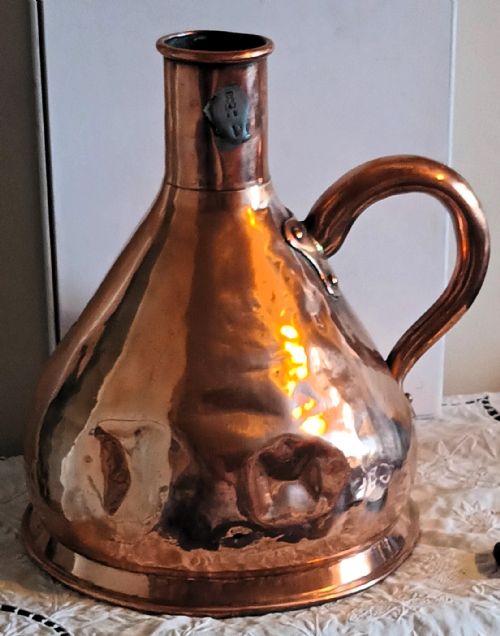

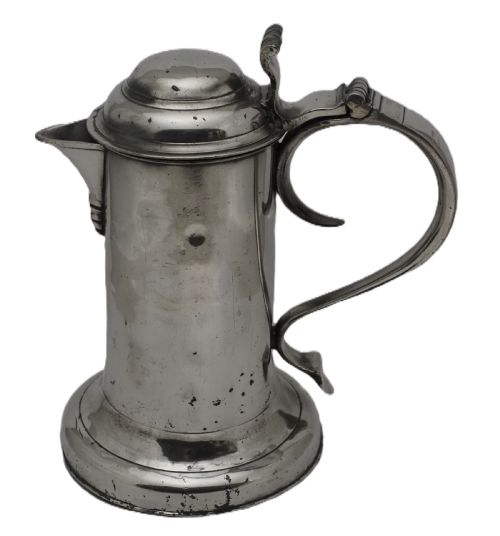


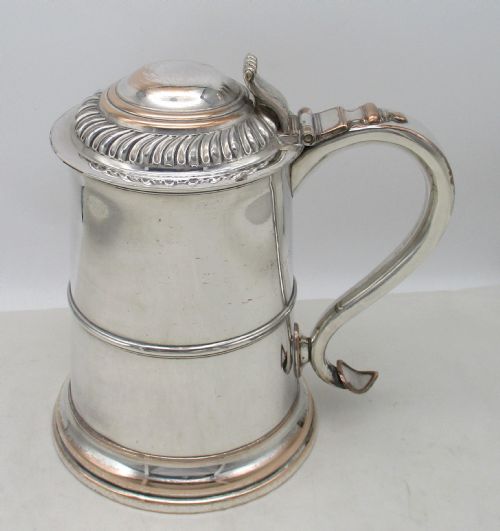


Georgian Metal Flagon
These georgian metal flagon examples are substantial vessels of pewter, copper, and old sheffield plate designed to hold and serve drinks reliably.
Georgian Metal Flagon
A georgian metal flagon encompasses robust drinking vessels and liquid measures originating from the eighteenth and early nineteenth centuries. The selection centres heavily upon pewter flagons, spired vessels, ale jugs, and substantial copper pitchers.
Buyers encounter distinct regional forms such as Irish church flagons, Scottish tappit hens, and Channel Islands measures alongside English spired flagons. These pieces range from small spirit measures up to colossal one gallon and multi gallon capacities.
The style spans plain utilitarian forms to ecclesiastical vessels bearing touchmarks, reflecting both domestic tavern life and formal church use during the georgian era.
How they were made
Pewter vessels were cast in metal moulds using a tin alloy containing lead or copper, then hammered and turned on a lathe to finish the surface. Makers soldered components such as handles, lids, and spouts to the main body.
Copper and old sheffield plate pieces utilised hammered sheet metal joined with seams or brazing. Old sheffield plate combined a thin layer of silver fused to a copper base, creating a durable composite material.
Scottish makers named one traditional capacity measure after a brooding hen, ensuring that tavern drinkers ordered their ale by poultry.
What varies in quality
The distinction between ordinary utility wares and finer examples lies in the weight of the metal and the crispness of the casting. Substantial wall thickness and well proportioned handles separate standard tavern pieces from monumental or ecclesiastical flagons.
Legibility of maker marks, touchmarks, and capacity stamps adds considerable distinction to individual pieces. Original lids, thumbpieces, and untouched patinas preserve the historical integrity of the vessel.
John Heaney of Dublin·Robert Iles of London·John De St Croix
The Georgian Metal Flagon Glossary
- Flagon
- A large drinking vessel with a handle and usually a lid, designed for holding liquids such as ale or wine. Many surviving examples served ecclesiastical or tavern purposes.
- Pewter
- A malleable metal alloy consisting primarily of tin, traditionally mixed with copper and lead. It formed the staple material for domestic and church measures.
- Old Sheffield Plate
- An early form of plated metal produced by fusing a sheet of silver onto a heavier copper ingot under heat. This technique preceded modern electroplating.
- Tappit Hen
- A traditional Scottish type of pewter drinking measure featuring a lid and a distinct tapered body. The name derives from the Scottish term for a hen with a crest.
- Touchmark
- An identifying stamp or hallmark struck into pewter by a maker or a guild inspector. These marks help identify the workshop and origin of the piece.
Georgian Metal Flagon: Frequently Asked Questions
What were georgian metal flagon pieces used for?
These vessels served primarily to measure, store, and pour liquids such as ale, wine, and spirits in domestic taverns and households. Larger ecclesiastical examples held wine for church communion services.
Capacity measures also functioned as legal standards for commerce, ensuring accurate volumes for customers before the adoption of imperial standardisation.
Can I use an antique pewter flagon for drinks?
Most collectors treat these pieces as decorative or historical objects rather than functional tableware. Historic pewter often contains varying levels of lead depending on its exact age and composition.
Displaying the vessel allows appreciation of the metal patina and touchmarks without risking chemical interaction with modern beverages.
How do I care for antique copper and pewter?
Maintenance requires keeping the metal dry and dusting it gently with a soft cloth. Aggressive polishing removes the historic surface oxidation known as patina, which develops over centuries.
Storing pieces away from damp environments prevents further corrosion and preserves the original texture of the metal.