


Georgian Copper Measure
These georgian copper measure items are robust vessels built for utility, prized by collectors for their honest domestic history and warm metallic tone.
Georgian Copper Measure
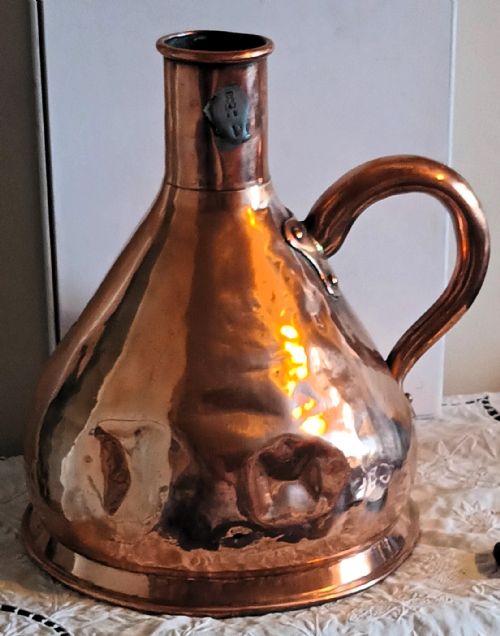
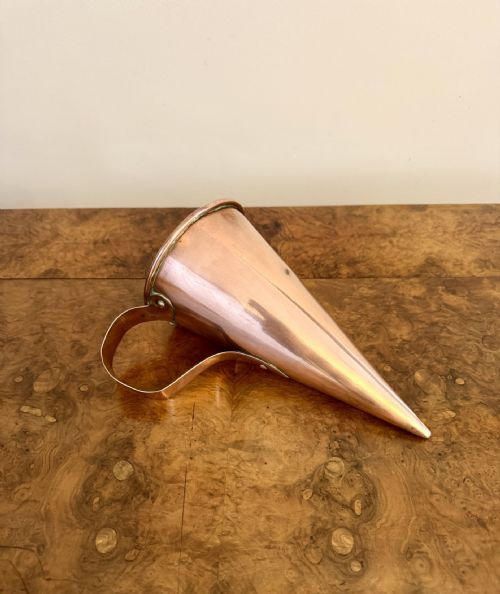
When you search for a georgian copper measure, you look at utilitarian vessels designed to hold and pour liquids accurately in taverns, markets and domestic kitchens. The examples on this page span from single pint sizes up to substantial four gallon jugs and harvest measures.
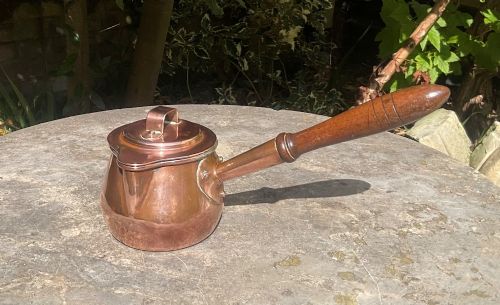
You are most likely to meet pieces dated to the Georgian period or around eighteen hundred, often associated with English origins and specific makers such as Loftus of Oxford Street London or Hy. Timms of Liverpool. Forms include jugs, pitchers, brandy warmers and measuring tankards.
Many of these surviving metalware objects show graduated sets or large capacity pieces, reflecting a rigorous system of volume standards necessary for trade and hospitality in the eighteenth and nineteenth centuries.
How they were made
The primary material across the evidence is copper, shaped into sturdy vessels and combined with lead for sealing or weight. Makers also utilised tin linings to ensure the containers remained safe for holding consumable liquids.
Construction techniques involved beating and joining sheet metal to form seamless or riveted bodies capable of holding precise volumes from one pint to several gallons. Sheffield plate and silver appear alongside copper in related liquid containers from the same era.
Some measuring jugs survived centuries of heavy tavern use only to retire as heavy duty kitchen flower vases.
What varies in quality
Quality rests upon the integrity of the original construction, the weight of the copper sheet used, and the clarity of any capacity markings or maker stamps. Pieces bearing clear inscriptions from named makers like Loftus or Hy. Timms hold greater historical interest.
The preservation of the surface texture, the honesty of the soldered joints, and the completeness of graduated sets define the distinction between ordinary utility ware and pieces selected for a serious collection.
Loftus of Oxford Street London·Hy. Timms of Liverpool
The Georgian Copper Measure Glossary
- Graduated set
- A collection of measures designed to nest or stack together, running in size from small pints up to several gallons. These complete groupings are particularly sought after by collectors.
- Brandy warmer
- A small vessel with a long handle used for heating spirits over a fire or hot embers. They form a distinct subcategory of domestic copperware.
- Harvest measure
- A large capacity liquid container utilised during agricultural gatherings and seasonal farm work. These examples often hold multiple gallons.
- Sheffield plate
- A material made by fusing a thin layer of silver onto a thicker copper base. It appears on drinking vessels from the turn of the nineteenth century.
- Tankard
- A tall drinking vessel with a handle, occasionally produced in metalware alongside pitchers and jugs during the Georgian era.
Georgian Copper Measure: Frequently Asked Questions
What were georgian copper measures used for?
These vessels were employed primarily for measuring and dispensing liquids such as ale, wine and spirits in commercial taverns and domestic households. Their exact capacities ensured fair trade and accurate record keeping.
Over time, many transitioned from working tavern tools into decorative interior objects valued for their industrial forms and warm metal surfaces.
How do I know if a measure is authentic Georgian?
Authenticity relies on examining the construction methods, tool marks, and material patination consistent with eighteenth and early nineteenth century metalwork. Look for period specific proportions and construction details rather than relying solely on surface appearance.
Reference marks, capacity stamps, and maker inscriptions like those from London or Liverpool workshops also help anchor a piece firmly to its era.
How should I clean copper measures?
Most collectors prefer to leave an aged patination undisturbed, as heavy cleaning removes the historic surface that accumulates over centuries of existence. Gentle dusting and occasional light waxing are usually sufficient for maintenance.
Avoid harsh modern abrasive compounds that strip away the authentic character and soften the crisp edges of old maker stamps.
Why do some measures have multiple sizes?
Graduated sets were produced so that tavern keepers could quickly access whatever volume a customer requested, from a single pint up to several gallons. These sets ensured compliance with local and national standards of measurement.
Finding a complete graduated set today is uncommon because individual pieces frequently became separated during generations of active use.