



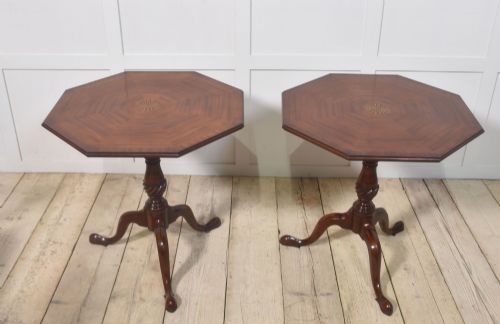
Georgian Marquetry Table
A georgian marquetry table brings together structured cabinet-making and detailed floral or geometric wood inlay.
Georgian Marquetry Table
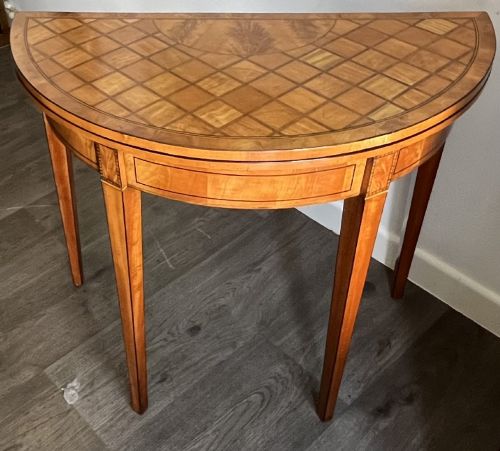
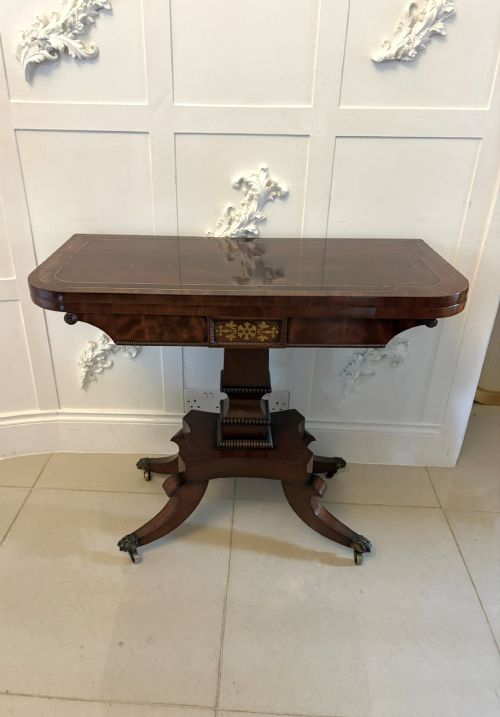
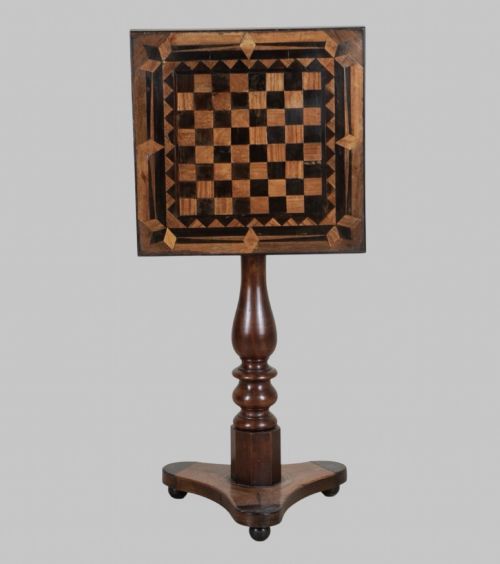
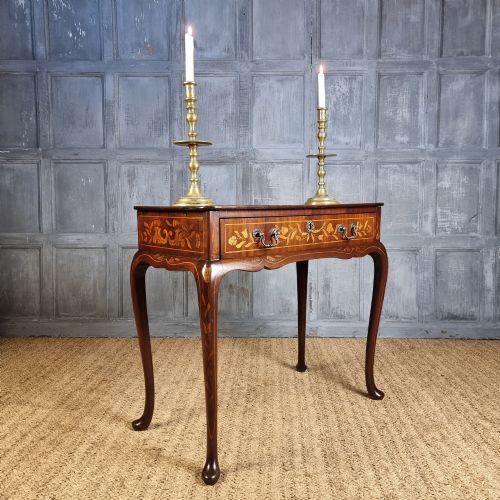
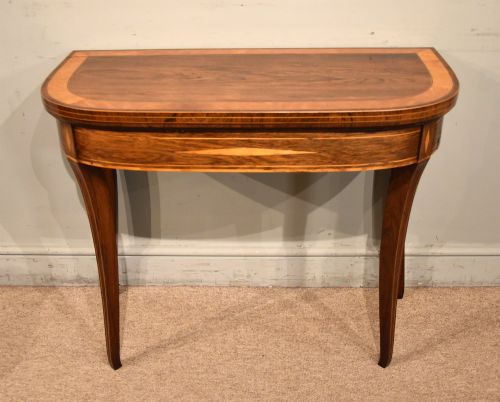
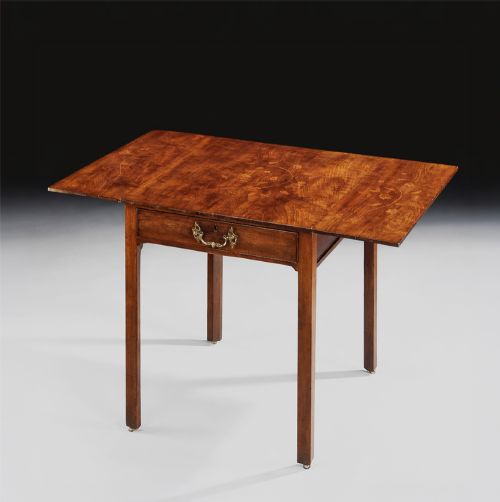
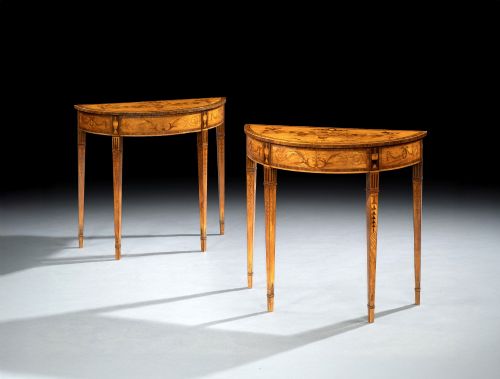
A georgian marquetry table encompasses various functional forms designed for domestic interiors, predominantly card tables, Pembroke tables, and demi-lune side tables. These surfaces combine practical furniture types with intricate surface decoration executed in contrasting timbers.
The versions most commonly met on this page date from the eighteenth century through to the Regency period, alongside later revival pieces. They rely on forms such as fold-over tops, drop leaves, and pillar supports to balance utility with decorative impact.
Makers of the period utilised mahogany, satinwood, and walnut as primary carcases for marquetry work. The resulting items range from compact occasional stands to larger console and games tables intended for principal reception rooms.
How they were made
Cabinet-makers constructed the foundational carcases using solid timbers such as mahogany, walnut, and satinwood, applying veneers to flat and curved surfaces. Frame structures often employed sturdy secondary woods to support the weight of folding tops and drop leaves.
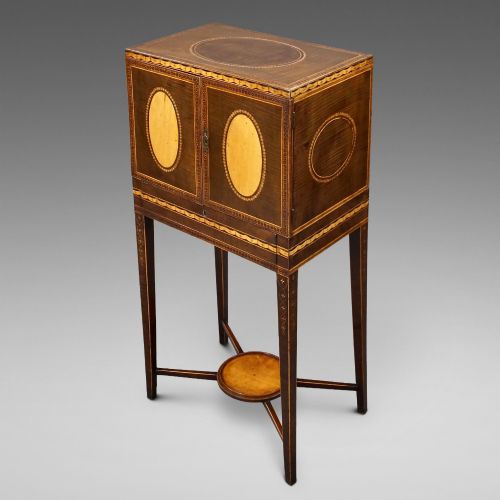
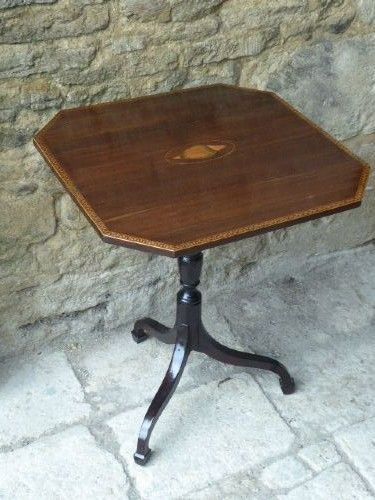
Marquetry decoration involved cutting fine veneers of boxwood, harewood, and fruitwoods into floral, urn, or geometric motifs. These delicate inlays were fitted tightly together and pressed onto the primary timber base before being scraped and polished.
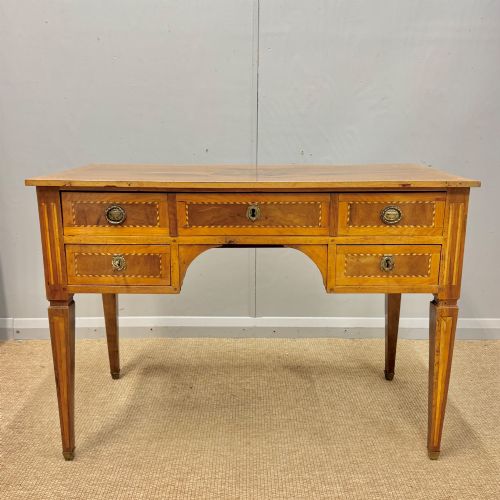
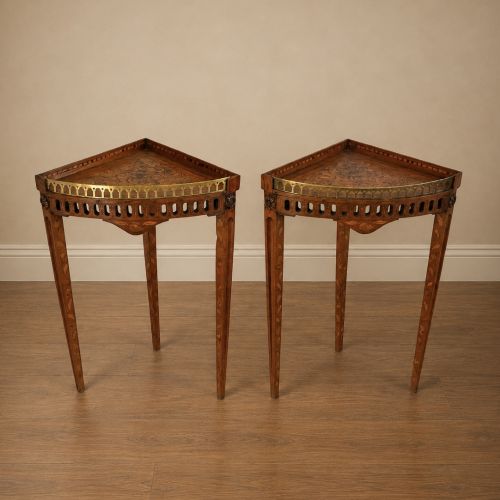
Additional detailing included cast brass galleries, stringing lines in contrasting light and dark woods, and occasional painted accents. Joinery techniques such as dovetailed drawers and hinged rule joints ensured the mechanical parts functioned smoothly.
Georgian Marquetry Table Retail Price Guide 2026
Typical asking prices for georgian marquetry table among the pieces listed under this phrase on Sellingantiques today, from the lower quarter to the upper quarter. They describe what is for sale here now, not the wider market.
The listings here feature eighteenth-century pieces alongside nineteenth-century Sheraton Revival examples, using satinwood, mahogany, and walnut veneers.
What varies in quality
The precision and complexity of the wood inlay separate standard examples from finer works. Master craftsmen achieved sharp, seamless junctions between individual veneer pieces without excessive filler, rendering crisp floral details and convincing perspective.
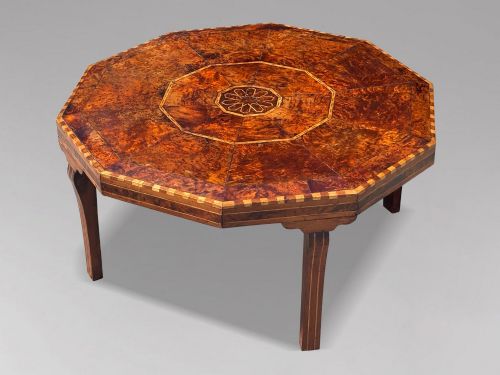
The choice of primary and secondary timbers dictates the visual depth of a piece. Highly figured satinwood, burr yew, and rich mahogany display superior grain selection that elevates the overall presence of the furniture.
Structural integrity and the retention of original brass hardware, patination, and secondary woods influence desirability. Untouched surfaces that display honest age-related wear hold more integrity than heavily refinished examples.
The Georgian Marquetry Table Glossary
- Marquetry
- A decorative technique where thin veneers of different coloured woods are assembled to form pictorial or geometric patterns on a carcase. It differs from inlay by covering the entire surface rather than resting within hollowed channels.
- Pembroke table
- A small rectangular table featuring two hinged drop leaves on opposing sides. It often includes one or two small drawers and stands on four legs.
- Demi-lune
- A half-moon shape used for console and side tables designed to sit flush against a wall. These surfaces frequently incorporate folding tops for card playing.
- Stringing
- Thin lines of contrasting wood inlaid into channels around the edges of table tops or drawer fronts. This linear detail defines panel borders.
- Harewood
- Sycamore wood stained greyish-brown through a chemical or dyeing process. It gained popularity during the Georgian period for delicate veneer work.
Georgian Marquetry Table: Frequently Asked Questions
What is a georgian marquetry table used for?
These tables served various social functions in the eighteenth-century home, acting as desks, tea tables, or surfaces for card games. Fold-over leaves allowed compact items to expand when guests arrived.
Today, they function well as decorative occasional tables, lamp stands, or hall furniture. Their flat surfaces and patterned tops make them suitable for displaying small objects or holding books.
How do I identify a genuine period piece?
Examine the timber underneath, the construction of the drawer linings, and the hand-cut nature of the dovetails. Eighteenth-century pieces typically show hand-planed secondary woods and subtle irregularities in the veneer cutting.
Check for period-appropriate hinges, locks, and fixings. Machine-cut screws or modern adhesives point towards later manufacture or substantial restoration.
How should I care for an antique wood surface?
Keep wooden furniture away from direct sunlight and steady heat sources to prevent the veneers from drying and lifting. Maintaining a stable room temperature protects the delicate boxwood and fruitwood inlays.
Apply a traditional beeswax polish sparingly and buff with a soft cloth to maintain the lustre. Avoid silicone-based sprays or excessive moisture on fragile marquetry.