


Georgian Mahogany Standing Mirror
A georgian mahogany standing mirror brings warmth and functional elegance to a room, offering a full-length reflection framed in rich timber.
Georgian Mahogany Standing Mirror
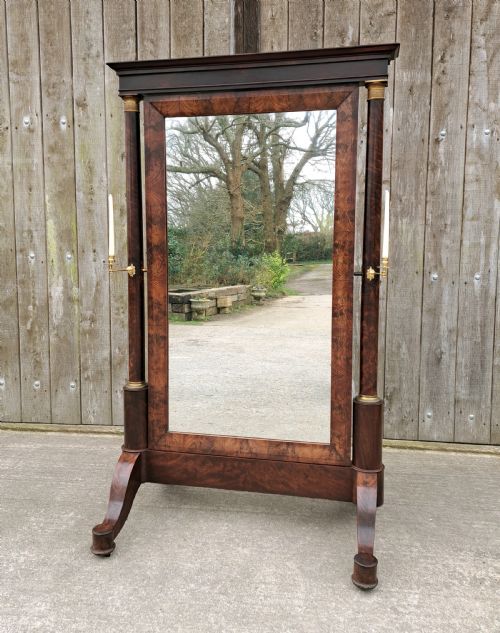
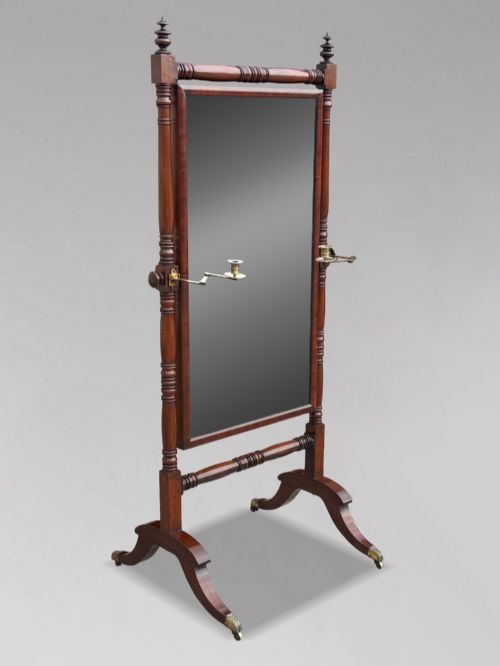
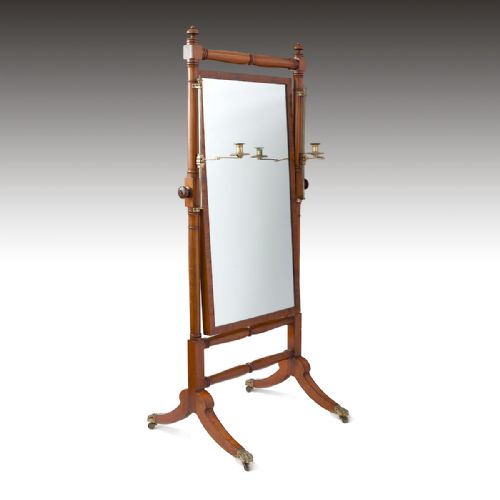
When you search for a georgian mahogany standing mirror, you encounter tall floor-standing cheval mirrors alongside smaller dressing table and toilet mirrors designed to sit on furniture. The standing examples are built to allow full-length viewing, supported by upright frames and stable feet.
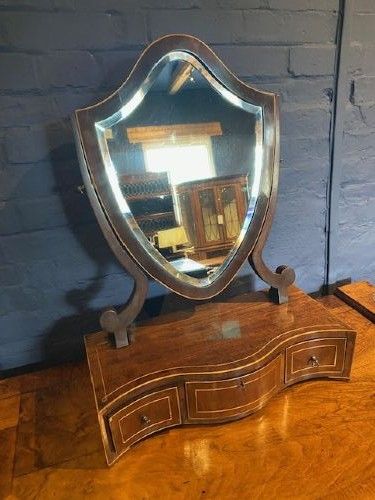
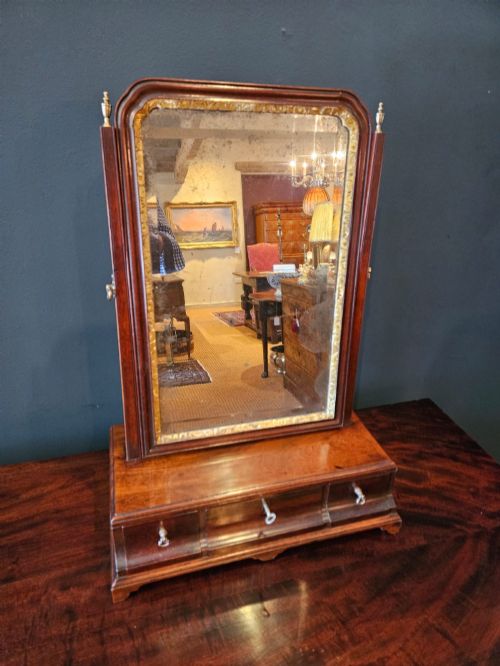
The pieces on this page span the Georgian, Regency, and Victorian periods, with many bearing the distinctive proportions of the George III and Regency eras. Alongside tall cheval glasses, the selection includes swing mirrors and washstands featuring built-in glass plates.
Most items you will meet date from the early nineteenth century down to the mid-Victorian decades, constructed in rich timbers like Cuban mahogany and frequently accented with satinwood or brass fittings.
What varies in quality
The distinction between ordinary and exceptional pieces rests on the choice of timber and the crispness of the framing details. Finer examples display carefully selected mahogany grain, robust turned or sabre legs, and high-quality brass hardware that remains intact and functional.
Proportion and balance dictate the architectural success of a standing mirror, where finer workshops achieved a lighter, more harmonious stance. The integrity of the original framing, free from heavy alterations, distinguishes the better survivors from heavily restored or later revival pieces.
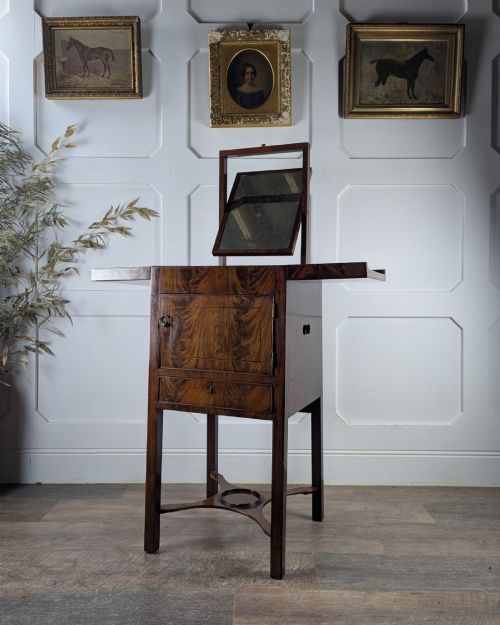
Some gentleman's washstands double as clever fold-away companions, hiding their washing basins beneath neat mahogany lids.
Gillows
The Georgian Mahogany Standing Mirror Glossary
- Cheval mirror
- A large standing mirror supported on a frame with four legs, designed for full-length viewing in a bedroom or dressing room. The frame allows the glass to swing or tilt on pivots.
- Toilet mirror
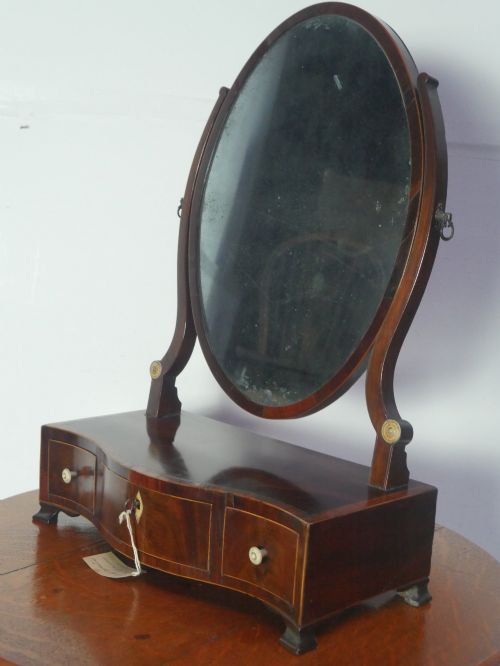
- A smaller mirror designed to sit upon a dressing table or chest of drawers, often incorporating small drawers in the base for storage. These are sometimes referred to as swing mirrors.
- Sabot
- A metal sleeve, usually made of brass, fitted to the foot of a furniture leg for protection and decoration. They frequently appear on Regency standing mirrors alongside castors.
- Cuban mahogany
- A dense, highly figured hardwood sourced from the Caribbean and widely utilised in fine eighteenth and nineteenth-century cabinet making. Its rich colour deepens gracefully over time.
- Tilt dressing glass
- A mirror plate mounted on pivots within a vertical frame, enabling the user to adjust the angle of reflection. This mechanism is common to both standing and table-top variants.
Georgian Mahogany Standing Mirror: Frequently Asked Questions
Where were standing mirrors placed?
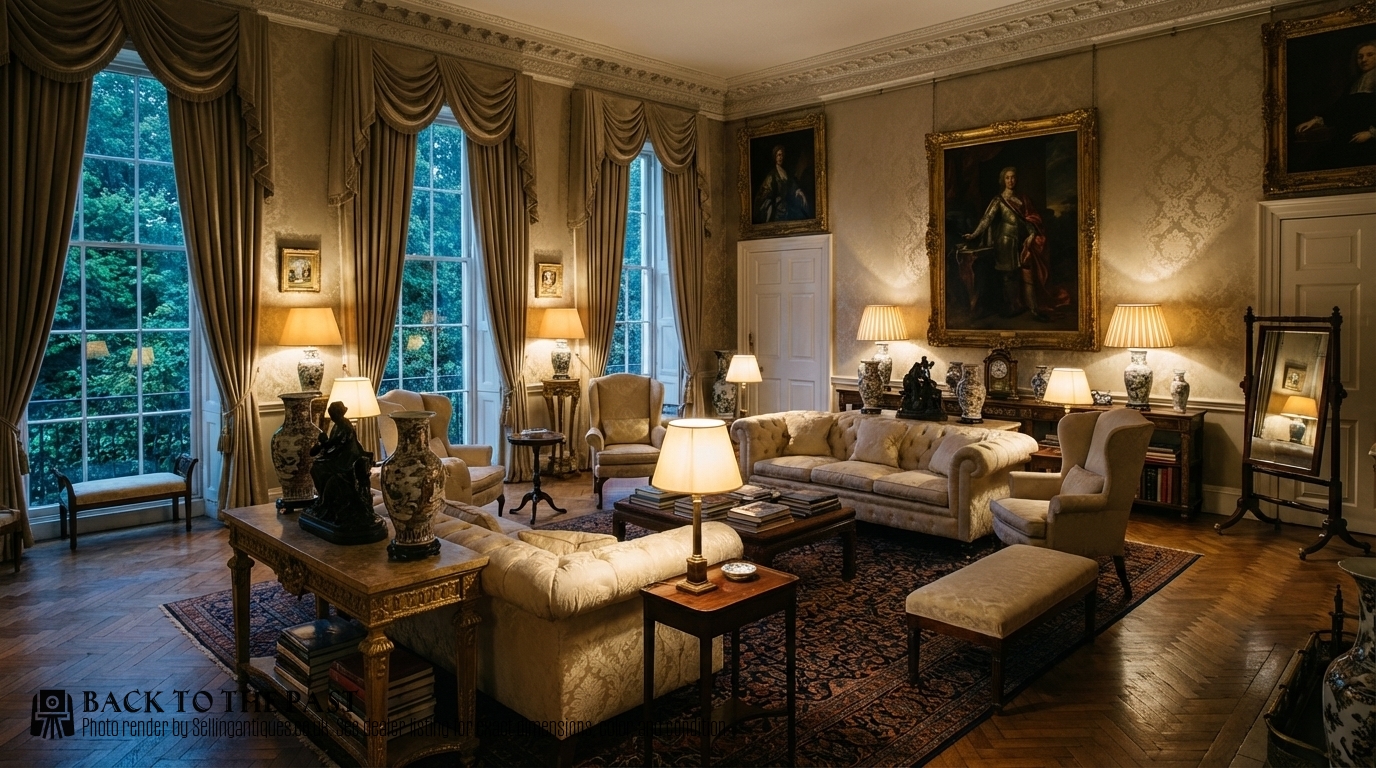
These mirrors were traditionally positioned in bedrooms, dressing rooms, and grand hallways where individuals dressed for the day.
Their substantial height made them essential furnishings for checking full attire before receiving visitors.
How do I adjust the mirror angle?
Most standing and cheval mirrors utilise side pivots or screw adjustments fitted into the upright support arms.
Tightening or loosening these brass fixtures allows the glass plate to tilt securely to the desired viewing angle.
Are the mirror plates original?
Many surviving pieces retain their early or original glass, which often displays minor foxing and soft, undulating reflections.
Replacement glass is sometimes fitted over the centuries when the original silvering degrades beyond practical use.
How do I distinguish Regency from Victorian examples?
Regency standing mirrors typically feature cleaner architectural lines, sabre legs, and restrained brass mounts characteristic of the early nineteenth century.
Victorian interpretations often introduce heavier proportions, more ornate turning, and alternative revival styles reflecting later tastes.