




18th Century Cheval Mirror
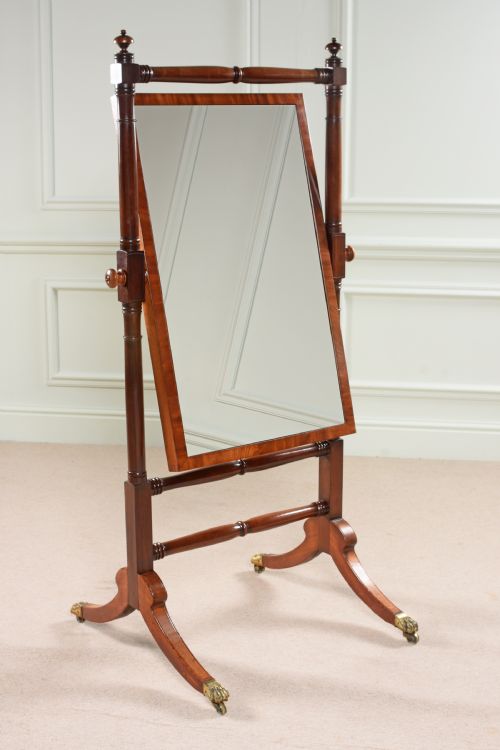
An 18th century cheval mirror stands as a towering dressing glass built to show the full figure, holding a commanding presence in any bedroom.
18th Century Cheval Mirror
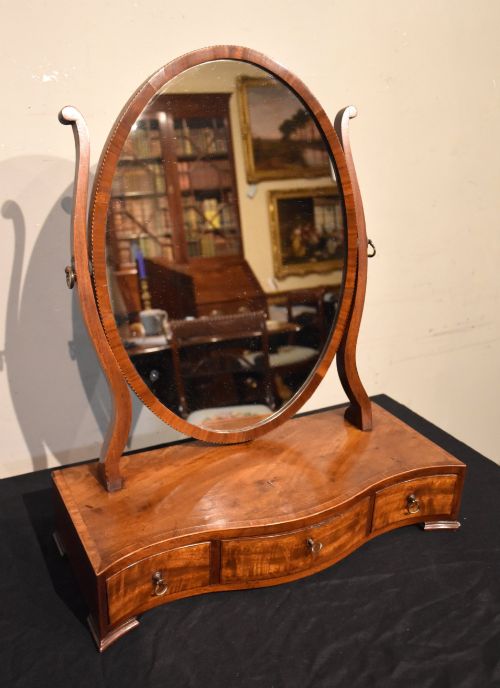
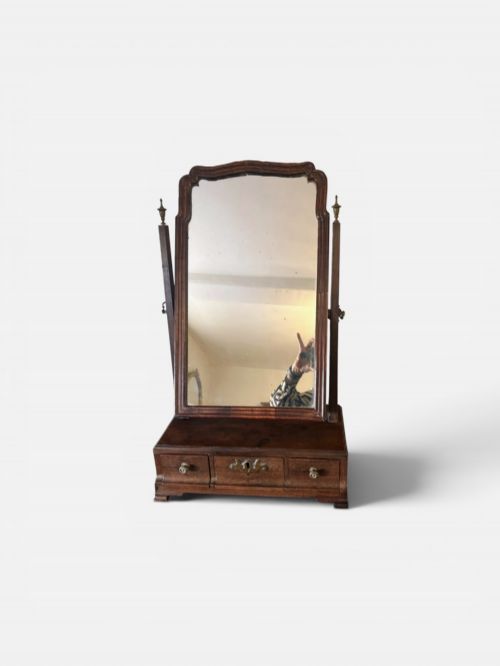
When you search for an 18th century cheval mirror, you meet tall, floor-standing dressing glasses designed for full-length viewing rather than small tabletop toilet mirrors. The selection spans George III and Georgian examples alongside a Victorian piece, shifting between grand freestanding frames and smaller dressing table mirrors.
Most pieces on offer take the form of toilet mirrors, dressing table mirrors, and full-length cheval mirrors mounted on pivoting frames. The woodwork relies heavily on mahogany, alongside satinwood and walnut, paired with glass and brass fittings.
How they were made
Cabinet makers constructed these frames predominantly from solid mahogany, frequently incorporating boxwood inlay and bone details to accent the woodwork. Giltwood and gilt elements appear alongside polished timber surfaces.
Makers utilised brass for pivoting hardware and adjustment mechanisms, allowing the mirror plate to tilt within its upright supports. Secondary details include boxwood stringing and fine joinery typical of Georgian workshops.
The listings span George III, George II, and Victorian periods, constructed from mahogany, satinwood, and walnut with brass and bone.
What varies in quality
The distinction between ordinary and superior pieces rests upon the crispness of the carving and the selection of figured mahogany timbers. Finer examples display meticulous attention to proportion, particularly in the sweep of the legs and the subtlety of the brass mounts.
Workmanship in the framing and the quality of the inlay separate standard production from master cabinet work. The presence of original glass plates and uncompromised pivoting mechanisms further elevates a piece within the range.
JOHN FRANKLIN LONDON
The 18th Century Cheval Mirror Glossary
- Cheval mirror
- A freestanding, full-length mirror mounted on a vertical frame with pivots that allow it to swing. This design originated in the eighteenth century to accommodate full-figure dressing.
- Toilet mirror
- A smaller mirror designed to sit upon a dressing table or chest of drawers, often incorporating small drawers in the base. These pieces date predominantly to the Georgian period.
- Serpentine front
- A furniture front curved with a convex centre flanked by concave wings. This graceful contour appears frequently on eighteenth century dressing mirror bases.
- Boxwood inlay
- Contrasting light-coloured wood inserted into recesses within a darker primary timber to create decorative borders. It adds fine geometric or linear detail to mahogany surfaces.
18th Century Cheval Mirror: Frequently Asked Questions
What is a cheval mirror?
A cheval mirror is a tall, freestanding dressing glass mounted in a frame with pivoting side supports. This allows the user to tilt the glass for a full-length view.
First developed in the eighteenth century, these large mirrors required sturdy floor-standing frames with supportive legs to maintain balance while pivoting.
How do I use a toilet mirror?
A toilet mirror sits atop a dressing table, bureau, or chest of drawers to provide a face and upper body reflection. Many examples include small drawers in the base for storage.
Position the mirror in a well-lit space and adjust the angle using the side brass pivots to suit your height.
How do I date a Georgian mirror?
Dating a Georgian mirror involves examining the timber species, construction methods, and hardware style. Eighteenth-century pieces frequently utilise solid mahogany, hand-cut dovetails, and cast brass pivoting screws.
Secondary woods, bevelled glass edges, and paper labels also offer clues regarding the decade of manufacture between seventeen-fifty and eighteen-hundred.
Where should I place a cheval mirror?
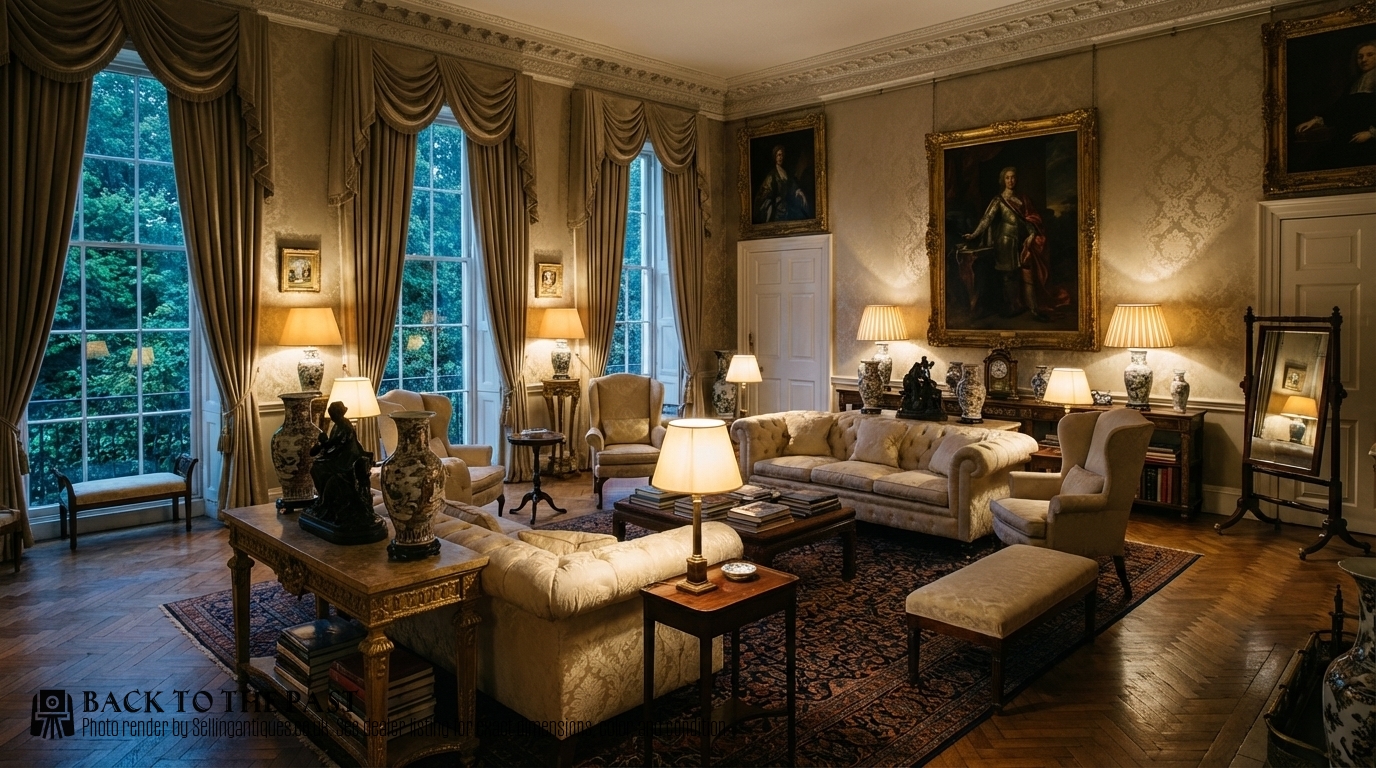
Place a cheval mirror in a bedroom or dressing room against a sturdy wall with adequate clearance for the pivoting frame to tilt. Ensure the surrounding floor space allows you to step back for a full-length view.
Keep the piece away from direct sunlight to protect the mahogany finish and the silvering on the glass plate.