

Georgian Mahogany Slant Desk
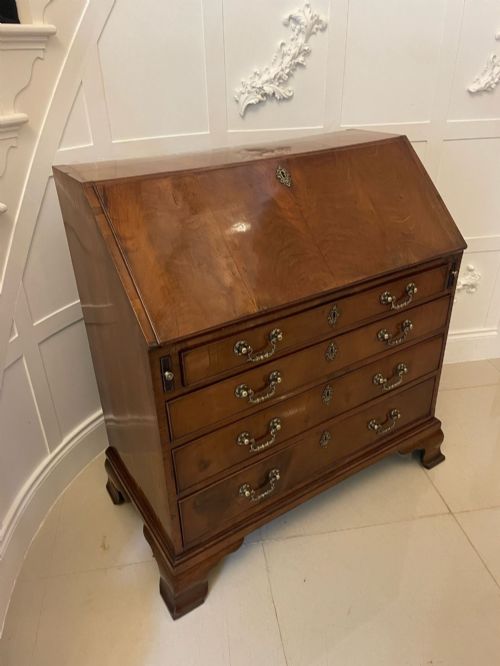
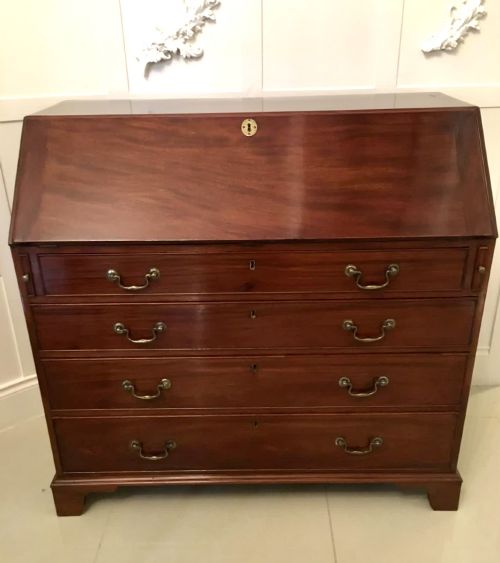
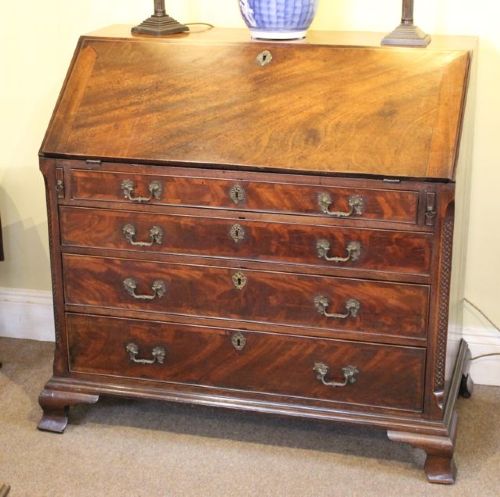
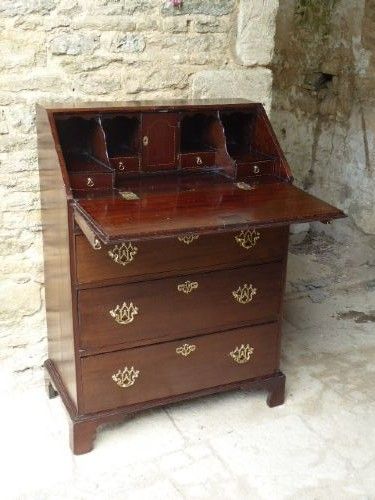
A georgian mahogany slant desk brings solid timber work furniture into daily use, offering a sloping lid that drops down to reveal fitted writing compartments.
Georgian Mahogany Slant Desk
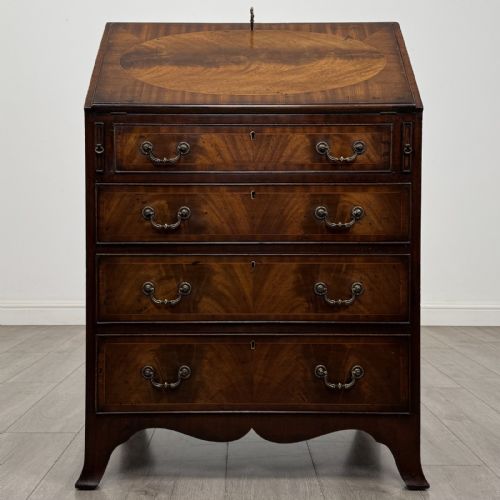
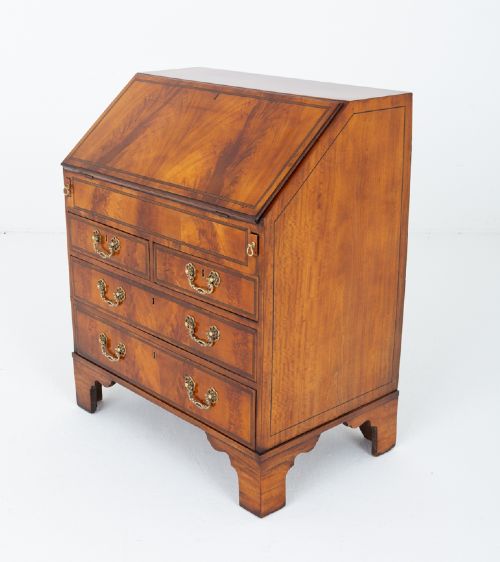
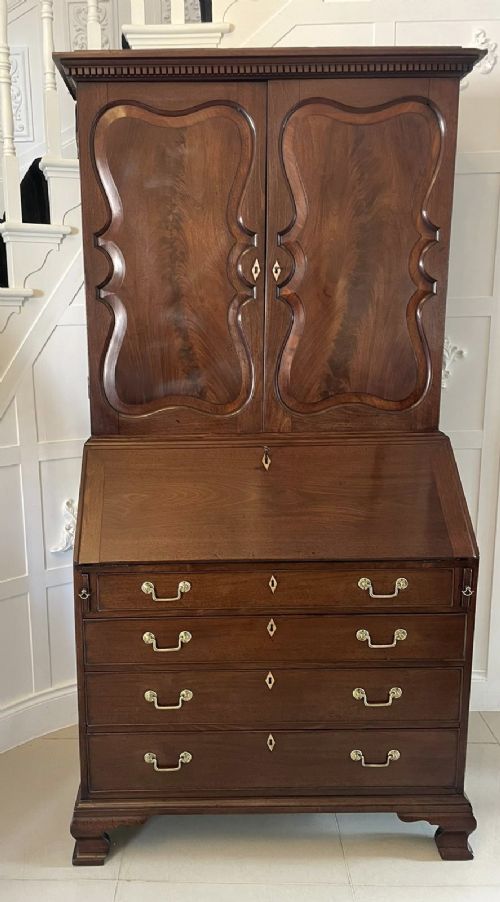
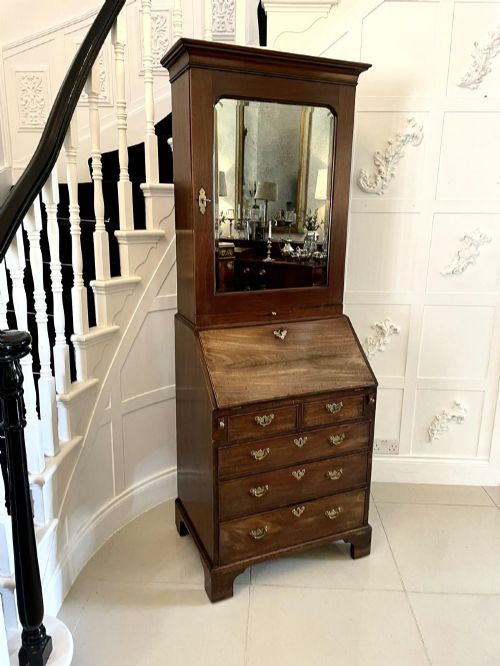
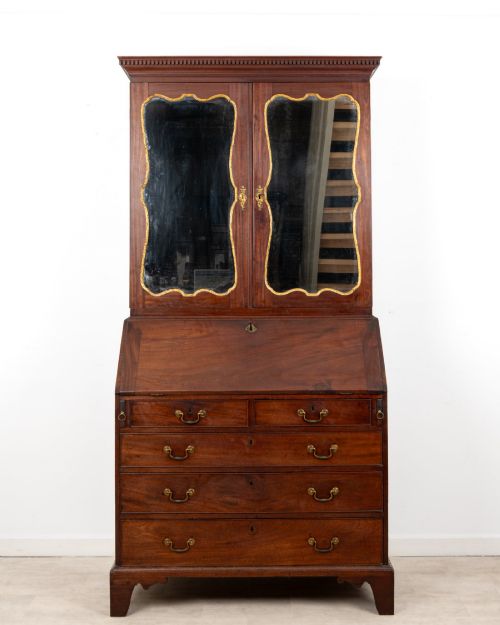
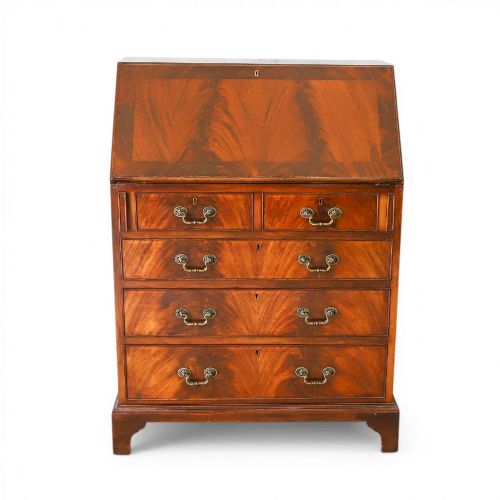
A georgian mahogany slant desk takes the form of a bureau or bureau bookcase, designed primarily for household correspondence and record keeping. The listings show examples spanning the eighteenth century and the Regency period, alongside later revival pieces.
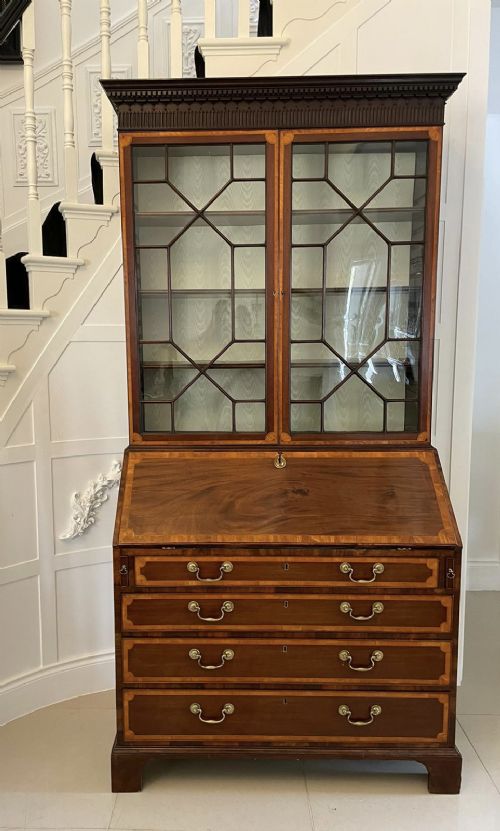
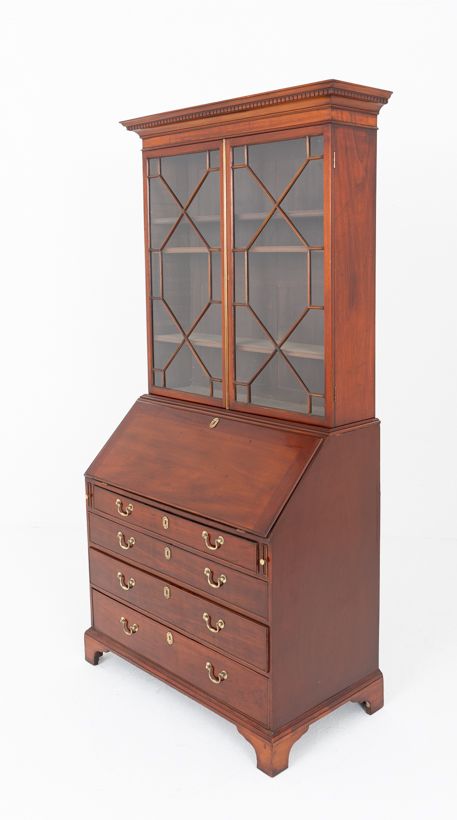
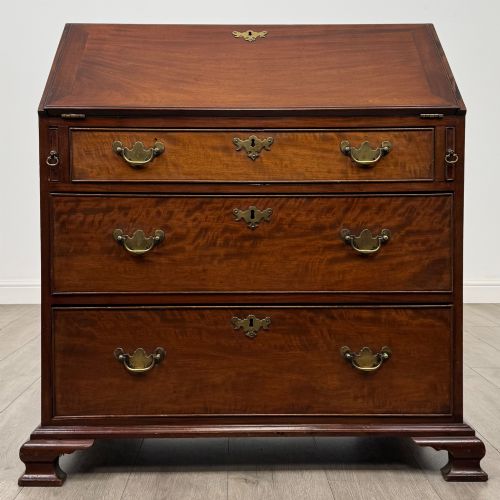
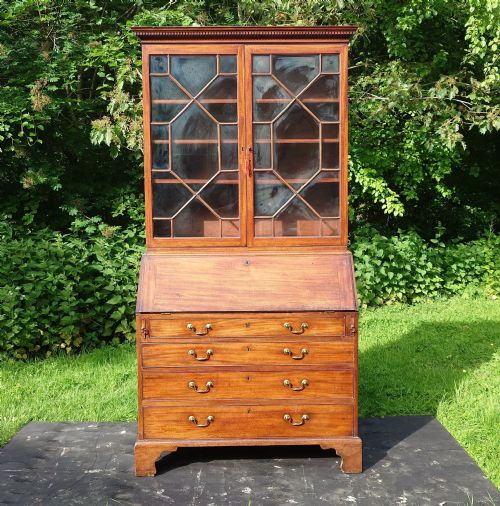
Most pieces encountered here belong to the Georgian and George III periods, constructed as compact fall front writing cabinets. Larger variations include tall bureau bookcases featuring upper shelved storage closed by panelled doors.
Materials and construction
Makers built these pieces predominantly from solid mahogany, often highlighting figured grain across the drop front and drawer fronts. Secondary timbers such as oak appear in internal drawer linings and carcass framing.
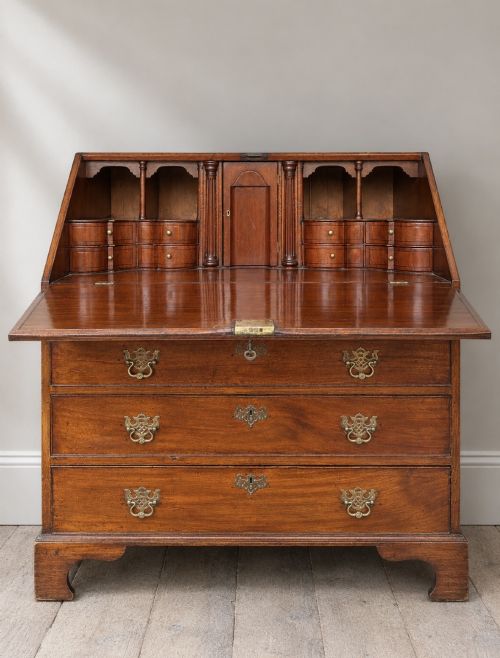
Details include satinwood inlay, brass handles, and glass panels in upper bookcase doors. Interiors use small pigeonholes and hidden compartments surrounding a central locking drawer.
Materials recorded across the inventory range from solid mahogany and oak to satinwood inlay and glass.
Indicators of standard
Quality rests upon the selection of timber figure, the tightness of joint construction, and the preservation of original internal fittings. Superior items display well matched mahogany veneers and crisp carving on bracket feet.
The integrity of the fall front hinges and the presence of working locks with original keys distinguish finer examples from altered pieces.
Gillows
The Georgian Mahogany Slant Desk Glossary
- Bureau
- A writing cabinet with a sloping fall front that opens to form a desk surface. It usually sits above a set of graduated drawers.
- Fall front
- The hinged writing flap on a desk that folds down from an angled position to provide a horizontal surface for writing.
- Bracket feet
- Small supporting feet shaped like architectural brackets, commonly found on eighteenth century case furniture.
- Pigeonholes
- Small, open compartments fitted inside the desk interior for sorting letters and documents.
- Secretary desk
- An alternative term for a writing cabinet combining a desk function with storage space.
Georgian Mahogany Slant Desk: Frequently Asked Questions
How do I use a slant desk?
Lower the hinged wooden flap to create a flat writing surface above the fitted interior pigeonholes. Papers and writing tools rest inside the compartments when the lid is closed upright.
Keep the writing surface free from heavy objects to protect the hinges and support struts attached to the interior frame.
What is a bureau bookcase?
A bureau bookcase combines a sloping desk base with an upper section enclosed by glass or wooden doors for storing books. This tall furniture form provides both writing space and shelving within a single footprint.
Most surviving examples date from the eighteenth century and require adequate ceiling height due to their towering proportions.
How do I identify a George III piece?
George III pieces date from the second half of the eighteenth century and typically feature clean lines, bracket feet, and figured mahogany surfaces. Interior arrangements often include small drawers and central concealed compartments.
Examine the secondary woods inside the drawers, such as oak, to confirm the period construction methods used by cabinet makers.
Where should I place this desk?
Position the desk against a sturdy wall in a study or living room where the fall front can drop down fully without obstruction. Avoid placing the timber directly next to heat sources or in strong sunlight.
Ensure there is sufficient clearance in front of the piece to pull out a chair and open the writing flap comfortably.