



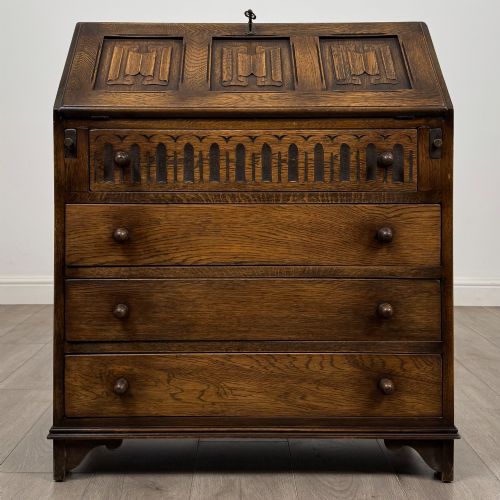
Bureau Chest of Drawers
When you search for a bureau chest of drawers, you seek a dual-purpose piece that combines deep storage with a fitted writing surface.
Bureau Chest of Drawers
A bureau chest of drawers bridges the gap between a conventional storage chest and a dedicated writing desk, offering practicality alongside formal elegance. These pieces appear in forms ranging from simple oak storage chests with fall fronts to elaborate walnut and mahogany fall-front writing bureaux and secretaire bookcases.
The selections span centuries of cabinetmaking, with Georgian, Victorian, and Regency examples dominating alongside earlier Queen Anne and William and Mary period items. Oak and mahogany versions from the eighteenth and nineteenth centuries are most frequently encountered, often incorporating brass handles and internal writing compartments.
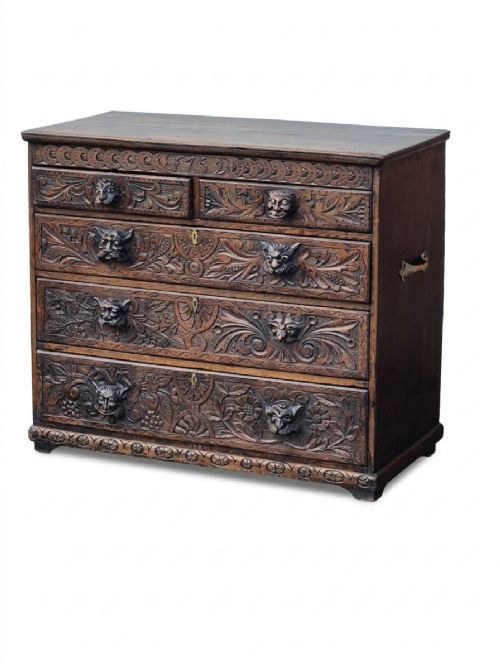
Buyers also encounter Edwardian and later twentieth-century interpretations, including pieces in painted finishes, burr walnut, and carved oak. The combination of functional drawers with writing slides, fall fronts, or secretaire drawers defines the category across every stylistic era.
Materials and Technique
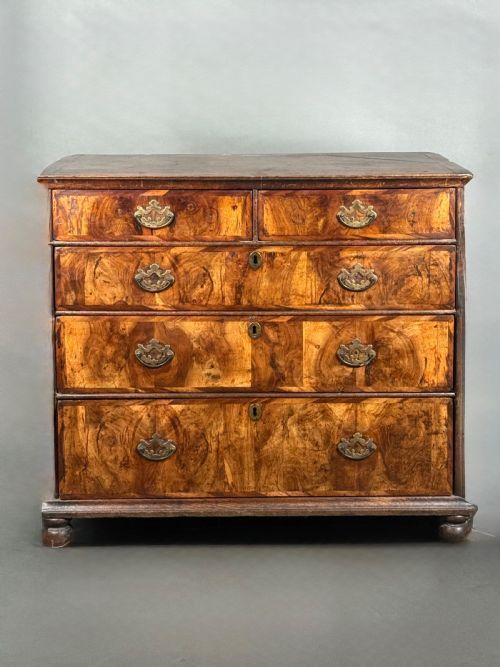
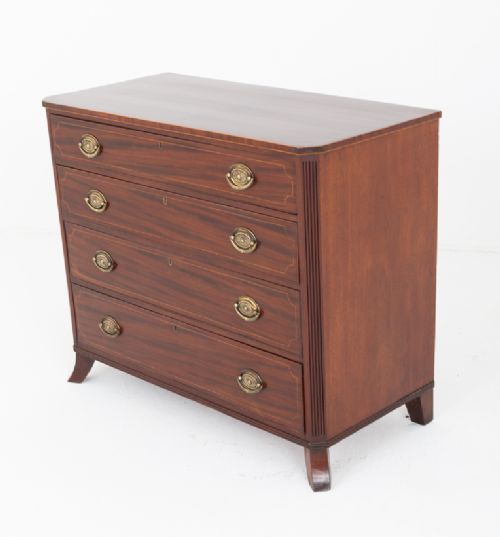
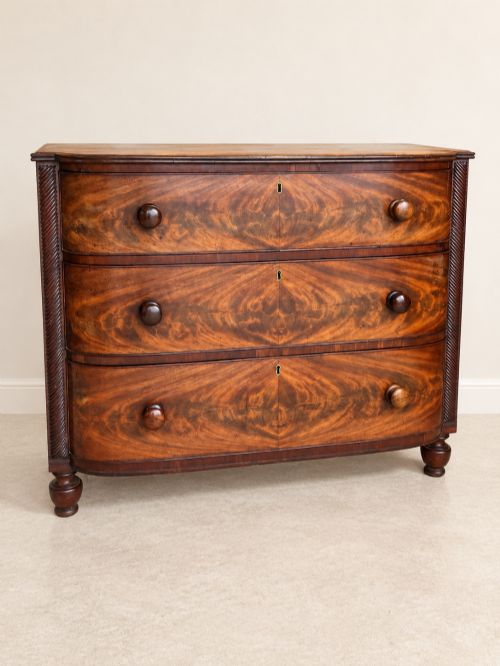
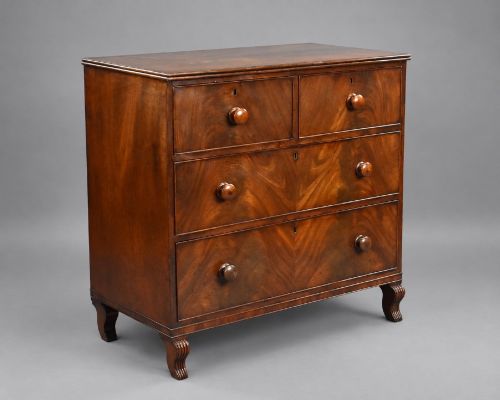
Cabinetmakers constructed these pieces using solid timbers such as oak, walnut, and mahogany, frequently applying flame mahogany veneer or burr walnut to create striking grain patterns on drawer fronts and writing surfaces. Pine often served as a secondary wood for drawer linings and internal partitions, while brass provided structural hardware including drop handles and escutcheons.
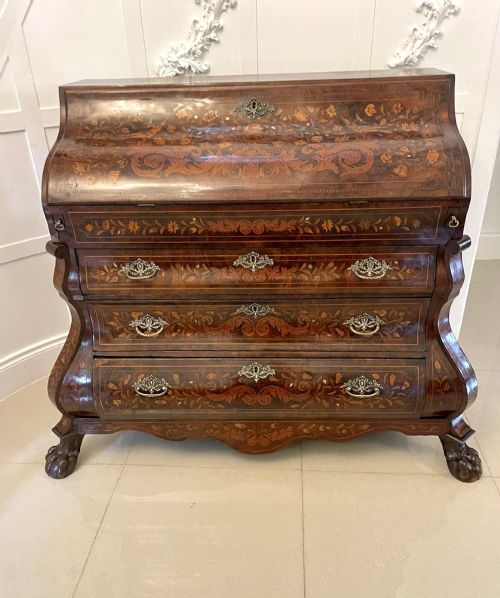
Advanced techniques such as floral marquetry, parquetry, and geometric moulding distinguished high-status examples from simpler utility furniture. Fall fronts and writing drawers were engineered with precise internal pigeonholes, small drawers, and occasionally leather writing surfaces insertable for daily correspondence.
Listings feature walnut, mahogany, oak, and pine across periods from the seventeenth century through the Edwardian era.
Design and Execution
The standard of a bureau chest of drawers rests on the choice of timber and the precision of its construction, from figured walnut veneers to hand-cut dovetails on the drawer sides. Superior examples display consistent grain alignment across the drawer tiers and immaculate internal joinery within the fitted writing compartments.
Proportion and decorative restraint elevate finer pieces, where serpentine or bombe contours, subtle string inlay, and original brass hardware remain intact. Lesser examples rely on plain timber construction and later alterations, whereas top-tier items retain their original locks, keys, and integrated writing slides without structural compromise.
Sir Clough Williams-Ellis
The Bureau Chest of Drawers Glossary
- Bureaux
- A writing desk with a sloping hinged lid that covers compartments and drawers for papers. These form the core of the writing furniture category.
- Secretaire
- A piece of furniture containing a drawer that pulls out and folds down to reveal a writing surface and small drawers. This mechanism integrates a desk into the upper drawers of a standard chest.
- Bombe
- A swelling or bulging contour found on the front and sides of advanced eighteenth-century cabinetwork. This curved shape requires immense skill from the woodworker.
- Brushing slide
- A pull-out shelf located above the top drawers used for dusting or writing. It sits flush beneath the top surface when not in use.
- Marquetry
- Decorative veneer work formed by fitting together small pieces of wood, ivory, or shell to create pictorial patterns. It adorns the exterior surfaces of luxury items.
- Serpentine
- A curved line or front featuring a convex centre flanked by concave sides. This undulating shape softens the rigidity of large case furniture.
Bureau Chest of Drawers: Frequently Asked Questions
How do I use a bureau chest of drawers in a modern home?
These pieces serve well in studies, bedrooms, or living rooms as dual-purpose furniture offering concealed workspace and generous clothes or linen storage. The drop-down writing surface provides a compact desk for laptops and correspondence.
Keeping the fall-front closed conceals paperwork, maintaining a tidy appearance in living spaces. The internal compartments organise small items efficiently.
How can I tell an eighteenth-century piece from a later copy?
Examine the drawer construction for hand-cut dovetails, irregular timber thicknesses, and secondary woods like oak or pine inside the carcase. Eighteenth-century pieces often show vernacular tool marks and timber shrinkage consistent with age.
Later copies or revival styles usually feature uniform machine-cut elements and modern adhesives. Original backboards and interior fittings also indicate period authenticity.
What woods were most commonly used?
Mahogany and oak dominate the surviving examples across the Georgian and Victorian eras. Oak provides robust structural framing in earlier pieces, while mahogany gained favour for its rich reddish hue and strength.
Walnut and burr walnut appear frequently on high-status items from the Queen Anne and eighteenth-century periods. Secondary timbers like pine are typical for internal drawer sides and backs.