


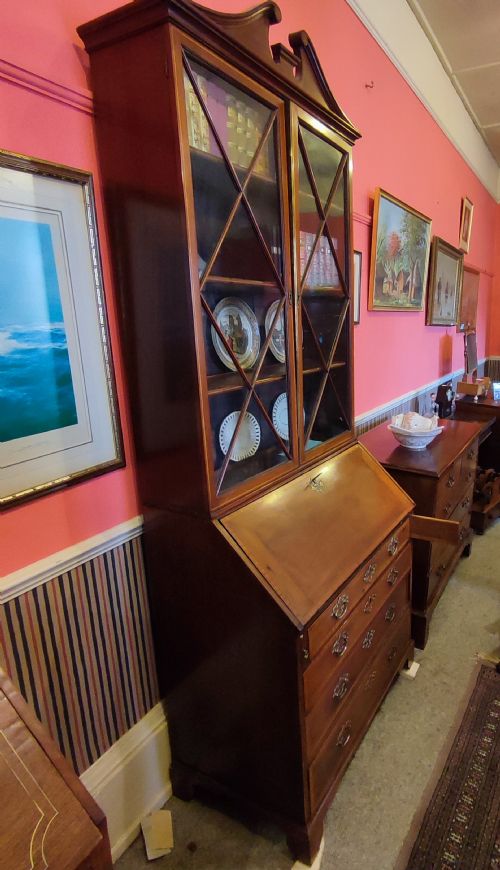


Traditional Mahogany Writing Cabinet
A traditional mahogany writing cabinet brings together fine timber and clever internal compartments for correspondence.
Traditional Mahogany Writing Cabinet
When you search for a traditional mahogany writing cabinet, you encounter various forms designed for storage and correspondence. These pieces span several eras, including the Georgian, Regency, and Victorian periods.
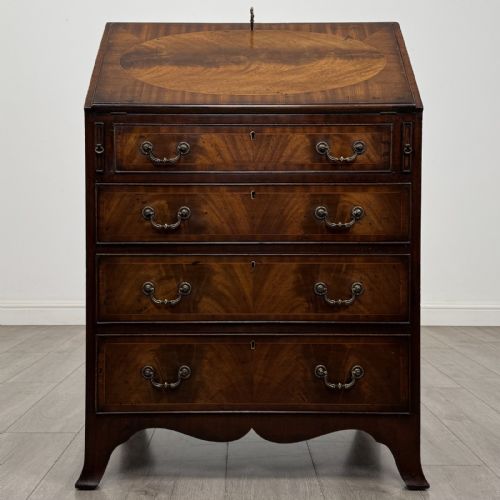
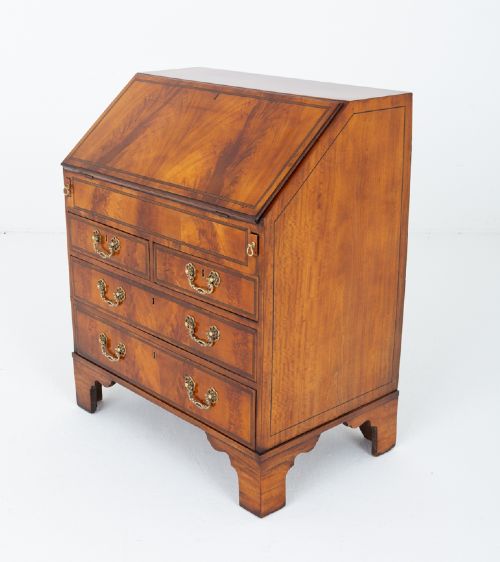
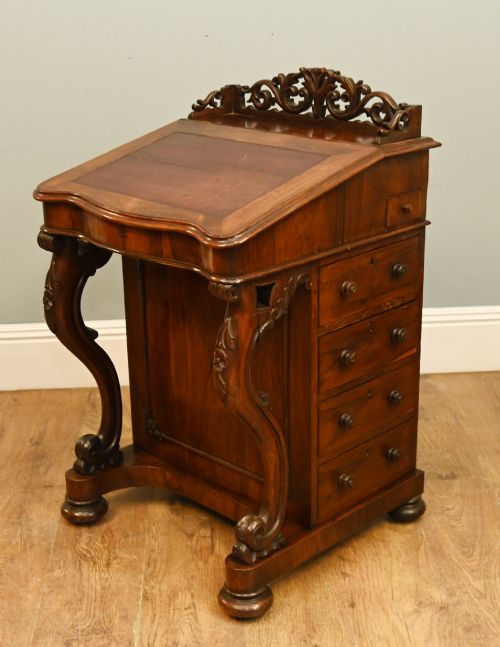
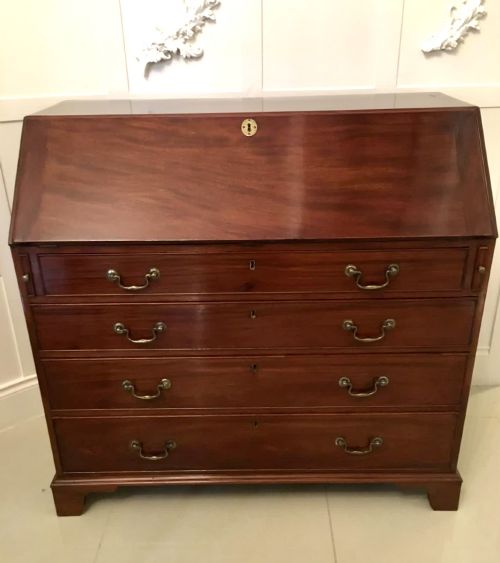
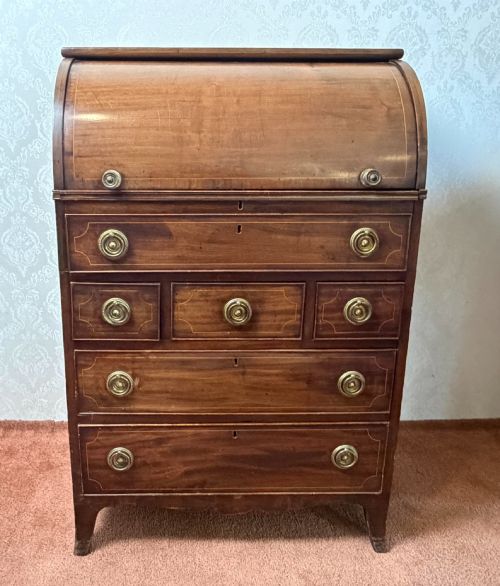
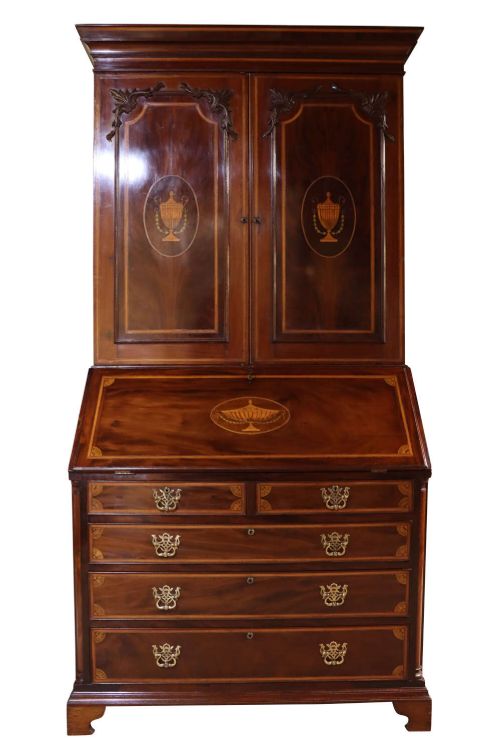
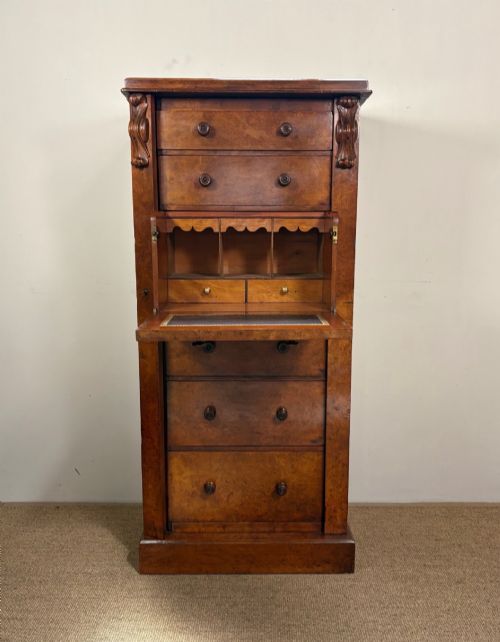
The selections on this page most commonly appear as bureau bookcases, secretaire cabinets, and compact davenports. Each type provides a dedicated writing surface alongside fitted drawers and pigeonholes.
Originating largely from the eighteenth and nineteenth centuries, these cabinets reflect the domestic habits of their time. They combine display shelving or upper bookcase sections with practical lower writing compartments.
How they were made
Cabinet makers utilised solid mahogany and rich veneers over secondary woods to build these pieces. Workshops incorporated contrasting woods such as satinwood for stringing and internal decoration.
Internal components relied on fine joinery, including hidden compartments and sliding sections operated by clever mechanical releases. Brass hardware, leather writing inserts, and glass panelling completed the construction of the finer examples.
One solid mahogany chiffonier bears later public house sign writing for the Red Lion.
What varies in quality
Quality rests heavily on the selection of timber and the depth of figure within the mahogany. Pieces featuring well-figured Cuban mahogany or delicate wood inlay demonstrate superior craftsmanship.
The complexity of the interior arrangement also distinguishes finer examples from simpler workshop production. Fitted interiors with numerous small drawers, secret compartments, and tambour slides demand greater skill from the maker.
J A Mein Edinburgh Cabinet Maker·Gillows
The Traditional Mahogany Writing Cabinet Glossary
- Bureau
- A sloping front desk that opens to reveal a fitted interior with pigeonholes and small drawers. This form frequently sits atop a chest of drawers or a bookcase.
- Secretaire
- A cabinet or chest featuring a pull-out or drop-front drawer that serves as a writing surface. It conceals a collection of small compartments for stationery.
- Davenport
- A compact desk featuring a sloping, hinged writing surface and drawers opening to the side. Victorian examples often incorporate a sliding top section.
- Tambour
- A series of narrow wooden slats glued to a canvas backing, allowing a desktop or door to slide in a track around a curve. This mechanism conceals the writing surface.
- Stringing
- Thin inlaid lines of contrasting light wood used to accent the edges of drawers and panels. It creates a refined border on cabinet surfaces.
Traditional Mahogany Writing Cabinet: Frequently Asked Questions
How do I use a bureau bookcase daily?
Lower the fall-front flap to create a stable writing surface supported by wooden lopers. This exposes the internal pigeonholes for organising letters and small stationery items.
Close the flap when finished to conceal your writing materials and display books in the upper glazed section safely.
Where should I place a davenport desk?
Position your davenport where side drawers remain fully accessible since they open from the flank rather than the front. Placing it near a natural light source helps illuminate the sloping writing surface.
Keep the piece away from direct heat sources to protect the polished mahogany timber and leather inserts.
How do I identify a Georgian bureau?
Examine the construction of the drawer linings and the grain pattern of the mahogany timber. Georgian pieces often feature hand-cut dovetails and bracket feet.
Look for simpler, well-proportioned lines in earlier examples compared to the heavier ornamentation found on later Victorian interpretations.
What is a secret compartment?
Secret compartments are hidden drawers or sliding panels built into the internal fittings of a writing cabinet. Makers designed them to secure valuables and private letters.
Accessing them often requires removing a central pigeonhole unit or releasing a concealed wooden spring.