


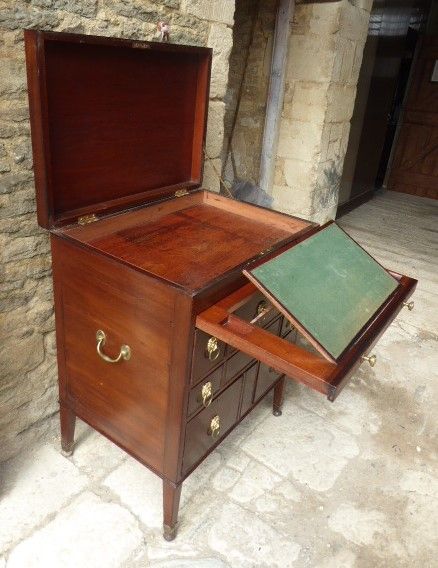
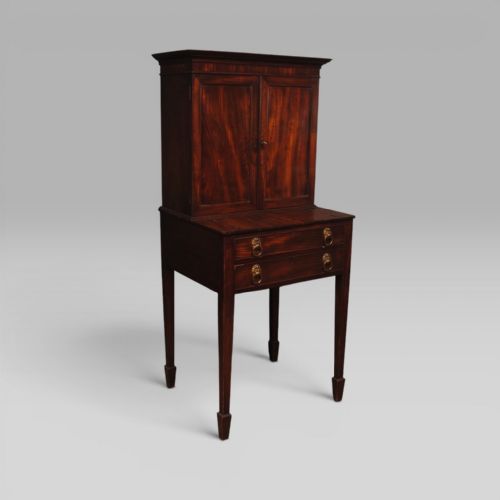
Georgian Writing Slope Cabinet
A georgian writing slope cabinet is a practical piece of antique furniture offering a fitted interior and a slanted writing surface that scholars and collectors prize for daily use.
Georgian Writing Slope Cabinet
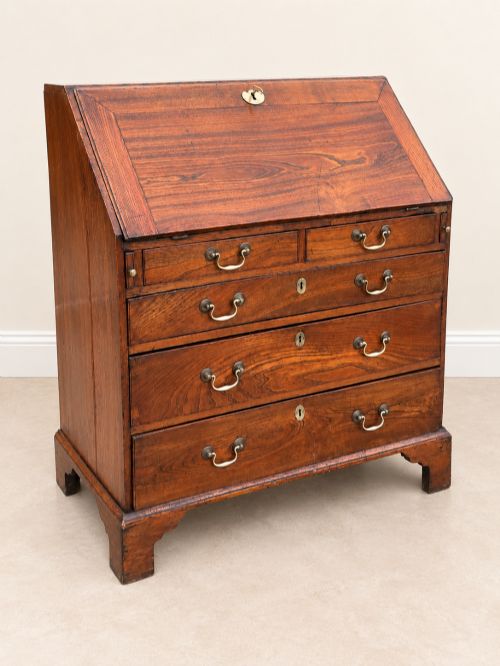
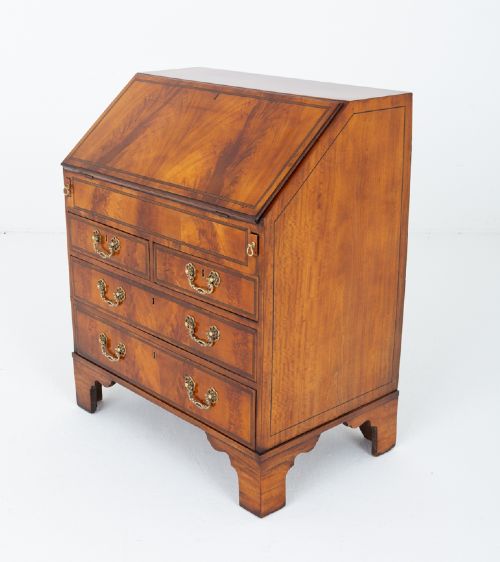
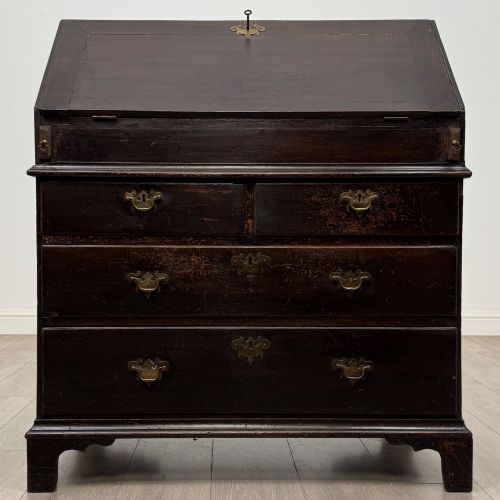
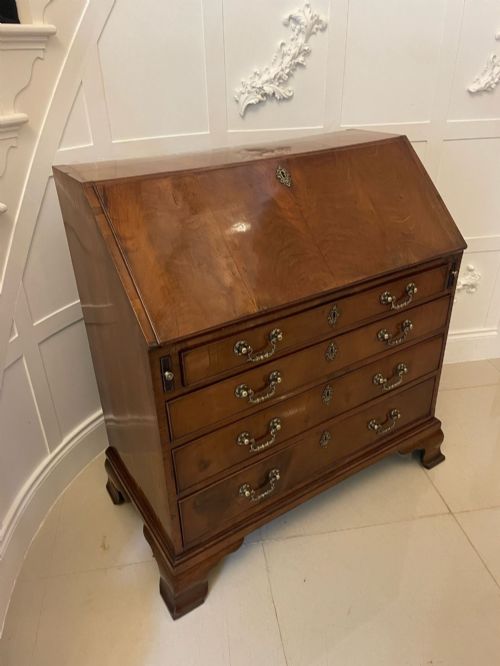
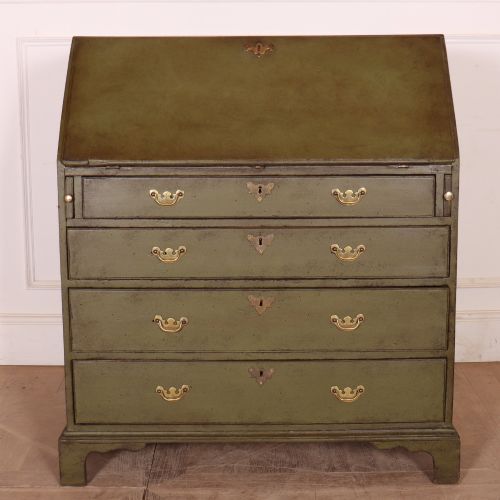
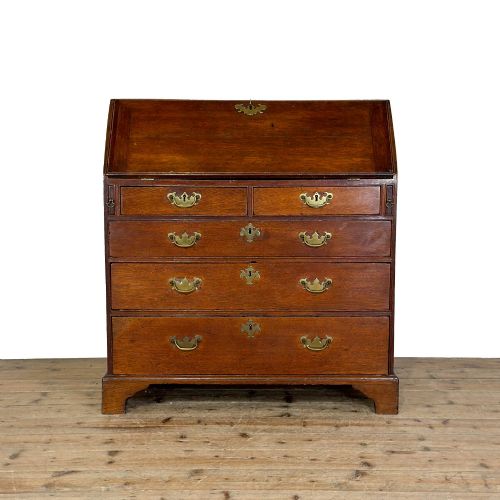
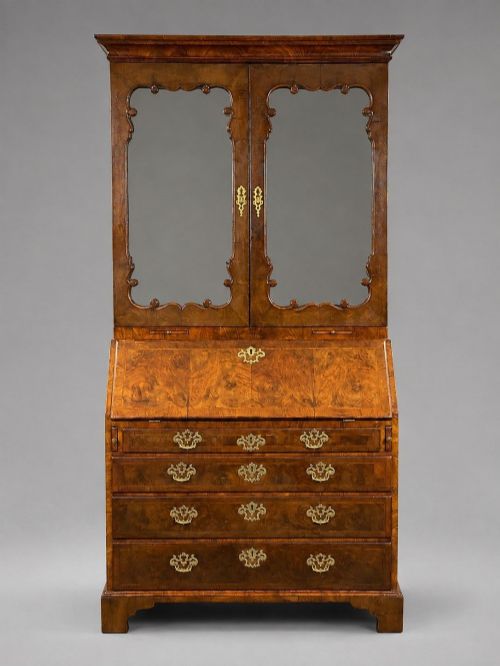
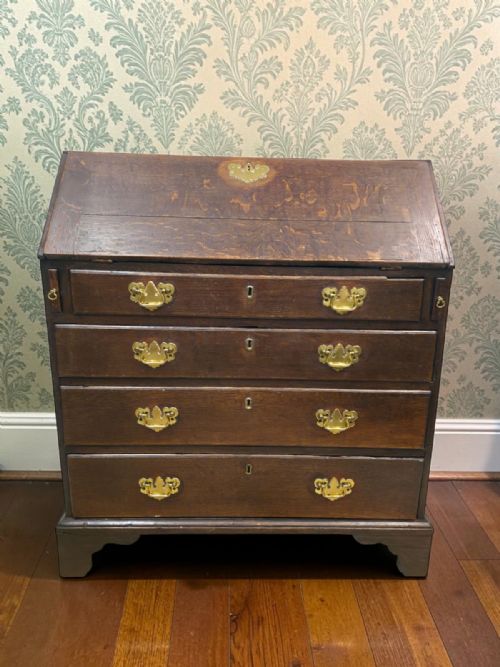
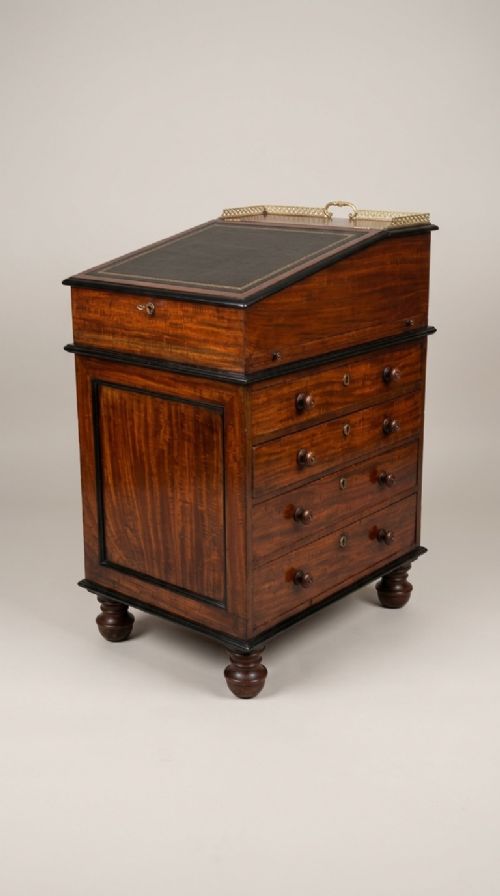
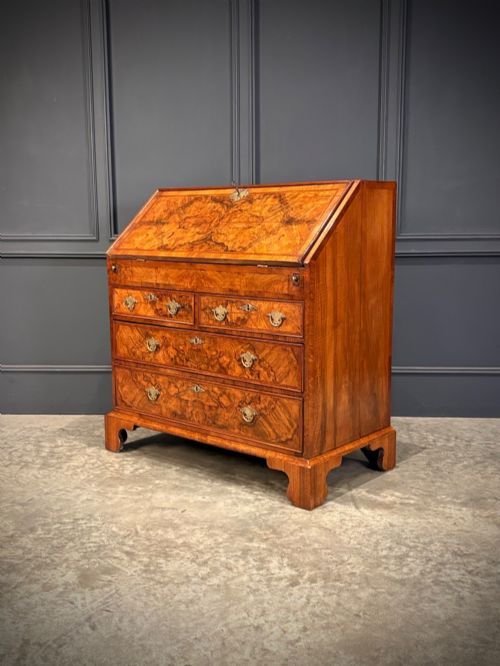
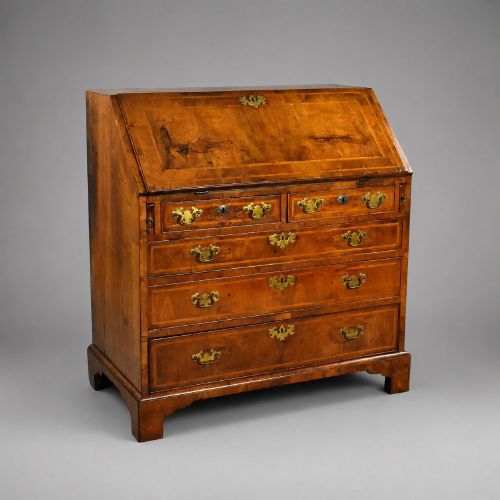
A georgian writing slope cabinet encompasses various forms such as bureaux, bureau bookcases, and compact Davenport desks designed for correspondence and storage. The pieces most commonly found span the eighteenth and nineteenth centuries, taking the shape of fall-front desks or bureau cabinets standing on bracket feet or frames.
Makers fashioned these pieces primarily in domestic and exotic woods including mahogany, oak, walnut, and burr walnut, sometimes incorporating satinwood or rosewood. Surviving examples reflect the shifts in design from Queen Anne and George I periods through George III and Regency eras.
Materials and construction
Cabinetmakers constructed carcass frames in solid oak or pine before applying fine veneers of mahogany, walnut, or burr walnut to visible surfaces. Drawer linings often utilise secondary timbers, while feather banding and inlaid stringing provide decorative borders.
Hardware consists of brass handles, escutcheons, and hinges that secure drop-down fall fronts and interior compartments. Leather inserts frequently line the writing surfaces of desks and Davenport variants.
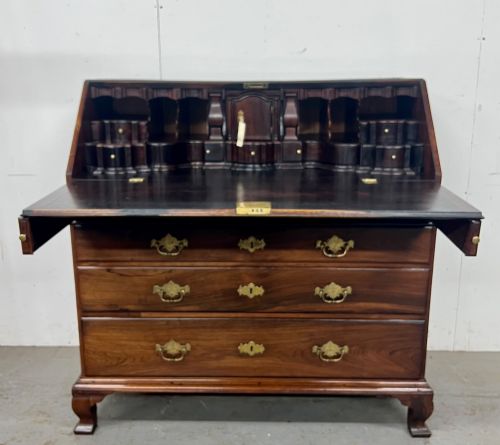
Many pieces hide secret spring-loaded compartments behind innocent-looking pigeonholes, designed for keeping private papers safe from prying eyes.
Distinguishing quality
Quality rests upon the choice of timber figurations, such as highly figured burr walnut or dense mahogany, paired with precise cabinet joining. The complexity of the internal fitments - small drawers, pigeonholes, and secret compartments - separates standard pieces from superior examples.
Proportion and untouched patination dictate the desirability of a piece, with smaller dimensions and original brassware commanding attention among collectors. The integrity of the secondary timbers and the crispness of crossbanding reveal the skill of the original workshop.
Gillows of Lancaster·Gillows
The Georgian Writing Slope Cabinet Glossary
- Fall-front
- A hinged panel that drops forward to form a horizontal writing surface and conceals internal pigeonholes and drawers. This mechanism defines the standard bureau format.
- Bureau bookcase
- A two-part furniture form combining a writing bureau base with an upper glazed or panelled cabinet for books. These tall pieces often feature adjustable shelving.
- Feather banding
- A decorative inlay technique using small strips of veneer arranged in a herringbone pattern around drawer edges. It frames the primary wood grain.
- Davenport
- A compact writing desk featuring a sloping top, side drawers, and often a stationary compartment on top. This form emerged during the Regency period.
Georgian Writing Slope Cabinet: Frequently Asked Questions
How do I use a bureau daily?
Drop the fall-front to reveal the writing surface and interior pigeonholes for letters and stationery. Store larger papers and books within the lower drawers when not writing.
Keep the leather or wood surface conditioned and avoid placing heavy objects on the unsupported slope when open.
What is the difference between a bureau and a Davenport?
A bureau provides a wide fall-front writing surface that drops forward from a vertical carcass containing full-width drawers. They usually stand taller and offer greater storage capacity.
A Davenport is a much smaller, compact desk with a slanted top that lifts or slopes, paired with drawers opening to the side rather than the front.
How do I identify a George III piece?
Look for characteristic timber choices like figured mahogany, restrained bracket feet, and neat brass handles or escutcheons. The proportions remain balanced and construction details follow eighteenth-century cabinetmaking traditions.
Check secondary woods inside the drawers, such as oak or pine, which help confirm the period of manufacture.
Where should I place a writing cabinet at home?
Position the piece away from direct sunlight and heat sources to protect veneer surfaces and prevent wood shrinkage. Ensure adequate floor space in front of the cabinet so the fall-front can open completely.
These pieces work well in studies, living rooms, or hallways where their compact footprint provides both surface area and enclosed storage.