

Georgian Mahogany Display Cupboard
A georgian mahogany display cupboard organises precious porcelain and volumes while anchoring a room with deep timber grain.
Georgian Mahogany Display Cupboard
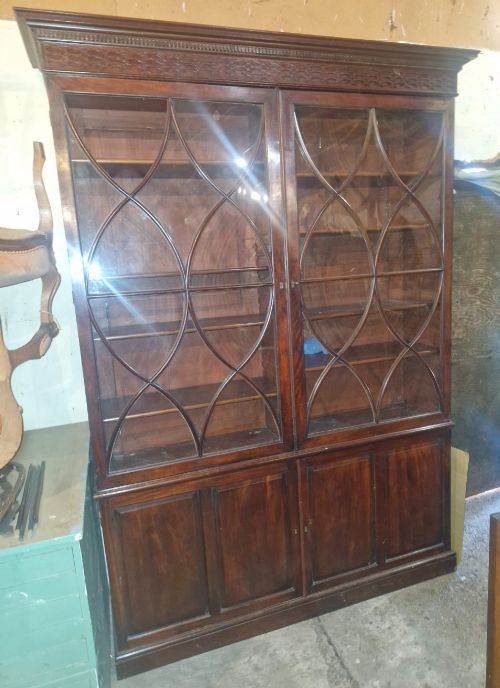
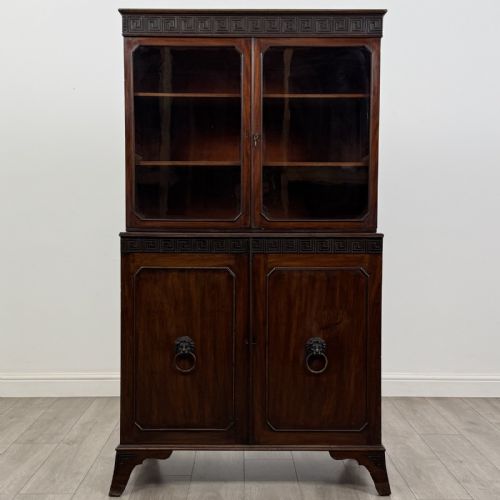
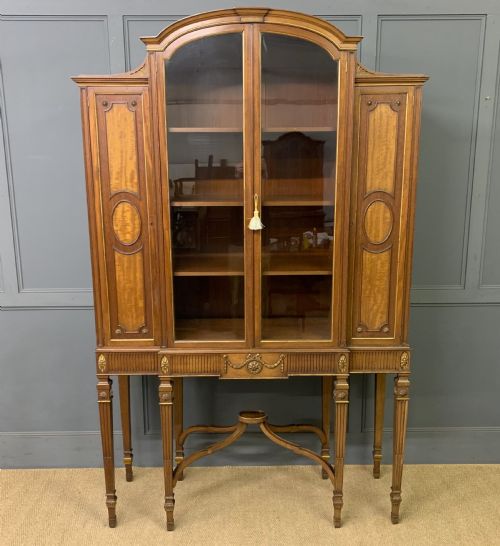
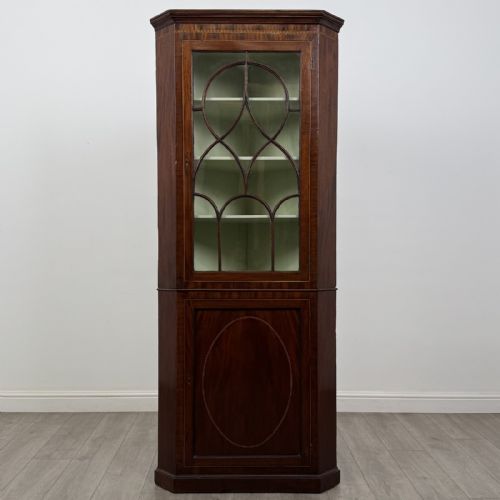
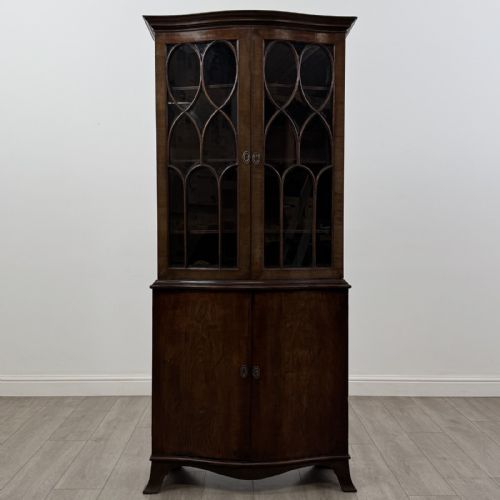
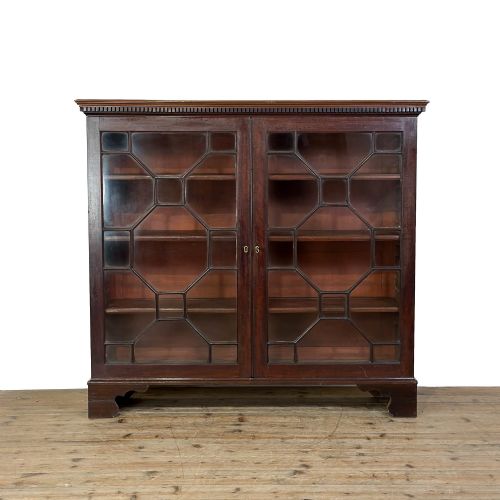
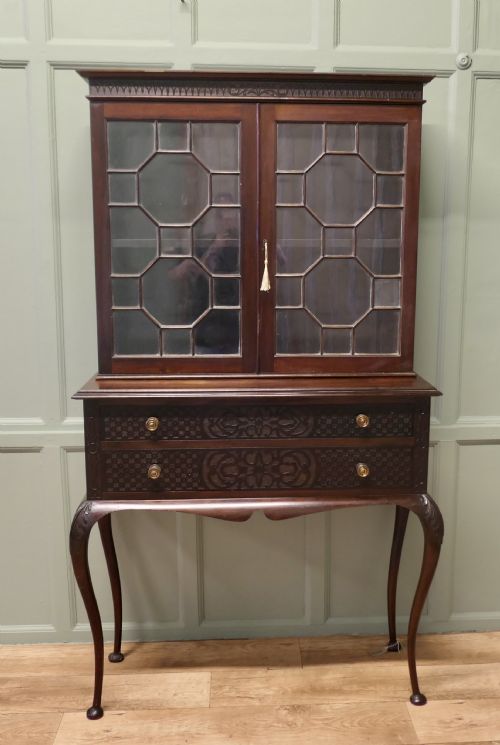
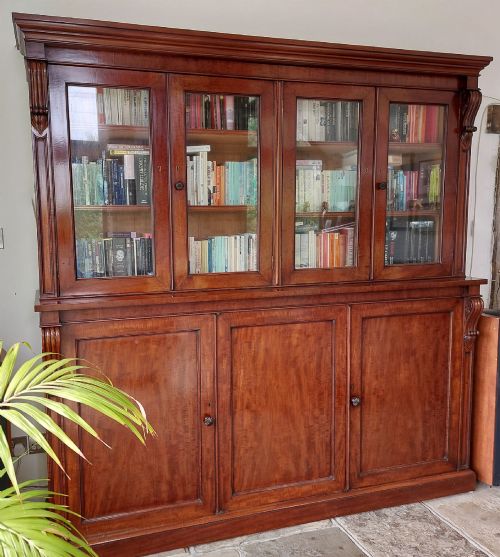
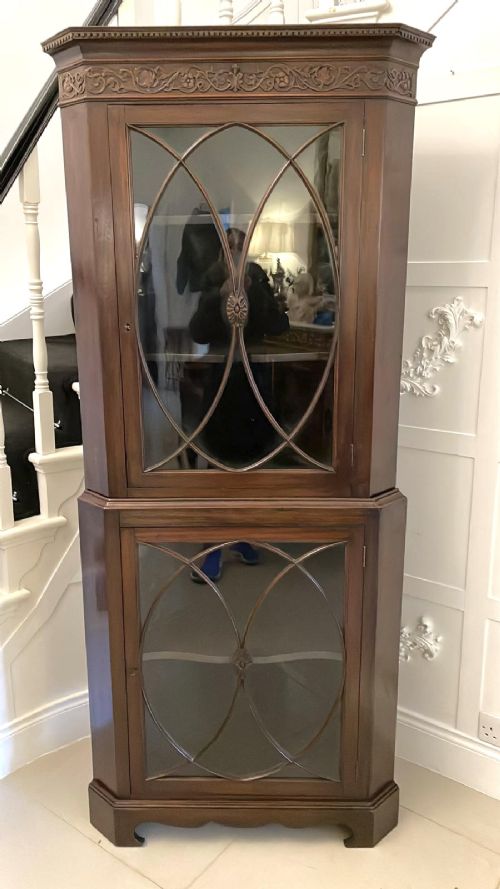
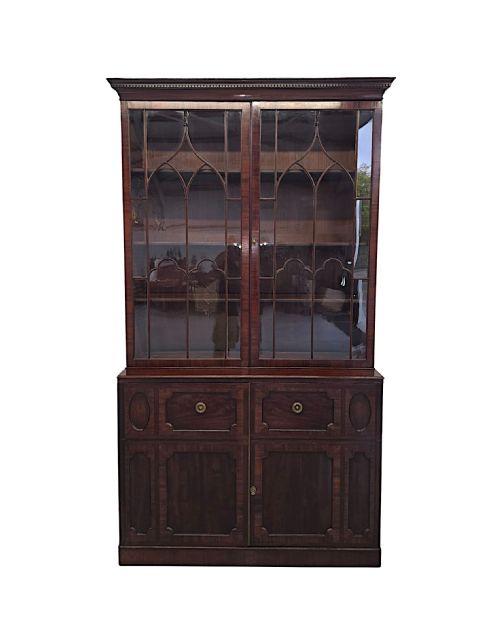
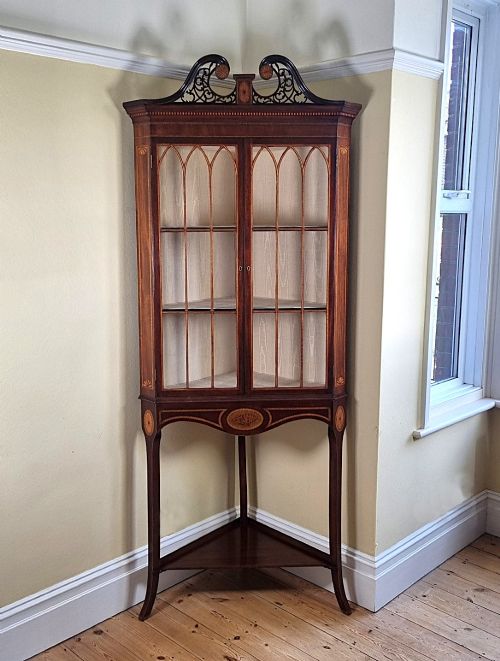
A georgian mahogany display cupboard spans tall floor-standing breakfront bookcases, glazed corner cabinets, and compact wall-hanging cupboards built to house books and prized possessions. The forms most frequently met on this page range from authentic 18th-century George III pieces to later revival iterations spanning the Victorian and Edwardian eras.
Makers and cabinet-makers constructed these items to fit domestic interiors, producing standing corner units, tiered waterfall bookcases, and large library cabinets with glazed doors. Variations emerge in silhouette, from bow fronts and breakfronts to simple rectilinear wall cabinets and tall corner cupboards designed to utilise awkward spaces.
Materials and Construction
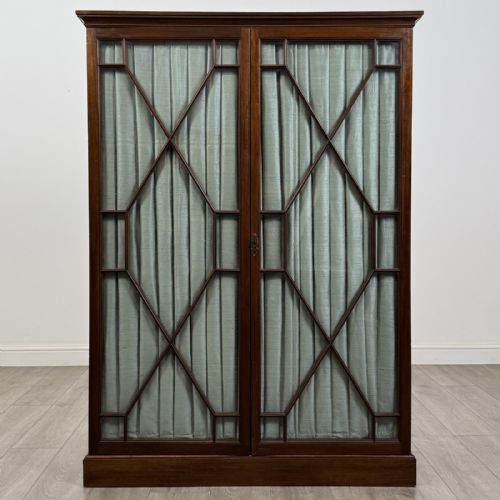
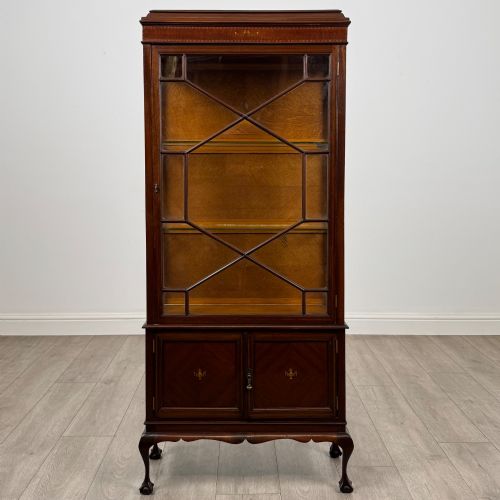
Craftsmen utilised solid mahogany and rich flame mahogany veneer over secondary timbers such as oak, often embellishing surfaces with fine satinwood inlay and brass hardware. Glazing bars divide the glass panes into geometric patterns like astragal shapes, allowing visibility into the shelved interior.
Structural integrity relies on traditional joinery, housing glass within timber frames and supporting heavier standing library units on plinths or bracket feet. Interior surfaces occasionally incorporate fabric linings behind glazed doors to set off displayed objects.
Several corner cupboards preserve narrow hidden interior shelves once utilised to lock away the family brandy.
Evaluating Craftsmanship
Quality rests upon the selection of timber figures, particularly the depth of flame mahogany grain and the precision of inlaid satinwood stringing. Superior examples display meticulously shaped astragal glazing bars and proportioned cornices that reflect thoughtful proportion rather than mass production.
The integrity of the original glass, the stability of the carcass joints, and the retention of period brass handles distinguish finer library bookcases and corner cabinets from later revival copies. Masterful carving, seen in Chinese Chippendale or Gothic interpretations, separates exceptional workshop output from standard commercial manufacture.
Wylie and Lochhead·Maple and Co.
The Georgian Mahogany Display Cupboard Glossary
- Astragal
- Glazing bars forming a grid to hold glass panes in cabinet doors. These thin wooden strips often feature fine moulding.
- Breakfront
- A large cabinet design where the central section projects forward from the flanking wings. This architectural arrangement creates depth and visual rhythm.
- Waterfall bookcase
- A set of open shelves diminishing in width from bottom to top, sometimes incorporating a small cupboard below. This compact form suited 19th-century domestic spaces.
- Flame mahogany
- Timber veneer cut from the branch junction of a mahogany tree, showing a distinctive flickering flame pattern. Cabinet-makers reserved this decorative wood for principal door panels.
- Secrataire bookcase
- A tall cabinet containing a fitted writing drawer with a drop-front desk above shelving. It combines a bureau workspace with display storage.
Georgian Mahogany Display Cupboard: Frequently Asked Questions
How do I spot a true period piece?
Examine the timber construction methods inside the carcass, looking for hand-cut dovetails and secondary woods like oak behind the mahogany exterior. Period pieces also exhibit subtle irregularities in hand-blown glass panes and traditional joinery rather than modern mechanical fixings.
Compare the proportions and carving details against documented examples from the 18th and 19th centuries. Surviving surface wear and patination on the mahogany polish further indicate genuine age.
Where should I place a corner cabinet?
Corner cabinets suit unused room angles, turning dead space into functional storage for glassware and ceramics. Tall standing versions anchor dining rooms or drawing rooms effectively.
Ensure the wall angles match the 90-degree or splayed geometry of the specific cupboard before placement. Wall-hanging models require secure fixing into solid masonry or studs to support the weight of timber and glass.
Can these hold heavy books?
Floor-standing library bookcases feature sturdy timber shelving designed to bear the weight of heavy volumes. Adjustable or fixed wooden shelves distribute loads across the internal carcass.
Smaller display cabinets and corner cupboards feature lighter internal shelving intended for porcelain and decorative objects rather than dense libraries. Check the thickness and support of each shelf before loading heavy items.
What is the difference between George III and Regency styles?
George III furniture typically displays classical proportions with intricate carving, Gothic influences, or Chinese Chippendale fretwork. Mahogany timber during this period was dense and rich in natural patination.
Regency design shifts towards bolder architectural lines, often incorporating brass inlay, ebony stringing, and classical revival motifs inspired by ancient Rome and Greece. Cabinets from this later era lean towards starker geometric silhouettes.